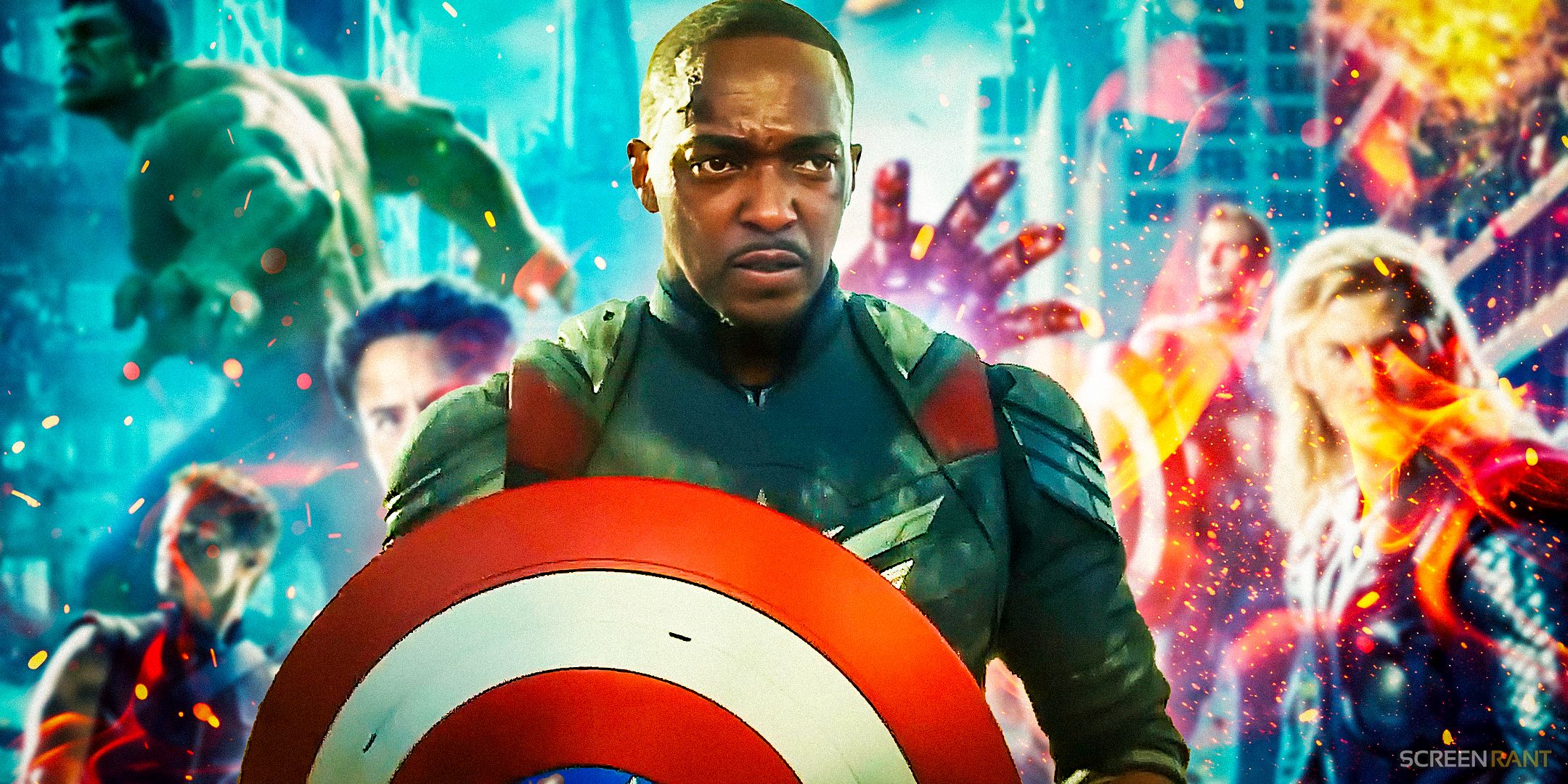
As the Marvel Cinematic Universe (MCU) moves deeper into its second decade, the relationship between Anthony Mackie’s Sam Wilson and the legacy of Tony Stark (Iron Man) has become a central pillar of the franchise’s narrative. While Sam Wilson has officially assumed the mantle of Captain America, his role is inextricably linked to the vacuum of leadership and the technological fallout left behind by Tony Stark. In 2026, we see Mackie's character not just as a successor to Steve Rogers, but as the primary custodian of the Avengers' stability in a world still grappling with the consequences of Stark’s life and death.
The Leadership Vacuum: From Billionaire Genius to Working-Class Hero
The death of Tony Stark in Avengers: Endgame (2019) did more than just remove a hero from the board; it removed the primary financier, strategist, and public face of the Avengers. For several years, the MCU explored the "Iron Man-shaped hole" left in the world, primarily through the lens of Peter Parker. However, as we have seen through the events of The Falcon and the Winter Soldier and the subsequent 2025 release of Captain America: Brave New World, Anthony Mackie’s Sam Wilson has become the structural answer to that void.
Unlike Tony Stark, who operated from a position of immense wealth and inherited privilege, Sam Wilson represents a "working-class" leadership style. Stark’s legacy was one of "fixing" the world through sheer force of will and technological intervention—often creating new problems in the process (such as Ultron or the complications of the Sokovia Accords). Sam Wilson, conversely, approaches leadership through the lens of a counselor and a veteran. His legacy is one of empathy and mediation, which serves as a necessary evolution for the Avengers after the high-octane, ego-driven era of Stark.
The transition from Stark to Wilson marks a shift in how the MCU defines a "pillar" character. Mackie has moved from a supporting player to the definitive leader of the current era, tasked with navigating a geopolitical landscape that is far more cynical than the one Tony Stark first entered in 2008.
The Technological Bridge: Stark Tech vs. Wakandan Innovation
A significant part of the Iron Man legacy is the proliferation of advanced weaponry. Tony Stark spent his final years trying to "put a suit of armor around the world." This obsession with security and technology remains a persistent threat and a tool within the MCU. Anthony Mackie’s character occupies a unique space here because he is one of the few non-powered humans leading the superhero community.
Sam Wilson relies entirely on technology to be a hero. While Tony Stark built his own suits, Sam’s equipment—specifically the flight suit and the vibranium shield—represents a collaborative effort between Stark’s original flight-wing concepts and Wakandan engineering. This blend of technologies symbolizes a shift in the MCU legacy:
- Stark’s Wings: The original EXO-7 Falcon wings were military hardware, grounding Sam in the "Earth-bound" tech era of the early MCU.
- Wakandan Upgrade: The suit Sam receives in The Falcon and the Winter Soldier (and wears in Brave New World) represents the pinnacle of global cooperation, moving away from Stark’s singular "genius" model toward a more inclusive, international defense strategy.
In 2026, the discussion around "Iron Man’s legacy" often focuses on who controls the world's most dangerous technology. As Sam Wilson leads the Avengers, he finds himself frequently at odds with those who wish to weaponize Stark’s discarded or "liberated" inventions, a theme that bridges his story directly with upcoming projects like Armor Wars.
Comparing the Pillars: Tony Stark vs. Sam Wilson
To understand how Anthony Mackie upholds the Iron Man legacy, it is helpful to compare the leadership styles and characteristics of these two defining figures.
| Feature | Tony Stark (Iron Man) | Sam Wilson (Captain America) |
|---|---|---|
| Source of Power | Self-engineered Arc Reactor and Armor | Military Training and Wakandan Tech |
| Financial Status | Multi-billionaire (Stark Industries) | Middle-class / Government Contracted |
| Leadership Style | Visionary, often unilateral and impulsive | Empathetic, diplomatic, and grounded |
| Primary Conflict | Managing his own ego and past mistakes | Fighting for legitimacy and social justice |
| Legacy Approach | Protecting the world through technology | Protecting the world through moral integrity |
| View of the Law | Volatile (from "I privatized world peace" to Sokovia Accords) | Respectful but critical (challenging systemic failures) |
The "Armor Wars" Connection and the Protection of Tech
While Don Cheadle’s James Rhodes (War Machine) is the most direct link to the Iron Man suits, Anthony Mackie’s Sam Wilson is the ideological shield against the misuse of that legacy. In the current 2026 landscape, the "Armor Wars" storyline—the idea that Stark’s technology has been leaked or stolen—serves as a primary threat for the Avengers.
Sam Wilson’s role in this is pivotal. As Captain America, he must decide how the United States government and global entities interact with Stark-level technology. Following the events of Captain America: Brave New World, where Sam faced off against a U.S. President (Thaddeus Ross) who sought to consolidate power through superhero-grade assets, the Iron Man legacy has become a cautionary tale. Sam doesn't just want to "protect" the tech; he wants to ensure that the power Stark once held never resides in the hands of a single, unchecked individual again.
This is the ultimate irony of the Iron Man legacy: Tony Stark’s greatest fear was a world he couldn't protect, and his solution was more tech. Sam Wilson’s solution is more humanity. By prioritizing the human element over the machine, Mackie’s character is successfully "de-escalating" the dangerous arms race Stark inadvertently started.
Anthony Mackie’s Impact on the MCU Brand
From a production and meta-textual standpoint, Anthony Mackie’s ascent to the lead role previously occupied (spiritually) by Robert Downey Jr. is a major milestone. Robert Downey Jr. was the "anchor" of the first three phases. By 2026, Mackie has effectively taken over that anchor role.
The "Iron Man legacy" is also a financial one. Stark was the centerpiece of the MCU’s commercial peak. Mackie has had to prove that a character grounded in social reality and tactical combat can carry the same weight as a billionaire in a flying laser suit. His performance has shifted the MCU tone from "science fiction spectacle" toward "political thriller with heart." This shift has allowed the franchise to remain relevant in a post-2020 world where audiences often demand more substance and accountability from their heroes.
Navigating the Shadow of the Past
A recurring theme in Anthony Mackie’s appearances is the struggle of being "the guy after the guy." Just as Sam Wilson struggled with the weight of Steve Rogers' shield, the character—and the actor—must also deal with the shadow of the "Golden Age" of the Avengers led by Iron Man.
The MCU has handled this by acknowledging it directly. In the 2026 context, Sam Wilson does not try to be Tony Stark. He doesn't make the witty quips at the expense of others, and he doesn't have a "Stark Tower" to operate out of. Instead, he uses the resources of the Smithsonian, the military, and his own community. This "un-Stark" approach is exactly how he honors the legacy: by proving that the world can survive and even thrive without a singular "Iron Man" figure, provided there is a "Captain America" to remind people of their own worth.
Frequently Asked Questions
Did Tony Stark and Sam Wilson have a close relationship in the MCU?
While they were on the same team, they were often on opposite sides of ideological divides. In Captain America: Civil War, Sam sided with Steve Rogers against Tony’s Sokovia Accords. However, they fought together in Avengers: Infinity War and Endgame. Their relationship was built on mutual respect for their respective skills, even if they disagreed on the role of government oversight.
Does Sam Wilson use any Stark technology as Captain America?
Yes, Sam's original Falcon wings were a military project (EXO-7 Falcon) which likely had design influences or components derived from Stark Industries tech, given the company's historical role as a primary defense contractor. However, his current Captain America suit is a specialized Wakandan design, marking a transition away from reliance on Stark’s specific inventions.
How does the Iron Man legacy affect the plot of Captain America: Brave New World?
The legacy of Iron Man in Brave New World (2025) is felt through the "power vacuum." With Stark gone, various world powers—including the U.S. government under President Thaddeus Ross—are racing to find the next "super-weapon." This puts Sam Wilson in the difficult position of preventing the "Iron Man-ification" of global warfare, where heroes are used as state-owned assets.
Will Anthony Mackie appear in the Armor Wars movie?
While Marvel Studios has not officially confirmed all cast members for the theatrical version of Armor Wars by early 2026, it is highly anticipated that Anthony Mackie will appear or be referenced. Given his role as Captain America and his history with James Rhodes, Sam Wilson is a natural choice to assist in reclaiming stolen Stark technology.
Who is the "new" Iron Man if Sam Wilson is the new leader?
The literal "successor" to the Iron Man suit and technological genius is Riri Williams (Ironheart), introduced in Black Panther: Wakanda Forever. While Sam Wilson provides the leadership and moral direction for the Avengers, Riri Williams represents the continuation of Stark’s mechanical and scientific brilliance.
Practical Recommendation for MCU Fans
To fully grasp the evolution of Anthony Mackie’s role and its connection to the Iron Man legacy, viewers should revisit the "Legacy Trilogy" of the MCU: Avengers: Endgame, The Falcon and the Winter Soldier, and Captain America: Brave New World. These projects track the movement from the end of the Stark era to the firm establishment of Wilson’s leadership. Pay close attention to how the "Shield" and the "Suit" are treated as symbols of responsibility—one represents the heart of the hero, the other the burden of the tech.