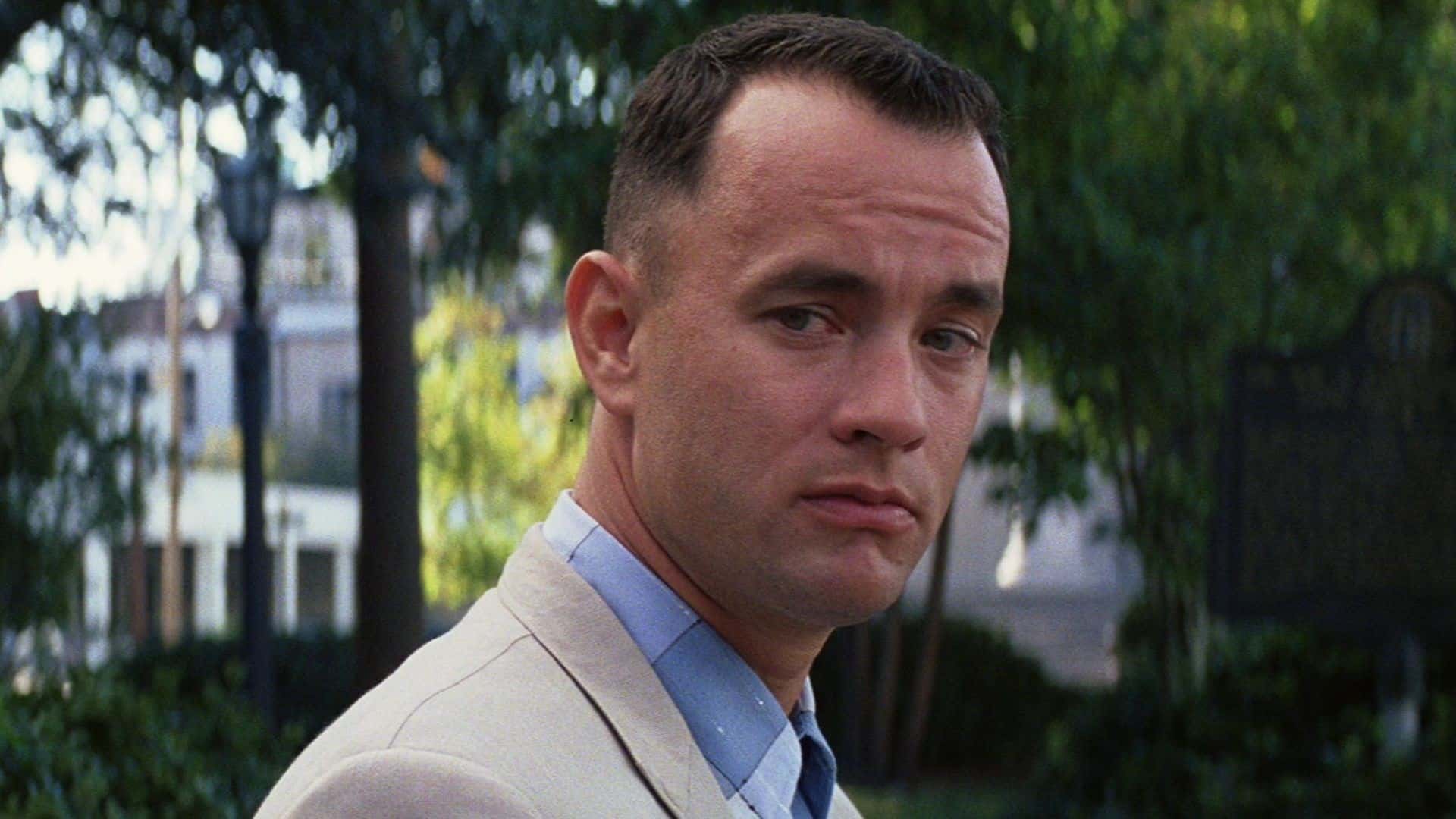
No, the 1986 novel Forrest Gump by Winston Groom is not based on a true story. Forrest Gump is a completely fictional character created as the central figure of a satirical novel. However, author Winston Groom constructed the story using real historical events, a childhood savant, his friend's shrimping knowledge, and actual Vietnam War veterans.
Fact vs. Fiction: The Origin of Winston Groom's Novel
When author Winston Groom published Forrest Gump in 1986, he did not set out to write a biography or document a historical figure. Instead, he wrote a picaresque, satirical novel about an Extraordinary American who inadvertently stumbles into some of the most pivotal moments of late 20th-century history.
The widespread belief that Forrest Gump was a real person largely stems from the 1994 film adaptation directed by Robert Zemeckis and starring Tom Hanks. The film utilized groundbreaking digital visual effects developed by Industrial Light & Magic to seamlessly composite Tom Hanks into real archival footage alongside historical figures like John F. Kennedy, Lyndon B. Johnson, Richard Nixon, and John Lennon. This technical achievement created a documentary-style realism that convinced millions of viewers that Gump’s exploits had actually occurred.
In reality, Forrest Gump never existed. He did not play college football for Coach Paul "Bear" Bryant at the University of Alabama, he did not win the Congressional Medal of Honor in Vietnam, and he did not launch a multi-million-dollar shrimping empire. However, while Forrest himself is a product of Groom's imagination, the world he inhabits and several key aspects of his character were built directly from real-life individuals and verified history.
The Real-Life People Who Inspired Forrest Gump
Winston Groom drew upon stories told by his family, personal acquaintances in Alabama, and real military veterans to bring the character of Forrest Gump to life.
1. The Neighborhood Savant (The Concept of Forrest's Mind)
The initial idea for Forrest Gump came from a story told to Winston Groom by his father, Winston Groom Sr. During a lunch in Mobile, Alabama, Groom’s father recalled a boy who lived in their neighborhood during his own youth. The boy was considered intellectually disabled by standard metrics and struggled with basic speech and reading. However, he possessed a remarkable savant talent: he could sit down at a piano and play complex classical compositions flawlessly after hearing them just once.
Groom was fascinated by the concept of a person who was overlooked or dismissed by society due to an intellectual disability, yet possessed extraordinary, hyper-focused capabilities. This conversation inspired Groom to write a story about an unwitting prodigy who perceived the world with raw honesty while excelling at unexpected skills.
2. Jimbo Meador (The Voice and the Shrimping Connection)
One of the most direct real-life influences on Forrest Gump was Jimbo Meador, a lifelong friend of Winston Groom from Mobile, Alabama. Groom dedicated the original 1986 novel to his childhood friends, including Meador and George Radcliff.
Meador was an avid outdoorsman and an expert on the waterways, delta, and commercial fishing industry of the Gulf Coast. During their conversations in the mid-1980s, Meador spoke extensively to Groom about the mechanics of shrimp farming, river tides, and commercial shrimping techniques. Groom took detailed notes on Meador’s speech patterns, regional cadence, and vast knowledge of sea life, incorporating those elements into Forrest’s character and his business partnership with Bubba.
Although Jimbo Meador inspired Forrest's voice and shrimping background, Meador publicly clarified in post-film interviews that he was not Forrest Gump himself and never ran across the country or fought in Vietnam.
3. Sammy Lee Davis (The Vietnam War Heroics)
While Forrest Gump's military battalion and experiences in Vietnam are fictional, his heroic actions during an enemy ambush were directly modeled after the real-life service of Sergeant First Class Sammy Lee Davis.
On November 18, 1967, during the Vietnam War, Davis’s unit came under heavy mortar and ground attack near Cai Lay. Despite sustaining severe injuries to his leg and buttocks from enemy fire and shrapnel, Davis continued to fire an 105mm howitzer at advancing enemy troops. When he heard wounded soldiers trapped across a river, Davis—who could not swim well due to his injuries—used an inflatable air mattress to cross the water under intense fire, rescue three wounded comrades, and carry them back to safety.
President Lyndon B. Johnson awarded Sammy Lee Davis the Medal of Honor in 1968. When Paramount Pictures produced the 1994 film, director Robert Zemeckis used actual newsreel footage of President Johnson placing the Medal of Honor around Sammy Lee Davis’s neck. The visual effects team digitally replaced Davis's head with Tom Hanks's head to create Gump’s famous award ceremony scene.
REAL-LIFE INSPIRATION MAP
| Real-Life Source | Influence on Forrest Gump Narrative |
|---|---|
| Neighborhood Savant (Mobile, AL) | Core concept of a savant with hidden talents |
| Jimbo Meador (Groom's Friend) | Speech patterns, Southern tone, shrimping |
| Sammy Lee Davis (Medal of Honor) | Vietnam battle heroics and film archival cut |
| 1970s Ping-Pong Diplomacy | International table tennis match sub-plot |
Historical Events Blended into Forrest's Life
While Forrest Gump is fictional, the novel and film place him inside authentic historical events that shaped 20th-century American history.
The Integration of the University of Alabama (1963)
In June 1963, Alabama Governor George Wallace stood in front of Foster Auditorium at the University of Alabama to symbolically block two African American students, Vivian Malone and James Hood, from enrolling. This event, known as the "Stand in the Schoolhouse Door," required intervention from the National Guard under federal order by President John F. Kennedy.
In both the novel and the film, Forrest Gump attends the University of Alabama on a football scholarship under legendary head coach Paul "Bear" Bryant. Forrest is depicted standing in the crowd during Governor Wallace's protest, even stepping forward to hand Vivian Malone a dropped textbook.
The Vietnam War and Anti-War Protests
Forrest’s military service reflects the combat experiences of the U.S. Army's 9th Infantry Division during the Vietnam War. His subsequent participation in anti-war rallies at the National Mall in Washington, D.C., reflects the massive peace demonstrations led by organizations such as the Vietnam Veterans Against the War (VVAW) in the late 1960s and early 1970s.
U.S.–China Ping-Pong Diplomacy (1971)
In 1971, the United States Table Tennis team accepted an invitation to visit the People's Republic of China for a series of exhibition matches. This historic event, known as "Ping-Pong Diplomacy," paved the way for President Richard Nixon’s landmark diplomatic visit to Beijing in 1972. In the book and movie, Forrest becomes a master ping-pong player while recovering in a military hospital and travels to China as a member of the U.S. Army ping-pong team.
The Watergate Break-in (1972)
On June 17, 1972, five men were arrested for breaking into the Democratic National Committee headquarters at the Watergate complex in Washington, D.C. In a famous satirical twist in the film, Forrest stays at the Watergate Hotel, notices flashlights in the building across from his room, and calls the security desk to report what he assumes is a blown fuse—inadvertently exposing the Watergate scandal that led to President Nixon's resignation.
Key Differences: The 1986 Novel vs. The 1994 Film Adaptation
Readers coming to the book after watching the 1994 movie will find striking differences in tone, character development, and plot points. The original novel by Winston Groom is far more satirical, cynical, and absurd than the bittersweet, romanticized film adaptation.
1. Forrest’s Personality and Physicality
- The Novel: Forrest is an imposing figure—standing 6 feet 6 inches tall and weighing 242 pounds. He is far from naive; he uses profanity frequently, drinks beer, smokes marijuana, and possesses a sharp, cynical view of human behavior. He is also an explicit mathematical and chess savant, capable of calculating complex equations and beating grandmasters despite failing general education courses.
- The Film: Forrest (played by Tom Hanks) is portrayed as an innocent, gentle, sweet-natured man with a strong moral compass instilled by his mother. His mathematical savant abilities are toned down in favor of his physical endurance and emotional honesty.
2. Wild Escapades Omitted from the Film
The 1986 novel features several outlandish subplots that were completely removed from the movie script for pacing and tone:
- NASA Astronaut: Forrest is recruited by NASA and sent into space on a mission with a female astronaut and a male chimpanzee named Sue. Their capsule crashes in New Guinea, where they are held captive by a local tribe for four years.
- Professional Wrestler: Forrest earns a living as a professional wrestler under the ring name "The Dunce," wearing a dunce cap into the ring.
- Chess Champion: Forrest plays in international chess tournaments, leveraging his savant spatial memory to defeat grandmasters.
- Political Candidate: Forrest runs for the U.S. Senate in Alabama under the campaign slogan "We Gotta Pee," which gains massive grassroots traction before he abandons the race.
3. Jenny's Fate
In the 1994 movie, Jenny Curran suffers from an unnamed terminal virus (widely interpreted as HIV/AIDS) and dies at the end of the film, leaving Forrest to raise their son alone. In Winston Groom’s novel, Jenny does not die. She survives, marries another man, and raises her son while maintaining a warm, distant friendship with Forrest.
Fiction vs. Real-Life Inspiration in Forrest Gump
The following table details the key story elements from Forrest Gump, clarifying what was entirely fictional versus what was grounded in historical reality.
| Narrative Element | Real or Fictional? | Primary Real-World Inspiration / Source | Historical Context & Details |
|---|---|---|---|
| Forrest Gump Character | Fictional | Neighborhood child in Mobile, AL & Jimbo Meador | Created by Winston Groom as a fictional savant and historical bystander. |
| Bubba Gump Shrimp Co. | Inspired / Created Later | Jimbo Meador's shrimping knowledge | Fictional in the book; later turned into an actual restaurant chain in 1996 by Viacom. |
| Medal of Honor Rescue Scene | Real Events | SFC Sammy Lee Davis (U.S. Army) | Davis rescued soldiers using an air mattress in Vietnam (1967); film used his real award footage. |
| Stand in the Schoolhouse Door | Real Event | Integration of Univ. of Alabama (1963) | Governor George Wallace blocked Vivian Malone and James Hood; federalized Guard stepped in. |
| Ping-Pong Diplomacy Trip | Real Event | 1971 U.S. Table Tennis Team China Visit | First group of Americans allowed into Communist China since 1949, opening diplomatic channels. |
| Cross-Country Running Craze | Inspired | Transcontinental runners of the 1970s | Inspired by real ultra-distance runners like Rob Sweetgall, who ran across America for heart health. |
| Lieutenant Dan Taylor | Fictional | Disabled American Veterans of Vietnam | Character reflects the real challenges faced by wounded veterans returning from Southeast Asia. |
| Watergate Hotel Break-in | Real Event | June 17, 1972 Democratic HQ Break-in | Five burglars arrested at the Watergate complex, leading to President Nixon's 1974 resignation. |
Why Forrest Gump Feels Authentic to Readers and Viewers
The enduring belief that Forrest Gump is a true story comes down to three factors: literary design, cinematic innovation, and real-world commercial spinoffs.
The "Everyman" Picaresque Narrative
Winston Groom structured the novel as an oral history. Forrest speaks directly to the reader in a first-person vernacular that sounds candid and unvarnished. By placing a fictional character into real historical settings alongside real public figures, Groom utilized a classic literary technique seen in historical fiction ranging from Mark Twain’s Huckleberry Finn to Thomas Berger’s Little Big Man.
Groundbreaking CGI Visual Effects
When Paramount Pictures released the film in 1994, visual effects supervisor Ken Ralston and his team at Industrial Light & Magic utilized revolutionary digital manipulation. They scanned archival 16mm and 35mm newsreel film into computers, digitally inserted Tom Hanks into the frames, matched the lighting and film grain, and manipulated the lip movements of dead historical figures like John F. Kennedy and Richard Nixon to match new voice tracks.
This level of realism had never been seen in cinema before, causing many viewers to question whether Forrest Gump was a real historical figure whose footage had recently been uncovered.
Visual Compositing Process (1994 Film):
- Archival Newsreel Footage + Green Screen Performance (Tom Hanks)
- Digital Grain & Color Matching
- Lip-Sync Modification
- Seamless Historic Scene Integration
The Real-World Creation of Bubba Gump Shrimp Co.
When Winston Groom wrote the novel, "Bubba Gump Shrimp Co." was an entirely imaginary business. However, following the overwhelming success of the 1994 film, Paramount Pictures licensed the name. In 1996, the first real-life Bubba Gump Shrimp Co. Restaurant & Market opened in Monterey, California.
Because millions of people have eaten at these real seafood restaurants in tourist destinations worldwide, many consumers naturally assume the business existed first and inspired the movie, reversing the actual timeline of events.
FAQs About the Real History Behind Forrest Gump
Was Bubba Gump Shrimp Co. a real business before the movie?
No. Bubba Gump Shrimp Co. was entirely fictional when Winston Groom wrote the 1986 novel. The real-world restaurant chain was created in 1996 by Viacom Consumer Products and Rusty Pelican Restaurants as a spin-off enterprise capitalized on the movie's global success.
Did a real person ever run across America like Forrest Gump?
Yes, multiple people have run across the United States, though none for the exact reasons Gump did in the movie. In 1979, Louis Figueroa ran from New Jersey to San Francisco to raise awareness for the American Cancer Society, inspiring a line of dialogue in the film. Later, runners like Rob Pope actually recreated Forrest Gump’s exact movie route across America, completing over 15,000 miles across four separate continent crossings.
Is Jenny Curran based on a real person?
No, Jenny Curran is a fictional character. She represents the counterculture movement of the 1960s and 1970s, embodying the anti-war movement, hippie culture, and the personal struggles of that era, serving as a foil to Forrest’s traditional, military-adjacent path.
How did the filmmakers get Tom Hanks into real historic footage?
Industrial Light & Magic used high-resolution digital compositing. Tom Hanks was filmed against a blue screen or green screen matching the camera angles and focal lengths of original archival newsreels. Visual effects artists then matte-composited Hanks into the historical footage and modified the facial movements of historical figures using early digital morphing software to match soundalike voice actors.
Did Winston Groom write a sequel to Forrest Gump?
Yes. Following the massive success of the 1994 movie adaptation, Winston Groom wrote a sequel novel titled Gump & Co., published in 1995. In the opening chapter of the sequel, Forrest meta-referentially remarks on how terrible it was when Hollywood made a movie about his life and messed up all the facts.
Exploring Historical Fiction and Gulf Coast Realities
If you enjoy Forrest Gump and want to explore the authentic history behind its narrative, consider these next steps:
- Read Winston Groom’s Bibliography: Beyond Forrest Gump, Winston Groom was a respected military historian. Read his non-fiction works, such as Shiloh 1862 or The Aviators, to appreciate his deep understanding of military history and Southern narrative traditions.
- Explore the History of Ping-Pong Diplomacy: Consult official archives from the National Committee on United States-China Relations to learn about the actual 1971 U.S. Table Tennis team trip that helped break decades of diplomatic silence between Washington and Beijing.
- Study Vietnam War Medal of Honor Records: Read verified military citations from the Congressional Medal of Honor Society to learn the factual stories of veterans like Sammy Lee Davis and the actual events of the conflict.