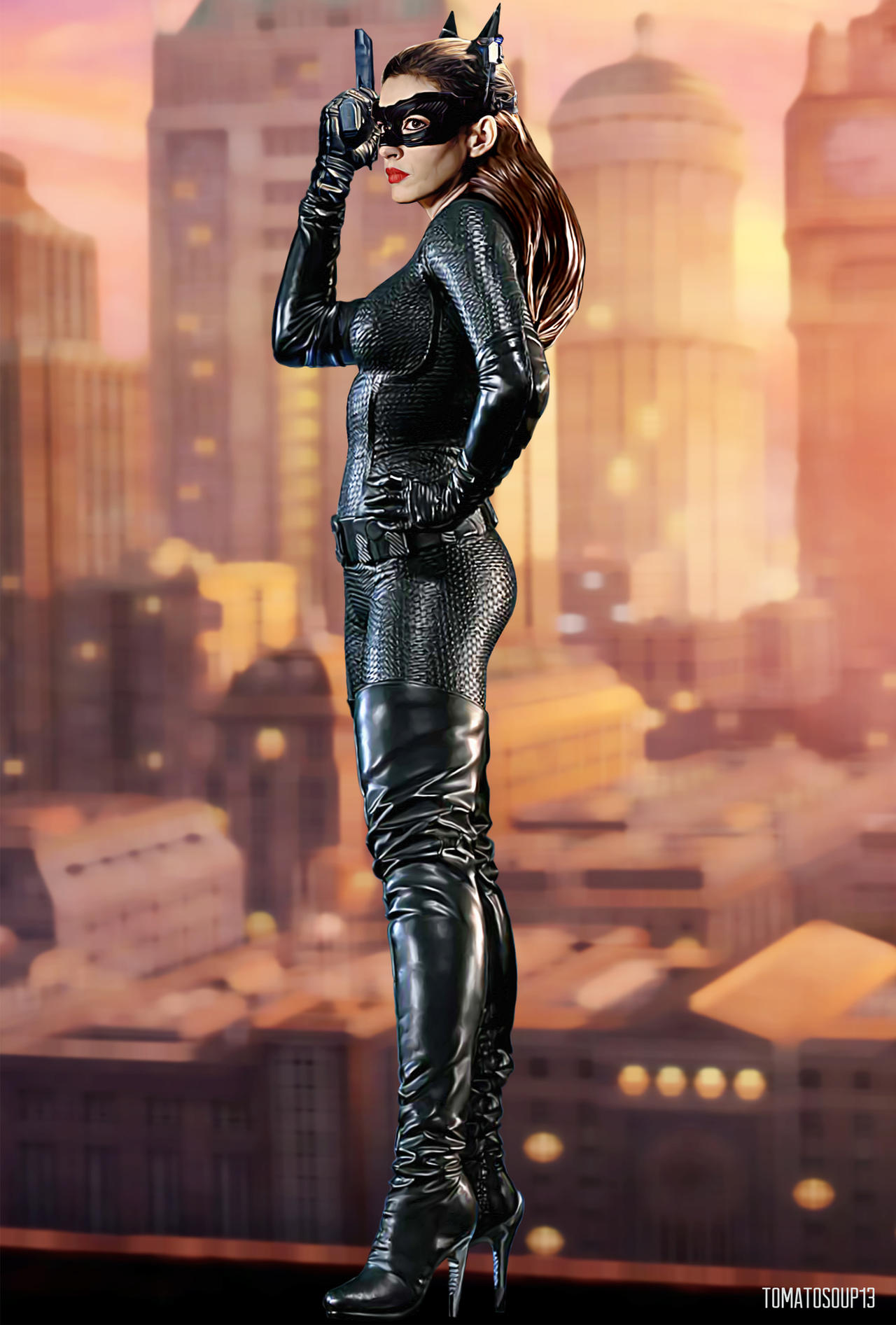
Anne Hathaway portrayed Selina Kyle, also known as Catwoman, in Christopher Nolan’s 2012 film The Dark Knight Rises. Her performance is celebrated for its grounded, tactical approach, blending high-stakes burglary with a complex redemption arc that redefined the character for a modern, gritty cinematic universe through technical precision and emotional depth.
The Road to Gotham: Casting and Conceptualization
The process of bringing Selina Kyle into the "Nolanverse" was one of the most anticipated casting decisions of the early 2010s. Christopher Nolan, known for his commitment to cinematic realism, needed an actress who could portray a character that was both a believable physical threat and a master of psychological manipulation. Anne Hathaway was cast in early 2011, beating out several high-profile contenders.
Interestingly, Hathaway famously recounted that she entered the initial meeting believing she was auditioning for the role of Harley Quinn. It was only after a lengthy conversation with Nolan that she realized the director intended for her to play Selina Kyle. This misunderstanding highlights the versatility Nolan saw in Hathaway; he required someone who could pivot from whimsical to lethal in a single breath.
In the context of The Dark Knight Rises, the character is never explicitly referred to as "Catwoman" by other characters, though the name appears in news headlines and marketing materials. This choice was deliberate. Nolan’s Selina Kyle is a world-class con artist and "cat burglar" whose feline persona is a byproduct of her functional gear rather than a theatrical costume. This nuance allowed Hathaway to focus on the character's survivalist instincts rather than the campier elements associated with previous iterations.
Characterization and Narrative Arc
Anne Hathaway’s portrayal of Selina Kyle is a study in performative duality. Within the narrative of The Dark Knight Rises, she is a character who constantly wears "masks," even when she is not in her tactical suit. From the "helpless maid" persona she adopts to infiltrate Wayne Manor to the hardened criminal dealing with Gotham’s underworld, Hathaway navigates these shifts with seamless transitions.
The Moral Ambiguity of Selina Kyle
Unlike the traditional hero or villain, Hathaway's Selina Kyle operates in a moral grey area. Her primary motivation is survival and the pursuit of a "clean slate"—a mythical computer program capable of erasing a person's criminal record from every database on Earth. This motivation grounds the character in a very human desire for reinvention, making her actions relatable even when they are legally or ethically questionable.
Her relationship with Bruce Wayne (Christian Bale) serves as the emotional core of her development. She is one of the few characters who can match Wayne's intellect and physical prowess, yet she challenges his rigid moral code. Hathaway portrays this dynamic with a mix of flirtation and cynicism, eventually leading to a partnership that is instrumental in the film’s climax. By the time 2026 has rolled around, critics still point to this version of Selina as the most effective "anti-hero" interpretation in modern comic book cinema because her redemption feels earned through shared sacrifice rather than a sudden change of heart.
The Physicality of the Performance
To prepare for the role, Hathaway underwent a grueling ten-month training regimen. This was not merely for aesthetic purposes; the role demanded a level of physical fluidity that could make the character’s combat scenes and acrobatic heists look effortless.
Training and Combat Styles
Hathaway’s preparation involved intense martial arts training, specifically focusing on disciplines that emphasized speed and agility over raw power. The stunt choreography incorporated elements of:
- Krav Maga: For efficient, brutal self-defense moves.
- Gymnastics: To facilitate the character’s "cat-like" movements and high-altitude escapes.
- High-Heel Combat: One of the most technically challenging aspects was performing stunts in boots with serrated, stiletto-like heels. Hathaway worked extensively with the stunt team to ensure she could move convincingly without sacrificing the character's elegance.
This dedication to physicality allowed Hathaway to perform many of her own stunts, providing the production with the ability to use long takes during action sequences. This contributed to the film’s sense of "cinematic verisimilitude," a hallmark of the Dark Knight trilogy.
Aesthetic and Technical Design
The "Catwoman" suit in The Dark Knight Rises is a masterpiece of utilitarian design. Created by costume designer Lindy Hemming, the outfit was built to be functional within the film’s internal logic. Rather than leather or spandex, the suit was constructed from a high-tech two-layer fabric with a carbon-fiber weave, designed to look like tactical gear used by a professional thief.
The Iconic Goggles and Tactical Suit
The most significant design element is the set of night-vision goggles. When not in use, the goggles flip up onto the top of Hathaway’s head. In a stroke of design genius, the flipped-up lenses create the silhouette of cat ears. This detail transformed a piece of functional military technology into a visual homage to the comic book source material without breaking the realism of Nolan’s world.
| Feature | Technical Specification / Material | Narrative Purpose |
|---|---|---|
| Main Suit | Two-layer laminated tensile fabric | Flexibility and protection during high-impact movement. |
| Goggles | Multi-spectral night-vision / Thermal | Essential for low-light heists and tactical awareness. |
| Heels | Serrated stainless steel | Used as both a climbing tool and a lethal close-quarters weapon. |
| Gloves | Reinforced knuckle plating | Enhances striking power while maintaining manual dexterity. |
| Belt | Hidden utility compartments | Storage for lockpicks and miniaturized hacking tools. |
Comparative Analysis of Cinematic Catwomen
As we look back from 2026, Hathaway’s performance occupies a unique space between the gothic fantasy of Michelle Pfeiffer and the street-level grit of Zoë Kravitz. While Pfeiffer’s 1992 version was a manifestation of psychological trauma and Kravitz’s 2022 version focused on noir-inspired vulnerability, Hathaway’s Selina Kyle is defined by her professional competence and social commentary.
Hathaway’s version leans heavily into the "class warrior" subtext present in Nolan’s script. She represents the disenfranchised who see Gotham’s elite as out of touch, a perspective she articulates during the famous ballroom scene with Bruce Wayne. This intellectual depth sets her apart from more decorative or purely villainous versions of the character.
Critical and Cultural Impact
Upon the release of The Dark Knight Rises in 2012, Hathaway received widespread acclaim, often being cited as one of the film's highlights. Critics praised her ability to deliver witty, "hard-boiled" dialogue without it feeling forced. In the years following, her performance has aged remarkably well, particularly for its avoidance of the "damsel in distress" tropes that often plague female characters in superhero media.
Her portrayal influenced how the character was handled in subsequent media, including video games like the Batman: Arkham series and various animated adaptations, which began to favor a more tactical, heist-focused Selina Kyle over the more supernatural or overtly fetishized versions of the past.
Common Misconceptions
Despite the popularity of the role, several misconceptions persist about Hathaway’s tenure as the character:
- The "Catwoman" Name: As mentioned, she is never called Catwoman in the film. She is always Selina Kyle. The film treats "Catwoman" as a media-generated moniker rather than a chosen alias.
- The Ears: Some viewers originally thought the cat ears were purely decorative. In reality, they are the hinged components of her goggles.
- The "Villain" Label: Selina is often categorized as a villain, but her actions in the film are those of a desperate individual caught between a revolution she helped start and a city she eventually chooses to save.
FAQ
Why did Anne Hathaway think she was auditioning for Harley Quinn?
At the time of casting, Christopher Nolan was notoriously secretive about his scripts. Hathaway knew the film featured a prominent female lead but didn't know which one. Given the popularity of Harley Quinn and Nolan's tendency to reinvent characters, she assumed that was the role. It wasn't until she met with Nolan that he clarified he was bringing back Selina Kyle.
What martial arts did Anne Hathaway learn for Catwoman?
Hathaway trained extensively in Krav Maga, a military self-defense system developed for the Israel Defense Forces. She also practiced dance-based movement to ensure her fight scenes had the requisite fluidity and grace associated with a "cat" burglar.
How does Anne Hathaway’s Catwoman compare to Zoë Kravitz’s?
Hathaway’s version is more of a "high-society" infiltrator and professional thief operating in a world of epic stakes. Kravitz’s version, in The Batman (2022), is more grounded in the detective/noir genre, focusing on personal vengeance and survival in a decaying urban environment. Hathaway’s version has more of a "tech-savvy" edge, while Kravitz’s is more "street-level."
Is Anne Hathaway in any other Batman movies?
No. Anne Hathaway only appeared as Selina Kyle in The Dark Knight Rises. As that film concluded Christopher Nolan’s trilogy, there were no direct sequels, and subsequent DC films featured different versions of the Batman universe (the DCEU and Matt Reeves’ The Batman).
What was the inspiration for Hathaway's performance?
Hathaway and Nolan looked to Hedy Lamarr, the 1940s actress and inventor, as a primary inspiration. Lamarr was the original visual inspiration for the comic book Catwoman in the 1940s, and Hathaway sought to capture that era’s "femme fatale" sophistication while updating it for a modern audience.
Final Recommendation: Re-evaluating the Performance
For those interested in the evolution of female characters in comic book cinema, re-watching The Dark Knight Rises in 2026 offers a fresh perspective on Anne Hathaway’s contribution. Her performance is a masterclass in subtlety; she manages to convey a lifetime of hardship and a sharp survivalist wit with a single glance or a dry line of dialogue.
If you are a student of acting or character design, pay close attention to the "ballroom scene." It perfectly encapsulates the character’s dual nature—the ability to blend into the world of the 1% while simultaneously planning its downfall. Anne Hathaway’s Selina Kyle remains a gold standard for how to adapt a legendary comic book character into a realistic cinematic framework without losing the essence of what made the character iconic in the first place.