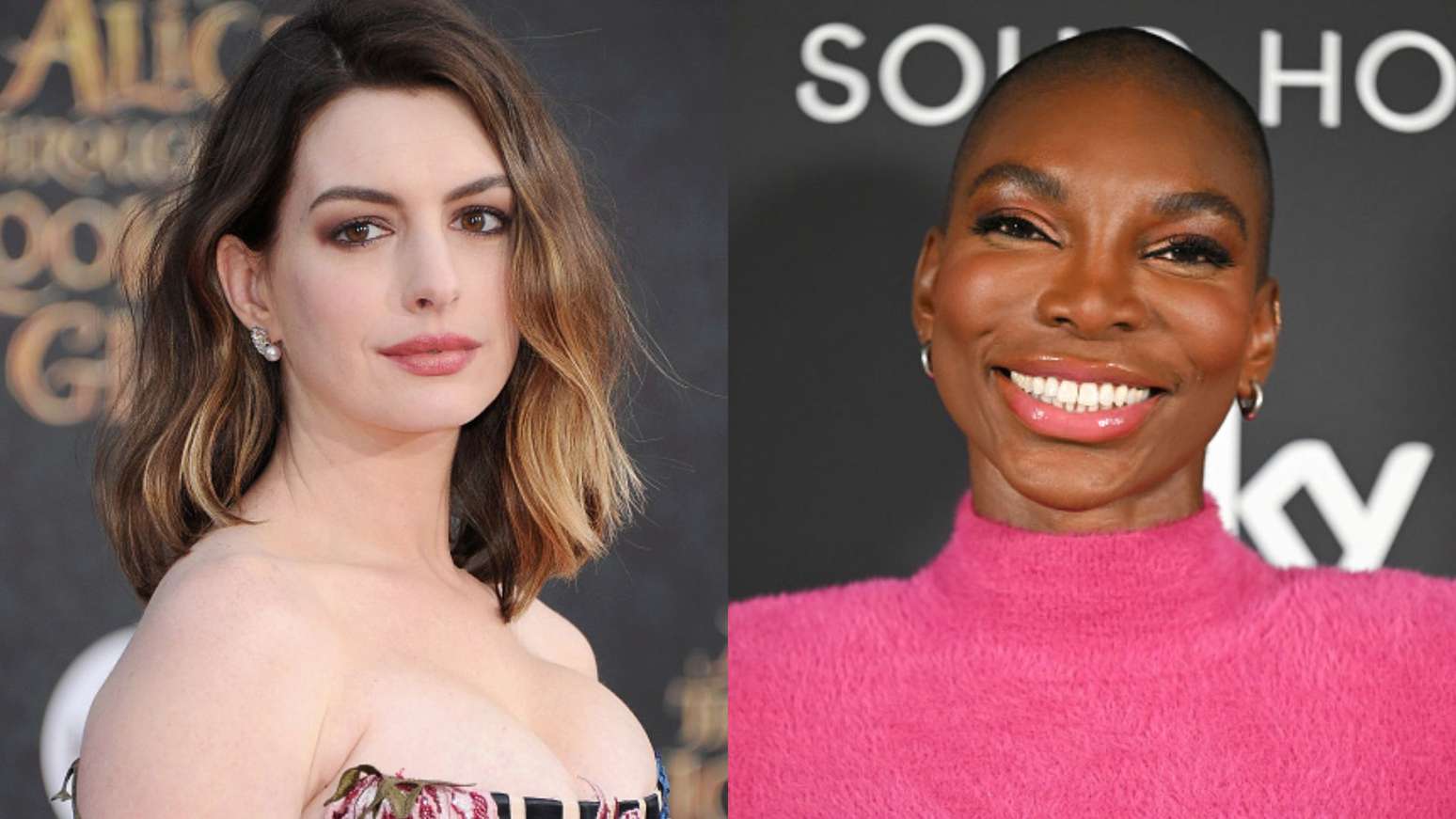
Anne Hathaway and Michaela Coel star in Mother Mary, an epic pop melodrama directed by David Lowery and produced by A24. The film explores the complex relationship between a world-renowned fictional musician and an iconic fashion designer, featuring original music by Jack Antonoff and Charli XCX.
In the landscape of 2026 cinema, few films have generated as much enduring discourse as David Lowery’s Mother Mary. This production represents a collision of prestige filmmaking, high-fashion aesthetics, and the visceral energy of the modern pop industry. By pairing Academy Award winner Anne Hathaway with the visionary Michaela Coel, the film transcends typical genre boundaries, offering a meditation on fame, artistic obsession, and the price of public life.
The Creative Vision of David Lowery
David Lowery has established himself as one of the most versatile directors of his generation. From the contemplative silence of A Ghost Story to the surreal medievalism of The Green Knight, Lowery’s filmography is defined by a willingness to experiment with pacing and atmosphere. With Mother Mary, Lowery pivoted toward the "epic pop melodrama," a term he used to describe the film’s heightened emotional reality and grand scale.
Unlike traditional musical biopics, Mother Mary is a fictional construct. This allowed Lowery to deconstruct the mechanics of stardom without the constraints of historical accuracy. The film utilizes a distinct visual language—characterized by long takes and a saturated color palette—to mirror the sensory overload experienced by its protagonists. By 2026, this stylistic choice is recognized as a hallmark of Lowery’s transition into more maximalist storytelling.
Character Analysis: Anne Hathaway and Michaela Coel
The success of the film hinges on the electric chemistry between its two leads. Each actress brings a unique pedigree to the project, bridging the gap between Hollywood royalty and contemporary British creative brilliance.
Anne Hathaway as the Pop Icon
Anne Hathaway portrays the central musician, a character whose public persona often clashes with her private turmoil. Hathaway, who previously demonstrated her vocal prowess in Les Misérables, underwent extensive preparation for this role. Her performance is not merely about the spectacle of performing on stage; it focuses on the grueling psychological demands of maintaining a global brand. Critics have noted that Hathaway’s portrayal manages to avoid the clichés of the "tortured artist," instead presenting a woman who is acutely aware of her own commodification.
Michaela Coel as the Fashion Visionary
Michaela Coel, known for her groundbreaking work in I May Destroy You, plays the iconic fashion designer who becomes a pivotal figure in the musician's life. Coel’s character serves as the aesthetic architect of the pop star's image. Her performance highlights the intersection of visual art and commercial viability. In the film, the relationship between the designer and the performer is portrayed as both symbiotic and parasitic, exploring how two creative forces can simultaneously build and destroy one another.
The Sonic Identity: Jack Antonoff and Charli XCX
A film centered on a pop star requires a soundtrack that feels authentic to the contemporary music charts. To achieve this, A24 enlisted the talents of Jack Antonoff and Charli XCX.
Jack Antonoff, a ubiquitous figure in 2020s pop production, provided the structural foundation for the film's music. His ability to craft anthemic, synth-heavy tracks lent the fictional discography a sense of legitimacy. Conversely, Charli XCX brought an experimental, "hyper-pop" edge to the songs, ensuring they felt forward-thinking rather than derivative of past eras.
The music in Mother Mary is not incidental; it functions as a narrative device. The lyrics often reflect the inner monologue of Hathaway’s character, providing subtext to scenes where she remains emotionally guarded. The integration of live performance sequences into the film’s structure was praised for its technical execution, blending the intimacy of a character study with the scale of a stadium concert.
Production and Aesthetic Direction
Filmed primarily in Germany, Mother Mary benefited from European tax incentives and the diverse architectural landscapes of the region. The production design emphasizes the contrast between the sterile luxury of the fashion world and the chaotic backstage environments of a global tour.
The Role of Fashion
Given that one of the leads is a fashion designer, the costume design in Mother Mary is of paramount importance. The film collaborated with several high-end couture houses to create the wardrobes, ensuring that every garment reflected the character’s status and emotional state. The costumes act as armor for the protagonists, shielding them from public scrutiny while telegraphing their power.
Visual Storytelling
Cinematographer Andrew Droz Palermo, a frequent collaborator of Lowery, used a mix of digital and film formats to differentiate between the various layers of the story. The concert footage is often shot with a frenetic, handheld energy, while the private interactions between Hathaway and Coel are framed with a static, almost voyeuristic precision. This duality helps the audience navigate the "public vs. private" theme that sits at the heart of the narrative.
Comparative Analysis of Pop Melodramas
To understand the impact of Mother Mary, it is useful to compare it to other films within the same subgenre. The following table illustrates how Mother Mary differs from other notable "music-industry" dramas released in the last decade.
| Film Title | Core Focus | Musical Style | Realism vs. Fictional |
|---|---|---|---|
| Mother Mary | The intersection of fashion and music | Avant-garde Pop / Synth | Entirely Fictional |
| A Star Is Born | The rise and fall of a romantic partnership | Country-Rock / Pop | Fictional (Remake) |
| Vox Lux | The trauma of fame and societal violence | Electronic Pop | Fictional |
| Elvis | The biography of a cultural icon | 50s-70s Rock & Roll | Biopic |
| Tár | Power dynamics in classical music | Orchestral | Fictional / Psychological |
While A Star Is Born focuses heavily on the romantic tragedy, Mother Mary leans more into the professional and aesthetic pressures of the industry. It shares a certain "coldness" with Tár, focusing on the technical and structural aspects of power, but retains the emotional grandiosity typical of the melodrama genre.
Exploring the Themes of Fame and Identity
At its core, the collaboration between Anne Hathaway and Michaela Coel serves as a vehicle to explore how identity is constructed in the 21st century. The film posits that for figures of their stature, "the self" is a performance.
- The Consumption of the Artist: The film depicts the audience not as a passive observer, but as a hungry entity that demands constant reinvention from the artist.
- Creative Autonomy: A major plot point involves the struggle for control over the musician's creative output, highlighting the tension between artistic vision and corporate interests.
- The Gendered Lens: By focusing on two powerful women, the film examines the specific double standards applied to female celebrities in terms of aging, behavior, and professional longevity.
Impact on the Careers of the Leads
By 2026, Mother Mary is viewed as a definitive turning point for both Anne Hathaway and Michaela Coel. For Hathaway, the role consolidated her status as an actress capable of anchoring a high-concept "Auteur" film while still appealing to a broad audience. It allowed her to utilize her musical talents in a more mature, cynical context compared to her previous theatrical work.
For Michaela Coel, Mother Mary marked a successful transition into major American independent cinema. Having already conquered television with Chewing Gum and I May Destroy You, her performance in this film proved she could bring her idiosyncratic intensity to a large-scale cinematic production without losing the specificity that made her famous.
Supporting Cast and Ensemble
While the focus remains on the two leads, the supporting cast provides essential context to the world they inhabit. Hunter Schafer, known for her role in Euphoria, delivers a standout performance as an assistant caught in the crossfire of the leads' intense relationship. Her character serves as the audience surrogate, witnessing the absurdity and brilliance of the high-fashion and high-stakes music industries from the inside.
Kaia Gerber also appears in a role that bridges the gap between the film’s fictional world and the real-world fashion industry she occupies. Her presence adds a layer of meta-commentary to the proceedings, blurring the lines between reality and the "epic pop melodrama" David Lowery intended to create.
Frequently Asked Questions
Who directed Mother Mary?
The film was directed by David Lowery, who is also known for The Green Knight, A Ghost Story, and Pete's Dragon. Lowery also wrote the screenplay, marking his continued partnership with A24.
Is Mother Mary based on a true story?
No, Mother Mary is an entirely fictional story. While it draws inspiration from the real-world mechanics of the music and fashion industries, the characters and events are products of David Lowery’s imagination.
Who wrote the songs for the film?
The original soundtrack was composed and written by Jack Antonoff and Charli XCX. Their collaboration ensures the film’s music sounds like contemporary pop while maintaining the specific emotional tone required for a melodrama.
Where was Mother Mary filmed?
The production took place primarily in Germany, specifically in the North Rhine-Westphalia region. The locations were chosen for their modern aesthetic and the logistical support provided by the German film funds.
What genre is Mother Mary?
The film is officially described as an "epic pop melodrama." It combines elements of musical drama, psychological thriller, and high-fashion aestheticism to create a unique cinematic experience.
Does Anne Hathaway actually sing in the movie?
Yes, Anne Hathaway performs her own vocals in Mother Mary. Given her extensive background in musical theater and her Oscar-winning performance in Les Misérables, she was uniquely suited to the vocal demands of the role.
Final Recommendation for Viewers
For those seeking a film that challenges the traditional structure of the musical drama, Mother Mary is essential viewing. It is a dense, visually arresting work that rewards repeat viewings, particularly for those interested in the intersections of art, commerce, and personal identity. To fully appreciate the film, viewers should pay close attention to the synergy between the costume design and the soundtrack, as these elements are as central to the narrative as the dialogue itself. As we look back from 2026, it remains a high-water mark for A24’s creative ambition.