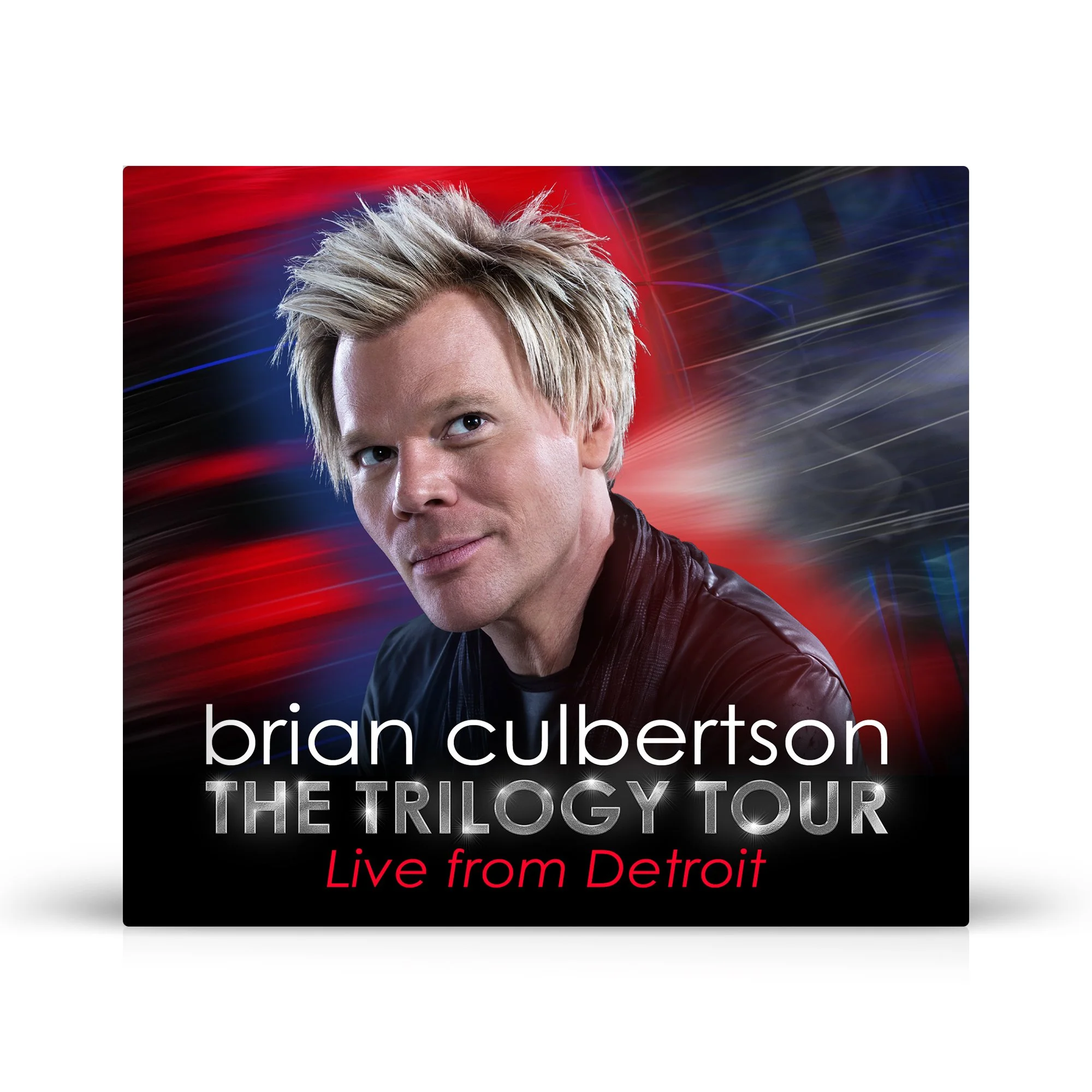
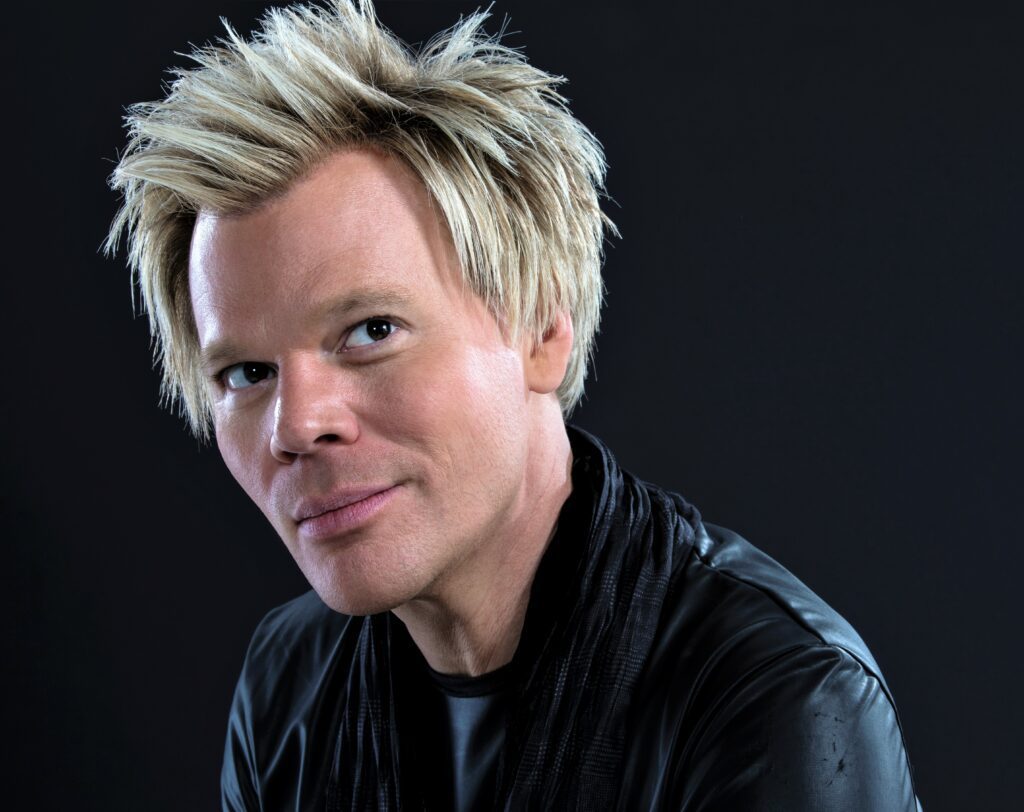
Brian Culbertson is a multi-instrumentalist, composer, and producer whose work defines the intersection of contemporary jazz, R&B, and funk. Since his 1994 debut, he has released over 25 albums, topped the Billboard charts numerous times, and established himself as a premier live performer and festival founder, blending technical precision with high-energy showmanship.
The Foundations of a Multi-Instrumentalist
To understand the music of Brian Culbertson, one must look at his origins in Decatur, Illinois. Born into a musical family—his father, Jim Culbertson, was an accomplished trumpeter and award-winning jazz band director—Brian was immersed in theory and performance from a young age. This environment fostered a disciplined approach to music that would later define his professional career.
Culbertson began his formal training on the piano at age eight, followed by the drums at nine, the trombone at ten, and the bass at twelve. This versatility is not merely a biographical detail; it is the cornerstone of his composition style. Unlike many soloists who focus on a single lead voice, Culbertson approaches songwriting from an orchestral perspective, often arranging every part of the rhythm section before a lead melody is even finalized.
His time at DePaul University in Chicago was pivotal. While studying music composition, he recorded his first album, Long Night Out, in his apartment. The success of this 1994 release, which climbed high on the adult contemporary and jazz charts while he was still a student, signaled the arrival of a new force in the "smooth jazz" genre—though Culbertson would soon prove that his musical identity was far more expansive than that label suggests.
The Evolution of the Culbertson Sound
The discography of Brian Culbertson is best viewed as a series of thematic eras. While his primary instrument remains the piano—specifically his signature Steinway—he frequently pivots between genres to keep his creative output fresh.
The Contemporary Jazz and R&B Fusion (1994–2007)
During his early years with GRP and Atlantic Records, Culbertson’s music focused on "Quiet Storm" R&B and melodic contemporary jazz. Albums like Modern Life (1995) and Secrets (1997) established his knack for creating infectious hooks. However, it was Nice & Slow (2001) that solidified his status as a hitmaker, leaning heavily into soulful, mid-tempo grooves that resonated with urban adult contemporary audiences.
In this period, Culbertson’s production style became highly sought after. He began collaborating with legendary figures such as Maurice White of Earth, Wind & Fire, who became a mentor. This relationship would eventually trigger a massive shift in Culbertson’s sonic direction.
The Funk Revolution (2008–2015)
In 2008, Culbertson released Bringing Back the Funk. Produced by Maurice White, the album featured a "who's who" of funk royalty, including Bootsy Collins, Larry Graham, and Musiq Soulchild. This was not a jazz album with funk influences; it was a full-scale tribute to the 1970s P-Funk and EWF era.
This era marked a change in his live performances. The stools and grand pianos were supplemented by synchronized choreography, a powerful brass section, and Culbertson frequently stepping out from behind the keys to play lead trombone. The success of this pivot demonstrated his ability to lead a 10-piece band with the same charisma as a pop star.
The Trilogy and Thematic Exploration (2016–2026)
As the music industry shifted toward independent distribution, Culbertson founded BCM Entertainment. This allowed him to engage in massive conceptual projects. The most notable is the Trilogy project, a three-album cycle released between 2021 and 2022:
- Red: Focused on "passion," featuring romantic R&B and sultry melodies.
- Blue: Focused on "melancholy," featuring stripped-back, moody jazz arrangements.
- White: Focused on "hope," featuring upbeat, pop-influenced tracks.
By 2026, this trilogy remains a benchmark for how independent artists can use thematic grouping to sustain interest over multi-year release cycles.
Technical Mastery and Instrumentation
Culbertson’s music is characterized by a "clean" production aesthetic that manages to retain a live, organic feel. He is a perfectionist regarding his gear and his sound.
The Steinway Connection
Brian is a Steinway Artist, and his piano sound is distinct—bright, percussive, and highly articulated. He often uses a customized Steinway Model B for recording. In his compositions, the piano acts as both the rhythmic engine and the lyrical voice. He frequently employs "grace notes" and rapid-fire pentatonic runs that have become his signature style.
The Trombone as a Lead Voice
One of the most unique aspects of Culbertson's music is his use of the trombone. In contemporary jazz, the trombone is often relegated to the background of a horn section. Culbertson, however, treats it as a lead melodic instrument, often engaging in "call and response" sections with his own piano tracks. His trombone style is heavily influenced by funk masters like Fred Wesley, emphasizing rhythmic "stabs" and soulful slides.
Production and Layering
Culbertson is an early adopter of digital recording technologies, but he insists on live drums and bass for his core tracks. This hybrid approach—combining programmed loops with elite session musicians—gives his music a polished, radio-ready sheen without sacrificing the "pocket" that jazz and funk fans crave.
Impact on the Live Experience: The "Getaway" Festivals
In the 2010s, Culbertson recognized that the traditional touring model was changing. He expanded his brand into "lifestyle events" by founding the Napa Valley Jazz Getaway and later the Chicago Jazz Getaway.
These events are more than just concerts; they are multi-day "experiences" that pair high-end wine and culinary events with performances. For Culbertson, these festivals serve as a curated showcase for his musical peers and a way to build a direct, loyal community. This business model has become a blueprint for other artists in the 2020s, emphasizing intimacy and high-quality production over mass-market appeal.
Key Collaborations and Influences
Throughout his career, Culbertson has maintained a high level of respect within the musician community. His albums often feature a rotating cast of virtuosos.
| Collaborator | Role/Instrument | Notable Project |
|---|---|---|
| Maurice White | Producer/Vocals | Bringing Back the Funk |
| Marcus Miller | Bass | Renaissance |
| Dave Koz | Saxophone | Long Night Out (30th Anniversary) |
| Bootsy Collins | Bass/Vocals | The Funk! Album |
| Ray Parker Jr. | Guitar | Somethin' Bout Love |
| Eric Marienthal | Saxophone | Multiple Tours/Albums |
His influences are a blend of the technical and the soulful. He cites David Foster for his production and arranging prowess, Earth, Wind & Fire for their rhythmic complexity and horn arrangements, and Oscar Peterson for his piano technique.
Brian Culbertson in 2026: The Current Landscape
As of 2026, Brian Culbertson continues to be a dominant force in the instrumental music scene. His "The Hang" series—a digital community born out of live-streamed studio sessions—has evolved into a robust subscription-based platform where fans can watch the recording process in real-time.
His latest work continues to bridge the gap between genres. Following the success of the Trilogy, he has leaned further into "Lo-Fi" jazz and ambient textures while maintaining his high-energy funk tours. In 2026, he remains one of the few artists in the genre capable of selling out theater-sized venues worldwide, largely due to his reputation for a "no-compromise" live show that features top-tier lighting, sound design, and choreography.
Essential Discography Highlights
For those new to his music, the following albums represent the different facets of his career:
- Long Night Out (1994/2014): The 20th-anniversary re-recording is the best way to experience his debut material with modern production values. It showcases his "Acoustic Jazz" roots.
- Nice & Slow (2001): The definitive contemporary R&B/Jazz fusion album of its era. It contains several of his most-requested live tracks.
- Bringing Back the Funk (2008): An essential listen for fans of 70s funk and soul. It remains his most critically acclaimed departure from the "smooth" label.
- Funk! (2016): A high-energy follow-up to his funk explorations, perfect for understanding his live band's dynamic.
- The Trilogy (Red, Blue, White) (2021-2022): A comprehensive look at his emotional and stylistic range as a mature composer.
Frequently Asked Questions
Is Brian Culbertson considered a jazz or pop artist?
Brian Culbertson is primarily categorized as a Contemporary Jazz or Smooth Jazz artist. However, his music heavily incorporates elements of R&B, Funk, and Pop. He often describes himself simply as a "multi-instrumentalist and producer" to avoid being confined by a single genre.
Does Brian Culbertson play all the instruments on his albums?
While Culbertson is capable of playing piano, trombone, bass, and drums, he typically handles the keyboards and trombone himself while hiring world-class session musicians for the drums, guitar, and bass. This allows him to achieve a specific "ensemble" sound while maintaining control over the arrangements.
What is the "Napa Valley Jazz Getaway"?
Founded by Culbertson in 2012, it is a five-day festival in California's wine country. It features performances by Culbertson and other stars in the jazz and R&B world, paired with wine tastings and private events. It is considered one of the premier "boutique" music festivals in the United States.
How has his music changed since his debut in 1994?
Early in his career, his sound was more aligned with the "Smooth Jazz" radio format—polished, melodic, and radio-friendly. Over the decades, his music has become more adventurous, incorporating heavy funk, orchestral arrangements, and more complex improvisation, especially after he went independent with his own label.
Where can I see Brian Culbertson perform in 2026?
Culbertson is a frequent tourer. In 2026, his schedule typically includes a spring "Jazz Getaway" event, a major summer tour across the US and Europe, and occasional "The Hang" residency dates in cities like Chicago and Las Vegas. Official dates are always verified through his official website, BrianCulbertson.com.
Final Recommendation for Listeners
To truly appreciate the music of Brian Culbertson, start with his live performances. While his studio albums are meticulously crafted, the energy of his live band provides a context that the "smooth" label often obscures. Whether you are a fan of technical piano playing, tight horn sections, or deep-pocket funk, Culbertson’s catalog offers a sophisticated yet accessible entry point into modern instrumental music.