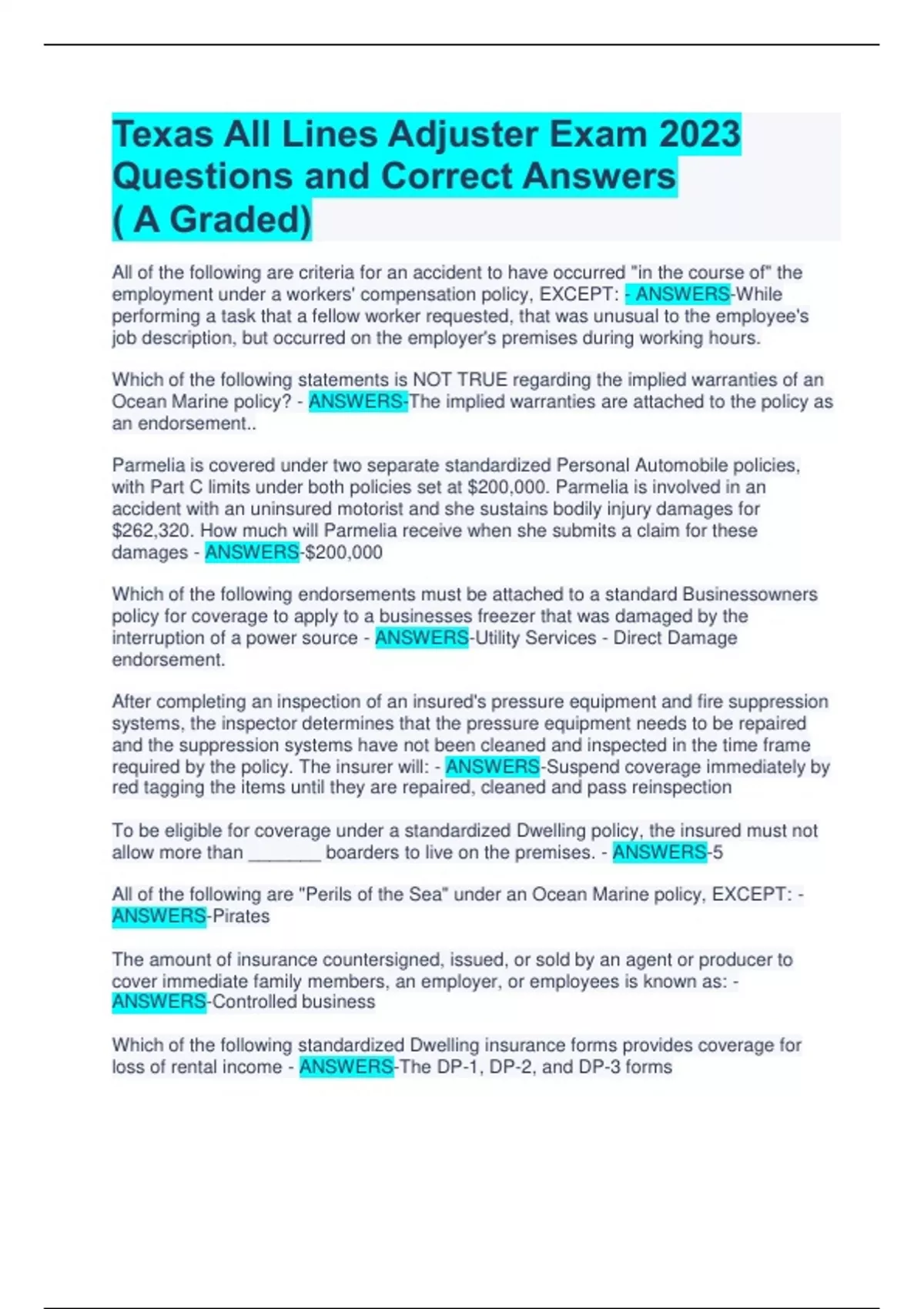
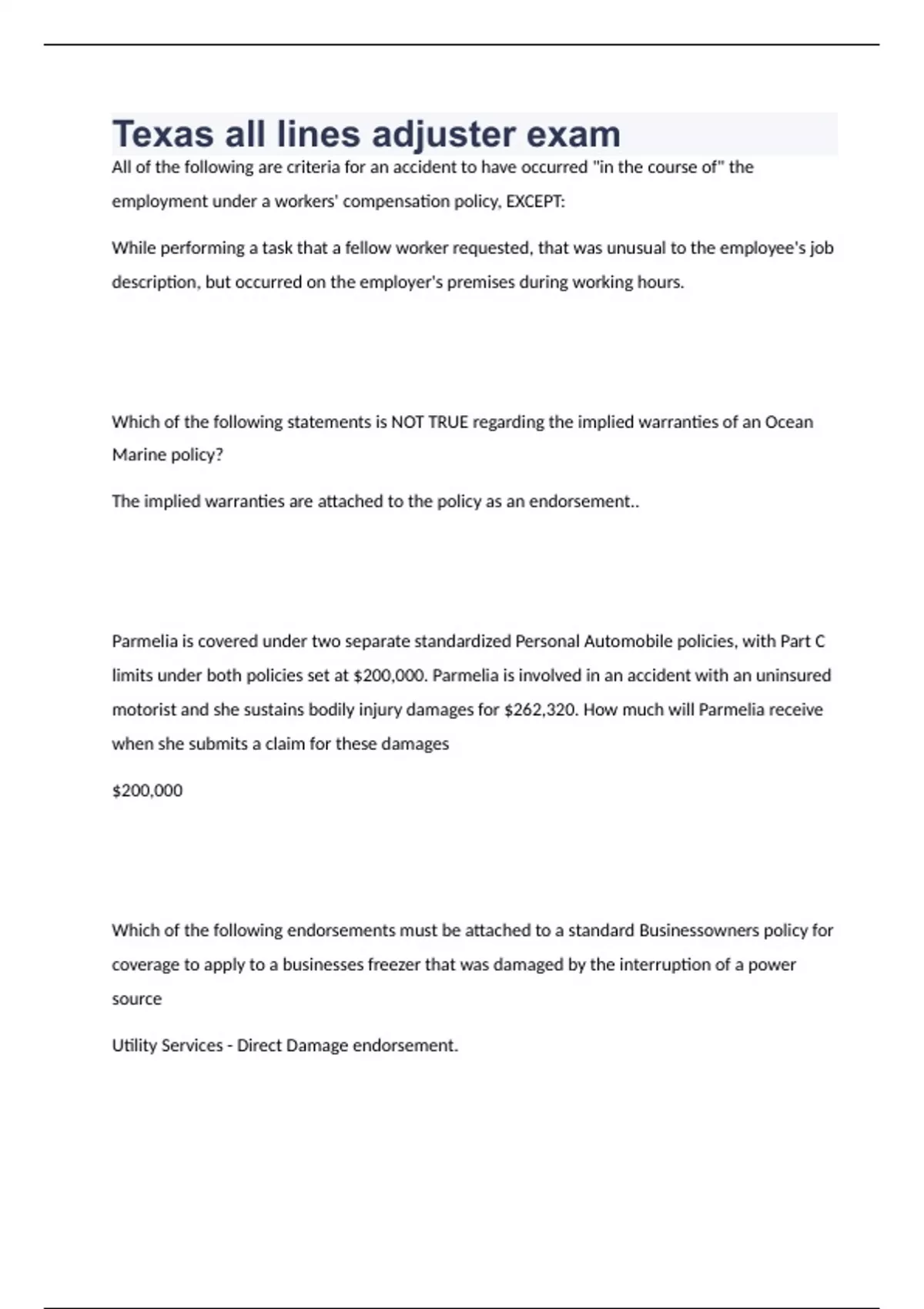
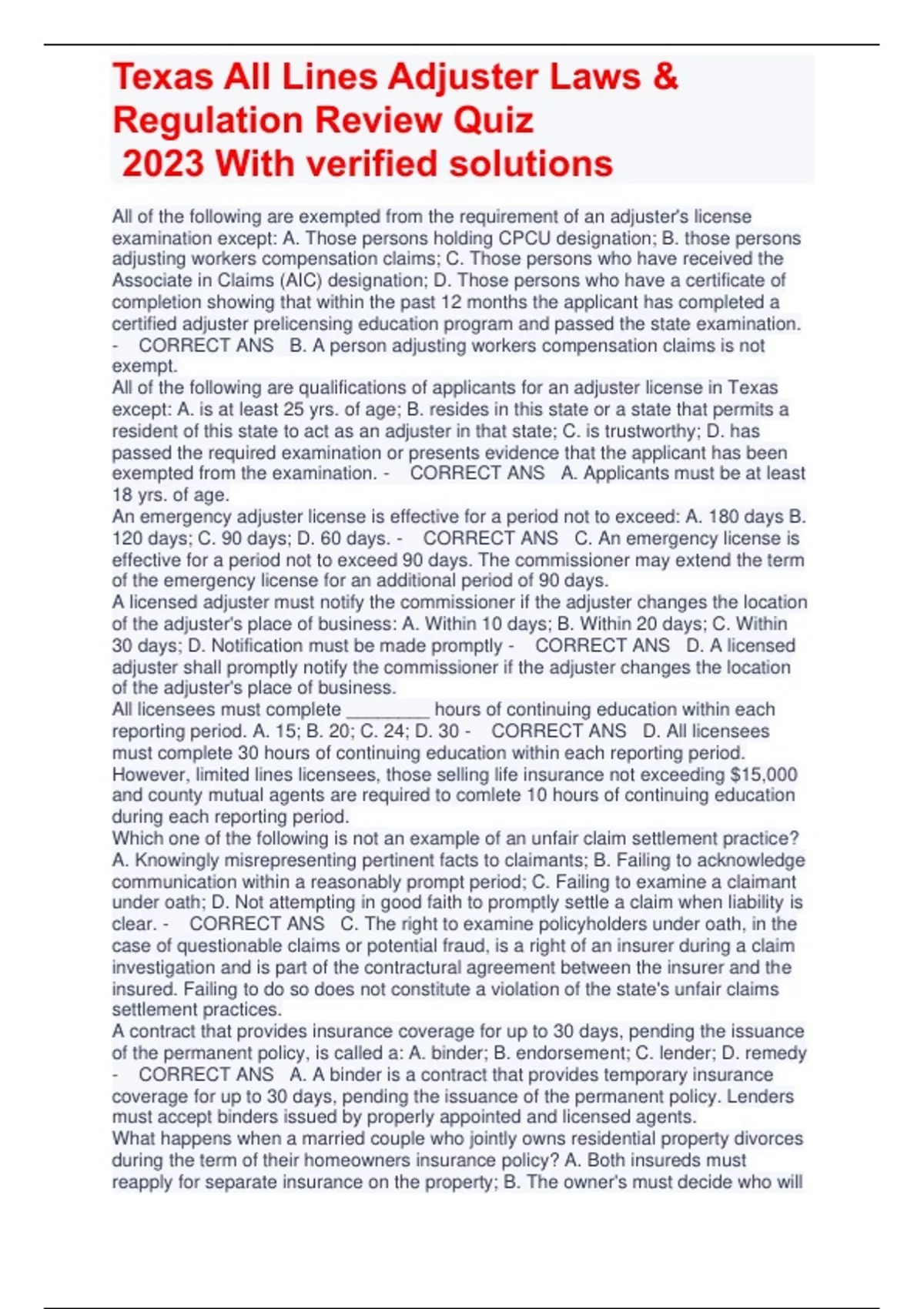
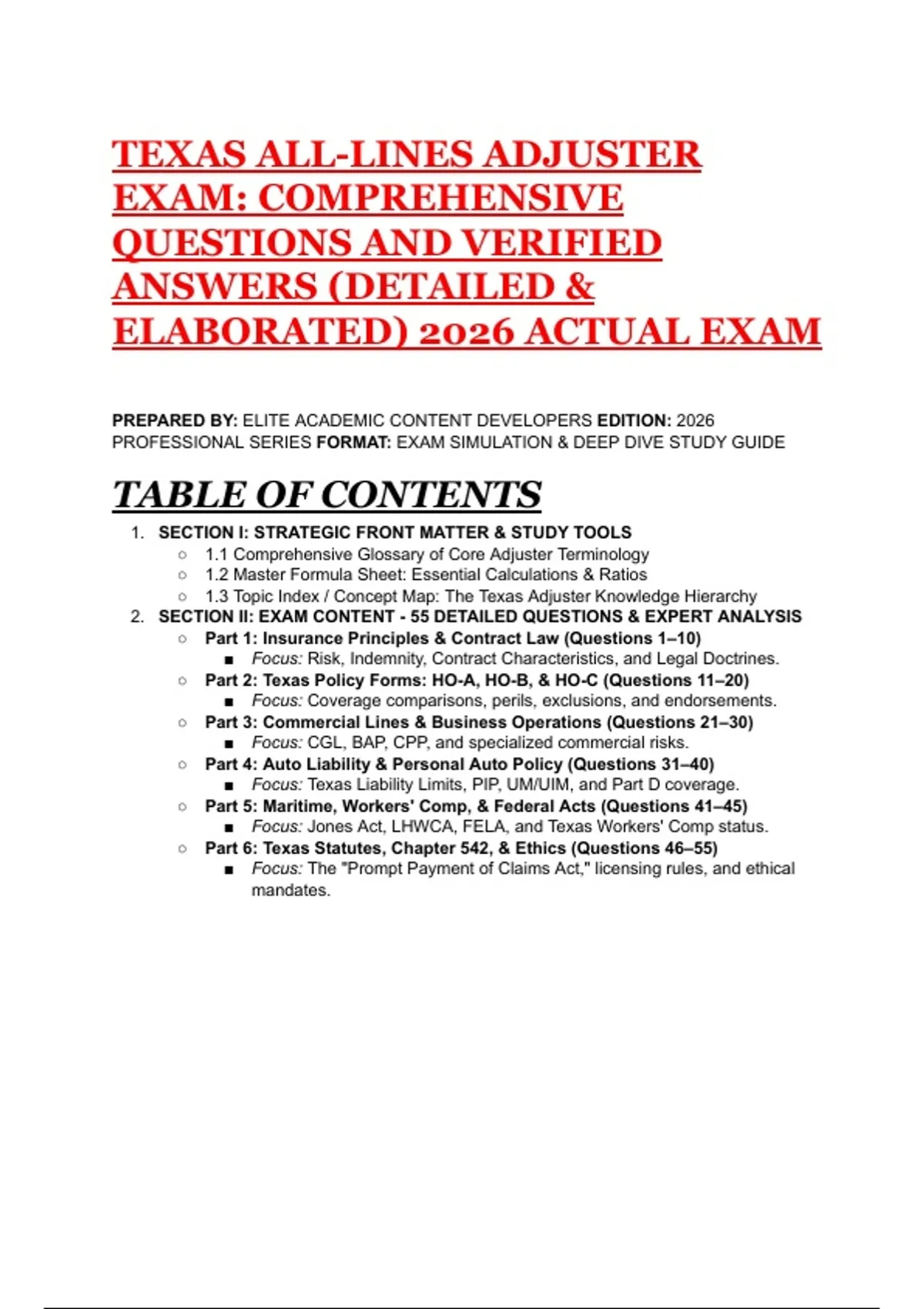
In Texas, an All-Lines Adjuster License is the most versatile certification, granting authority to handle property, casualty, and workers' compensation claims. Obtaining it requires completing a Texas Department of Insurance (TDI) approved pre-licensing course or passing the state exam, submitting fingerprints, and filing a formal application through the Sircon or National Insurance Producer Registry (NIPR) portals.
The Strategic Importance of the Texas All-Lines Adjuster License
As of 2026, the Texas insurance market remains one of the largest and most complex in the United States. For professionals entering the claims industry, the Texas All-Lines Adjuster License stands as the "gold standard." Unlike limited licenses that restrict an adjuster to specific niches like crop insurance or property-only claims, the All-Lines designation provides the legal authority to investigate, negotiate, and settle nearly every type of insurance claim recognized in the state.
The primary appeal of this license is its inclusion of Workers' Compensation (WC). Texas occupies a unique position in the American labor landscape as the only state that allows private employers to "opt-out" of the workers' compensation system (known as being a nonsubscriber). However, because the majority of large employers still opt into the state-regulated system, and because Texas is a hub for high-risk industries like oil and gas, construction, and manufacturing, the demand for adjusters who are legally qualified to handle WC claims is perpetual.
Choosing the All-Lines path over the "Property & Casualty" (P&C) only path is a strategic career move. While P&C adjusters are restricted from touching any claim involving workplace injuries, an All-Lines adjuster can jump between catastrophe (CAT) response, residential fire claims, and complex occupational disease cases without needing additional licensure.
The Critical Link: Why All-Lines Includes Workers' Compensation
To understand why "All-Lines" and "Workers' Compensation" are so frequently discussed together in Texas, one must look at the statutory structure of the Texas Insurance Code. The Texas Department of Insurance (TDI) categorizes adjusters based on the risks they are qualified to evaluate.
The Texas All-Lines Adjuster License encompasses:
- Property and Casualty (P&C): Coverage for homes, vehicles, and businesses against physical damage and liability.
- Workers' Compensation: Claims involving medical care and lost wages for employees injured on the job.
- Surety and Marine: Specialized bonds and transit-related insurance.
In many other jurisdictions, an adjuster might need a separate endorsement or a standalone license to handle workers' compensation. In Texas, the All-Lines license serves as an "all-access pass." This is particularly important for independent adjusters who may be deployed to handle "daily claims" in a specific territory. If a carrier asks an independent firm to handle a workplace injury claim and the assigned adjuster only has a P&C license, they are legally barred from adjusting that claim, creating an operational bottleneck.
Furthermore, the Texas workers' compensation system is highly litigious and strictly regulated by the Division of Workers' Compensation (DWC) within the TDI. Adjusters must not only know insurance principles but also the specific timelines, medical fee guidelines, and indemnity benefit calculations mandated by the Texas Workers' Compensation Act.
Eligibility and Prerequisites for Texas Licensure in 2026
Before beginning the technical training, applicants must meet the foundational requirements set by the state. As of 2026, these standards ensure that adjusters possess the necessary character and legal standing to handle sensitive financial transactions and legal negotiations.
- Age and Residency: You must be at least 18 years old. While you do not need to be a resident of Texas to hold a Texas license (non-resident licenses are common), the "home state" designation determines your reciprocity with other states.
- Trustworthiness and Integrity: Because adjusters handle significant sums of money and sensitive claimant data, the TDI conducts a thorough background check. Applicants must be of "good character" and have a reputation for honesty and fair dealing.
- Fingerprinting: All applicants must submit electronic fingerprints via an approved vendor, such as IdentoGO. These fingerprints are used for both state and federal (FBI) criminal history checks. Even if you have been fingerprinted for another professional license, the TDI generally requires a fresh submission for the adjuster application.
- Language Proficiency: While not a formal exam requirement, the ability to communicate clearly in English is essential for interpreting policies and drafting legal settlement documents in Texas.
The Two Paths to Licensing: State Exam vs. Pre-Licensing Course
In 2026, candidates still have two primary routes to satisfy the educational requirement for the Texas All-Lines license. Understanding the difference between these paths is crucial for time management and success rates.
Path A: The Pearson VUE State Exam
Candidates can choose to self-study and schedule a proctored exam through Pearson VUE, the state’s testing partner. The exam is rigorous, covering Texas-specific laws, general insurance concepts, and deep-dives into workers' compensation statutes. If you choose this path, you must pass the exam before submitting your license application to the TDI.
Path B: The Certified Pre-Licensing Course (The "Texas Method")
The more popular route involves enrolling in a TDI-approved 40-hour pre-licensing course. Many private providers offer these courses online. The benefit of this path is that the final exam provided by the course provider replaces the Pearson VUE state exam. Once you pass the provider's exam, you receive a certificate of completion which you upload during your application. This method is often preferred because the coursework is tailored specifically to the material on the exam, and the testing environment is often less stressful than a state testing center.
Comparing Texas Adjuster License Types
Not all licenses are created equal. The following table illustrates why the All-Lines designation is the preferred choice for 2026 professionals.
| Feature | All-Lines Adjuster | Property & Casualty (P&C) | Workers' Compensation Only |
|---|---|---|---|
| Covers Residential Property | Yes | Yes | No |
| Covers Commercial Property | Yes | Yes | No |
| Covers Workers' Comp | Yes | No | Yes |
| Covers Auto/Liability | Yes | Yes | No |
| Reciprocity Potential | High (widely accepted) | Moderate | Low |
| Career Versatility | Maximum | High | Limited to WC Carriers |
| Required CE Hours | 24 Hours / 2 Years | 24 Hours / 2 Years | 24 Hours / 2 Years |
Step-by-Step Guide to Obtaining Your License
Following a structured sequence is vital to avoid delays in the TDI’s processing queue, which can take anywhere from 10 to 30 days depending on the volume of applications in 2026.
Step 1: Complete the 40-Hour Pre-Licensing Course
Enroll in an All-Lines course that explicitly includes the Texas Workers' Compensation curriculum. Ensure the provider is currently certified by the TDI. You must spend the full 40 hours in the materials (as tracked by the software) before you are eligible to take the final exam.
Step 2: Pass the Exam
Whether via a course provider or Pearson VUE, you must achieve a passing score (usually 70% or higher). If taking a pre-licensing course, you will receive a "Certificate of Completion." Keep this document in PDF format; it is your proof of eligibility.
Step 3: Get Fingerprinted
Schedule an appointment through the IdentoGO website. You will need the specific "Service Code" provided by the TDI to ensure the results are sent to the correct department. This should be done within a few days of passing your exam to ensure the background check is ready when your application arrives.
Step 4: Submit the Application
File your application electronically via Sircon or the NIPR. You will need to pay the application fee (approximately $50 in 2026, though this is subject to minor adjustments). During this step, you will upload your course completion certificate.
Step 5: Wait for Processing and Verification
Monitor the TDI Agent/Adjuster Search portal. Once your name appears in the database with an active license number, you are legally authorized to begin adjusting claims in the State of Texas.
Mastery of Texas Workers' Compensation for Adjusters
Simply holding the license is not enough; an All-Lines adjuster must understand the mechanics of the Texas Workers' Compensation Act. In 2026, this system is governed by complex "benefit tiers" that dictate how much an injured worker is paid.
Indemnity Benefits
Adjusters are responsible for calculating four types of income benefits:
- Temporary Income Benefits (TIBs): Paid to employees who lose wages due to a work-related injury.
- Impairment Income Benefits (IIBs): Paid based on a permanent physical impairment rating assigned by a doctor.
- Supplemental Income Benefits (SIBs): Long-term benefits for those with an impairment rating of 15% or higher who meet specific work-search requirements.
- Lifetime Income Benefits (LIBs): Reserved for catastrophic injuries, such as the loss of sight or limbs.
The Role of the "Designated Doctor"
In Texas WC claims, disputes often arise regarding the extent of an injury or the worker's ability to return to work. Adjusters must interact with the "Designated Doctor" (DD) system, where an impartial physician appointed by the state provides a binding (or semi-binding) medical opinion. Understanding the administrative rules for requesting a DD exam is a core competency for any All-Lines adjuster.
Continuing Education (CE) and License Maintenance
A Texas All-Lines Adjuster License is not a "one-and-done" achievement. To maintain your status in 2026 and beyond, you must adhere to strict Continuing Education (CE) requirements. Failure to do so will result in the expiration of your license and potentially significant fines if you continue to adjust claims with a lapsed credential.
- Total Hours: 24 hours every two years.
- Ethics Requirement: At least 2 of those 24 hours must be dedicated to Ethics or Consumer Protection.
- Format: At least 12 hours must be "classroom" or "classroom equivalent" (which includes interactive webinars). The remaining 12 can be self-study.
- Exemptions: If you have held a Texas license for 20 years or more, you may be eligible for a "Long-Term Licensee" exemption, though you must still apply for this status.
It is highly recommended that adjusters use their CE hours to deepen their knowledge of Texas Workers' Compensation updates, as the DWC frequently updates medical fee schedules and reporting requirements.
Reciprocity: The Power of the Texas License
One of the greatest advantages of the Texas All-Lines license in 2026 is its reciprocity. Because Texas's licensing requirements are among the most stringent in the nation, many other states (including Florida, Georgia, and Alabama) recognize the Texas license as a valid prerequisite for a non-resident license in their own states.
If you are a resident of a state that does not issue adjuster licenses (like Kansas or Colorado), you can designate Texas as your "Designated Home State" (DHS). This allows you to gain the same reciprocal benefits as a Texas resident, opening doors to work national catastrophes or remote claims across the country.
Common Mistakes to Avoid
- Applying for the Wrong License: Ensure you select "All-Lines" and not just "Property & Casualty" if you intend to work for a carrier that handles workers' comp.
- Missing the Fingerprint Window: If you apply but wait too long to get fingerprinted, the TDI may reject your application, forcing you to pay the fee again.
- Neglecting the Ethics Hours: Many adjusters complete 24 hours of general credits but forget the 2-hour ethics requirement, leading to a "non-compliant" status during renewal.
- Failing to Report Address Changes: You are legally required to notify the TDI of any change in your home or business address within 30 days.
Frequently Asked Questions
How long does the Texas All-Lines exam take?
The Pearson VUE state exam generally allows about 150 minutes (2.5 hours) for the All-Lines version. If you take an approved pre-licensing course, the time limit is set by the provider but typically mirrors the state's timing to ensure rigor.
Can I handle workers' comp claims in other states with a Texas license?
While Texas has reciprocity for the license itself, you must still learn the specific WC laws of other states. Workers' compensation is highly state-specific. A Texas license grants you the legal right to hold the license in another state, but it does not make you an expert in New York or California WC statutes.
Is the Texas All-Lines license difficult to get?
Compared to other states, Texas is considered moderately difficult due to the volume of information. The workers' compensation section, in particular, requires memorizing specific benefit types and legal timelines that are not found in standard property insurance.
Does Texas require a separate license for public adjusters?
Yes. The All-Lines Adjuster License discussed here is for "Company" or "Independent" adjusters who represent the insurance carrier. If you wish to represent the policyholder (the public), you must obtain a separate Public Adjuster License, which has different testing and bonding requirements.
Can I get a Texas adjuster license if I have a criminal record?
It depends on the nature and age of the offense. Under the Texas Occupations Code, the TDI will consider whether the crime directly relates to the duties of an adjuster. Financial crimes like fraud, embezzlement, or theft are often disqualifying. You may file a "Preliminary Evaluation Letter" with the TDI before taking the course to see if your background would prevent licensure.
Next Steps for Prospective Adjusters
If you are ready to pursue a career as an insurance professional in 2026, your first step is to select a TDI-approved pre-licensing provider. Prioritize courses that offer dedicated modules on the Texas Workers' Compensation Act, as this is often the most challenging portion of the curriculum. Once enrolled, treat the 40-hour requirement as a professional commitment; the knowledge gained here forms the foundation of your legal authority to operate in the Texas insurance market.