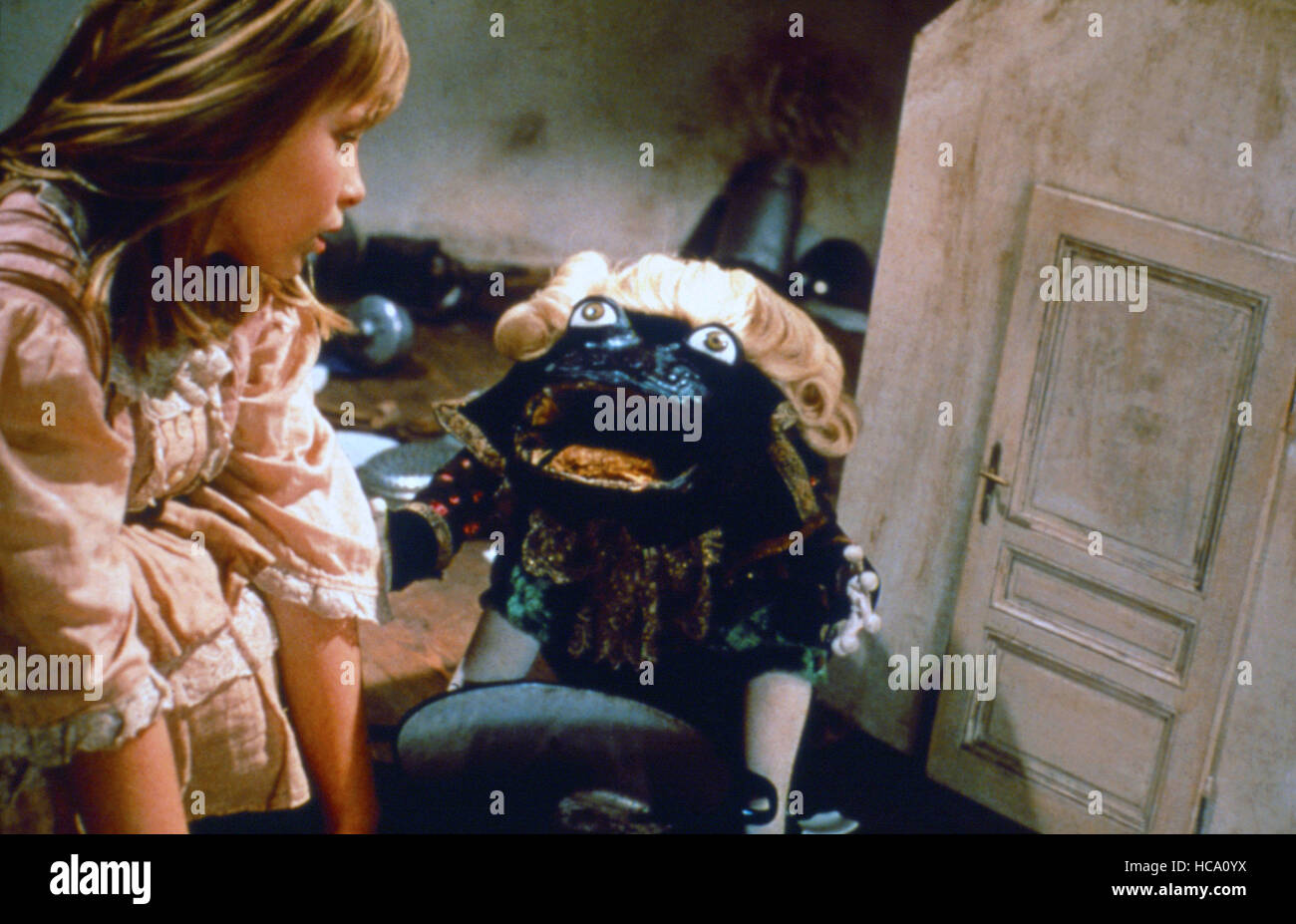
Jan Švankmajer’s 1988 film Alice (originally titled Něco z Alenky) is a dark, surrealist reimagining of Lewis Carroll’s classic novel, Alice's Adventures in Wonderland. Eschewing the whimsical tone of traditional adaptations, this film utilizes a visceral blend of live-action and stop-motion animation to explore the logic of dreams, the tactile nature of childhood, and the unsettling reality of inanimate objects coming to life.
The Cinematic Significance of Jan Švankmajer’s 1988 Alice
When Alice the 1988 film released in 1988 first reached international audiences, it signaled a radical departure from the "Disneyfied" versions of Lewis Carroll’s work. Directed by the Czech master of surrealism, Jan Švankmajer, the film serves as a landmark in experimental cinema. By 2026, its influence can be seen across the works of contemporary directors like Terry Gilliam, Tim Burton, and the Brothers Quay, yet it remains peerless in its specific aesthetic execution.
Švankmajer’s approach to the source material was born out of a desire to reclaim the story from the realm of lighthearted fairy tales. He famously viewed Carroll’s original text not as a fantasy, but as a "dream-log," a transcription of the internal, often harsh logic of a child’s subconscious. In this 1988 production, the Wonderland we encounter is not a lush garden, but a cluttered, decaying attic filled with taxidermy, rusted tools, and skeletal remains. This environmental choice anchors the film in a specific Eastern European surrealist tradition, where the mundane and the macabre coexist.
The production itself was a feat of endurance and technical precision. As Švankmajer’s first feature-length film after decades of working on shorts, Alice allowed him the runtime necessary to build a truly immersive, claustrophobic atmosphere. The film was produced in Switzerland, West Germany, and the United Kingdom, reflecting the complex co-production landscape of late-1980s European cinema.
Visual Language: The Tactile Power of Stop-Motion
The most striking feature of Alice is its use of stop-motion animation. Unlike modern CGI, which often strives for seamless fluidity, Švankmajer’s animation is intentionally "herky-jerky," emphasizing the physical resistance of the materials used. This is a central tenet of Švankmajer’s philosophy: the "life" within inanimate objects.
The White Rabbit and Taxidermy
In the 1988 film, the White Rabbit is not a cute talking animal. He is a taxidermied rabbit that comes to life by pulling out the nails holding him to a display stand. Throughout the film, he continually leaks sawdust from a hole in his chest—a hole he periodically "plugs" by eating more sawdust. This choice transforms a literary character into a grotesque physical entity, highlighting themes of decay and the futility of maintenance.
Found Objects and Domestic Horrors
The film utilizes "found objects" to populate its world. The Mad Hatter is a wooden puppet; the March Hare is a clockwork toy; the Knave of Hearts is a literal playing card with articulated limbs. By using items that a child might actually find in an old nursery or basement, Švankmajer taps into the "uncanny"—the feeling of something familiar becoming strange and threatening.
The animation process for these objects required thousands of individual frame adjustments. In the pre-digital era of 1988, this meant the director and his animators had to manually manipulate glass eyes, rusted hinges, and raw meat (used in some scenes to represent living tissue) to create the illusion of sentient movement. This "dirty" aesthetic is what gives the film its enduring power; it feels tangible, as if the viewer could reach out and touch the grit on the floor.
Sound Design: The Absence of Music
One of the most technically interesting aspects of Alice (1988) is its soundscape. Most films of the era relied heavily on orchestral scores to guide the audience's emotions. Švankmajer took the opposite approach, opting for a complete absence of traditional music. Instead, the film is driven by an aggressive, hyper-realistic foley track.
Every movement in the film is amplified. The sound of scissors cutting through paper, the clicking of the White Rabbit’s teeth, the heavy thud of Alice’s shoes on wooden floorboards, and the wet squelch of moving meat create a sensory experience that borders on ASMR (Autonomous Sensory Meridian Response), though it often leans toward the discomforting. This sound design reinforces the "materiality" of the world. It forces the viewer to focus on the physical properties of the objects on screen, making the surreal events feel grounded in a harsh, physical reality.
The only "speech" in the film comes from a close-up of Alice’s mouth as she narrates the dialogue for every character. This framing device suggests that the entire journey is an internal monologue—a child playing alone and projecting voices onto her toys. It adds a layer of psychological depth, framing the film as an exploration of solitude and the imaginative (and sometimes cruel) power of a child's mind.
Comparing Alice (1988) to Other Major Adaptations
To understand the unique position of Švankmajer’s work, it is helpful to compare it against other cinematic interpretations of the Carroll text.
| Feature | Švankmajer’s Alice (1988) | Disney’s Alice (1951) | Burton’s Alice (2010) |
|---|---|---|---|
| Primary Medium | Live-action & Stop-motion | Cel Animation | Live-action & CGI |
| Atmosphere | Gritty, Surreal, Claustrophobic | Whimsical, Colorful, Musical | Epic, Action-oriented, Gothic |
| The White Rabbit | Taxidermied, leaky sawdust | Anxious, anthropomorphic rabbit | Digital creature, "McTwisp" |
| Target Audience | Adults / Experimental Film fans | Children / General Audience | Teenagers / General Audience |
| Key Theme | The "logic" of dreams and objects | Nonsense and wonder | Heroic destiny and rebellion |
| Soundtrack | None (Foley-driven) | Iconic musical numbers | Orchestral (Danny Elfman) |
Narrative Structure and Philosophical Underpinnings
The 1988 film follows the general trajectory of the book—the fall down the rabbit hole, the shrinking and growing, the tea party, and the trial—but it recontextualizes these events. In Švankmajer’s hands, the narrative is cyclical and repetitive, mimicking the way actual dreams often feel.
The Role of Alice
The character of Alice, played by Kristýna Kohoutová, is the only human presence in the film. Unlike the polite, Victorian Alice of other versions, Kohoutová’s Alice is stoic and pragmatic. She treats the bizarre horrors around her with the flat affect of a child who has accepted the rules of a game. This performance is crucial; if Alice were too frightened, the film would become a horror movie. If she were too happy, it would be a fantasy. By remaining neutral, she allows the audience to project their own unease onto the environment.
Surrealism as Social Commentary
Produced during the waning years of the Communist regime in Czechoslovakia, Švankmajer’s work has often been interpreted through a political lens. The bureaucracy of the Queen of Hearts’ court and the rigid, nonsensical "trial" at the end of the film can be seen as a critique of authoritarian systems where rules are arbitrary and the outcome is predetermined. However, Švankmajer himself often resisted narrow political readings, preferring to focus on the "subversive power of the imagination."
Technical Requirements for Modern Viewing (2026 Perspective)
As of 2026, Alice (1988) has undergone significant preservation efforts. For cinephiles looking to experience the film in its best possible quality, several factors should be considered:
- 4K Restorations: High-definition scans from the original 35mm negatives are now the standard. These restorations are essential for Švankmajer’s work because they preserve the fine textures—the dust, the wood grain, and the fabric fibers—that are central to the film’s impact.
- Aspect Ratio: The film was shot in a 1.37:1 Academy ratio. Modern viewers should ensure their playback devices are not "stretching" the image to 16:9, as this distorts the carefully composed stop-motion frames.
- Subtitle vs. Dubbing: While English-dubbed versions exist (often featuring narration by Camilla Power), the original Czech version with subtitles is generally preferred by purists. The sound of the original Czech narration provides a specific tonal quality that matches the film's origins.
- Physical Media: Organizations like the British Film Institute (BFI) and the Criterion Collection have historically handled the distribution of Švankmajer’s library. In 2026, these editions often include essential bonus features, such as Švankmajer’s early short films (e.g., Dimensions of Dialogue), which provide necessary context for his feature-length debut.
Common Misconceptions About the Film
Despite its cult status, several myths persist about alice the 1988 film released in 1988.
- "It’s a Horror Movie": While it contains "creepy" imagery, it does not use jump scares or traditional horror tropes. It is better classified as Surrealist Fantasy.
- "It’s for Kids": While children can watch it, many find the lack of music and the grotesque puppets disturbing. It was intended for an adult audience capable of appreciating its experimental nature.
- "It’s Incomplete": Some viewers feel the ending is abrupt. This is a deliberate choice to reflect the sudden "waking up" from a dream, leaving the viewer in the same state of disorientation as Alice.
FAQs About Alice (1988)
Is Alice (1988) suitable for children?
The film is unrated in many jurisdictions but generally carries a PG or 12A equivalent. While it contains no graphic violence or profanity, its atmosphere is intensely claustrophobic and some imagery (like the taxidermy Rabbit or the skeletal creatures) may be frightening for younger or sensitive children. It is best viewed first by a parent.
Why does the White Rabbit eat sawdust?
In Švankmajer’s surrealist logic, the Rabbit is a physical object—a stuffed toy. Because he is leaking his "insides" (sawdust) through a hole in his chest, he must consume more sawdust to maintain his structural integrity. This is a literal representation of the struggle against physical decay.
Where was the film shot?
The film was shot primarily in a studio setting to maintain total control over the lighting and foley. While it was a multi-national co-production (involving West Germany, Switzerland, and the UK), the creative heart of the production remained in Czechoslovakia, utilizing the country's rich history of puppet theater and animation.
Why is there a close-up of the mouth whenever a character speaks?
This is a stylistic choice by Švankmajer to emphasize that Alice is narrating the entire story. By showing her lips speaking the words for the Rabbit, the Hatter, and the Queen, the film reinforces the idea that Wonderland is a projection of Alice’s own mind and voice.
Is there a sequel to this version of Alice?
No. Jan Švankmajer never produced a direct sequel to Alice. However, his subsequent feature films, such as Faust (1994) and Otesánek (Little Otik, 2000), follow similar themes of inanimate objects coming to life and the intersection of the mundane with the macabre.
Final Recommendation: How to Experience the Film
To get the most out of Alice (1988), it is recommended to watch it in a darkened room with high-quality headphones or a robust sound system. Because the film relies so heavily on textural details and minute sounds, a "casual" watch on a mobile device or in a noisy environment will diminish its power.
Viewers should approach the film not as a narrative to be "solved," but as an experience to be felt. Do not worry about the "meaning" of every jar or skeletal bird; instead, let the tactile surrealism of Jan Švankmajer wash over you. Whether you are a student of film history or a fan of Lewis Carroll looking for something deeper than a cartoon, this 1988 masterpiece remains one of the most significant achievements in the history of animation.