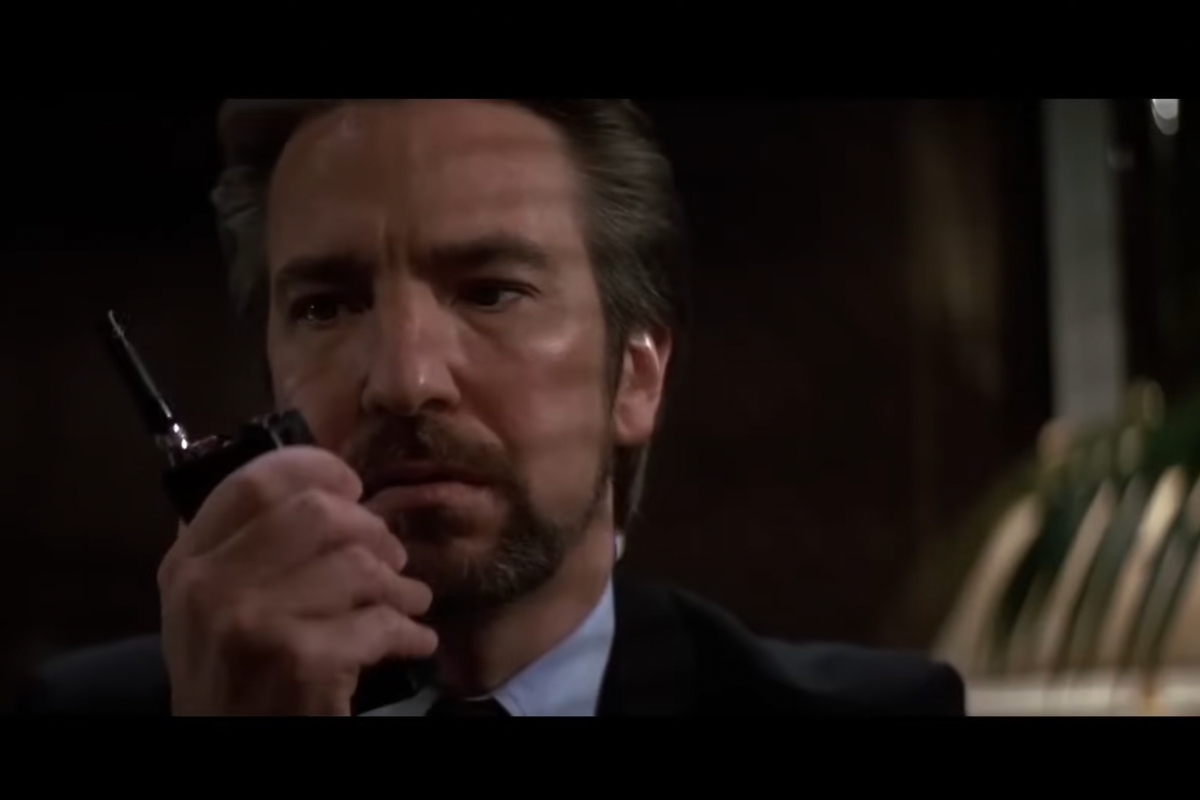
Alan Rickman is the actor who played Hans Gruber, the primary antagonist in the 1988 landmark action film Die Hard. This role marked Rickman’s feature film debut at the age of 41, transforming the classically trained British stage actor into a global cinematic icon and forever changing the archetype of the Hollywood villain.
The Intersection of Theater and Action Cinema
Before the world knew him as the calculating mastermind of the Nakatomi Plaza heist, Alan Rickman was a stalwart of the British stage. A graduate of the Royal Academy of Dramatic Art (RADA), Rickman had spent the better part of two decades honing his craft with the Royal Shakespeare Company. His transition to film was not a calculated move toward stardom but rather a serendipitous moment in casting history.
In 1987, producer Joel Silver and director John McTiernan were searching for an actor who could provide a cerebral counterpoint to Bruce Willis’s "everyman" hero, John McClane. They found their man in a Broadway production of Les Liaisons Dangereuses, where Rickman was playing the manipulative Valmont. The casting was unconventional for the time; the 1980s were dominated by muscular, often monosyllabic villains. Rickman, with his precise diction, theatrical gravity, and subtle physicality, offered something entirely different.
Rickman initially hesitated to take the role. Having just arrived in Los Angeles, he was wary of his first film being a "cheap" action flick. However, after reading the script by Jeb Stuart and Steven E. de Souza, he recognized the intelligence of the character and the subversive potential of the plot. His decision to accept the part of Hans Gruber remains one of the most significant casting choices in the history of the action genre.
Deconstructing Hans Gruber: A New Breed of Villain
Hans Gruber was not a typical terrorist, a fact that Rickman leaned into heavily during production. He famously suggested that Gruber should not wear standard military fatigues or tactical gear throughout the film. Instead, he insisted on a high-end, tailored suit, arguing that a man of Gruber’s sophistication would want to look the part of a successful businessman, even while committing a $640 million robbery.
The Power of Diction and Stillness
One of Rickman’s most effective tools was his voice. Characterized by a deep, melodic baritone and a languid pace, his delivery made Gruber seem perpetually in control. While other villains of the era relied on shouting or manic energy, Rickman utilized stillness. This choice forced the audience to lean in, making his occasional outbursts of violence even more shocking.
The "Bill Clay" Scene
Perhaps the greatest testament to Rickman’s range in Die Hard is the scene where Hans Gruber and John McClane meet for the first time. Gruber, finding himself cornered and unarmed, adopts a fake American persona named "Bill Clay." This scene was not in the original script; it was added after the filmmakers realized Rickman could perform a convincing American accent. The duality of the performance—an actor playing a character who is himself playing a character—added a layer of psychological depth rarely seen in action cinema.
Behind the Scenes: The Technical Demands of the Role
The production of Die Hard was notoriously grueling, and for an actor used to the controlled environment of the theater, the technical requirements of a big-budget action movie were a significant adjustment. Rickman was committed to realism, even when it came to the more dangerous aspects of the role.
During the filming of the iconic scene where Hans Gruber falls from the top of Nakatomi Plaza, Rickman chose to perform the stunt himself (onto an airbag 25 feet below). To capture a genuine look of surprise, the stunt coordinator dropped him on the count of "two" instead of "three." The resulting shot captures Rickman’s actual reaction of shock, creating one of the most memorable character deaths in film history.
Furthermore, Rickman had a physical aversion to the loud reports of the firearms used on set. In many shots where Gruber is firing a gun, the camera has to cut away quickly because Rickman couldn't help but flinch. This human element, though unintentional, arguably added to the character's persona as a man who preferred intellect and planning over the "cowboy" antics of his adversaries.
The Impact of Rickman’s Film Debut on His Career Path
Die Hard was released in July 1988 and became a massive commercial and critical success. For Alan Rickman, the impact was instantaneous. He went from being a respected stage actor to a sought-after Hollywood commodity overnight. However, the success of Hans Gruber also presented a challenge: the threat of typecasting.
Rickman spent much of the 1990s navigating his new-found fame by selecting roles that subverted the "villain" trope or leaned into different genres entirely.
- Robin Hood: Prince of Thieves (1991): He played the Sheriff of Nottingham, leaning into a more campy, scenery-chewing version of the antagonist that earned him a BAFTA.
- Sense and Sensibility (1995): He demonstrated his romantic range as Colonel Brandon, proving he could play the "good man" with equal depth.
- Galaxy Quest (1999): He satirized his own Shakespearean roots and his association with genre fiction.
Ultimately, his role as Severus Snape in the Harry Potter franchise (2001–2011) became his most enduring legacy for younger generations, but the foundation for that complex, morally ambiguous performance was laid decades earlier in the corridors of Nakatomi Plaza.
The Hans Gruber Effect: Influencing the Action Genre
Before Hans Gruber, action movie villains were often caricatures—foreign mercenaries or hulking brutes with little motivation beyond "being evil." Rickman’s portrayal introduced the "Sophisticated Villain" archetype. Because of Rickman, the industry began to value antagonists who were:
- Educated and Cultured: Gruber reads Time magazine and knows about expensive suits and architecture.
- Relatable Motivations: He wasn't a religious or political zealot; he was, in his own words, an "exceptional thief."
- Intellectual Equals to the Hero: The conflict in Die Hard is a battle of wits as much as a battle of bullets.
In the decades since 1988, countless villains in the James Bond, Mission: Impossible, and Marvel Cinematic Universe franchises have drawn direct inspiration from Rickman’s blueprint. The idea that the villain is the "protagonist of their own story" is a concept Rickman championed long before it became a standard trope in modern screenwriting.
Comparing the "Hans Gruber Effect" on Cinema
The following table illustrates how Rickman's portrayal of Hans Gruber deviated from the standard villain tropes of the 1980s, setting a new benchmark for the genre.
| Feature | Pre-Gruber Villain Standard | The Hans Gruber Approach (Alan Rickman) |
|---|---|---|
| Primary Motivation | Global domination or senseless chaos. | Tactical, financial gain with a clear exit strategy. |
| Aesthetic | Camouflage, scars, or "scary" uniforms. | High-end European tailoring (John Phillips London). |
| Communication | Shouting, threats, and monologues. | Quiet, precise, and often sarcastically polite. |
| Intellect | Frequently outsmarted by the hero's brawn. | Challenges the hero to think faster and adapt. |
| Background | Often unexplained or purely militaristic. | Classical education; former member of radical groups. |
A Legacy That Endures in 2026
As of 2026, Die Hard remains a staple of film education and a perennial favorite for audiences, particularly during the holiday season. Alan Rickman’s performance as Hans Gruber is frequently cited in acting workshops as a masterclass in "status-driven" performance. Even ten years after his passing in 2016, his debut role continues to be the gold standard against which all screen antagonists are measured.
Rickman’s ability to imbue a "bad guy" with charm, humor, and a palpable sense of danger ensured that Hans Gruber was never just a foil for Bruce Willis. Instead, he was a character who commanded the screen, making the audience secretly—or not so secretly—admire his competence even as they rooted for his downfall.
For those looking to understand the history of modern action cinema, studying Alan Rickman’s work in Die Hard is essential. It represents the moment when the "popcorn movie" gained a soul, thanks to a British theater actor who wasn't sure he wanted to be there in the first place.
Frequently Asked Questions
Was Die Hard Alan Rickman's first movie?
Yes, Die Hard (1988) was Alan Rickman's first feature film. Prior to this, he had a long and successful career in theater and had appeared in several British television productions, including the BBC's The Barchester Chronicles. He was 41 years old when the film was released, which is considered a late start for a Hollywood film career.
Why did Alan Rickman almost turn down the role of Hans Gruber?
Rickman was a classically trained theater actor who had just arrived in Hollywood. When he was handed the script for Die Hard, he initially found the idea of an action movie unappealing and somewhat "empty." It was only after he realized the script was more of an ensemble thriller with a very intelligent antagonist—and after his agents convinced him of the opportunity—that he agreed to take the part.
Did Alan Rickman do his own stunts in Die Hard?
Rickman performed several of his own stunts, most notably the 25-foot fall at the end of the movie. While stunt doubles were used for more dangerous sequences, director John McTiernan wanted a close-up of Rickman's face during the fall to ensure the audience knew it was Gruber falling. Rickman agreed to do the drop himself onto a high-quality airbag.
How did Alan Rickman's Hans Gruber change action movies?
Before Hans Gruber, villains were often one-dimensional. Rickman introduced a sense of "European sophistication" and intellectual depth to the role. This forced future action movies to develop more complex "brainy" villains who could match the hero's physical prowess with mental agility. The "Gruber" archetype influenced villains in everything from Speed to The Dark Knight.
What happened to the suit Alan Rickman wore in Die Hard?
The suit Hans Gruber wears is a light-colored, tailored piece designed to make him look like a professional businessman rather than a terrorist. This was a specific character choice suggested by Rickman himself. Many of the costumes from Die Hard are now part of private collections or museum archives, as the film is considered a cultural touchstone by organizations like the American Film Institute.
Final Recommendation
For those interested in the craft of acting or the evolution of the action genre, a focused re-watch of Die Hard with an eye on Alan Rickman’s performance is highly recommended. Pay close attention to his physicality and his use of silence. Beyond the film itself, exploring Rickman’s later work in Sense and Sensibility or Truly, Madly, Deeply provides a fascinating contrast that highlights the incredible range he brought to his debut as Hans Gruber. To further explore the technical history of the film, the official IMDb page for Die Hard offers comprehensive casting and production credits.