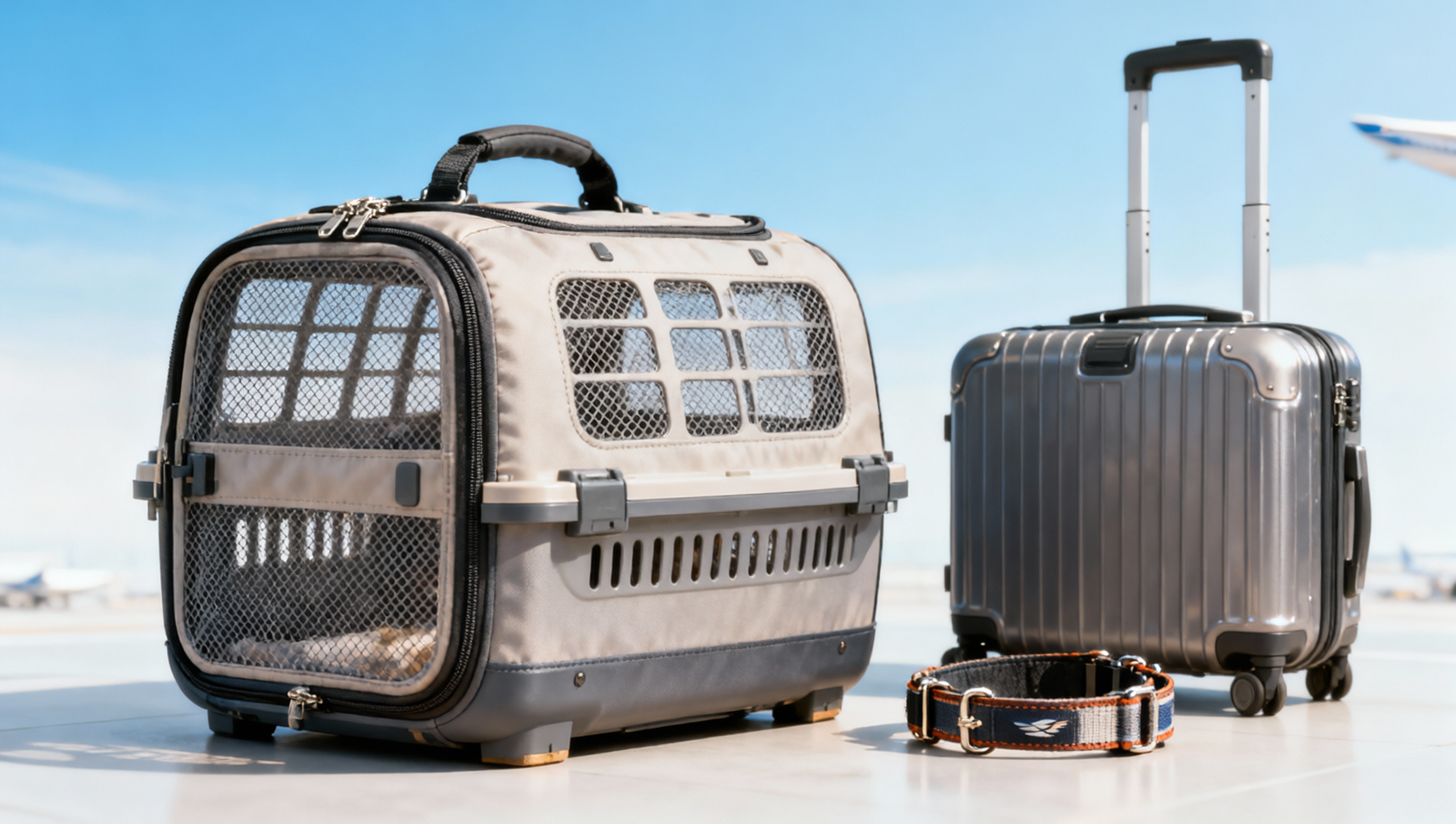
Understanding airline pet carrier dimensions is essential for ensuring your pet is permitted to board the aircraft and remains safe during your flight. Because airlines vary significantly in their specific requirements, there is no single universal carrier size; instead, dimensions depend on the type of aircraft, your pet's size, and whether the animal is traveling in the cabin or as checked cargo.
The Importance of Precise Dimensions
When traveling by air with a pet, the carrier functions as a portable habitat. For cabin travel, the carrier must fit entirely under the seat in front of you. Unlike carry-on luggage, which can often be forced into an overhead bin, a pet carrier must maintain its structural integrity while conforming to the limited space beneath a passenger seat. If the carrier is even one inch too tall or wide, flight attendants are legally required to deny boarding for the animal, as obstructing the floor space poses a safety risk during emergency evacuations.
For pets traveling in the cargo hold, dimensions are governed by the IATA (International Air Transport Association) Live Animals Regulations (LAR). In this context, the primary goal is not fitting under a seat, but ensuring the animal has enough space to stand, turn around, and lie down in a natural position without touching the top or sides of the crate.
Cabin Travel: The "Under-Seat" Constraint
Most major commercial airlines allow small cats and dogs to travel in the cabin. The "under-seat" area is the most restricted environment in the aircraft.
Standard Requirements for Soft-Sided Carriers
Soft-sided carriers are preferred for cabin travel because they offer a degree of flexibility that allows them to be compressed slightly to fit under seat supports. Most airlines specify dimensions that roughly equate to 18 x 11 x 11 inches, though this fluctuates by carrier.
- Height: The critical constraint. You must measure your pet while standing, from the floor to the top of their shoulders (the withers).
- Width and Length: These must accommodate the pet’s length from the tip of the nose to the base of the tail, plus a few inches for movement.
Measuring Your Pet for the Cabin
Before purchasing a carrier, perform these three measurements:
- Standing Height: Measure from the floor to the highest point of the shoulders.
- Total Length: Measure from the nose to the base of the tail.
- Width: Measure the width of the pet at their widest point.
If your pet exceeds the height allowance of your chosen airline by more than an inch, you may need to reconsider cabin travel, as forcing a carrier into a tight space can cause distress and restrict airflow.
Cargo and Checked Pet Requirements
For larger animals or long-haul flights, pets often travel in the climate-controlled cargo hold. Requirements here are governed by the IATA Live Animals Regulations (LAR), which are the industry standard for safe pet transport.
The Five-Point Rule for Crate Sizing
To comply with IATA standards, the kennel must allow the animal to perform the following actions:
- Stand and sit: The animal must stand erect without touching the top of the container.
- Turn around: The animal must be able to turn around easily while standing.
- Natural Lying Position: The animal must be able to lie in a natural, unrestrained position.
- Ventilation: The crate must have ventilation on at least three sides (for domestic) or four sides (for international) to ensure a constant flow of fresh air.
- Construction: The material must be rigid, impact-resistant, and free of internal protrusions that could injure the pet during turbulence.
Crate Construction Material
Unlike the soft-sided bags used in the cabin, cargo crates must be made of rigid plastic, wood, or metal. Wire mesh crates are generally prohibited for cargo transport because tails or paws can get stuck in the gaps, and the sides offer no protection against shifting luggage.
Comparison Table: Cabin vs. Cargo Dimensions
| Feature | Cabin Carrier | Cargo/Checked Crate |
|---|---|---|
| Flexibility | Soft-sided (pliable) | Rigid (Plastic/Metal/Wood) |
| Primary Goal | Fit under the seat | Safety and animal movement |
| Space Requirement | Must fit under seat obstruction | Must allow standing/turning |
| Verification | Inspected at check-in counter | Verified against IATA guidelines |
| Typical Max Height | 10–12 inches | Varies by animal size |
Common Mistakes to Avoid
Navigating airline pet policies is prone to errors that can lead to being barred from the flight.
Assuming "Universal" Sizes
One of the most frequent mistakes is assuming a carrier that was approved by one airline will be approved by all. While many airlines use similar dimensions, a shift from a wide-body aircraft to a smaller regional jet can change the under-seat clearance significantly. Always verify the specific aircraft type listed on your itinerary.
Neglecting Internal Protrusions
When selecting a hard-sided cargo crate, ensure all fasteners—bolts, screws, and clips—are on the exterior. If there are any sharp points or internal hardware inside the crate, the pet may be denied boarding by the cargo agents who perform the final safety inspection.
Ignoring Weight Limits
Many travelers focus exclusively on dimensions and forget that most airlines impose a combined weight limit for the pet and the carrier. Even if the dimensions are perfect, if the total weight exceeds the airline's limit (often 20 lbs or 9 kg, including the carrier), you will be denied boarding.
Preparing Your Pet for the Carrier
Beyond dimensions, the success of your flight depends on your pet’s familiarity with the container.
- Desensitization: At least three weeks before your 2026 travel dates, place the carrier in a common room in your house.
- Positive Association: Place treats, toys, and familiar bedding inside. Allow your pet to enter and exit the carrier freely.
- Short Trials: Once the pet is comfortable entering the crate, zip it up for short periods while you remain nearby, gradually increasing the duration to simulate the time they will spend in the terminal and on the aircraft.
Frequently Asked Questions
Can I use a carrier that is slightly larger than the airline's stated dimensions? No. Airline staff, particularly at the boarding gate, are trained to be strict regarding these dimensions. If the carrier does not slide under the seat without force, the crew has the right to move your pet to cargo (if space permits) or deny you travel entirely.
Do I need a special carrier for an ESA or Service Animal? In 2026, most major airlines distinguish between psychiatric service dogs and standard pets. Service dogs often travel at your feet rather than in a carrier, but if you choose to use a carrier for your service animal, it must still comply with the aircraft's safety rules for under-seat stowage. Always check your airline’s specific portal for service animal documentation requirements.
Are folding carriers acceptable for cargo travel? No. Cargo crates must be rigid and durable. Collapsible or folding carriers are intended strictly for cabin use, as they lack the structural strength required to survive the baggage handling process.
What happens if my pet is too big for a cabin carrier but I don't want to use cargo? If your pet exceeds the cabin size limits and the airline does not offer a "pet in cabin" option for larger animals, you may need to look into specialized pet-transport services or ground transportation. Some airlines have stopped allowing pets in cargo altogether, so verifying your specific airline's current live animal policy is a mandatory step before booking.
How do I handle the water dish requirement for cargo crates? IATA regulations require two dishes (one for water and one for food) attached to the inside of the crate door. They must be accessible from the outside so that airline staff can refill them without opening the main enclosure.
Final Action Plan
Before booking your flight:
- Check the Airline Website: Look for the "Traveling with Pets" section and confirm the specific height/width/length limits.
- Measure Your Pet: Use a soft tape measure while they are standing.
- Select the Carrier: Choose a carrier that adheres to the dimensions while providing at least two inches of clearance above the pet's head.
- Confirm Eligibility: Call the airline reservation line to ensure your pet is added to your booking, as most airlines limit the number of pets permitted per flight.