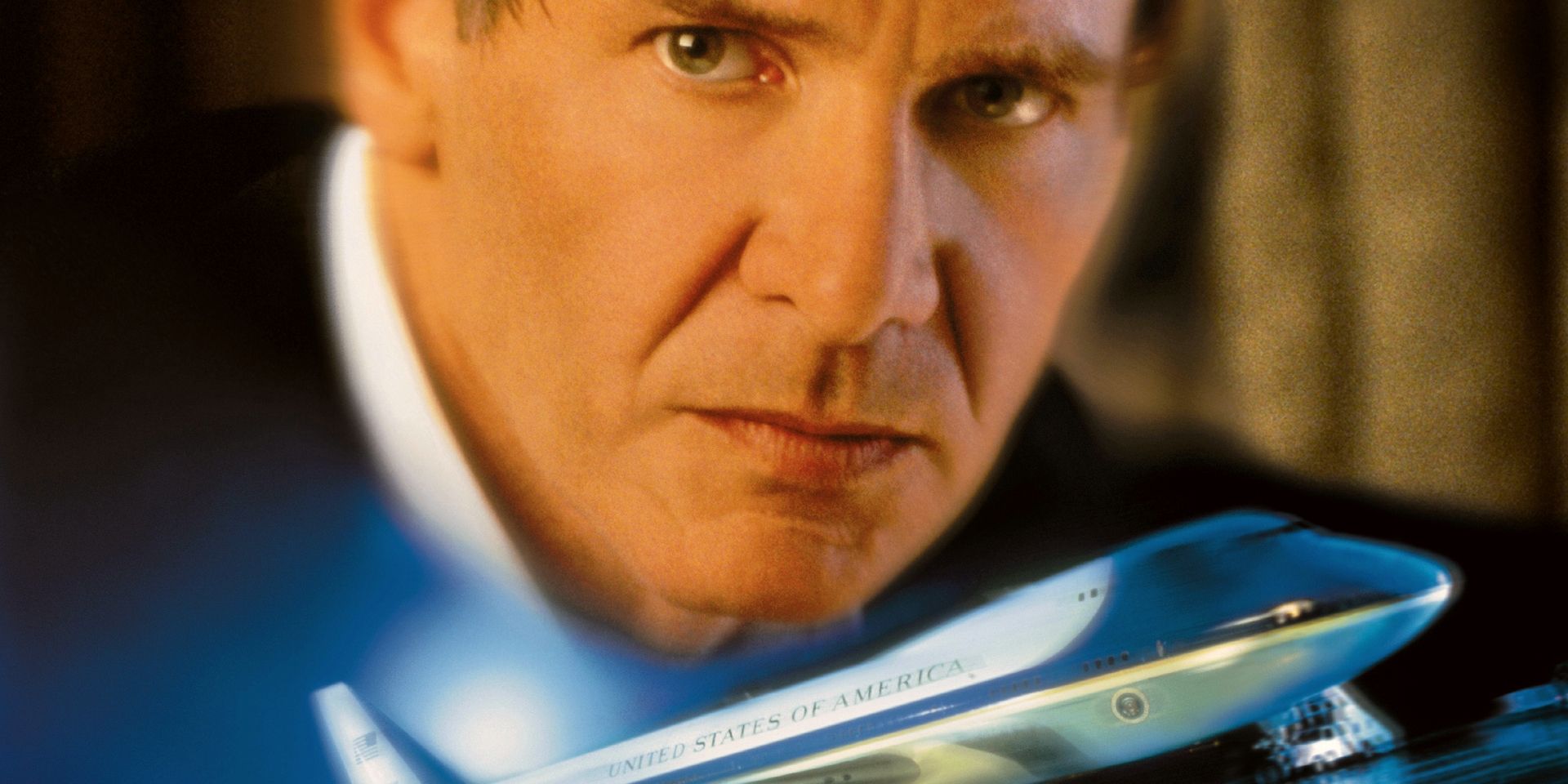
Released in 1997 and remaining a cornerstone of political action cinema through 2026, Air Force One features Harrison Ford as President James Marshall, a veteran and family man forced to reclaim his hijacked aircraft. The film serves as the quintessential "Die Hard on a plane" entry, elevated by Ford’s gravitas, Wolfgang Petersen’s taut direction, and Gary Oldman’s chilling performance as a neo-Soviet radical.
The Enduring Cultural Impact of Air Force One
As of 2026, nearly three decades since its theatrical debut, Air Force One remains a frequent subject of retrospective analysis and a staple of high-definition streaming libraries. Its enduring popularity stems from a unique intersection of 1990s optimism, post-Cold War anxieties, and the peak of Harrison Ford’s career as a global action star. Unlike many contemporary political thrillers that lean into cynicism or complex moral ambiguity, Air Force One presents a clear-cut battle between democratic ideals and authoritarian extremism, anchored by a President who literally fights for his beliefs.
The film arrived at a time when the "action hero" archetype was shifting from the invincible musclemen of the 1980s to the vulnerable, reluctant heroes of the 1990s. Harrison Ford, already established as Han Solo and Indiana Jones, brought a "working-class" dignity to the office of the Presidency. This portrayal resonated deeply with audiences, creating a cinematic legacy where James Marshall is often cited in surveys as one of the most beloved fictional U.S. Presidents in history.
Harrison Ford as President James Marshall: The Ultimate Everyman Hero
In the spotlight of this high-altitude thriller, Harrison Ford delivers a performance that balances the weight of executive responsibility with the raw instinct of a soldier. James Marshall is not just a politician; he is a Medal of Honor recipient and a veteran of the Vietnam War. This backstory provides the necessary internal logic for why a sitting President would be capable of taking on a team of trained terrorists single-handedly.
Ford’s portrayal avoids the pitfalls of superheroism. Throughout the film, Marshall is seen struggling, sweating, and making tactical errors. He is motivated primarily by the safety of his wife, Grace (played by Wendy Crewson), and daughter, Alice (Liesel Matthews). By centering the stakes on a personal family crisis, the film humanizes the presidency, making the high-concept premise accessible to a broad audience. Ford’s famous line, "Get off my plane!" has transcended the film itself, becoming a shorthand for righteous defiance in popular culture.
The Contrast of the Reluctant Warrior
While other action stars might have played Marshall with a sense of relish, Ford plays him with a sense of grim necessity. This "reluctant warrior" trope was Ford’s specialty during this era. Whether as Richard Kimble in The Fugitive or Jack Ryan in Patriot Games, Ford excelled at playing men who would rather be anywhere else but are forced by circumstance to act. In Air Force One, this translates to a President who uses his knowledge of the plane’s layout and systems to outsmart his captors, rather than just outgunning them.
Gary Oldman and the Stakes of the Antagonist
No hero is greater than the villain they overcome, and Gary Oldman’s Ivan Korshunov remains one of the most effective antagonists in action history. Oldman, known for his transformative roles, portrays Korshunov not as a cartoonish terrorist, but as a man fueled by a perceived historical injustice. His goal—the release of General Ivan Radek, a captured dictator—is driven by a desire to restore the "glory" of the Soviet Union.
The chemistry between Ford and Oldman is electric, despite them spending much of the film communicating via radio or through barriers. When they finally meet face-to-face, the clash of ideologies is as impactful as the physical struggle. Korshunov’s ruthless execution of hostages creates a genuine sense of peril, ensuring that the audience understands the cost of Marshall’s resistance. The film’s tension is meticulously maintained by Petersen, who uses the claustrophobic confines of the Boeing 747 to amplify the psychological pressure on both the President and the hijackers.
Technical Execution: Direction, Score, and Production Design
The technical prowess of Air Force One is a significant reason why it holds up so well in 2026. Director Wolfgang Petersen, who previously mastered the art of close-quarters tension in Das Boot, was the perfect choice to helm a film set almost entirely inside an aircraft. Petersen utilizes every inch of the plane—the galley, the luggage hold, the cockpit, and the presidential suite—to create a dynamic sense of movement despite the limited setting.
The Iconic Score by Jerry Goldsmith
One of the most remarkable aspects of the film’s production was its musical score. Originally, Randy Newman was hired to compose the music, but his work was rejected late in the process for being too parodic or "militaristic" in a way that didn't fit the film's tone. Jerry Goldsmith was brought in and reportedly wrote and recorded the entire heroic, patriotic, and pulsing score in just twelve days. The result is one of the most recognizable soundtracks of the 1990s, perfectly capturing the urgency of the hijacking and the nobility of the office.
Set Design and Realism
The production team spent significant resources to recreate the interior of the VC-25A (the military version of the Boeing 747-200B that serves as Air Force One). While some creative liberties were taken for the sake of the plot—most notably the inclusion of a "one-man escape pod" (which does not exist in the real aircraft)—the attention to detail in the communications center and the layout of the plane added a layer of authenticity that grounded the fantastical elements of the story.
For the exterior shots, the production used a Boeing 747-146 (N703CK) repainted in the iconic blue and white presidential livery. This practical approach to filmmaking, common in the late 90s, provides a tactile quality that modern CGI-heavy productions often lack.
Comparing the "Die Hard" Formula in 90s Action
Air Force One was part of a specific sub-genre of action films that followed the "Die Hard" blueprint: a lone hero in a confined space against a group of organized villains. Below is a comparison of how Air Force One stacks up against its contemporaries of the era.
| Feature | Air Force One (1997) | Die Hard (1988) | Under Siege (1992) | Speed (1994) |
|---|---|---|---|---|
| Lead Actor | Harrison Ford | Bruce Willis | Steven Seagal | Keanu Reeves |
| Setting | Presidential Aircraft | Office Skyscraper | Battleship | Transit Bus |
| Villain | Gary Oldman | Alan Rickman | Tommy Lee Jones | Dennis Hopper |
| Core Motivation | Family / Patriotism | Saving Estranged Wife | Duty / Revenge | Public Safety |
| Scale of Stakes | Global/Geopolitical | Personal/Local | Military/Terrorist | Localized/Terrorist |
| Legacy Status | Definitive Presidential Action | Genre Foundation | High-Octane 90s Staple | Masterpiece of Tension |
While Die Hard remains the gold standard, Air Force One is often cited as the most successful "prestige" version of the formula, due to its high production values and the inherent gravity of the U.S. Presidency.
Geopolitical Context and the Post-Cold War Era
To fully understand Air Force One in 2026, one must view it through the lens of late-1990s geopolitics. The film was released during a window of time after the fall of the Berlin Wall but before the events of September 11, 2001. During this period, Hollywood often portrayed Russia as a nation in flux, caught between a new democratic future and the lingering shadows of its Soviet past.
The character of President Marshall advocates for a proactive, interventionist foreign policy. In his opening speech in Moscow, he declares that the U.S. will no longer allow "political expediency" to prevent it from intervening in human rights abuses. This sentiment reflected the real-world debates of the Clinton era regarding Balkan interventions and the role of the United States as the world's sole superpower. The hijackers in the film represent the "old guard" of the Soviet era, fearful of their country becoming a "satellite" of the West.
Frequently Asked Questions
Does a real escape pod exist on Air Force One?
No, the real Air Force One does not have an escape pod. This was a narrative device created for the film to allow the hijackers to believe the President had fled, thereby giving James Marshall the "ghost-in-the-machine" advantage to fight back from within the shadows of the aircraft. Real-world security for the President on the aircraft relies on advanced electronic countermeasures, escort fighters, and the extreme structural integrity of the plane itself.
Was Harrison Ford the first choice for the role of President Marshall?
Interestingly, the role was originally written with Kevin Costner in mind. However, Costner was committed to filming The Postman at the time and could not accept the part. Costner reportedly suggested Harrison Ford to the producers, a recommendation that Ford has publicly thanked him for in various interviews over the years.
Where was the film actually shot?
While many interior scenes were filmed on soundstages at Sony Pictures Studios in Culver City, California, several location shoots took place in Ohio. The exterior of the "Russian prison" seen at the beginning of the film was actually the Ohio State Reformatory in Mansfield, the same location used for The Shawshank Redemption.
How accurate is the portrayal of the hijacking sequence?
While highly dramatized, the film correctly identifies certain vulnerabilities and protocols, such as the "A-G" (Air-to-Ground) communication systems. However, the ease with which the terrorists infiltrate the crew as "news media" would be virtually impossible under actual Secret Service protocols, which involve rigorous background checks and physical screenings long before anyone approaches the aircraft.
What is the significance of the "Liberty 24" call sign?
In the film's climax, after the President is rescued and the aircraft is about to crash, the C-130 rescue plane adopts the call sign "Air Force One" because the President is on board. The call sign "Liberty 24" refers to the parajumpers' aircraft. According to FAA and military regulations, any Air Force aircraft carrying the President automatically uses the "Air Force One" designation, a detail the film uses to great emotional effect in its final moments.
Expert Guidance: How to Appreciate Air Force One Today
For those revisiting the film in 2026, it is best experienced in a 4K Ultra HD format that preserves the grain and texture of the original 35mm film. Modern viewers should pay close attention to the practical stunts and the scale of the sets, which offer a sense of "weight" that digital sets often lack.
If you are a student of film or an aspiring screenwriter, analyze the "ticking clock" element of the plot. The film constantly introduces new deadlines—fuel levels, the proximity of the MiG fighters, the execution of hostages—to ensure that the pacing never slackens. This "compounding pressure" is a masterclass in action movie structure.
Finally, consider the performance of Glenn Close as Vice President Kathryn Bennett. Her role provides a fascinating counterpoint to the action on the plane, showcasing the political maneuvering and Constitutional crises (such as the 25th Amendment debate) that occur on the ground when the Commander-in-Chief is compromised. It adds a layer of intellectual depth to what could have been a simple action movie.