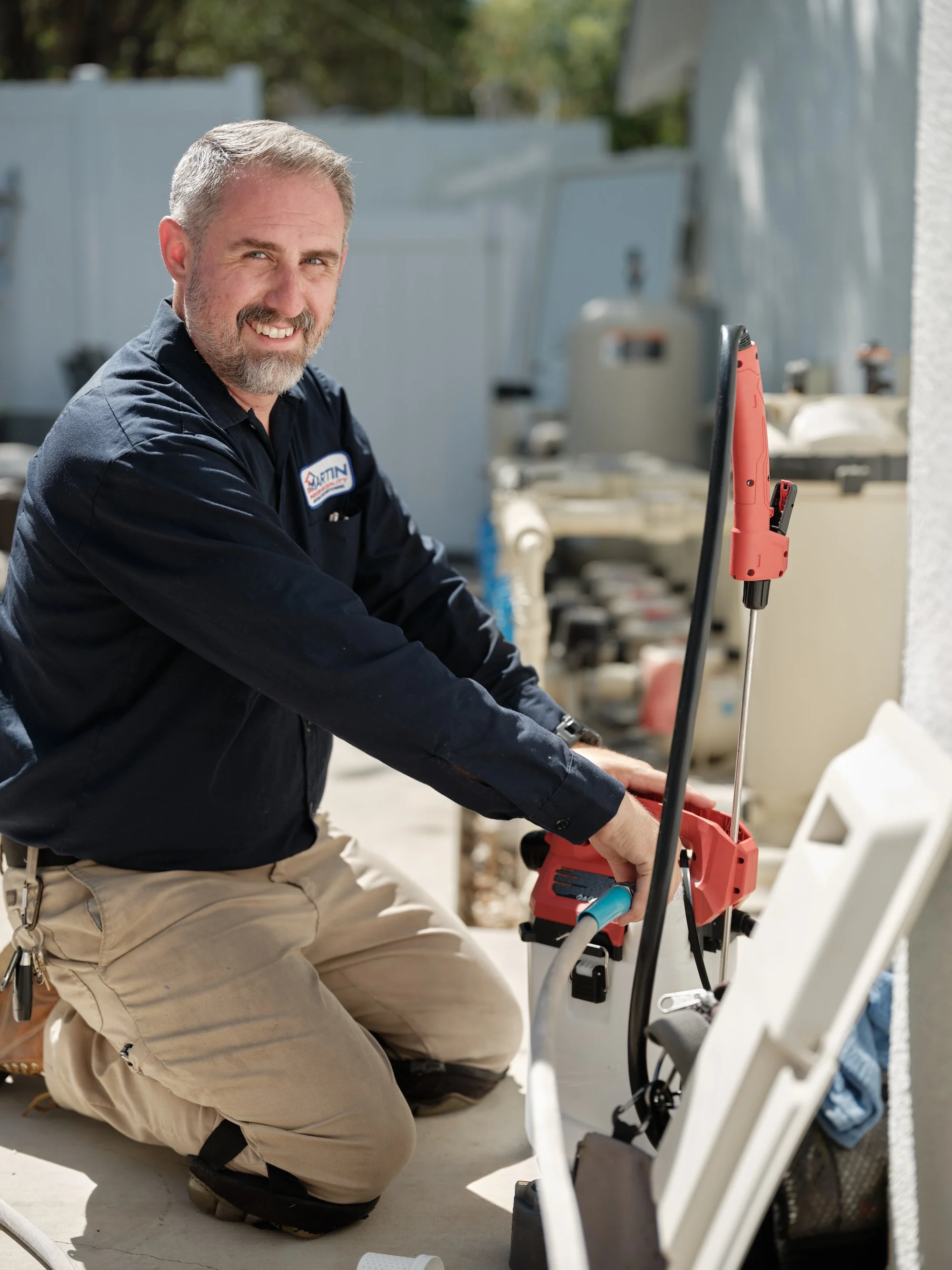
In Orange County, professional air conditioning service encompasses routine maintenance, emergency repairs, and high-efficiency system installations tailored to the region's unique coastal and inland microclimates. By 2026, these services prioritize compliance with California’s stringent Title 24 energy codes and the transition to low-GWP refrigerants like R-454B and R-32 to ensure optimal performance and environmental sustainability.
Understanding the Orange County Climate and Its Impact on AC Systems
Orange County presents a unique challenge for HVAC (Heating, Ventilation, and Air Conditioning) systems due to its varied geography. From the humid, salt-heavy air of Huntington Beach and Newport Beach to the scorching dry heat of Anaheim and Yorba Linda, air conditioning units are subjected to different stressors depending on their exact ZIP code. Professional air conditioning service in Orange County must account for these microclimates to ensure equipment longevity and efficiency.
In coastal areas, "salt air corrosion" is the primary enemy of outdoor condenser units. The salt-laden mist can accelerate the oxidation of aluminum fins and copper tubing, leading to refrigerant leaks and reduced heat transfer capabilities. Technicians servicing these areas often recommend specialized anti-corrosion coatings and more frequent rinsing of the outdoor coils. Conversely, inland residents face extreme temperature fluctuations and higher levels of dust and pollen. During the Santa Ana wind events, air filtration systems are pushed to their limits, necessitating high-MERV (Minimum Efficiency Reporting Value) filters and frequent duct inspections to maintain indoor air quality.
The 2026 Regulatory Landscape: SEER2 and New Refrigerants
As of 2026, the HVAC industry has fully integrated the transition dictated by the Environmental Protection Agency (EPA) and the California Energy Commission (CEC). When seeking air conditioning service in Orange County, homeowners must understand two critical technical factors: SEER2 ratings and the phase-out of R-410A refrigerant.
SEER2 Efficiency Standards
The Seasonal Energy Efficiency Ratio 2 (SEER2) is the current standard for measuring AC efficiency. In California, residential central air systems must meet a minimum SEER2 rating of 14.3 (which roughly corresponds to the old 15 SEER standard). However, due to Orange County's high electricity rates, many local services now recommend units with ratings of 18 SEER2 or higher. These variable-speed systems are significantly better at managing the "May Gray" and "June Gloom" humidity without over-cooling the home.
The Shift to A2L Refrigerants
The year 2026 marks a significant milestone in the AIM Act’s timeline, with nearly all new installations utilizing A2L refrigerants such as R-454B or R-32. These refrigerants have a much lower Global Warming Potential (GWP) than the previous R-410A. Professional service providers in Orange County have undergone specific training to handle these mildly flammable refrigerants safely. If you have an older system using R-410A, service is still available, but the cost of reclaimed refrigerant continues to rise, making full system upgrades increasingly attractive.
Essential Components of Comprehensive AC Maintenance
Routine maintenance is the cornerstone of reliable air conditioning service in Orange County. Given that many units in Southern California run for over 1,500 hours per year, a "set it and forget it" mentality leads to premature compressor failure and inflated Southern California Edison (SCE) bills.
Precision Tune-Ups and Inspections
A professional maintenance visit should never be a simple "filter swap." A comprehensive 2026-standard tune-up includes:
- Refrigerant Charge Verification: Ensuring the system has the exact amount of refrigerant required. Undercharged systems work harder and cool less, while overcharged systems can damage the compressor.
- Electrical Component Testing: Measuring the amperage and voltage on motors and checking the capacitors. In the OC heat, capacitors are often the first component to fail.
- Condensate Drain Clearing: Orange County’s humidity can lead to algae growth in drain lines. Technicians use pressurized air or vacuum systems to clear these lines, preventing water damage to the home’s interior.
- Evaporator and Condenser Coil Cleaning: Removing the buildup of dust and oxidation to ensure maximum heat exchange.
Ductwork and Airflow Analysis
California's Title 24, Part 6 regulations place heavy emphasis on duct integrity. Air conditioning services now frequently include duct leakage testing. In many Orange County homes built between 1970 and 1990, leaky ducts can account for a 25% loss in cooling efficiency. Sealing these leaks is often more cost-effective than buying a larger AC unit.
Air Conditioning Repair vs. Replacement: A 2026 Comparison
Deciding whether to repair an aging unit or invest in a new system is a common dilemma for Orange County property owners. The "5,000 Rule" is a helpful heuristic: multiply the age of the equipment by the repair cost. If the result exceeds $5,000, replacement is generally the more economical long-term choice.
| Service Type | Estimated Cost (2026 USD) | Typical Duration | Expected Frequency |
|---|---|---|---|
| Routine Maintenance Tune-Up | $125 – $250 | 1.5 – 2 Hours | Annually (Spring) |
| Diagnostic/Service Call | $99 – $185 | 1 Hour | As Needed |
| Capacitor Replacement | $250 – $450 | 30 – 60 Mins | Every 5–7 Years |
| Blower Motor Repair | $600 – $1,200 | 2 – 3 Hours | Rare |
| Evaporator Coil Replacement | $1,500 – $3,500 | 4 – 6 Hours | Every 10–12 Years |
| Full System Installation (3-Ton) | $8,500 – $16,000 | 1 – 2 Days | Every 15–20 Years |
Note: Costs are estimates based on Orange County market averages and vary by brand (e.g., Carrier, Lennox, Trane) and installation complexity.
Choosing a Qualified HVAC Contractor in Orange County
The abundance of service providers in the region makes selection difficult. However, California law and local building codes provide a framework for vetting contractors.
Licensing and Certification
Any individual or company performing air conditioning service in Orange County for a project exceeding $500 must hold a valid C-20 HVAC Contractor License from the California Contractors State License Board (CSLB). You should always verify the license status to ensure the contractor carries the necessary workers' compensation and liability insurance. Furthermore, NATE (North American Technician Excellence) certification remains the industry gold standard for individual technician competency.
HERS Testing Requirements
In Orange County, when a professional replaces an AC condenser or evaporator coil, state law often requires a Home Energy Rating System (HERS) test. This is an independent third-party verification that the ducts are sealed properly and the refrigerant charge is correct. Reputable services will handle the coordination of the HERS rater as part of their installation package.
Energy Rebates and Incentives for OC Homeowners
In 2026, the financial burden of upgrading to a high-efficiency AC system is mitigated by several programs. The federal Inflation Reduction Act (IRA) continues to offer tax credits (Section 25C) for high-efficiency heat pumps and central air conditioners, potentially covering up to $2,000 or 30% of the project cost.
Locally, the South Coast Air Quality Management District (SCAQMD) and utility providers like Southern California Edison (SCE) offer rotating rebates for "smart" thermostats and variable-speed systems that reduce the strain on the California power grid during peak demand hours. Always ask your service provider for a current list of applicable rebates before signing a contract.
Common Air Conditioning Problems in Orange County
Identifying issues early can prevent the total loss of cooling during a July heatwave. Look for these "red flags" specific to Southern California homes:
- Short-Cycling: If the unit turns on and off every few minutes, it may be oversized for the home or suffering from a faulty thermostat. This is common in newer Irvine developments where homes are highly insulated.
- Ice on the Lines: Even in 100-degree weather, AC lines can freeze. This usually indicates a restricted air filter or a refrigerant leak. Given the 2026 refrigerant regulations, a leak in an old R-410A system requires a serious discussion about system replacement.
- Uneven Cooling: In many two-story Orange County townhomes, the upstairs remains significantly hotter than the downstairs. This often requires a "zoning" service or the installation of a mini-split system for the upper floor.
- Strange Odors: A "musty" smell (Dirty Sock Syndrome) is common in coastal areas where moisture accumulates on the coils. Professional UV light installation or specialized coil cleaning can resolve this.
FAQs About Air Conditioning Service in Orange County
How often should I service my AC in Orange County?
Professional maintenance should be performed at least once a year, ideally in the early spring before the first heatwave. For homes within five miles of the coast, bi-annual inspections are recommended to monitor and mitigate salt-air corrosion on the exterior condenser unit.
Why is my electricity bill so high even when the AC is new?
A new unit's efficiency is only as good as the system it is connected to. If your ductwork is leaky, your attic insulation is insufficient, or your windows are single-pane, the AC must run longer to maintain the set temperature. Additionally, ensure your "Time-of-Use" (TOU) plan with SCE is optimized for your cooling habits.
Is it mandatory to switch to the new R-454B refrigerant in 2026?
If your current R-410A system is functioning correctly, there is no legal requirement to replace it. However, if the system requires a major repair involving the refrigerant circuit, you may find that the cost of R-410A has become prohibitively expensive. All new systems sold and installed in 2026 will use the newer, more eco-friendly refrigerants.
Can I perform my own AC service?
While homeowners can and should change their own air filters every 3 months, California law requires a licensed professional to handle refrigerant and perform high-voltage electrical repairs. Improper handling of HVAC systems can void manufacturer warranties and violate local building codes.
What is the average lifespan of an AC unit in Orange County?
Inland units typically last 15 to 20 years with regular maintenance. Coastal units may have a shorter lifespan of 10 to 15 years due to the corrosive effects of the marine environment. Regular application of clear-coat protectants can help coastal units reach the higher end of that range.
Are heat pumps a viable alternative for Orange County homes?
Yes, heat pumps are exceptionally well-suited for the Orange County climate. Because OC rarely experiences freezing temperatures, modern electric heat pumps can efficiently provide both heating and cooling year-round. Many local air conditioning services now specialize in "dual-fuel" or "all-electric" heat pump conversions to align with California's decarbonization goals.
Final Recommendation for Orange County Residents
For reliable air conditioning service in Orange County, prioritize contractors who offer transparent, flat-rate pricing and hold NATE certifications. Before the summer season begins, schedule a comprehensive precision tune-up that includes a duct integrity check and a refrigerant level verification. If your system is over 12 years old, 2026 is an opportune time to explore high-efficiency SEER2 replacements, as federal tax credits and local utility rebates are currently at their most generous levels to support the transition to sustainable cooling technologies.