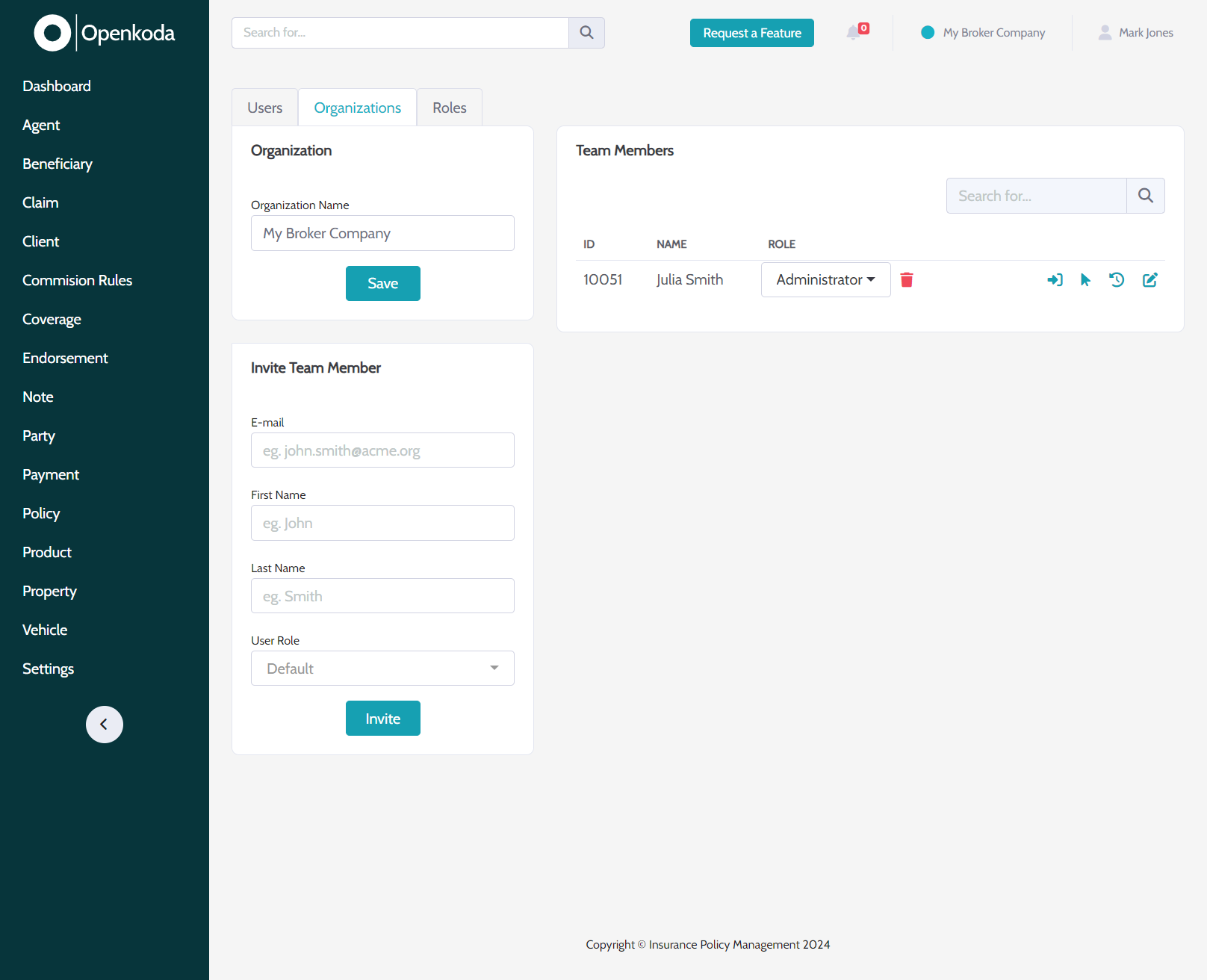
Agency systems for insurance CRM software are specialized digital platforms designed to centralize client data, automate policy lifecycles, and streamline communication between brokers, carriers, and policyholders. In 2026, these systems have evolved beyond simple databases into AI-driven ecosystems that manage everything from lead generation and real-time quoting to automated renewals and complex commission tracking.
The Convergence of CRM and Agency Management Systems (AMS)
Historically, insurance professionals had to choose between a general-purpose Customer Relationship Management (CRM) tool and a specialized Agency Management System (AMS). The CRM handled the "front office"—sales, marketing, and lead nurturing—while the AMS handled the "back office"—policy downloads, ACORD forms, and carrier accounting.
By 2026, the distinction between these two categories has largely evaporated. Modern agency systems for insurance CRM now provide a unified interface. Agencies no longer want to toggle between a platform like Salesforce and a platform like Vertafore; they demand a single "source of truth." This convergence is driven by the need for speed. When a client calls to adjust a limit on their homeowners' policy, the agent needs to see the client's entire interaction history, current policy details, and potential cross-sell opportunities (like an umbrella policy) in one view.
The "modern" insurance CRM is now defined by its ability to handle structured insurance data. Unlike a generic CRM that treats every "deal" the same, an insurance-specific system understands the nuances of an effective date, a retroactive date, a premium vs. a commission, and the specific fields required for different lines of business, whether it is Personal Lines, Commercial Lines, or Life and Health.
Core Functional Requirements for 2026 Insurance Systems
To remain competitive in the current landscape, an agency system must do more than just store contact information. It must act as an active participant in the agency’s growth.
1. Automated Policy Lifecycle Management
The most significant drain on an agency’s time is administrative "busy work." A robust insurance CRM automates the renewal process by triggering workflows 60 to 90 days before an expiration date. These systems can automatically pull current policy data, send a pre-filled renewal questionnaire to the client, and even ping carriers for updated quotes if the current premium increases beyond a certain percentage.
2. Multi-Carrier Integration and Real-Time Rating
Efficiency in 2026 is measured by how quickly an agent can move from a lead to a bound policy. Top-tier agency systems integrate directly with carrier portals using advanced APIs or established protocols like IVANS. This allows for real-time rating, where an agent enters data once and receives multiple quotes instantly. This eliminates the need for "double entry," which was the primary cause of data errors in previous decades.
3. Artificial Intelligence and Predictive Analytics
AI is no longer a buzzword; it is a core component of insurance CRM architecture. In 2026, these systems use machine learning to identify "at-risk" clients by analyzing communication frequency and payment patterns. Furthermore, AI-driven Sentiment Analysis can flag an angry email from a client before a human agent even opens it, allowing the agency to prioritize retention efforts.
4. Omnichannel Communication
Clients today expect to interact via SMS, WhatsApp, email, and client portals. A modern system logs every interaction across these channels into a single timeline. If a client texts a photo of a car accident, that photo should automatically attach to their claim file within the CRM without manual intervention from the agent.
Comparing Top Insurance CRM and Agency Systems
Choosing the right platform depends on the size of the agency and the specific lines of authority they hold. Below is a comparison of the leading systems available in 2026.
| System Name | Primary Focus | Key Strength | Best For |
|---|---|---|---|
| Applied Epic | Enterprise AMS/CRM | Unmatched scale and deep carrier integrations | Large, multi-location agencies |
| Vertafore (AMS360) | Comprehensive AMS | Robust accounting and document management | Mid-to-large independent agencies |
| AgencyBloc | Life & Health CRM | Specialized commission tracking for L&H | Benefits and Life-focused agencies |
| EZLynx | Personal Lines | Superior real-time rating and consumer portals | Small to mid-market personal lines |
| Better Agency | Sales Automation | Built-in marketing automation and "speed to lead" | High-growth, sales-focused agencies |
| Salesforce FSC | Customization | Highly extensible via the Financial Services Cloud | Agencies with dedicated IT/Dev teams |
Implementation and Data Migration Strategies
Moving from a legacy system or a collection of spreadsheets to a modern insurance CRM is a significant undertaking. The "garbage in, garbage out" rule applies here; if the historical data is poorly organized, the new system will be hampered from day one.
The Mapping Phase
Before any data is moved, agencies must map their current data fields to the new system's architecture. This is particularly complex in insurance because of the variety of policy types. A "Commercial Auto" policy has different data requirements than a "Professional Liability" policy. Most vendors in 2026 offer specialized migration services that use AI to categorize and clean legacy data, but manual oversight from a knowledgeable agent is still required to ensure accuracy.
Training and Adoption
The failure of many CRM implementations isn't technical—it's behavioral. If the staff finds the new system cumbersome, they will keep using their own "shadow" systems like private notes or Excel files. Successful agencies in 2026 utilize Digital Adoption Platforms (DAPs) that provide in-app walkthroughs and real-time guidance to help staff learn the new interface as they work.
API Connectivity
A modern system must be "open." This means it should have a robust Application Programming Interface (API) that allows it to talk to other tools. For example, if an agency uses a specialized third-party tool for premium financing or a separate e-signature platform like DocuSign, the CRM should be able to pass data back and forth seamlessly without manual uploads.
Cost Considerations and Return on Investment (ROI)
The pricing models for insurance agency systems have shifted toward "per user, per month" SaaS (Software as a Service) models. While this reduces the upfront capital expenditure, the long-term costs can be substantial.
- Subscription Fees: Expect to pay anywhere from $70 to $200 per user per month for a high-quality system.
- Implementation Fees: One-time setup and data migration fees can range from $2,000 for small agencies to over $50,000 for large enterprises.
- Third-Party Integration Costs: Some systems charge extra for "bridge" software that connects the CRM to rating engines or specific carriers.
Calculating ROI: The ROI is typically found in "Time Saved per Policy." If a system reduces the time spent on a renewal from two hours to thirty minutes, and an agency handles 1,000 renewals a year, the system effectively pays for itself by allowing the agency to scale without hiring additional administrative staff. According to reports from the Independent Insurance Agents & Brokers of America (IIABA), agencies that fully utilize automation see a significantly higher revenue-per-employee ratio.
Compliance, Security, and Data Privacy
In 2026, insurance agencies are prime targets for cyberattacks due to the high volume of Personally Identifiable Information (PII) they store, including Social Security numbers and health records. Any agency system must meet rigorous security standards.
- SOC 2 Type II Compliance: This is the gold standard for cloud security, ensuring the vendor has strict controls over data privacy and availability.
- Data Residency: For agencies operating globally, the system must be able to store data in specific jurisdictions to comply with laws like the GDPR in Europe or the CCPA in California.
- Encryption: Data must be encrypted both "at rest" (while stored on servers) and "in transit" (while being sent from the carrier to the agency).
- Multi-Factor Authentication (MFA): In 2026, MFA is no longer optional; most E&O (Errors and Omissions) insurance carriers now require agencies to have MFA enabled on their CRM to qualify for coverage.
Common Mistakes When Selecting an Insurance CRM
Many agency owners make the mistake of buying the system with the most "features" rather than the one that fits their workflow. A common pitfall is purchasing a complex enterprise system for a three-person agency; the administrative overhead of maintaining the system can actually decrease productivity.
Another frequent error is ignoring the Mobile Experience. In 2026, agents are frequently in the field. If the CRM does not have a native mobile app that allows for document scanning and instant policy lookups, it will limit the agent’s effectiveness. Agencies should also be wary of "closed" systems that make it difficult to export data. Data portability is essential; you should always own your data and be able to move it if a vendor increases prices or fails to innovate.
Frequently Asked Questions
Can a generic CRM like Salesforce work for an insurance agency?
Yes, but it requires significant customization. While Salesforce is incredibly powerful, its base version does not understand "insurance." You would need to use the Salesforce Financial Services Cloud or hire a developer to create custom objects for policies, coverages, and ACORD forms. Most small to mid-sized agencies find that an insurance-specific CRM is more cost-effective because the "insurance logic" is built-in from day one.
How long does it typically take to migrate to a new agency system?
For a small agency with clean data, migration can take 30 to 60 days. For larger agencies with decades of legacy data and multiple carrier integrations, the process can take six months to a year. This timeframe includes data cleaning, mapping, staff training, and parallel testing where both the old and new systems are run simultaneously to ensure no data is lost.
Do these systems help with commission tracking?
Yes, this is one of the primary benefits of an insurance-specific system. They can ingest "commission downloads" from carriers and automatically reconcile them against the expected commission. This allows agency owners to see exactly which carriers are most profitable and ensures that sub-agents or producers are paid accurately and on time.
Is AI actually useful in an insurance CRM, or is it just hype?
By 2026, AI has proven its value in two main areas: Data Entry and Lead Scoring. AI can "read" a PDF of a competitor’s policy and automatically extract the coverage limits to create a comparison quote. It also analyzes lead behavior—such as how many times a prospect opened an email—to tell the agent exactly who to call first each morning.
How do I ensure my data is safe if the CRM provider goes out of business?
Before signing a contract, review the "Data Portability" clause. A reputable provider should allow you to export your entire database in a standard format (like CSV or SQL) at any time. Furthermore, many 2026 contracts include "escrow" agreements where the software's source code and data are held by a third party, ensuring you can still access your information even if the vendor ceases operations.
Practical Recommendation for Agency Leaders
If you are evaluating agency systems for insurance CRM software in 2026, start by auditing your current "manual" processes. Identify the three tasks that consume the most time for your account managers. If those tasks involve re-keying data or manually tracking renewals, prioritize a system with strong IVANS integration and automated workflow triggers.
Always request a "sandbox" environment before committing. Don't just watch a salesperson's demo; have your top producer and your most detail-oriented account manager try to complete a common task—like adding a new vehicle to an existing policy—within the software. The system that requires the fewest clicks to complete that task is usually the winner.