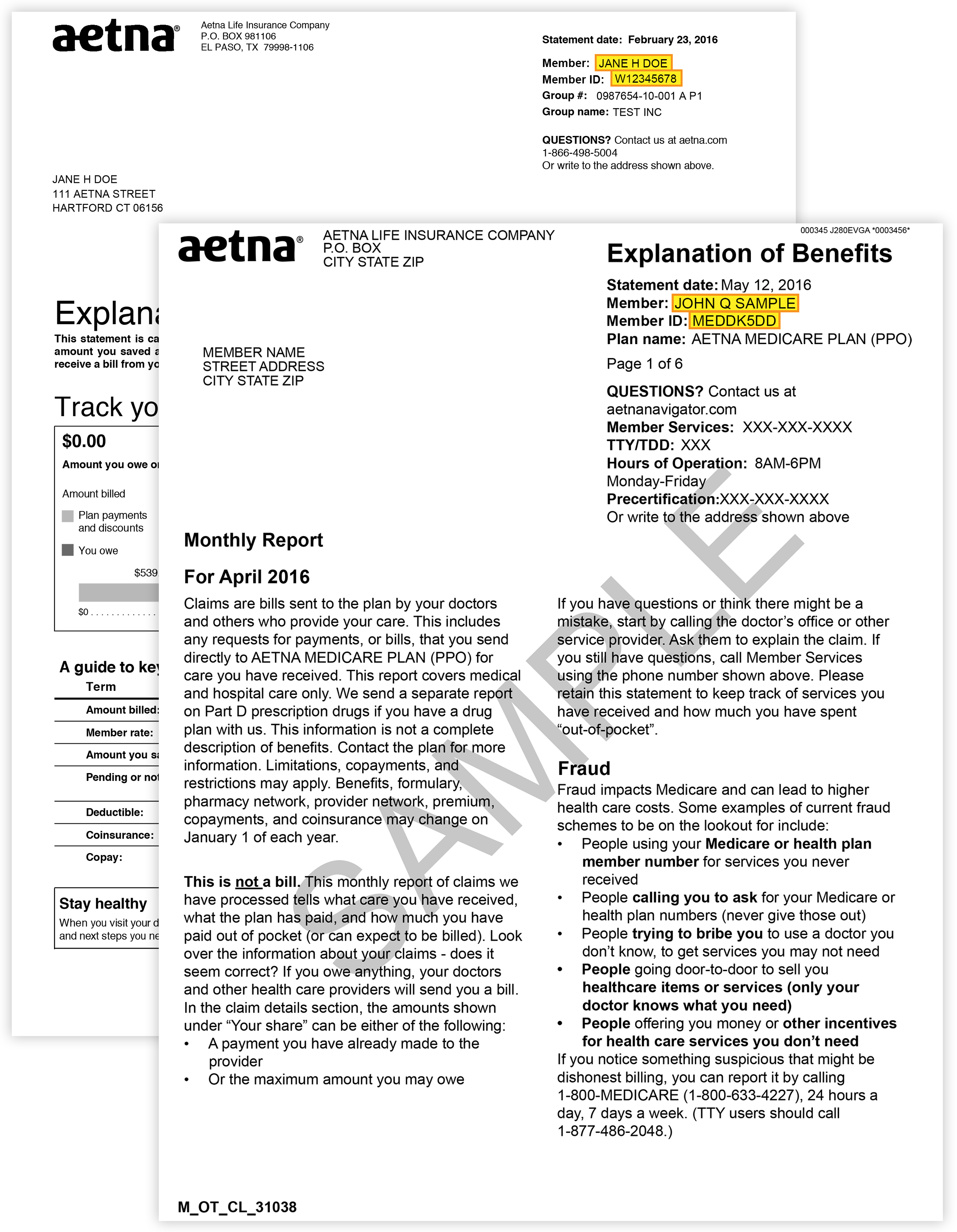
To receive reimbursement for out-of-network vision services under an Aetna plan, you must submit the Aetna Life Insurance Company Vision Claim Form, officially known as the Out-of-Network Vision Services Claim Form. This document is required when you visit a provider who does not participate in the Aetna Vision network, requiring you to pay upfront and seek manual reimbursement for exams, frames, or lenses.
Understanding the Role of Aetna Life Insurance Company in Vision Benefits
It is common for members to feel a moment of confusion when they see "Aetna Life Insurance Company" printed on their vision ID cards or at the top of their claim forms. In the insurance industry, Aetna Life Insurance Company serves as the primary legal entity and underwriter for a wide array of supplemental health products, including dental, vision, and accidental death policies. Even though you are seeking coverage for an eye exam or new spectacles, the financial obligation and the regulatory filing of the plan fall under the "Life Insurance" corporate umbrella.
In 2026, Aetna continues to utilize this underwriting structure to provide comprehensive Vision Preferred plans. These plans are often administered through partnerships with networks like EyeMed, but the formal claim process for out-of-network benefits remains tethered to Aetna’s internal administrative systems. When you download a claim form, ensuring it bears the Aetna Life Insurance Company branding is essential for verifying that you are using the correct document for a plan underwritten by this specific entity, rather than a different regional Aetna affiliate.
This distinction is important because different Aetna entities may have different mailing addresses for claims. Using the form specifically designated for Aetna Life Insurance Company ensures that your request is routed to the correct processing center, minimizing delays in your reimbursement.
When Is the Vision Claim Form Required?
In a standard in-network scenario, you rarely have to deal with paperwork. When you visit a "participating" or "in-network" eye doctor, the provider verifies your eligibility through the Aetna member portal, applies your discounts or co-pays at the point of sale, and files the remaining balance directly with Aetna.
However, the vision claim form becomes a necessity in the following out-of-network circumstances:
- Non-Participating Providers: You choose to visit a boutique eyewear shop or a specialist who does not have a contract with Aetna.
- Emergency Vision Care: You require urgent eye care while traveling in an area where no in-network providers are available.
- Specific Retail Limitations: Some plans allow you to use your benefits at large retailers, but if that specific retail location does not have a direct billing agreement with Aetna Life Insurance Company, you must pay the full retail price and file for reimbursement.
- In-Network Exceptions: Occasionally, an in-network doctor may provide a specific service or specialized lens type that they do not bill through insurance, requiring you to handle the claim yourself.
By submitting the claim form, you are essentially asking Aetna to pay you back for the portion of the bill that the insurance company would have normally paid the doctor directly.
Detailed Breakdown of the Vision Claim Form Sections
Filling out the Aetna Life Insurance Company Vision Claim Form requires precision. Errors in the member ID or the provider’s tax information can lead to immediate rejection. As of 2026, the form is divided into several critical sections that must be completed in their entirety.
Section A: Patient and Member Information
This section identifies who received the service and who holds the insurance policy. If you are the policyholder and you took your child to the eye doctor, you are the Member, and your child is the Patient.
- Member ID Number: This is found on your Aetna Vision ID card. It is often different from your medical insurance ID number, though some integrated plans use the same one.
- Group Number: This identifies your employer's specific plan design and benefit levels.
- Patient Relationship: You must check the box for Self, Spouse, or Child. This determines which sub-account the funds are drawn from.
Section B: Provider Information
Even though the doctor is "out-of-network," Aetna still needs to know exactly who provided the service to prevent fraud and ensure the provider is licensed. You will need to ask the doctor's office for their National Provider Identifier (NPI) and their Federal Tax ID Number. Most out-of-network providers are accustomed to these requests and will provide an itemized "superbill" containing this information.
Section C: Service Categorization
This is where you detail what you purchased. Most Aetna Life Insurance Company vision plans categorize services into:
- Comprehensive Eye Exam: A standard vision health check and refraction.
- Frames: The physical glasses frames.
- Lenses: Single vision, bifocal, trifocal, or lenticular.
- Contact Lenses: Both the fitting fee and the materials (the lenses themselves).
Section D: Request for Assignment of Benefits
This is an optional section. If you have not yet paid the doctor and the doctor agrees to accept payment from Aetna, you can "assign" the benefits to them. However, in almost all out-of-network cases, you will have already paid the bill, so you should leave this section blank or ensure it is set to pay the member (you).
Documentation: The Itemized Receipt Requirement
The claim form itself is only half of the requirement. Aetna Life Insurance Company will not process a claim based solely on the form; it must be accompanied by an itemized receipt. A credit card slip or a "paid in full" receipt that only shows a total amount is insufficient.
A valid itemized receipt for a 2026 vision claim must include:
- The date of service.
- The name of the patient.
- A breakdown of costs (e.g., $120 for the exam, $200 for frames, $150 for lenses).
- CPT Codes: These are "Current Procedural Terminology" codes (e.g., 92004 for a comprehensive eye exam).
- ICD-10 Codes: These are diagnosis codes that explain the medical necessity (e.g., H52.1 for Myopia).
If your provider gives you a receipt that lacks these codes, your claim may be delayed as Aetna’s processors will have to manually investigate whether the service is a covered benefit.
Summary of Claim Submission Requirements
The following table summarizes the essential components needed for a successful vision claim submission to Aetna Life Insurance Company in 2026.
| Requirement Component | Description | Why It Is Necessary |
|---|---|---|
| Completed Form | The official Aetna Life Insurance Co. Vision Claim Form. | Provides the legal framework for the reimbursement request. |
| Member ID | The alphanumeric code on your vision benefit card. | Links the claim to your specific employer-sponsored plan. |
| Itemized Receipt | A receipt showing individual costs for exam, frames, and lenses. | Prevents overpayment and verifies service types against plan limits. |
| NPI Number | The 10-digit National Provider Identifier of the doctor. | Confirms the provider is a licensed medical professional. |
| CPT/ICD-10 Codes | Standardized medical billing and diagnosis codes. | Allows for automated processing and verification of "medical necessity." |
| Proof of Payment | Indication on the receipt that the balance is $0. | Ensures reimbursement goes to the patient who paid the cost. |
Digital vs. Paper Submission Methods
In 2026, Aetna encourages members to submit vision claims through the Aetna Navigator or the Aetna Health app. Digital submission is significantly faster than paper mail, often reducing the "turnaround time" from 30 days to fewer than 10 business days.
Online Submission Steps:
- Log in to your member portal.
- Navigate to the "Claims" or "Manage Benefits" section.
- Select "Submit an Out-of-Network Claim."
- Upload a clear photo or PDF scan of your itemized receipt.
- Digitally sign the attestation statement.
Mail-In Submission:
If you prefer the traditional route, you must print the form and mail it with your receipts to the address listed on the back of your ID card or at the bottom of the form. Historically, the vision claim center for Aetna Life Insurance Company has been located in Lexington, Kentucky, but you should always verify the specific PO Box on the 2026 version of the form to ensure it hasn't been updated.
Pro-tip: If mailing your claim, always keep a photocopy of the completed form and the original receipts. Mail-in claims can occasionally be lost in transit, and having a backup prevents you from having to pay for a second eye exam out of pocket.
Timely Filing Limits and Deadlines
One of the most common reasons vision claims are denied is the expiration of the timely filing limit. For plans underwritten by Aetna Life Insurance Company, this limit is typically six months to one year (180 to 365 days) from the date of service.
If you receive an eye exam on January 15, 2026, but do not submit your claim form until February 2027, Aetna is contractually permitted to deny the claim regardless of its validity. Some states have laws that extend these deadlines, but it is best practice to submit the form within 30 days of your appointment to ensure the details are fresh and the documentation is readily available.
Common Reasons for Claim Denials
Understanding why claims fail can help you avoid the frustration of a "Denied" status in your member portal.
- Duplicate Submissions: If you accidentally upload the same receipt twice, the system may flag it as a duplicate and freeze both claims for manual review.
- Ineligible Services: Most vision plans do not cover refractive surgery (like LASIK) or non-prescription sunglasses. Attempting to claim these through a standard vision form will result in a denial for that specific line item.
- Missing NPI Number: As mentioned previously, Aetna cannot pay a claim if they cannot verify the identity of the provider. If the doctor's NPI is missing, the claim will be pended.
- Coordination of Benefits (COB) Issues: If you are covered by two vision plans (e.g., your own and your spouse’s), you must indicate this on the form. Failure to disclose other coverage can lead to a denial while Aetna determines which company is "primary."
- Exceeding Frequency Limits: Vision plans operate on "frequency clocks" (e.g., one exam every 12 months, one pair of frames every 24 months). If you submit a claim for frames only 18 months after your last pair, Aetna Life Insurance Company will deny the claim based on the plan's frequency limitations.
Troubleshooting and Contacting Support
If your claim status is listed as "Pending" for more than 14 days, it is time to take action. You should first check your "Secure Member Inbox" in the Aetna portal. Aetna often sends requests for "Additional Information" digitally. If they require a more detailed receipt, the request will be listed there.
If you need to speak with a human representative, call the Vision Member Services number located on the back of your ID card. When you call, have your Member ID and the "Claim Reference Number" (if available) ready. Be specific that you are asking about a vision claim underwritten by Aetna Life Insurance Company, as this helps the agent route you to the specialized vision department rather than general medical support.
Frequently Asked Questions
Can I use the vision claim form for prescription sunglasses?
Yes, as long as the sunglasses are prescription-grade. Most Aetna Life Insurance Company vision plans cover "prescription lenses" regardless of the tint. However, "plano" (non-prescription) sunglasses are generally excluded from coverage. Ensure your itemized receipt explicitly states the lenses are prescription.
How long does it take to receive a reimbursement check?
For digital submissions made in 2026, reimbursements are typically processed within 7 to 10 business days. If you have signed up for Direct Deposit (Electronic Funds Transfer), the money will appear in your account shortly after. Paper checks sent via mail can take 3 to 4 weeks to arrive.
What if I lost my receipt from the out-of-network doctor?
You must contact the provider's office and request a "Duplicate Itemized Receipt" or a "Superbill." Aetna Life Insurance Company cannot legally process a claim based on your word or a bank statement alone; they require the clinical and financial breakdown provided by the doctor's office.
Does this form cover LASIK or other vision correction surgeries?
Generally, no. Most standard vision claim forms are for "Hardware" (glasses/contacts) and "Exams." While some Aetna plans offer a LASIK discount, it is usually handled through a separate "Value-Added" program rather than a standard reimbursement claim. Check your specific Evidence of Coverage (EOC) document before filing.
Can I submit one form for my entire family?
No. Every patient requires their own individual claim form. Even if you, your spouse, and your child all went to the same out-of-network doctor on the same day, you must submit three separate forms with three separate itemized receipts. This ensures the services are tracked against each individual's frequency limits.
Practical Recommendation
To ensure the fastest possible reimbursement, always submit your Aetna Life Insurance Company vision claim form digitally through the Aetna Health app. Before leaving your doctor's office, double-check that your receipt includes the NPI number, CPT codes, and ICD-10 codes. Taking thirty seconds to verify these details at the front desk can save you weeks of administrative back-and-forth with the insurance company. If you must use a paper form, send it via a trackable mail service to confirm delivery to the processing center.