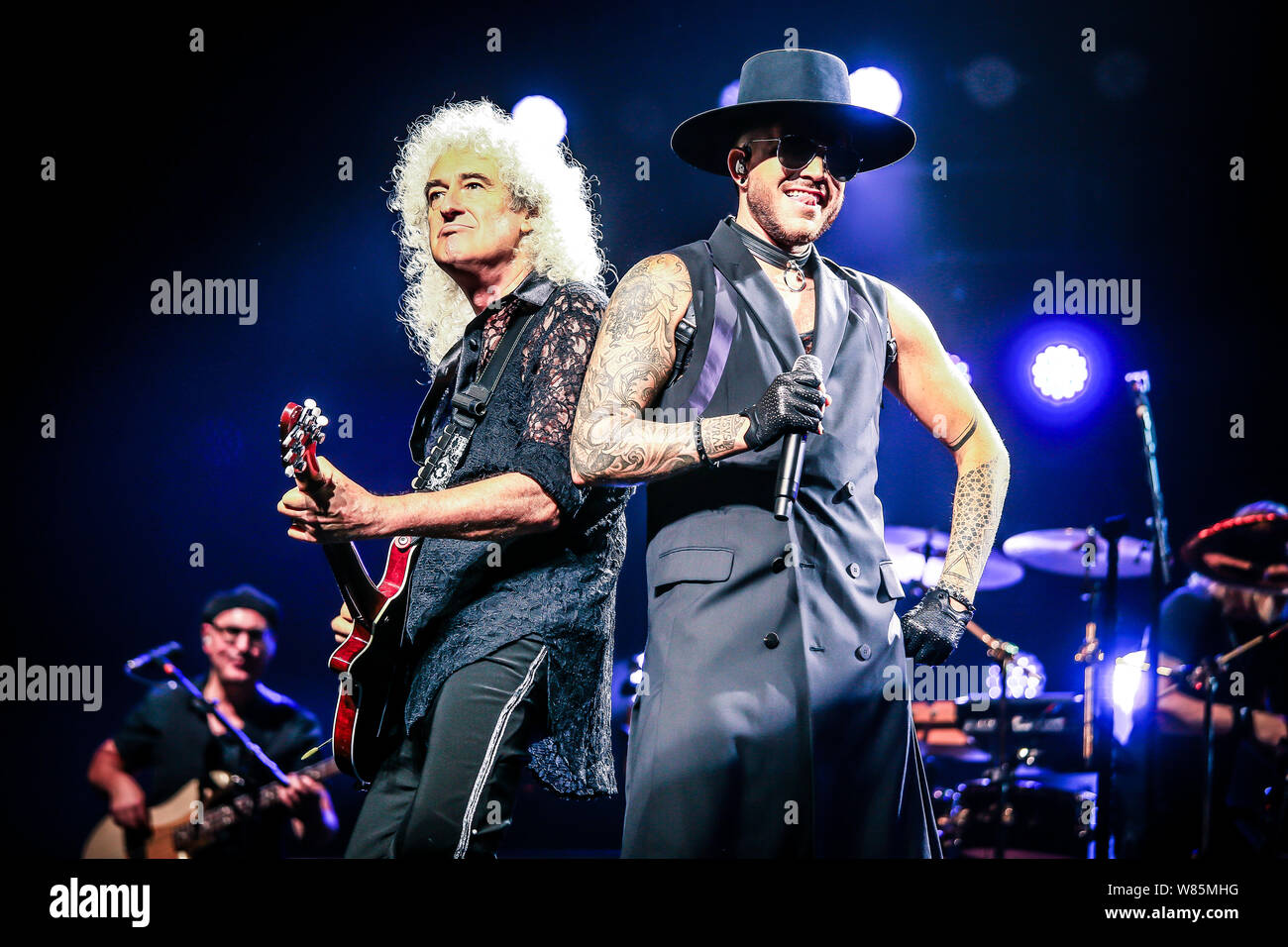
Adam Lambert's live band and touring ensemble represent a powerhouse of contemporary rock and pop musicianship, carefully assembled to support his powerhouse vocal range, theatrical performance style, and high-profile collaborations, most notably with legendary rock band Queen.
Understanding the composition, history, and technical setup of Adam Lambert’s band requires examining the individual instrumentalists who have shaped his sound since his breakout on American Idol in 2009. Over more than a decade of international touring, solo releases, and massive stadium residencies with Queen + Adam Lambert, the lineup has balanced stability with world-class session players, delivering arrangements that bridge glam rock, electronic pop, and soulful balladry.
The Foundations of Adam Lambert's Live Ensemble
When Adam Lambert transitioned from television finalist to a solo recording artist with his debut album For Your Entertainment (2009), he required a backing band capable of navigating rapid genre shifts. His music demanded heavy rock guitar riffs, intricate synthesizer landscapes, and driving dance-pop percussion.
Unlike bands formed organically as garage outfits, a major-label pop-rock touring band is typically curated by a musical director in collaboration with the artist. The primary objective is to replicate complex studio arrangements in a live setting while maintaining the spontaneous energy of a rock concert. Lambert's early touring ensembles laid the groundwork for this dynamic, utilizing veteran session musicians who understood how to frame a larger-than-life vocalist without overpowering the mix.
Key Instrumental Roles in the Live Setup
- Lead Guitar: Responsible for translating the aggressive, melodic textures of modern rock and the iconic guitar styling of classic rock when performing with Queen.
- Bass Guitar: Anchors the low end, bridging synth-bass electronica with traditional fingerpicked or slapped funk and rock basslines.
- Keyboards and Synths: Recreates the intricate electronic layers of solo tracks like "Whataya Want from Me" and provides orchestral and piano arrangements.
- Drums and Percussion: Drives the tempo with a hybrid acoustic-electronic kit, ensuring punchy dance grooves and heavy rock backbeats.
- Background Vocals: Often handled by instrumentalists or dedicated backing singers to support Lambert's extensive multi-track harmony arrangements.
Key Musicians in Adam Lambert's Touring History
While Adam Lambert's solo touring lineup has seen various iterations depending on album cycles—such as Trespassing (2012), The Original High (2015), and Velvet (2020)—certain core players have defined his sound. Furthermore, his long-term role as the frontman for Queen + Adam Lambert introduced him to one of the most famous rhythm sections and touring crews in rock history.
When touring under his own name, Lambert has routinely enlisted top-tier Los Angeles session players. These musicians are selected for their reading proficiency, improvisational skill, and stamina. A standard solo tour lineup features a four-to-five-piece core band, occasionally expanded with horn sections or string quartets for specialized promotional performances and television appearances.
| Musician | Primary Role | Associated Era / Tours | Notable Contributions |
|---|---|---|---|
| Tommy Joe Ratliff | Bass Guitar / Lead Guitar | 2009–Present (Solo & QAL) | Longtime collaborator; transitioned from bassist to guitarist; integral visual and sonic fixture. |
| Saam Hashemi | Keyboards / Programming | Solo Eras (Trespassing / The Original High) | Handled complex electronic sound design, sequencing, and synth bass integration. |
| Isaac Carpenter | Drums | Solo Tours and Selected Projects | Provided driving, heavy-hitting rock percussion suited for Lambert's high-energy theatrical numbers. |
| Taylor Hawkins (Tribute / Guest) | Drums | Various Special Appearances | Occasional guest collaborator and rock peer within the broader Los Angeles music community. |
The Queen + Adam Lambert Phenomenon
It is impossible to discuss Adam Lambert's band without addressing his partnership with Queen. Beginning with a shared performance on the eighth season finale of American Idol in 2009, and formalizing into a touring entity in 2012, Lambert stepped into the role previously held by the late Freddie Mercury.
For these tours, Lambert does not bring a separate solo band; instead, he fronts Queen's surviving original members alongside their elite touring ensemble. This distinction shifts the musical context entirely from contemporary pop-rock to stadium classic rock.
The Queen Touring Lineup
- Brian May: Lead guitar, co-founder of Queen, and architect of the signature layered guitar orchestrations.
- Roger Taylor: Drums, percussion, and high-register backing vocals, anchoring the band's foundational groove.
- Neil Fairclough: Bass guitar, maintaining the complex, melodic basslines originally played by John Deacon.
- Spike Edney: Keyboards, musical direction, and rhythm guitar, having toured with Queen since the 1980s.
- Tyler Warren: Percussion and auxiliary drums, supporting Roger Taylor's rhythm section.
This collaboration requires Lambert's bandmates (and Lambert himself) to adapt to a legendary musical heritage. Brian May's guitar tone, characterized by his custom Red Special guitar and multiple Vox AC30 amplifiers run in wet-dry-wet configurations, dictates much of the high-end frequency spectrum. Consequently, Lambert's solo arrangements often lean into a similarly robust, guitar-driven ethos when he performs his own catalog live.
Technical Production and Musical Direction
Operating a high-profile international touring band requires rigorous technical infrastructure. Musical directors oversee stage arrangements, click tracks, backing tracks, and in-ear monitor (IEM) mixes for every musician on stage.
In-Ear Monitoring and Stage Volume
Modern tours for artists like Adam Lambert rely heavily on custom-molded in-ear monitors. Because Lambert's vocal delivery ranges from soaring operatic belts to subtle, breathy falsettos, the stage volume must be strictly controlled to protect his hearing and ensure pristine vocal pickup.
- Drummers use electronic pads alongside acoustic shells to control bleed into vocal microphones.
- Guitar amplifiers are frequently housed off-stage in isolation booths or replaced by digital load boxes and cabinet simulators (such as Fractal Audio or Kemper profilers), reducing stage clutter and giving front-of-house engineers absolute control over the mix.
Sequencing and Electronics
In solo tracks like "Ghost Town," electronic production elements are central to the composition. The live band utilizes backing tracks synchronized via playback rigs operated from the stage or monitor world. These rigs provide the sub-bass drops, sequenced synthesizer arpeggios, and orchestrated vocal doubles that fans expect to hear alongside the live instruments.
Solo Work vs. Collaborative Live Arrangements
A critical aspect of Adam Lambert's musicianship is how his band alters arrangements depending on the venue and project.
During theatrical residencies, such as his Las Vegas engagements, the band expands to include multi-instrumentalists capable of shifting from funk-inflected basslines (Velvet era) to soaring glam-rock anthems. Conversely, stripped-down acoustic promotional tours feature a streamlined setup—often just Lambert accompanied by a single acoustic guitarist or pianist—demonstrating the structural integrity of his songs stripped of production gloss.
Frequently Asked Questions
Who is the long-time bassist and guitarist in Adam Lambert's band?
Tommy Joe Ratliff is Adam Lambert's most notable and long-standing band member. Initially hired as the touring bassist for Lambert's post-American Idol solo runs, Ratliff later transitioned to lead and rhythm guitar roles, remaining a consistent presence in Lambert's musical circle for over a decade.
Does Adam Lambert use the same band for his solo shows and Queen + Adam Lambert?
No. For his solo material, Lambert utilizes a rotating ensemble of contemporary pop and rock session musicians based primarily in Los Angeles. When touring as Queen + Adam Lambert, he performs with Queen's core members Brian May and Roger Taylor, alongside their dedicated veteran touring band.
What genre of music does Adam Lambert's band typically play?
The band's style varies depending on the setlist, spanning dance-pop, electronic-infused rock, funk, soul, and arena classic rock. Their versatility allows them to pivot smoothly from synthesizer-heavy modern pop to complex, guitar-driven stadium rock anthems.
How are live backing vocals handled during Adam Lambert's concerts?
While Adam Lambert is renowned for his powerful lead vocals and extensive multi-track studio stacking, his live band members actively contribute harmony vocals from the stage. Additionally, specialized vocal processors and pre-recorded harmony tracks are occasionally integrated via backing hardware to replicate complex studio arrangements.
Where can I find official live recordings of Adam Lambert's band?
Official live performances can be found on concert films such as Queen + Adam Lambert: Live Around the World (2020), as well as various televised concert broadcasts, live streaming specials, and official promotional videos released via Lambert's verified YouTube and streaming channels.
Conclusion and Next Actions
Adam Lambert's band represents a masterclass in modern touring musicianship, successfully navigating the technical demands of electronic pop, glam rock, and legendary stadium rock repertoire. Whether analyzing the punchy rhythm section of his solo tours or his historic tenure fronting Queen, the ensemble functions as a precise vehicle for one of contemporary music's most dynamic vocalists. To explore their work further, examine official live concert releases or review album credits for Trespassing, The Original High, and Velvet to identify the specific session players behind individual tracks.