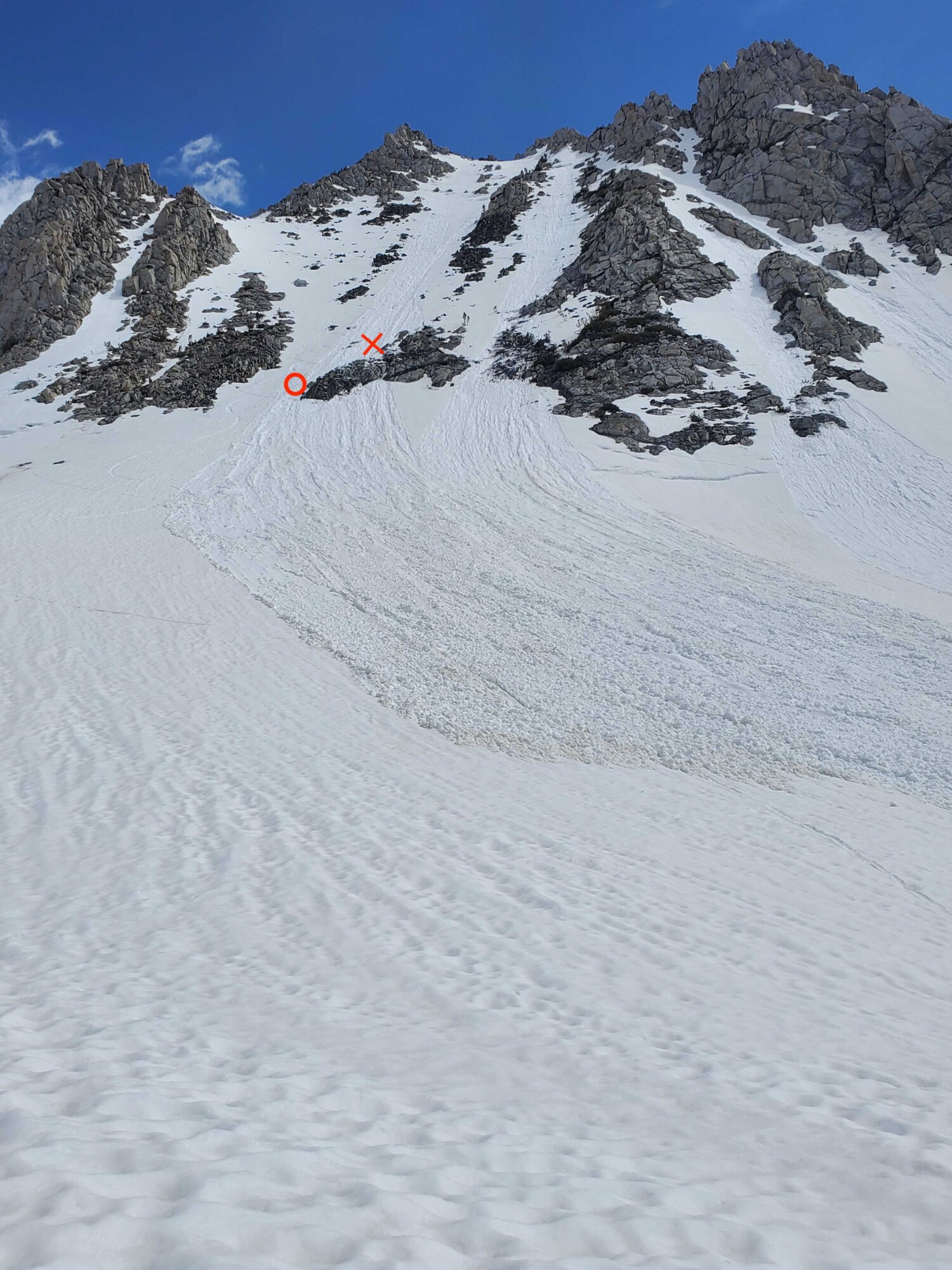
An accident avalanche refers to a rapid, downslope movement of snow, ice, and debris triggered by human activity, often occurring in mountainous terrain during winter and spring. Unlike naturally triggered events, these are characterized by the presence of a person or group in a vulnerable slope, leading to immediate burial or trauma risks that require specialized search and rescue responses.
The Mechanics of Avalanche Triggering
Avalanches occur when the gravitational pull on a snowpack exceeds the strength of its internal layers. When an "accident avalanche" is mentioned, the primary trigger is the added weight and stress applied to the snowpack by a human—most commonly a skier, snowboarder, or mountaineer.
The failure typically occurs within a "weak layer"—a specific stratigraphic level of the snowpack that has poor structural integrity, such as depth hoar, surface hoar, or buried graupel. When a human crosses a slope, their weight propagates a fracture through this weak layer, often causing it to collapse under the weight of the overlying "slab." Once the slab breaks free from its anchor points, the internal friction of the snowpack drops, and the entire mass begins to accelerate downslope.
Understanding the human element in avalanche release is critical. Statistics from organizations like the Colorado Avalanche Information Center (CAIC) indicate that the vast majority of fatal accidents occur when the victim or a member of their party triggers the slide. This shift in momentum—from stationary snow to a high-velocity fluid-like state—is why human-triggered events are so dangerous; they happen without warning at the exact moment the victim is most exposed.
Terrain Analysis and Risk Factors
To mitigate the risk of an accident avalanche, practitioners must evaluate the "avalanche triangle": snowpack, weather, and terrain. Terrain is the only factor that a person can reliably control through decision-making.
Key Terrain Indicators
- Slope Angle: Most human-triggered avalanches occur on slopes between 30 and 45 degrees. Below 30 degrees, the slope is generally not steep enough for the snow to slide; above 45 degrees, the snow often sloughs off naturally before enough mass accumulates to become dangerous.
- Aspect: The direction a slope faces dictates how much sun and wind it receives. North-facing slopes in the Northern Hemisphere are often colder and more prone to persistent weak layers, while south-facing slopes are more susceptible to wet-slab avalanches as temperatures rise during the day.
- Terrain Traps: These are features that increase the consequences of being caught in an avalanche. Gullies, cliffs, and dense timber can turn a minor slide into a fatal event by burying the victim deeper or causing traumatic injuries.
Comparative Table: Common Avalanche Hazards
| Hazard Type | Trigger Mechanism | Predictability | Primary Risk |
|---|---|---|---|
| Slab Avalanche | Human weight on weak layer | Moderate | Burial and suffocation |
| Loose Snow (Sluff) | Surface instability | High | Falling/off-balance |
| Cornice Fall | Structural failure of snow lip | Low | Trauma and secondary slide |
| Wet Slab | Liquid water infiltration | High (diurnal) | Deep burial/debris |
Requirements for Safe Backcountry Travel
Safety in the backcountry is not merely about gear; it is about education and planning. Anyone entering avalanche-prone terrain in 2026 should adhere to standardized industry protocols to minimize the likelihood of an accident.
1. Education and Certification
Before entering the backcountry, individuals should complete a certified avalanche safety course. In the United States, these are generally categorized into Level 1, Level 2, and professional-level training. These courses teach students how to read avalanche forecasts, perform snowpack tests (such as compression tests and extended column tests), and execute search and rescue operations.
2. Essential Safety Gear
Every member of a party must carry the "Avalanche Trinity," which is the minimum equipment requirement for any backcountry travel:
- Avalanche Transceiver (Beacon): A radio device that emits a signal. In the event of a burial, survivors switch their beacons to "search" mode to locate the victim’s signal.
- Probe: A collapsible pole used to pinpoint the exact location of a buried victim through the snow.
- Shovel: A reinforced metal shovel capable of digging through dense, hard-packed avalanche debris.
3. Monitoring Forecasts
Professional avalanche centers provide daily regional forecasts. These forecasts assign an "Avalanche Danger Rating" (Low, Moderate, Considerable, High, Extreme). In 2026, these forecasts are accessible via mobile apps and official agency websites. A "Considerable" rating is statistically the most dangerous day for travelers, as it represents a scenario where the snowpack is unstable but conditions may still appear tempting to the casual observer.
Procedures During an Avalanche Incident
If an accident occurs, the response must be immediate and systematic. The time window for successful rescue is narrow; the survival rate for victims buried under snow drops significantly after 15 to 20 minutes due to asphyxiation.
- Safety First: Never rush into an area that is still sliding or where secondary slides are possible.
- Search: All survivors must immediately switch their transceivers to search mode. Follow the signal until the strongest reading is found.
- Probe: Use the probe in a spiral pattern around the strongest signal to confirm the location and depth of the victim.
- Excavation: Dig strategically. If the victim is buried, dig down-slope from the probe, not directly on top of it, to create a ramp that allows for easier removal of the victim and provides space to clear their airway.
Common Mistakes and Human Factors
Often, the cause of an avalanche accident is not a lack of technical knowledge but a failure of decision-making. Experts refer to these as "heuristic traps."
- Familiarity: Assuming a slope is safe because you have skied it many times before.
- Social Proof: Following others onto a slope because they appear confident, assuming they have done their own safety assessment.
- Commitment: Pushing forward into dangerous terrain because of time, energy, or money already invested in the trip (the "sunk cost" fallacy).
- Expert Halo: Deferring judgment to the most experienced or vocal member of the group, even if that person is making an error.
Legal and Medical Considerations
It is vital to acknowledge that avalanche accidents often result in complex medical and legal scenarios. Victims frequently suffer from hypothermia, blunt force trauma, and asphyxiation. Rescue operations in remote areas can be logistically challenging and expensive; in many jurisdictions, search and rescue (SAR) costs are covered by the state, but medical evacuation costs are the responsibility of the individual.
Users should note that professional advice regarding snow safety should be sought from certified mountain guides or official avalanche forecast centers. No written guide or digital resource can replace the real-time, site-specific evaluation conducted by an experienced professional in the field.
Frequently Asked Questions
What should I do if I am caught in an avalanche? If you trigger a slide, try to move to the side of the debris flow, where the force is weaker. Use a "swimming" motion to stay near the surface, and if you are buried, attempt to clear an air pocket in front of your face as the snow begins to set like concrete.
Is it safe to travel alone in avalanche terrain? No. Avalanche safety relies on a group rescue effort. A solo traveler has no one to perform a search or initiate a rescue if they are buried, which makes survival nearly impossible in a significant burial event.
How do I interpret an avalanche forecast? Forecasts include the "Avalanche Problem," which identifies the type of instability (e.g., wind slab, persistent weak layer, loose wet). Read the full narrative, not just the danger rating, to understand where in the terrain the risk is highest (e.g., above treeline on northern aspects).
What is the best way to test snow stability? While you can dig a snow pit and perform stability tests like a Compression Test or Extended Column Test, these provide only a snapshot of the snowpack in one specific location. Never rely on a single test to deem a slope "safe"; consider it an indicator of potential instability.
Where can I find current 2026 avalanche information? In the United States, rely on the American Avalanche Association to locate your regional avalanche center. Internationally, the European Avalanche Warning Services provides comprehensive data.
Next Steps for Backcountry Users
If you are planning to engage in activities in mountainous terrain, your first step is to visit the website of your regional avalanche center to check the current forecast. If you have not undergone formal training, prioritize registering for a Level 1 avalanche course before the season begins. Finally, ensure your rescue equipment is functional, test your beacon’s battery life and signal, and establish a clear communication plan with your partners before leaving the trailhead. Every excursion should begin with a team "check-in" to discuss the day’s plan, known hazards, and the group’s tolerance for risk.