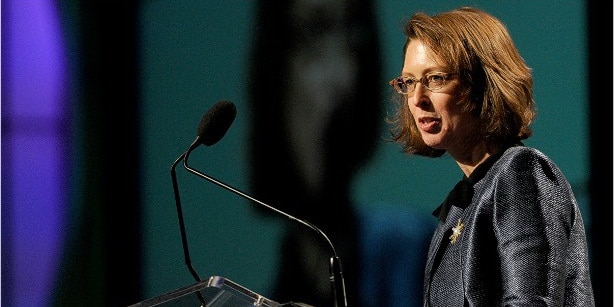
As of 2026, Abigail Johnson’s net worth is estimated to be approximately $35 billion, making her one of the wealthiest women in the world and a dominant figure in the financial services industry. Her fortune is primarily derived from her ownership stake in FMR LLC, the parent company of Fidelity Investments, where she serves as Chair and Chief Executive Officer.
Abigail Johnson, often referred to as "Abby," represents the third generation of the Johnson family to lead the Boston-based financial giant. While many billionaire profiles focus on inherited wealth, Johnson’s net worth is a direct reflection of her active management and the strategic evolution of Fidelity under her tenure. Since taking the helm, she has navigated the company through the transition from active fund management dominance to the era of low-cost indexing, digital assets, and automated advisory services.
To understand the scale of her wealth, one must look beyond a simple dollar figure and examine the structural mechanics of Fidelity, the valuation of private equity, and the diversification strategies she has implemented over the last decade.
The Foundation of Wealth: Fidelity’s Private Structure
The most significant component of Abigail Johnson’s net worth is her ownership stake in FMR LLC. Unlike competitors such as BlackRock or Charles Schwab, Fidelity is a privately held company. This private status is a crucial factor in how her net worth is calculated and why it often remains more stable than that of CEOs leading publicly traded firms.
The Johnson Family Stake
The Johnson family is estimated to own approximately 49% of FMR LLC. Within this family block, Abigail Johnson holds the largest individual share, estimated at roughly 24.5%. The remaining shares are largely held by current and former employees of the firm. This ownership structure allows the company to focus on long-term strategic goals rather than the quarterly earnings pressure felt by public companies.
Because Fidelity is private, its valuation is determined by independent analysts (such as those at Bloomberg and Forbes) who use a "comparables" method. They look at the market capitalization, revenue, and assets under management (AUM) of public peers like BlackRock and T. Rowe Price and apply similar valuation multiples to Fidelity’s financials. As Fidelity’s AUM has climbed toward the $13 trillion to $15 trillion range in 2026, the valuation of Abigail’s stake has increased proportionally.
Revenue Diversification
The value of Abigail Johnson’s stake is bolstered by Fidelity’s diverse revenue streams. The company is not just a mutual fund provider; it is a multi-faceted financial engine:
- Retail Brokerage: Serving millions of individual investors.
- Institutional Services: Providing clearing and custody services for other financial firms.
- Workplace Investing: Managing 401(k) and retirement plans for thousands of corporations.
- Healthcare and Benefits: Adminising health savings accounts (HSAs) and other benefit programs.
By maintaining leadership in these varied sectors, Johnson has ensured that her net worth is insulated against downturns in any single market segment.
Career Trajectory and Leadership Impact
Abigail Johnson did not simply inherit her position; her "explained" net worth includes the value she added through decades of operational experience. She joined the firm in 1988 as an analyst in the equity division. This foundational experience in "the trenches" of investment management provided her with the technical depth required to later overhaul the firm's product lineup.
From Analyst to CEO
She ascended through the ranks, serving as the head of the retail, workplace, and institutional businesses before being named President in 2012 and CEO in 2014. In 2016, she succeeded her father, Edward "Ned" Johnson III, as Chairperson. Her leadership has been defined by a willingness to disrupt Fidelity’s own successful business models before competitors could do it for them.
Strategic Pivots that Increased Valuation
Three specific strategic moves during her tenure have significantly enhanced the firm's valuation and, by extension, her personal net worth:
- The Shift to Zero-Fee Funds: In 2018, Johnson made the bold move to introduce the industry’s first zero-expense-ratio mutual funds. While this seemed counterintuitive for a profit-seeking firm, it served as a massive customer acquisition tool, drawing billions in assets that could then be cross-sold into other profitable services.
- Digital Assets and Blockchain: Long before most institutional leaders took cryptocurrency seriously, Johnson pushed Fidelity into the space. Fidelity Digital Assets, launched in 2018, established the firm as a premier custodian for Bitcoin and other digital assets for institutional clients. By 2026, this division has become a significant contributor to the firm’s innovative brand value.
- Modernizing the Tech Stack: Under her guidance, Fidelity invested billions into cloud computing and AI-driven personalized wealth management. This transition from a traditional "fund house" to a "fintech powerhouse" has allowed Fidelity to command a higher valuation multiple in the eyes of private equity analysts.
Valuation Methodology: How Experts Calculate $35 Billion
Since FMR LLC does not trade on the New York Stock Exchange, calculating Abigail Johnson’s net worth requires a sophisticated technical approach. Financial analysts typically follow a three-step process:
1. Revenue and EBITDA Analysis
Analysts review FMR LLC’s annual performance reports. Although private, the company frequently shares high-level financial data. For example, if Fidelity reports annual revenue of $28 billion and an EBITDA (Earnings Before Interest, Taxes, Depreciation, and Amortization) margin of 30%, it generates roughly $8.4 billion in annual earnings.
2. Peer Group Multiples
The "Peer Group" includes firms like BlackRock, Charles Schwab, and Franklin Resources. If these public companies are trading at an average of 12 times their EBITDA, analysts will apply a similar multiple to Fidelity.
- Example: $8.4 billion (EBITDA) x 12 (Multiple) = $100.8 billion valuation.
3. Illiquidity Discount
Because Abigail Johnson cannot sell her shares on an open exchange tomorrow morning, analysts often apply an "illiquidity discount" of 10% to 20%.
- Adjusted Valuation: $100.8 billion - 15% discount = $85.68 billion.
- Individual Stake: 24.5% of $85.68 billion = ~$21 billion (from the core business alone).
The remaining portion of her $35 billion net worth comes from other family assets, real estate holdings, and the "F-Prime Capital" venture arm, which manages billions in non-Fidelity related investments.
Comparative Wealth Table
To provide context for Abigail Johnson’s wealth in 2026, the following table compares her standing and the scale of Fidelity against other major industry benchmarks.
| Feature | Abigail Johnson / Fidelity | BlackRock (Peer) | Charles Schwab (Peer) |
|---|---|---|---|
| Estimated Net Worth | ~$35 Billion | ~$1.2 Billion (Larry Fink) | ~$10 Billion (Charles Schwab) |
| Primary Wealth Source | Equity Stake in FMR LLC | Salary & Public Stock | Founder/Major Shareholder |
| Company Status | Private | Public | Public |
| Est. Assets Under Management | $14.2 Trillion (2026) | $11.5 Trillion | $9.8 Trillion |
| Core Strategy | Diversified / Multi-Channel | Institutional Indexing | Retail / Banking |
| Crypto Presence | High (Early Mover) | High (ETF Leader) | Moderate |
Philanthropy and the Impact of Wealth
A significant aspect of Abigail Johnson’s wealth is managed through the Johnson Family Foundation and various donor-advised funds (DAFs). Fidelity is the largest provider of DAFs in the United States through Fidelity Charitable.
Unlike some of her billionaire peers who have signed the "Giving Pledge" (a commitment to give away the majority of their wealth), Johnson has maintained a more private approach to philanthropy. Her contributions often focus on:
- Arts and Culture: Significant support for the Boston Museum of Fine Arts and other Massachusetts-based institutions.
- Education: Major gifts to Harvard University (her alma mater) and other educational initiatives.
- Community Development: Impact investing in the Greater Boston area.
While these charitable endeavors reduce her taxable net worth, the growth of the underlying Fidelity equity continues to outpace her rate of giving, resulting in a net increase in her total wealth year-over-year.
Risks to Her Net Worth in 2026
Despite the massive scale of her fortune, several factors could influence the future "explanation" of her net worth. As a senior editor would note, no valuation is static.
Regulatory Pressure
The SEC and other global regulators in 2026 have increased scrutiny on "systemically important" private financial institutions. Any change in legislation that would force Fidelity to go public or break up its brokerage and asset management arms could lead to a significant revaluation—likely upward in the short term, but potentially volatile.
Market Volatility
As her wealth is tied to AUM, a prolonged bear market in equities or a collapse in the bond market would reduce the fees Fidelity collects. Since her net worth is a calculation of the company’s value, a 20% drop in the S&P 500 can lead to a multi-billion dollar "paper loss" for Johnson.
Competition from "Invisible" Rivals
The rise of decentralized finance (DeFi) and AI-led non-bank startups continues to pressure the traditional fee models of firms like Fidelity. To maintain her net worth, Johnson must ensure Fidelity remains at the forefront of the technological curve.
Frequently Asked Questions
Does Abigail Johnson own 100% of Fidelity?
No. Abigail Johnson is estimated to own approximately 24.5% of FMR LLC. The Johnson family as a whole owns about 49%, with the remaining 51% owned by employees and former employees of the company. This distributed ownership is a key part of the firm's culture.
How does Abigail Johnson’s net worth compare to her father’s?
At the time of his passing in 2022, Edward "Ned" Johnson III had a net worth of approximately $11 billion. Abigail’s net worth has surpassed this significantly due to the massive growth in Fidelity’s AUM and the overall bull markets of the early 2020s, along with the consolidation of family shares.
Is Abigail Johnson the richest person in finance?
She is consistently among the top five. While individuals like Ken Griffin (Citadel) or Jeff Yass (Susquehanna) may occasionally surpass her depending on hedge fund performance, Johnson’s wealth is considered more stable because it is tied to an institutional asset manager rather than a volatile trading firm.
Can I buy stock in Fidelity to invest alongside her?
No. Fidelity (FMR LLC) is a private company and does not trade on public exchanges. The only way for the public to "invest" with her is by using Fidelity’s products, such as their mutual funds, ETFs, or brokerage services.
What is her annual salary?
As the CEO of a private company, her exact salary is not public record. However, in the financial services industry, a CEO of a firm the size of Fidelity would typically receive a base salary in the low millions, with total compensation (including bonuses and profit-sharing) reaching $20 million to $50 million annually. This is secondary to the growth of her equity stake.
How has her net worth changed since 2020?
Her net worth has nearly doubled since 2020. This was driven by the surge in retail investing during the pandemic, the successful launch of zero-fee funds, and the massive appreciation of the stock market through 2024 and 2025.
Summary of Findings
Abigail Johnson’s net worth of $35 billion is a testament to the enduring power of the Fidelity brand and her aggressive modernization of its business model. By pivoting the firm toward digital assets, low-cost indexing, and a robust technology stack, she has not only preserved her family’s legacy but expanded it into a new era of finance.
For those tracking the intersection of personal wealth and corporate leadership, Johnson remains the gold standard of "active ownership." Her wealth is not merely a static asset but a dynamic reflection of one of the world's largest financial engines. To stay informed on her net worth, one must monitor the annual AUM reports of Fidelity and the broader valuation trends of the asset management industry.
Recommendation: If you are looking to track the health of Johnson’s fortune, focus on Fidelity's quarterly AUM updates and any news regarding their private valuation rounds or employee share-buyback programs. These are the most reliable indicators of the "real-world" value of her 24.5% stake.