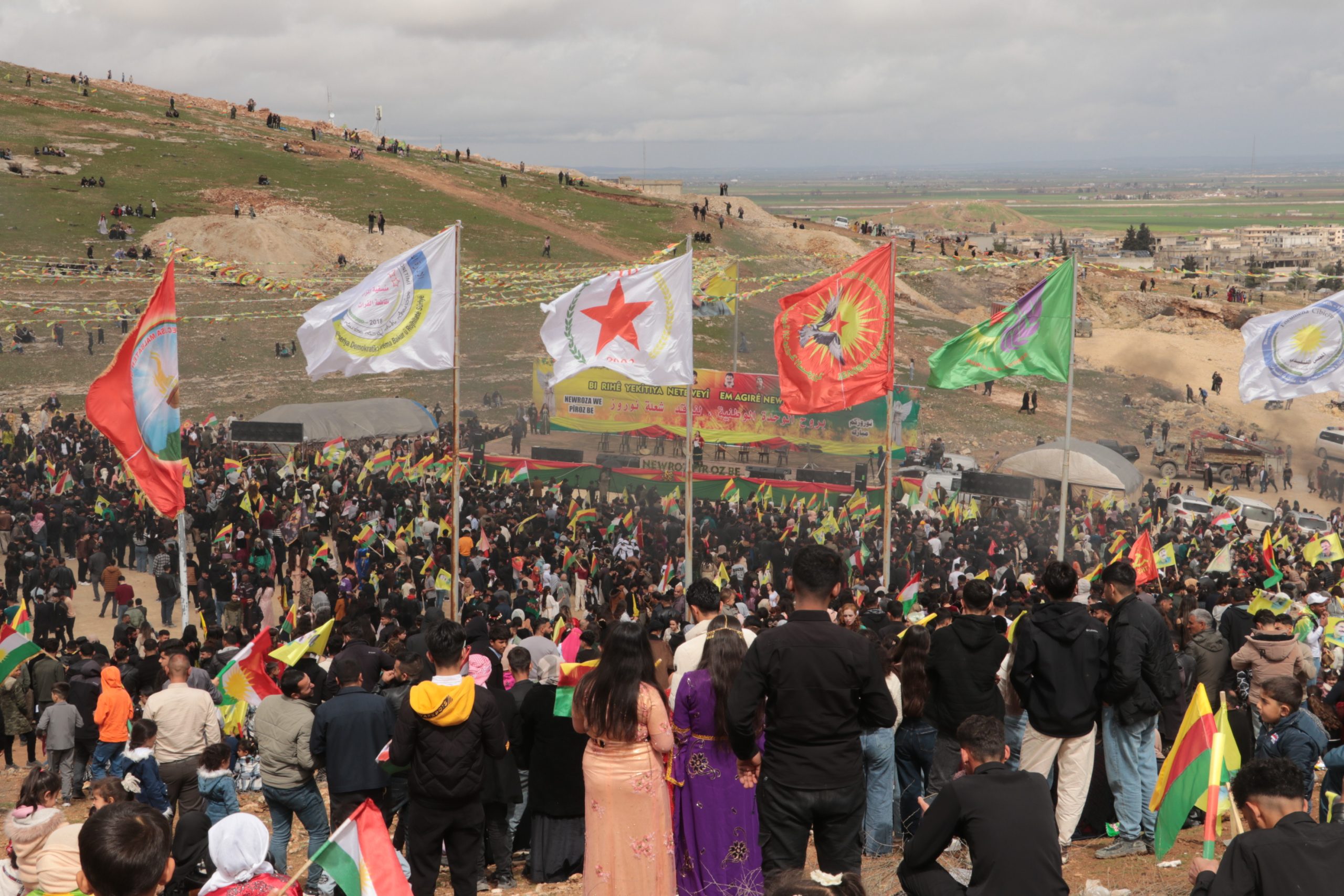
As of 2026, Abdullah Öcalan does not possess a personal net worth in any traditional or verifiable sense. Having been incarcerated in the Imralı F-type High-Security Prison in Turkey since 1999, Öcalan has no access to personal bank accounts, real estate holdings, or private investments. While he remains the ideological figurehead of the Kurdistan Workers' Party (PKK), a group with significant annual revenue, these funds are managed by organizational structures and do not constitute his personal wealth.
The Distinction Between Personal Assets and Organizational Control
When discussing the "net worth" of a political figure like Abdullah Öcalan, it is essential to distinguish between the individual and the movement they lead. In the case of Öcalan, this distinction is absolute due to his long-term imprisonment and the nature of his political ideology. Since his capture in Nairobi in 1999, Öcalan has been held in near-total isolation. Under Turkish law and international monitoring, a prisoner in his position is prohibited from engaging in commercial activities or managing private financial portfolios.
Furthermore, Öcalan’s transition from Marxist-Leninist roots to the philosophy of "Democratic Confederalism" emphasizes communal ownership and the rejection of individual capital accumulation. Consequently, there are no records of Öcalan owning shares in companies, luxury estates, or liquid assets. Any financial power attributed to his name is actually a reflection of the PKK’s decentralized financial network, which operates across Europe, the Middle East, and the Caucasus.
To analyze his financial context in 2026, one must look at the "shadow economy" of the organization he founded. While Öcalan himself lives a life of enforced asceticism, the movement continues to move hundreds of millions of dollars annually to support its political, social, and militant infrastructure. These funds are never categorized as his personal net worth in any reputable financial or intelligence report.
The Evolution of PKK Finances Under Öcalan’s Ideology
The financial history of the PKK is intrinsically linked to Öcalan’s leadership phases. In the early years (late 1970s and 1980s), the organization relied heavily on small-scale donations from Kurdish students and workers. As the conflict escalated, the need for a robust financial apparatus became paramount. By the 1990s, the PKK had established a sophisticated "taxation" system among the Kurdish diaspora, particularly in Germany, France, and the Benelux countries.
This system, often referred to as the kampanya (campaign), involves annual fundraising drives. Intelligence estimates from 2026 suggest that these campaigns continue to be a primary source of legitimate-looking revenue. However, because the PKK is designated as a terrorist organization by Turkey, the United States, and the European Union, these funds are subject to rigorous anti-money laundering (AML) and counter-terrorism financing (CTF) regulations.
Öcalan’s role in this financial evolution was strategic rather than operational. He provided the ideological justification for the "revolutionary tax," arguing that the liberation of the Kurdish people required a self-sustaining economy independent of the Turkish state. This ideological framework ensured that the money remained within the party’s "war chest" rather than being diverted to individual leaders’ pockets, a factor that distinguishes the PKK from many other contemporary insurgent groups.
Revenue Streams: How the Movement Sustains Itself
While Öcalan’s personal balance sheet is empty, the organizational budget he initiated is vast. Experts in 2026 identify several key revenue streams that support the movement’s survival. These streams are complex and often bypass traditional banking systems through methods like the hawala system or cryptocurrency.
The Diaspora Contribution Network
The Kurdish diaspora remains the backbone of the movement's financial health. Millions of Kurds living in Europe contribute a portion of their income to various cultural and political organizations that are ideologically aligned with Öcalan. While these organizations claim to be independent, security agencies often view them as fronts for the PKK’s financial wing. These contributions cover legal fees for Öcalan’s defense team, media outlets, and diplomatic efforts in international forums.
Allegations of Illicit Trade
For decades, various international reports, including those from the U.S. Department of State, have alleged that the PKK is involved in the taxation of illicit trade routes. This includes the smuggling of fuel, tobacco, and, most controversially, narcotics moving from the East toward Europe. The organization has consistently denied direct involvement in drug trafficking, claiming that it only "taxes" smugglers passing through territories where it exerts influence. Regardless of the label, the revenue generated from controlling transit routes in the mountainous borders of Iraq, Iran, and Turkey contributes significantly to the movement’s liquidity.
Business Fronts and Social Cooperatives
In line with Öcalan’s writings on "social economy," the movement has invested in various legitimate businesses across the Middle East. These include agricultural cooperatives, construction firms, and media houses. These entities serve two purposes: they provide employment for supporters and they provide a "clean" revenue stream that can be used to fund civil society initiatives.
Legal Restrictions and Asset Freezes
The primary reason Abdullah Öcalan has a net worth of zero is the comprehensive legal framework designed to isolate him. Since the early 2000s, Turkey has enacted stringent laws regarding the assets of individuals associated with terrorism. Any property or fund that could be linked to Öcalan would be immediately seized by the Turkish Savings Deposit Insurance Fund (TMSF).
Internationally, the situation is similar. The U.S. Department of the Treasury maintains the PKK and its leadership on various sanctions lists. These sanctions prohibit any U.S. person or entity from engaging in financial transactions with them and freeze any assets within U.S. jurisdiction. Similar measures are enforced by the EU through its restrictive measures list. These legal barriers make it impossible for Öcalan to hold wealth in the global financial system.
Even the legal defense funds raised by his lawyers are scrutinized. While he is entitled to legal representation, the payment for these services must be proven to originate from legitimate sources. This constant surveillance ensures that no personal wealth can be accumulated or hidden.
The Cost of Isolation: Life at Imralı Prison
The reality of Öcalan’s daily life further confirms the absence of personal wealth. Since 1999, his existence has been confined to a small cell on a remote island. His "expenditures" are managed by the Turkish state, which provides for his basic necessities—food, clothing, and medical care—under the strict regulations of the penal system.
In the years leading up to 2026, reports from the Committee for the Prevention of Torture (CPT) have detailed the conditions of his confinement. He is permitted a limited number of books and newspapers, and his communication with the outside world is frequently restricted. In such an environment, the concept of "net worth" becomes an abstraction. His only "assets" are his manuscripts and the books he has authored during his imprisonment, the royalties for which are typically funneled back into the political movement or used for his legal defense, rather than personal enrichment.
| Revenue Category | Estimated Source | Usage of Funds |
|---|---|---|
| Diaspora Donations | Kurdish communities in Europe/North America | Political lobbying, media, and legal fees. |
| "Revolutionary Taxes" | Businesses in conflict-affected regions | Militant operations and territorial control. |
| Transit Fees | Control of regional smuggling routes | Procurement of logistics and equipment. |
| Commercial Interests | Cooperatives and front companies | Long-term organizational sustainability. |
| Personal Assets | None (Abdullah Öcalan) | N/A - Imprisoned since 1999. |
Comparative Financial Context: Political Leaders in Conflict
To understand why people search for Öcalan’s net worth, it is helpful to compare him with other leaders of non-state actors or revolutionary movements. Figures like Yasser Arafat or Nelson Mandela had vastly different financial trajectories. Arafat was often accused of maintaining secret accounts worth hundreds of millions, while Mandela, after his release, became a global figure with a significant estate managed by a trust.
Öcalan differs from these figures because he has never held a state office and has been in total state custody for nearly three decades. Unlike leaders who have "retired" or transitioned to recognized political roles, Öcalan’s status has remained static. The lack of a "post-revolutionary" phase in his life means he never had the opportunity to translate political influence into personal financial gain. In 2026, he remains a symbol of a cause rather than an actor in the global economy.
Frequently Asked Questions
Does Abdullah Öcalan receive royalties from his books?
While Abdullah Öcalan has written dozens of books and manifestos during his time in prison, any royalties generated are generally not accessible to him personally. These funds are usually managed by the publishing houses or Kurdish cultural foundations that distribute his work. The money is typically reinvested into the translation and distribution of his "Democratic Confederalism" ideology rather than being deposited into a personal account.
How much money does the PKK have in 2026?
Exact figures for the PKK's total wealth are difficult to verify because the organization operates outside the traditional banking system. However, intelligence reports from the mid-2020s estimate that the organization’s annual operational budget exceeds $400 million. This includes revenue from both legitimate donations and clandestine activities across the Middle East and Europe.
Who manages the finances of the movement while Öcalan is in prison?
The financial operations are handled by the KCK (Kurdistan Communities Union), which serves as the umbrella organization for the movement. Specifically, the "Finance Commission" based in the Qandil Mountains of Northern Iraq is responsible for budget allocation, while coordinators in Europe manage the diaspora fundraising activities. Öcalan has no direct role in these day-to-day financial decisions.
Are there any hidden bank accounts linked to Öcalan?
Despite decades of surveillance by Turkish and international intelligence agencies, no secret personal bank accounts belonging to Abdullah Öcalan have ever been discovered. The decentralized and ideology-driven nature of the PKK makes the accumulation of personal wealth by individual leaders highly unlikely and culturally taboo within the movement.
Can his family access any of his wealth?
Öcalan’s family members, including his brother Mehmet Öcalan, live modest lives in Turkey. They are subject to the same financial scrutiny as the leader himself. There is no evidence that the family has benefited financially from his position or that they are holding assets on his behalf.
Practical Recommendation for Researchers
For those investigating the financial aspects of Abdullah Öcalan or the PKK, it is recommended to focus on organizational financial reports and security agency assessments rather than searching for individual "net worth" figures. Reputable sources include the annual reports from Europol (TE-SAT) and the Financial Action Task Force (FATF). These documents provide a more accurate picture of how money moves within the movement and the legal mechanisms in place to prevent personal enrichment by its leaders. Understanding the distinction between an ideological symbol and a financial entity is crucial for any accurate socio-political analysis in 2026.