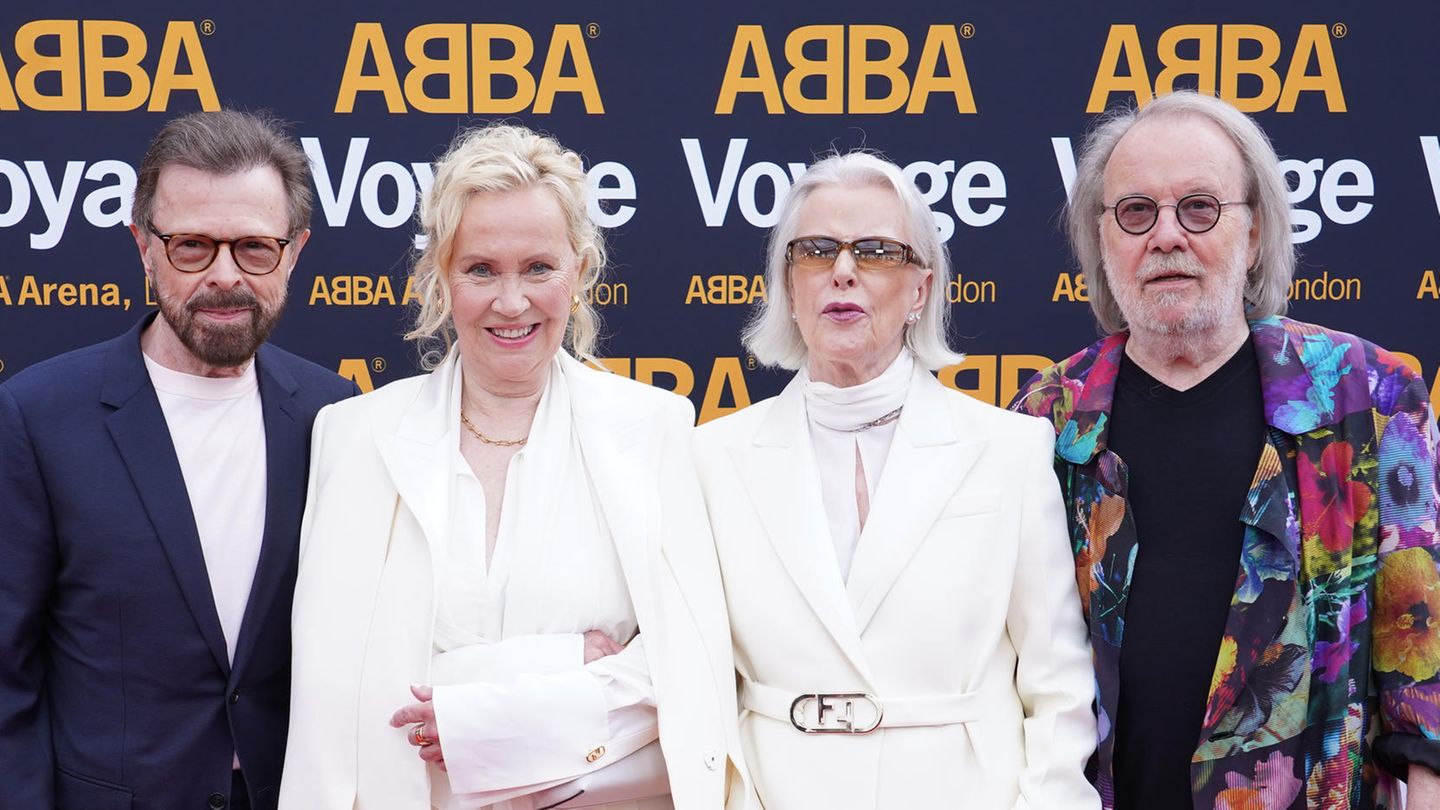
The names of the four ABBA band members are Agnetha Fältskog, Björn Ulvaeus, Benny Andersson, and Anni-Frid "Frida" Lyngstad. Formed in Stockholm in 1972, the group’s name is an acronym created from their first initials. They remain one of the most successful pop acts in history, famous for their 1974 Eurovision victory and their 2021 comeback, Voyage.
The Architecture of an Icon: How the Names Formed ABBA
To understand ABBA, one must first understand that the group was not a manufactured entity but a collision of four established Swedish stars. By the time they officially adopted the acronym ABBA in 1973, each member brought a distinct musical pedigree to the table. The name itself was originally used as a joke or a shorthand by their manager, Stig Anderson, as it was also the name of a well-known Swedish fish canning company. After negotiating for the rights to the name, the quartet solidified a brand that would become synonymous with melodic precision and complex vocal arrangements.
In 2026, the resonance of these four names is stronger than ever. The longevity of their music is supported not just by the catchy hooks of "Dancing Queen" or "Mamma Mia," but by the technical sophistication of the individuals behind the moniker. Each member contributed a specific "pillar" to the group’s structure: Agnetha and Frida provided the contrasting vocal layers, while Björn and Benny formed one of the most formidable songwriting and production duos in the history of recorded music.
Agnetha Fältskog: The Voice of Melancholy and Precision
Agnetha Fältskog was born on April 5, 1950, in Jönköping, Sweden. Before ABBA was even a concept, Agnetha was a successful solo artist in Scandinavia, having achieved a number-one hit at the age of 17 with "Jag var så kär" (I Was So In Love).
Vocal Characteristics and Technical Role
Agnetha is often characterized as the "blonde one" of the group, but her technical contribution was her soaring, high-soprano voice. She possessed a unique ability to convey profound sadness even within an upbeat pop song—a quality often referred to by fans and critics as "Swedish melancholy." This is most evident in tracks like "The Winner Takes It All," where her vocal performance captured the genuine emotional weight of her real-life divorce from Björn Ulvaeus.
Life After the Group and the 2020s
Following the group's "hiatus" in 1982, Agnetha pursued a solo career with varying degrees of international success, including albums like Wrap Your Arms Around Me. She famously retreated from the public eye for many years, leading to a "Greta Garbo-esque" reputation. However, her return for the Voyage sessions in 2021 proved that her vocal clarity remained remarkably intact. As of 2026, she remains a private figure, occasionally engaging with the official ABBA Voyage project, which continues to run its successful digital residency in London.
Björn Ulvaeus: The Lyricist and Business Visionary
Björn Ulvaeus, born April 25, 1945, in Gothenburg, began his career in the folk group the Hootenanny Singers. While Benny was the primary melodic architect, Björn was the rhythmic engine on guitar and the primary lyricist for the band's most iconic hits.
The Evolution of Songwriting
Björn’s lyrics evolved significantly throughout the 1970s. Early songs like "Waterloo" were simple and infectious pop fare, but by the time the band released The Visitors in 1981, his writing had turned toward more mature, political, and domestic themes. He handled the complexities of the band's internal relationships with a raw honesty that was rare for pop music of the era.
Technological Advocacy and 2026 Status
In the 21st century, Björn has transitioned into a tech-forward entrepreneur and a fierce advocate for a cashless society and artists' rights. He was the driving force behind the "ABBAtar" concept, working closely with Industrial Light & Magic to create the digital avatars that perform in the ABBA Arena. In 2026, he continues to be the most public-facing member of the group, frequently speaking on the intersection of music, intellectual property, and artificial intelligence.
Benny Andersson: The Melodic Mastermind
Benny Andersson (born December 16, 1946, in Stockholm) is widely regarded as one of the greatest pop composers of the 20th century. Before ABBA, he was a member of the Hep Stars, often called "The Swedish Beatles."
Technical Production and Musicality
Benny’s role in ABBA was centered on the keyboard and the production desk. He was influenced by everything from Swedish folk music and classical compositions to the "Wall of Sound" techniques of Phil Spector. Benny’s ability to layer synthesizers, pianos, and orchestral arrangements gave ABBA a "thick" sound that was difficult for other bands to replicate. He was known for being a perfectionist in the studio, often spending weeks refining a single melodic line.
Beyond the Pop Sphere
After ABBA, Benny’s musical ambitions expanded into musical theater and folk. Alongside Björn, he composed the musicals Chess and Kristina från Duvemåla. He also founded Benny Anderssons Orkester (BAO), which allows him to explore his roots in Swedish traditional music. In 2026, Benny remains active in his Stockholm studio, RMV Studios, continuing to produce and compose across multiple genres.
Anni-Frid "Frida" Lyngstad: The Jazz-Infused Mezzo-Soprano
Anni-Frid Lyngstad, born November 15, 1945, in Norway and raised in Sweden, brought a different vocal texture to the group. Known as "Frida," she was a seasoned jazz singer before joining forces with the other three members.
The Contrast of the Two Leads
If Agnetha was the "light" soprano, Frida was the "dark" mezzo-soprano. Her voice provided the warmth and lower-register strength that made the ABBA harmonies so distinctive. When the two women sang in unison, their voices blended so perfectly that they often sounded like a single, third "super-voice." Frida’s lead vocals on tracks like "Knowing Me, Knowing You" and "Money, Money, Money" showcased her dramatic range and stage presence.
Personal Life and Philanthropy
Frida’s life has been marked by both immense success and personal tragedy. She married Prince Heinrich Ruzzo Reuss of Plauen in 1992, earning the title of Princess Reuss of Plauen. Since the Prince’s death in 1999, she has lived a largely quiet life in Switzerland. In 2026, she remains dedicated to environmental causes and various charitable foundations, while still participating in the creative oversight of the ABBA brand alongside her three former bandmates.
The Dynamic of the Couples
One of the most compelling aspects of the ABBA members is that they were two married couples: Björn and Agnetha, and Benny and Frida. This dynamic is central to the "ABBA story" and heavily influenced their creative output.
| Member | Former Spouse | Relationship Period | Notable Song Influenced |
|---|---|---|---|
| Agnetha Fältskog | Björn Ulvaeus | 1971–1980 | "The Winner Takes It All" |
| Björn Ulvaeus | Agnetha Fältskog | 1971–1980 | "S.O.S." |
| Benny Andersson | Anni-Frid Lyngstad | 1978–1981 (engaged 1971) | "One of Us" |
| Anni-Frid Lyngstad | Benny Andersson | 1978–1981 (engaged 1971) | "When All Is Said and Done" |
The dissolution of these marriages in the late 70s and early 80s shifted the band's tone from celebratory to reflective. This transition is a major reason why their music has endured; it captures the full spectrum of human experience, from the joy of falling in love to the clinical reality of a divorce lawyer's office.
ABBA in 2026: The Digital Immortality
As we look at the group in 2026, the "names" of the members have achieved a form of digital immortality. The ABBA Voyage show at the Queen Elizabeth Olympic Park in London has become a blueprint for the future of the music industry. By using motion-capture technology, the four members—now in their late 70s and early 80s—perform every night as their 1979 selves.
This project was not a simple "greatest hits" cash-in. The members spent five weeks in motion-capture suits, performing the songs together to ensure that every movement and nuance of the digital avatars was authentic to their real-life personas. In 2026, this residency continues to draw thousands of fans weekly, proving that the brand of ABBA transcends the physical limitations of its human components.
Common Misconceptions About the Members
Despite their global fame, several myths persist regarding the members of ABBA.
- They were all Swedish: While the band is quintessentially Swedish, Anni-Frid Lyngstad was actually born in Bjørkåsen, Norway, the daughter of a Norwegian mother and a German soldier during World War II.
- The name was always ABBA: As mentioned, they originally performed under the clunky name "Björn & Benny, Agnetha & Anni-Frid." It was only through the insistence of their manager and the convenience of the acronym that "ABBA" was born.
- They never spoke after the breakup: While there were periods of distance, the members remained in contact over the decades, eventually reuniting in the studio in 2017 to record what would become the Voyage album.
FAQs About ABBA Band Members
Who are the 4 members of ABBA?
The four members are Agnetha Fältskog (vocals), Björn Ulvaeus (guitar, vocals, lyrics), Benny Andersson (keyboards, vocals, music), and Anni-Frid "Frida" Lyngstad (vocals). They formed in Stockholm, Sweden, in the early 1970s.
Are all the original ABBA members still alive in 2026?
Yes, as of 2026, all four original members of ABBA—Agnetha, Björn, Benny, and Frida—are alive. They have all reached their late 70s or early 80s and continue to be involved in the management of their musical legacy and the ABBA Voyage digital concert experience.
What do the letters in ABBA stand for?
ABBA is an acronym formed by the first letter of each member's first name: Agnetha, Björn, Benny, and Anni-Frid. The name was officially adopted in 1973 after the group had already begun performing together under their full names.
Did the members of ABBA date each other?
The group consisted of two married couples. Agnetha Fältskog and Björn Ulvaeus were married from 1971 to 1980. Benny Andersson and Anni-Frid Lyngstad were a couple for many years and were married from 1978 to 1981. The emotional weight of their respective divorces is famously reflected in the band's later lyrics.
Why did ABBA break up in 1982?
The group never officially "broke up" but rather announced a hiatus. The strain of the members' divorces, combined with a desire to pursue different creative paths—such as Benny and Björn’s interest in musical theater—led to the group drifting apart. They did not record new music together again until the sessions for Voyage began in 2017.
Who was the main singer in ABBA?
ABBA did not have a single "main" singer. Instead, they utilized the contrasting lead vocals of Agnetha Fältskog and Anni-Frid Lyngstad. Most songs featured both women singing in tight harmony, though they often took turns as the primary lead on specific tracks. Björn and Benny also occasionally sang lead, particularly in the group's early years.
Practical Recommendation for Fans
If you are looking to explore the individual contributions of the ABBA members further, the best next step is to visit the ABBA The Museum in Stockholm, Sweden. It provides an immersive look at the personal histories, instruments, and costumes of each member. For those unable to travel, the 2021 album Voyage serves as the most recent and technologically advanced entry point to understanding how their four distinct voices and talents still harmonize more than five decades after they first met.