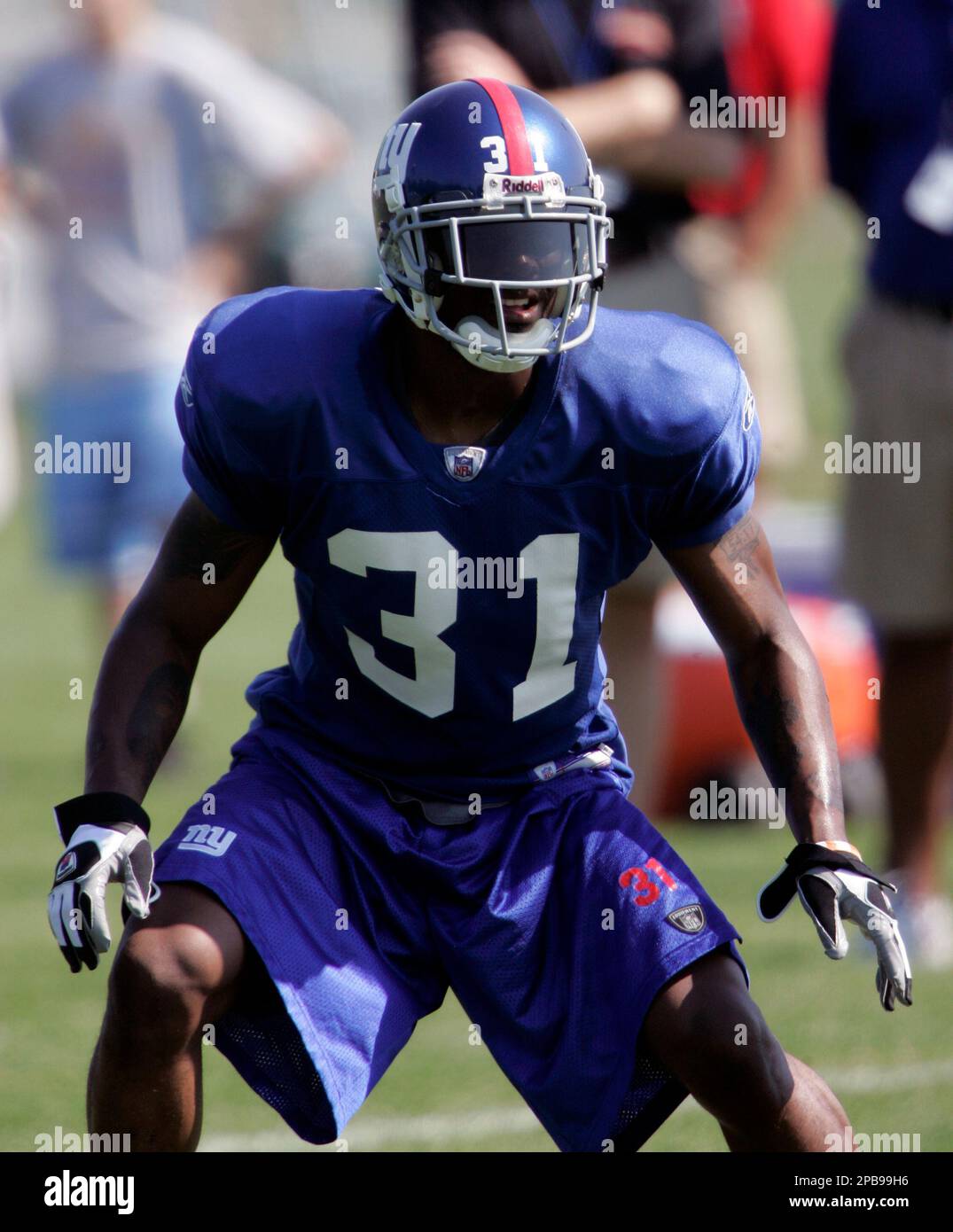
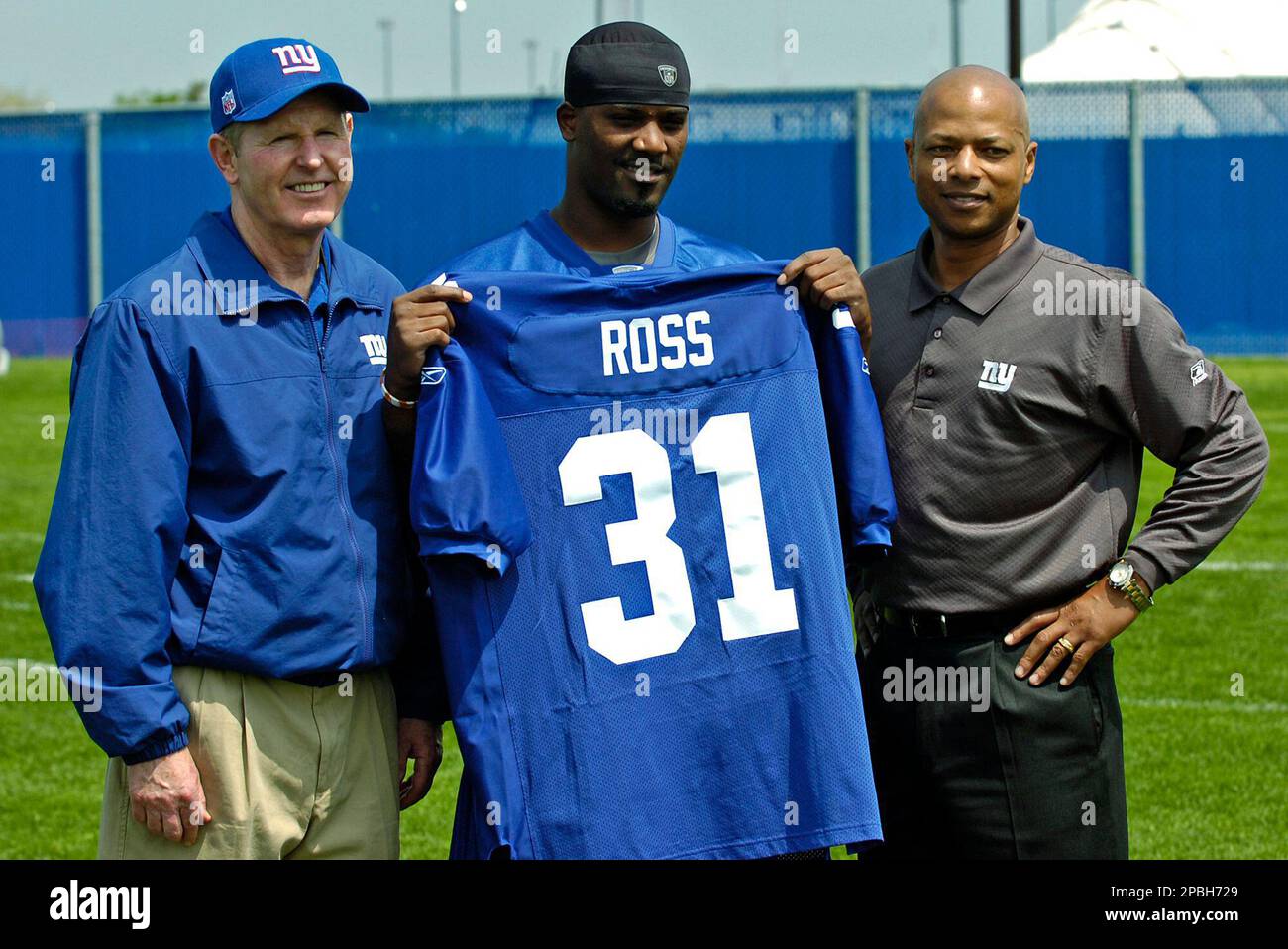
Aaron Ross, a standout cornerback who played seven seasons in the National Football League, is best remembered for his role in the New York Giants' defensive secondary during two championship runs. Drafted out of the University of Texas in 2007, Ross spent the majority of his professional career with the Giants, where he contributed to victories in Super Bowl XLII and Super Bowl XLVI before brief stints with the Jacksonville Jaguars and a return to the Giants.
Early Life and Collegiate Success at the University of Texas
Before ascending to the NFL, Aaron Ross established himself as a high-level athlete at the collegiate level. Playing for the Texas Longhorns under head coach Mack Brown, Ross developed the technical proficiency and physical durability required to transition to the professional game. His tenure in Austin was marked by a steady rise in performance, culminating in a senior season that cemented his status as one of the top defensive prospects in the 2007 draft class.
During his time at the University of Texas, Ross showcased a rare combination of speed and ball-tracking ability. He was not merely a traditional defensive back; he was a playmaker capable of contributing on special teams as a punt returner—a role that requires vision, agility, and a high risk-reward threshold. This versatility made him an attractive candidate for NFL general managers looking for "three-down" players who could provide value across multiple phases of the game. His performance in the 2005 national championship season provided the foundation for his professional draft stock.
Entry into the NFL: The 2007 Draft Class
The 2007 NFL Draft represented a pivotal moment for the New York Giants' defensive strategy. Recognizing the need for depth and youth in their secondary, the organization selected Aaron Ross in the first round with the 20th overall pick. Coming into a market like New York requires more than just athletic ability; it requires the mental fortitude to handle the scrutiny of a high-pressure media environment and the high expectations of a demanding fan base.
Ross’s transition to the professional level was immediate. He was expected to contribute as a rookie, providing cover for a secondary that needed to stop the high-octane passing attacks of the NFC East. His selection was a strategic move by the Giants' front office to solidify their pass defense, allowing them to exert pressure on quarterbacks while maintaining tight coverage downfield.
Defensive Contributions and Super Bowl Success
Aaron Ross’s career is indelibly linked to the New York Giants' successful postseason campaigns. As a core member of the secondary, he played a vital role in the 2007 and 2011 championship seasons. His ability to line up against both outside receivers and shift into nickel packages provided defensive coordinators with the flexibility to adapt to various offensive personnel sets.
Super Bowl XLII: The Disruptive Force
In the 2007 season, the Giants embarked on an improbable playoff run that ended with a Super Bowl victory over the previously undefeated New England Patriots. Ross’s contribution was essential during a season where the Giants' defense needed to be highly efficient in short-field situations. His technical skills—specifically his footwork and ability to break on the ball—were instrumental in holding opposing receivers to manageable production during critical late-game drives.
Super Bowl XLVI: The Return to Glory
By 2011, Ross had matured into a veteran presence. The path to Super Bowl XLVI required the defense to overcome significant injuries and inconsistent performances earlier in the season. Ross’s reliability as a starter allowed the team to maintain defensive continuity. His presence on the field was not always defined by flashy statistics; instead, it was characterized by "sound assignment football"—a term used to describe a player who consistently fulfills his specific responsibilities within a complex defensive scheme.
Professional Transition and Later Career
Following his initial tenure with the New York Giants, Ross entered the free-agent market and signed with the Jacksonville Jaguars in 2012. This shift required him to adapt to a different defensive system and a new role within a rebuilding roster. While his time in Jacksonville was limited to a single season, it provided a testament to his value as a professional, as he was brought in to provide mentorship and starting-caliber coverage to a younger defensive backfield.
In 2013, Ross returned to the Giants, completing a career arc that saw him serve as a bridge between the Giants’ championship-winning defense of the late 2000s and the newer iteration of the team. This final stint underscored his reputation as a trusted defensive back, capable of reading routes and anticipating quarterback decisions based on his extensive experience in the league.
Technical Analysis: The Cornerback Position
The cornerback position is often cited as the most difficult transition from college to the NFL. It requires a player to move backward while a receiver moves forward at full speed. Aaron Ross excelled due to several key technical traits:
- Backpedal Mechanics: Ross maintained a low center of gravity, allowing him to flip his hips quickly when receivers changed direction.
- Route Recognition: Through years of film study and in-game experience, he became adept at identifying receiver splits and offensive formations, enabling him to predict route combinations before the snap.
- Physicality at the Line: In the modern NFL, the ability to disrupt a receiver’s timing in the first five yards of a route is crucial. Ross utilized his size and arm length to jam receivers, preventing them from achieving their maximum speed during the vertical release.
Comparison of Career Stages
| Career Stage | Team | Focus Area | Impact Level |
|---|---|---|---|
| Early Career (2007-2010) | NY Giants | Athleticism & Special Teams | High (Starter/Contributor) |
| Mid Career (2012) | Jacksonville | System Adaptation | Moderate (Veteran Depth) |
| Late Career (2013) | NY Giants | Mentorship & Reliability | Moderate (Support/Starter) |
Personal Life and Life After the NFL
Outside of his athletic career, Aaron Ross is known for his marriage to Olympic track and field gold medalist Sanya Richards-Ross. Their lives as high-level professional athletes provided a unique window into the demands of elite competition. Since retiring from professional football, Ross has maintained a private life, occasionally engaging in projects that highlight the intersection of sports, family, and personal development. His transition out of the league is typical of many veteran NFL players who leverage their experience to pursue ventures outside of the immediate spotlight of the gridiron.
Frequently Asked Questions
What were Aaron Ross’s primary defensive responsibilities during his time with the Giants? Ross was primarily responsible for coverage on the outside, though his versatility allowed him to move into the slot during nickel packages. His main tasks were to limit "big plays" by keeping receivers in front of him and to provide support in run defense from the perimeter.
How did Aaron Ross’s college career impact his transition to the NFL? His experience at the University of Texas—a program known for rigorous preparation—provided him with a sophisticated understanding of defensive schemes. This collegiate foundation allowed him to compete for a starting job immediately upon joining the Giants in 2007.
Was Aaron Ross involved in special teams play throughout his career? Yes. In his early years, Ross was utilized as a punt returner. His ability to handle punts while simultaneously serving as a starting cornerback demonstrated his high level of conditioning and athletic versatility.
How many Super Bowl titles did Aaron Ross win? Aaron Ross won two Super Bowl championships with the New York Giants: Super Bowl XLII (2007 season) and Super Bowl XLVI (2011 season).
What defined Aaron Ross’s style of play in the secondary? He was known for a disciplined approach, prioritizing proper technique over gambling for interceptions. His consistency in coverage, particularly in the red zone where space is restricted, was highly valued by his coaches.
Conclusion and Legacy
Aaron Ross’s tenure in the NFL serves as a study in the importance of consistency and situational awareness in a defensive back. By contributing to two championship-winning teams, he demonstrated an ability to perform under the immense pressure of the postseason. Today, he is remembered by Giants fans and NFL historians as a reliable professional whose technical acumen and physical resilience were integral to the team's defensive successes during a golden era for the franchise.