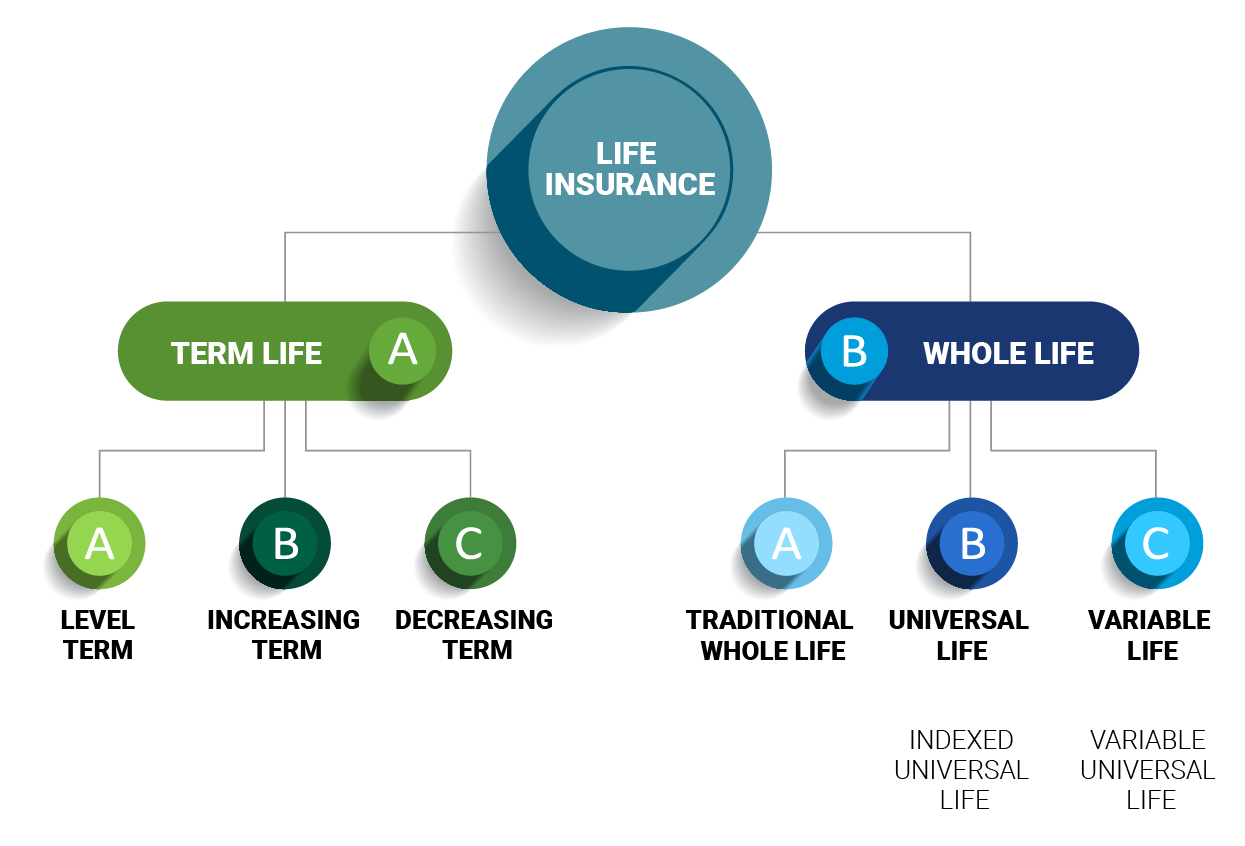
An AAA life insurance payout chart typically outlines the death benefit amounts available across various policy types, ranging from $5,000 for guaranteed issue plans to over $5,000,000 for underwritten term life. The exact payout depends on the policyholder’s age, health status, and the specific plan selected at the time of enrollment.
The search for a "AAA life insurance payout chart" often stems from a need to understand two distinct things: how much coverage a person can buy (the face value) and how much a beneficiary will actually receive upon the policyholder's death. Because AAA Life Insurance Company offers a diverse portfolio of products—ranging from simplified issue term life to complex universal life structures—there is no single universal chart. Instead, payouts are determined by the policy "tier" and the specific underwriting requirements met by the applicant.
As of 2026, AAA Life Insurance continues to be a major provider for both AAA members and non-members, though members often receive preferential pricing or access to specific riders. To navigate the complexities of these payouts, it is essential to break down the charts by product category, eligibility, and the factors that can increase or decrease the final sum paid to beneficiaries.
AAA Life Insurance Product Categories and Payout Limits
The payout potential of an AAA life insurance policy is defined first and foremost by the type of insurance purchased. Each product has a minimum and maximum "face amount," which constitutes the primary payout.
Term Life Insurance Payouts
Term life insurance is the most common product for those seeking high payout amounts at a lower monthly cost. In 2026, AAA Life offers several variations of term insurance:
- Traditional Term Life: This requires full medical underwriting. Payouts typically start at $100,000 and can exceed $5,000,000 for qualified individuals. The "chart" for this product is highly individualized based on the applicant's health class (e.g., Preferred Plus, Standard, or Tobacco).
- ExpressTerm Life: This is a simplified issue product. It is designed for faster approval, often using automated underwriting. The payout chart for ExpressTerm generally ranges from $25,000 to $500,000. It is a popular choice for those who want a significant payout without the need for a medical exam, although premiums are slightly higher than fully underwritten policies.
Whole Life Insurance Payouts
Whole life insurance provides a permanent payout, meaning the benefit is guaranteed as long as premiums are paid.
- Simplified Whole Life: These policies often have a payout chart ranging from $5,000 to $75,000. They are intended to cover final expenses, such as funeral costs and small outstanding debts.
- Guaranteed Issue Whole Life: This is often the product people are referring to when they look for a specific "payout chart." Because there are no health questions, the payouts are capped. Typically, the increments are fixed at $5,000, $10,000, $15,000, $20,000, and $25,000.
The AAA Life Insurance Payout Chart: Estimated Coverage by Product
The following table illustrates the standard payout ranges and characteristics of the primary AAA Life Insurance products available in 2026.
| Policy Type | Minimum Payout | Maximum Payout | Underwriting Required | Best For |
|---|---|---|---|---|
| Traditional Term | $100,000 | $5,000,000+ | Full Medical Exam | Mortgage protection, income replacement |
| ExpressTerm | $25,000 | $500,000 | Health Questionnaire | Fast coverage, middle-income families |
| Whole Life | $5,000 | $75,000 | Simplified Health Questions | Final expenses, legacy planning |
| Guaranteed Issue | $5,000 | $25,000 | None (Guaranteed) | Seniors with medical issues |
| Universal Life | $100,000 | Variable | Full Underwriting | Flexible premiums, long-term wealth |
Factors That Influence the Final Payout Amount
While the "face value" of a policy is the number listed on the front page of the contract, the actual payout received by a beneficiary can be influenced by several technical factors. Understanding these is crucial for accurate financial planning.
1. Graded Death Benefits
In products like Guaranteed Issue Whole Life, a "graded death benefit" is standard. If the policyholder dies within the first two years of the policy effective date from natural causes (illness), the payout is not the full face value. Instead, the beneficiary usually receives the total premiums paid plus a specific percentage of interest (often 10-20%). If the death is accidental within those first two years, the full payout is typically honored. After the two-year "waiting period," the full face value is payable for any cause of death.
2. Outstanding Policy Loans
Whole life and universal life policies accumulate cash value. Policyholders have the right to borrow against this cash value. However, if a loan is not repaid before the policyholder dies, the outstanding loan balance plus any accrued interest is deducted from the final payout. For example, if a policy has a $50,000 face value and a $10,000 outstanding loan, the beneficiary will only receive $40,000.
3. Accidental Death Riders
Many AAA Life policies include or offer an optional Accidental Death Benefit (ADB) rider. This can significantly alter the payout chart. If the policyholder dies in a qualifying accident, the rider may double the payout (often called "double indemnity"). A $100,000 term policy with an ADB rider could result in a $200,000 payout to the beneficiary.
4. Material Misrepresentation
If the insurance company discovers that the applicant lied on their health questionnaire (e.g., hiding a smoking habit or a chronic illness) during the "contestability period"—usually the first two years of the policy—they may legally deny the claim or reduce the payout to match what the premiums would have purchased if the truth had been known.
Eligibility and Requirements for AAA Life Insurance
To qualify for the payouts listed in the AAA charts, applicants must meet specific criteria. While AAA membership is not always a strict requirement for all life insurance products, it often provides access to higher coverage limits or lower rates.
Age Requirements
- Term Life: Generally available for adults aged 18 to 75.
- Whole Life: Often available up to age 85.
- Guaranteed Issue: Typically targeted at seniors aged 45 to 85.
Residency and Membership
AAA Life Insurance Company is a separate entity from the AAA motor club, but they work in tandem. Coverage availability can vary by state due to local insurance regulations. In 2026, most states allow for digital applications, but some specific riders may be restricted in jurisdictions like New York or California.
Medical Underwriting
For payouts exceeding $500,000, AAA will typically require a paramedical exam. This involves a technician visiting the applicant's home to collect blood and urine samples and record height, weight, and blood pressure. The results of this exam determine the "rating" of the policy, which influences the premium cost rather than the payout amount itself.
How the Payout Process Works for Beneficiaries
When a policyholder passes away, the "payout chart" becomes a reality for the beneficiary. The process in 2026 has been streamlined through the AAA Life Online Claims Portal, but the fundamental legal requirements remains the same.
- Notification: The beneficiary must notify AAA Life Insurance of the death. This can be done online, via phone, or through a local AAA agent.
- Documentation: The primary document required is a certified copy of the death certificate. AAA may also require the original policy document, though digital records have made this less common.
- Claim Forms: The beneficiary must complete a "Statement of Beneficiary" form, which indicates how they wish to receive the funds.
- Review Period: AAA Life typically reviews claims within 30 to 60 days. If the policy is past the two-year contestability period, simple claims are often processed much faster, sometimes within 7-10 business days.
- Distribution of Funds: Beneficiaries can usually choose between a lump-sum check, a direct deposit into a bank account, or an interest-bearing account held by the insurer.
Common Mistakes When Evaluating Payouts
One of the most frequent errors consumers make is assuming that "Accidental Death and Dismemberment" (AD&D) is the same as "Life Insurance." AAA heavily promotes AD&D insurance to its members, often offering a small amount of coverage for free.
The payout chart for AD&D is only applicable if the death is a direct result of an accident. It does not pay out for deaths caused by cancer, heart disease, or old age. Relying on an AD&D payout chart for "life insurance" needs is a common mistake that leaves many families under-protected. Real life insurance (Term or Whole Life) covers both natural and accidental causes of death.
Another mistake is failing to update beneficiaries. If a named beneficiary has passed away or if the policyholder has divorced and not updated their paperwork, the payout may be delayed significantly as it moves through probate court, or it may be paid to the estate rather than directly to a person.
Comparing AAA Payouts to Industry Standards
In 2026, AAA Life Insurance remains competitive, particularly for the "middle market"—individuals looking for coverage between $50,000 and $1,000,000.
Compared to "Big Box" insurers like Prudential or MetLife, AAA's payout charts for simplified issue products (like ExpressTerm) are often more accessible to the average driver or club member. However, for ultra-high-net-worth individuals seeking payouts of $10,000,000 or more for estate tax planning, AAA may have lower internal retention limits, meaning they might refer such cases to specialized high-limit carriers.
For seniors, the AAA Guaranteed Issue Whole Life payout chart is very similar to competitors like Mutual of Omaha or Colonial Penn. The primary advantage of choosing AAA in these instances is often the convenience of bundling the policy with a membership they already trust for roadside assistance.
FAQs About AAA Life Insurance Payouts
Does AAA life insurance pay out for suicide?
Most AAA life insurance policies have a two-year suicide clause. If the policyholder dies by suicide within the first two years of the policy's effective date, the company will not pay the death benefit. Instead, they will refund the premiums paid to the beneficiary, usually with interest. After the two-year period has passed, suicide is typically covered like any other cause of death.
How long does it take for AAA to pay out a life insurance claim?
Once all required documentation, including the certified death certificate and completed claim forms, has been received and verified, AAA Life usually issues the payout within 30 days. However, if the death occurs within the two-year contestability period, the company may conduct a more thorough investigation, which can extend the timeline to 60 or 90 days.
Is the AAA life insurance payout taxable?
Generally, life insurance payouts are not subject to federal income tax. The beneficiary receives the full face value of the policy tax-free. However, if the payout is delayed and the insurance company pays interest on the death benefit, that interest portion may be taxable as income. Additionally, if the payout is large enough to exceed federal or state estate tax thresholds, it could be subject to estate taxes, though this usually only applies to very high-value policies.
Can I change my payout amount after the policy is active?
For Term Life policies, you cannot usually "increase" the payout without undergoing a new medical exam and applying for a new policy. You can, however, often "decrease" your coverage to lower your premiums. For Universal Life policies, there is more flexibility to adjust the death benefit upward or downward, though increases will still require evidence of insurability (health questions or exams).
What happens to the payout if the beneficiary dies first?
If the primary beneficiary dies before the policyholder and no "contingent beneficiary" was named, the payout typically goes to the policyholder’s estate. This can lead to the funds being tied up in probate court and potentially being used to pay off the deceased's creditors before any remaining money reaches the heirs. It is vital to name at least one contingent beneficiary to avoid this.
Practical Recommendation: Choosing Your Payout Level
When selecting a payout amount from the AAA life insurance chart, do not simply pick the lowest premium. Instead, use a "Needs Analysis" approach. Calculate your total mortgage balance, outstanding car loans, and credit card debts. Add a buffer for funeral expenses (currently averaging $10,000–$15,000 in 2026) and income replacement for your spouse or children.
For most families, a payout of 10 to 15 times their annual salary is the recommended benchmark. If you are a senior looking only to prevent your children from paying for your burial, a $15,000 to $25,000 Whole Life policy is usually sufficient. Once you have determined your required payout, contact an AAA Life representative to compare the "Simplified" vs. "Underwritten" options to ensure you are getting the best rate for that specific benefit amount.

![AAA Life Insurance Guide 2024 Best Coverages + Rates]](https://www.effortlessinsurance.com/wp-content/uploads/2020/04/6c096c2a-aaa-life-insurance-quote-coverage-estimate-min.jpg)