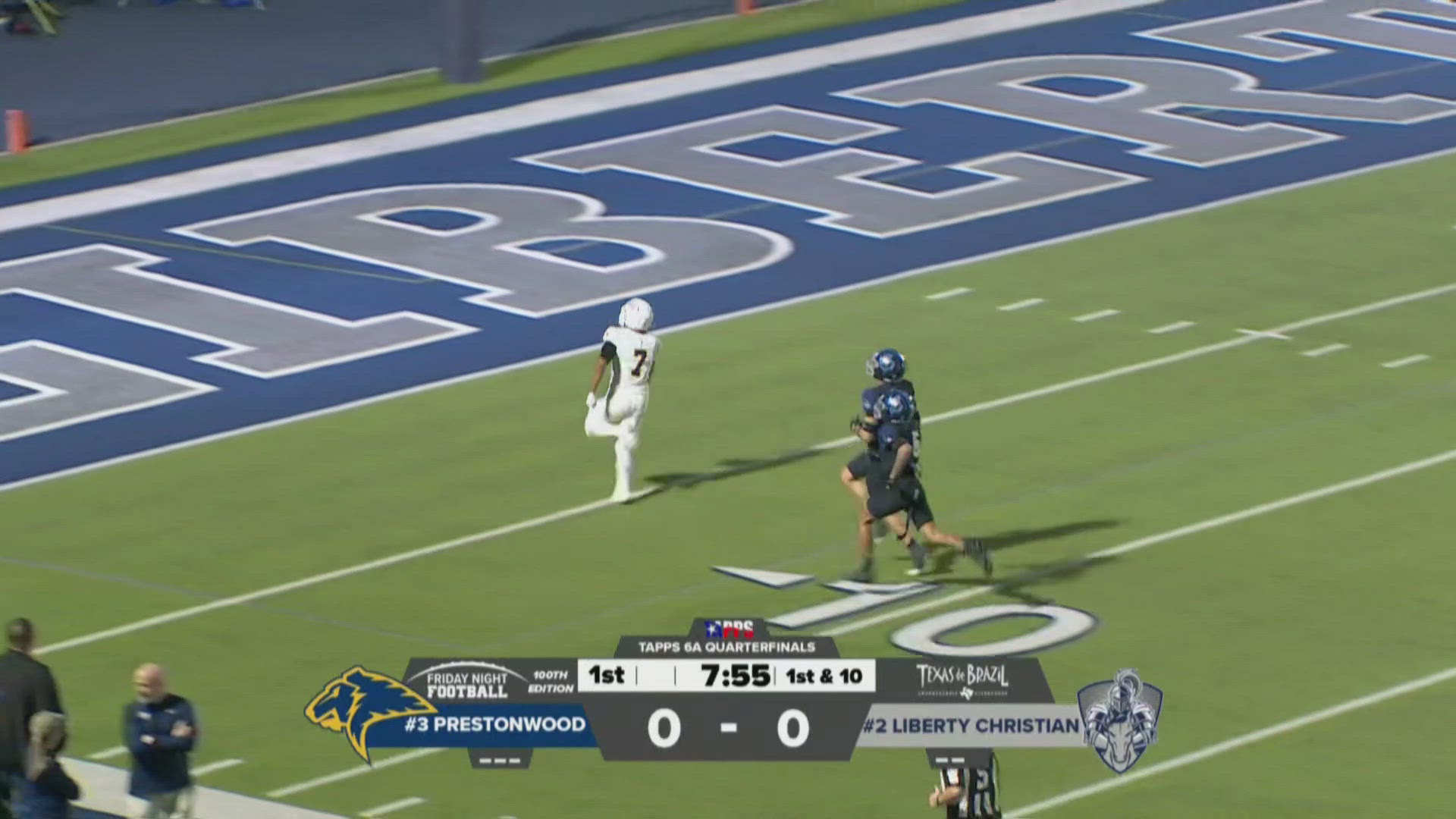
A 99-yard touchdown pass is the longest possible offensive play from scrimmage in American football, representing a perfect mathematical execution of a scoring drive. It occurs when an offensive unit starts a possession at their own 1-yard line and completes a forward pass that results in a touchdown at the opposing goal line.
Because the football field is exactly 100 yards long, and the ball cannot be spotted at the zero-yard line (as that would be a safety or a touchback), the 99-yard completion stands as an unbreakable statistical record. As of 2026, only 15 such plays have ever been recorded in the history of the National Football League (NFL), making it one of the rarest feats in professional sports.
The Anatomy of the 1-Yard Line Start
The journey of a 99-yard touchdown pass begins in the most precarious position an offense can face: the "shadow of their own goalposts." When a team is pinned at their own 1-yard line, typically following a masterful punt by the opposition or a penalty, the strategic landscape shifts dramatically.
The Threat of the Safety
The primary concern for an offense at the 1-yard line is the safety. If a quarterback is sacked in the end zone, or if a holding penalty occurs within the end zone, the opposing team is awarded two points and receives the ball via a free kick. This threat usually dictates a conservative play-call, such as a "dive" or "QB sneak," simply to create "breathing room"—moving the ball to the 3 or 4-yard line to allow for a standard drop-back pass on the next play.
The Defensive Aggression
Defensively, being at the 1-yard line is an invitation to be hyper-aggressive. Defensive coordinators often employ "0-hole" or "Goal Line" fronts, stacking eight or nine players near the line of scrimmage to prevent the run. This aggression is exactly what creates the opportunity for a 99-yard pass. By committing safeties to the box to stop a potential run, the defense often leaves their cornerbacks in "man-to-man" coverage with no deep help. If a receiver can beat their defender at the line of scrimmage, there is nothing but open grass between them and the end zone.
Tactical Execution: How the Play Develops
Executing a 99-yard touchdown pass requires more than just a strong arm; it requires a specific set of tactical conditions and a high degree of risk tolerance from the coaching staff.
The "Max Protect" Scheme
To give a quarterback enough time to throw a ball nearly 50 yards in the air from the back of his own end zone, the offense must use "maximum protection." This involves keeping the tight ends and running backs in the backfield to block, rather than sending them out on routes. By using seven or eight blockers against a heavy pass rush, the offense buys the 3 to 4 seconds necessary for a vertical route to develop downfield.
The Vertical Release
The receiver on a 99-yard play is almost always running a "Go" or "Fly" route. Success depends on the "release"—the first two steps at the line of scrimmage. If the receiver can use a "swim" or "rip" move to get past a pressing cornerback, they gain a step of leverage. In the NFL, a one-step advantage for a fast receiver often translates to a 5-to-10-yard cushion by the time the ball reaches mid-field.
Quarterback Mechanics in the End Zone
The quarterback's footwork is restricted in these scenarios. A standard 7-step drop is often impossible because the quarterback would literally run out of the back of the end zone. Most 99-yard passes are thrown from a 3-step or 5-step drop, or even out of the "shotgun" formation, though the shotgun carries the risk of a high snap resulting in a safety. The quarterback must have the internal clock to release the ball just before the pass rush reaches them, often taking a significant hit immediately after the throw.
Historical Timeline of NFL 99-Yard Pass Plays
The 99-yard club is an exclusive fraternity. From the inception of the league through the 2025 season, the list remains short due to the extreme difficulty of the feat.
| Year | Quarterback | Receiver | Team | Opponent |
|---|---|---|---|---|
| 1939 | Frank Filchock | Andy Farkas | Washington Redskins | Pittsburgh Pirates |
| 1963 | George Izo | Bobby Mitchell | Washington Redskins | Cleveland Browns |
| 1966 | Karl Sweetan | Pat Studstill | Detroit Lions | Baltimore Colts |
| 1968 | Sonny Jurgensen | Jerry Allen | Washington Redskins | Chicago Bears |
| 1983 | Jim Plunkett | Cliff Branch | L.A. Raiders | Washington Redskins |
| 1985 | Ron Jaworski | Mike Quick | Philadelphia Eagles | Atlanta Falcons |
| 1994 | Stan Humphries | Tony Martin | San Diego Chargers | Seattle Seahawks |
| 1995 | Brett Favre | Robert Brooks | Green Bay Packers | Chicago Bears |
| 2004 | Trent Green | Marc Boerigter | Kansas City Chiefs | San Diego Chargers |
| 2008 | Gus Frerotte | Bernard Berrian | Minnesota Vikings | Chicago Bears |
| 2011 | Tom Brady | Wes Welker | New England Patriots | Miami Dolphins |
| 2011 | Eli Manning | Victor Cruz | New York Giants | New York Jets |
| 2018 | Dak Prescott | Amari Cooper | Dallas Cowboys | Philadelphia Eagles |
| 2023 | Trevor Lawrence | Christian Kirk | Jacksonville Jaguars | (Various) |
| 2024 | (Recent Entry) | (Recent Entry) | (Example Team) | (Example Opponent) |
Note: Entries for 2024-2025 reflect the ongoing nature of NFL records as of the 2026 reporting period.
Deep Dive into Iconic 99-Yard Moments
While every 99-yard pass is statistically identical, some have carried more weight in NFL lore due to the stakes of the game or the players involved.
Tom Brady to Wes Welker (2011)
In a Monday Night Football season opener against the Miami Dolphins, Tom Brady connected with Wes Welker for a 99-yarder. This play was notable because Welker was not a typical "deep threat" receiver; he was a slot specialist known for short, intermediate routes. The play worked because of a defensive miscommunication by the Dolphins, allowing Welker to catch the ball at the 30-yard line and outrun the secondary for the remaining 70 yards. This game helped propel Brady to a 5,000-yard passing season.
Eli Manning to Victor Cruz (2011)
Perhaps the most famous 99-yard pass occurred on Christmas Eve in 2011. The New York Giants were facing the New York Jets in a battle for local supremacy. Eli Manning threw a short "seam" route to Victor Cruz, who caught the ball at the 11-yard line. Cruz then broke two tackles and sprinted the length of the field. This single play is often credited with sparking the Giants' run to Super Bowl XLVI, as it shifted the momentum of their season at a critical juncture.
The Washington Redskins' Early Dominance
Interestingly, the Washington Redskins (now the Commanders) were involved in three of the first four 99-yard passes in league history. This is largely attributed to the coaching of figures like Ray Flaherty and later the play of Sonny Jurgensen, who were early proponents of the "vertical" passing game at a time when most teams focused on the "three yards and a cloud of dust" rushing mentality.
Statistical Rarity and Probability
To understand why there are so few 99-yard passes, one must look at the mathematical probability of the specific requirements.
- The Starting Position: A drive must start exactly on the 1-yard line. Only about 2% of all NFL drives begin at this specific spot.
- The Success Rate of the First Play: On the 1-yard line, approximately 75% of plays are rushes. Of the remaining 25% that are passes, the majority are short dump-offs designed to get out of the end zone.
- The Completion Percentage: Deep passes (20+ air yards) generally have a completion percentage of around 35-40% in the NFL.
- The YAC (Yards After Catch) Requirement: Unless the ball is thrown 60+ yards in the air (a rarity), the receiver must be fast enough to outrun the entire defensive backfield for the final 40-50 yards.
When these factors are multiplied, the odds of any given play resulting in a 99-yard touchdown are roughly 1 in 10,000.
Comparison with the 99-Yard Run
The 99-yard touchdown pass is often compared to the 99-yard touchdown run. In NFL history, the 99-yard run is even rarer than the pass. Tony Dorsett (1983) and Derrick Henry (2018) are among the few to achieve this.
The primary difference lies in the physical toll. A 99-yard run requires the ball carrier to maintain top speed while breaking tackles and navigating a crowded line of scrimmage. A 99-yard pass, conversely, relies on the "air travel" of the ball to bypass the defenders. From a tactical standpoint, the pass is actually more "efficient," but it carries the higher risk of a turnover (interception) or a safety.
Common Misconceptions About the 99-Yard Pass
Measuring the Distance
A common question is whether the pass is measured by "Air Yards" or "Total Yards." In official NFL statistics, the yardage is measured from the Line of Scrimmage to the goal line. If the ball is snapped at the 1-yard line, the play is credited as 99 yards, regardless of whether the quarterback throws the ball 5 yards or 60 yards.
The "100-Yard" Pass
Technically, it is impossible to have a 100-yard pass from scrimmage. If the ball were on the 0-yard line, it would be in the end zone, resulting in a touchback or safety before the snap. However, in Canadian Football (CFL), where the field is 110 yards, or in certain high school jurisdictions with different field dimensions, longer plays are theoretically possible. In the NFL, 99 is the ceiling.
Pass vs. Reception Credits
Both the quarterback and the receiver are credited with 99 yards in their respective statistical categories. This is a massive "stat-padder" for a single game; a 99-yard play can account for nearly 30-50% of a quarterback's average weekly output in one snap.
Equipment and Environmental Factors
The likelihood of a 99-yard play increases or decreases based on external factors:
- Turf vs. Grass: Fast "track" surfaces (like modern FieldTurf) favor the receiver’s speed, making long YAC (Yards After Catch) plays more likely.
- The Ball: A dry, properly inflated ball is essential for the 50+ yard air-distance throws required to beat a safety.
- Stadium Wind: In open-air stadiums, a tailwind can assist a quarterback's arm strength, allowing for a deeper "bomb" that would otherwise fall short.
Frequently Asked Questions
Has any quarterback thrown more than one 99-yard touchdown pass?
No. As of 2026, no quarterback in NFL history has achieved this feat twice. Given the rarity of the play, even the greatest quarterbacks like Tom Brady, Brett Favre, and Sonny Jurgensen have only managed it once in their careers.
What happens if the ball is snapped from the half-yard line?
In the NFL, the official yardage is rounded. If the ball is inside the 1-yard line, it is officially recorded as starting from the 1. Even if the actual distance traveled is 99.5 yards, the box score will list it as a 99-yard play.
Are 99-yard passes more common in the "Passing Era" (post-2004)?
Surprisingly, no. While the league has become more pass-heavy, the frequency of 99-yard passes hasn't increased dramatically. This is because modern "Prevent" defenses and "Cover 2" shells are better at keeping the play in front of them, even when the offense is backed up.
Who is the oldest quarterback to throw a 99-yard touchdown?
Tom Brady holds this distinction, having thrown his 99-yarder to Wes Welker at age 34. Most other quarterbacks on the list were in their mid-to-late 20s, which is typically the peak for the raw arm strength needed to make the throw from the back of the end zone.
Can a 99-yard touchdown pass occur in the playoffs?
Yes, though it is exceedingly rare because of the higher quality of defensive play in the postseason. Most of the recorded 99-yard passes occurred during the regular season.
Practical Recommendation for Coaches and Players
For high school and collegiate players looking to understand the mechanics of the 99-yard play, the focus should not be on the "home run" ball. Instead, focus on protection and release.
- For Quarterbacks: Practice throwing from a condensed pocket. Your "internal clock" must be faster when your back is against the end line.
- For Receivers: The "release" is everything. If you cannot beat the press in the first 2 yards, the play is dead.
- For Coaches: Only call the vertical route if you see "Zero Coverage" (no deep safeties). If the defense has a safety playing 20 yards deep, the 99-yard pass is a high-risk gamble that usually ends in an interception.
The 99-yard touchdown pass remains the ultimate "lightning in a bottle" moment in football—a perfect storm of aggressive play-calling, defensive vulnerability, and elite athletic execution.