Choosing the best auto insurance in Florida requires balancing mandatory state minimum requirements with adequate personal liability protection, given the state's unique high-risk driving environment and high rates of uninsured motorists. Drivers can secure optimal coverage by evaluating minimum legal thresholds, stacking uninsured motorist protections, assessing policy deductibles, exploring available discounts, verifying insurer financial strength, and comparing quotes across multiple licensed carriers.
Navigating the Florida auto insurance market presents a distinct set of challenges for motorists. Unlike many other states, Florida operates under a no-fault insurance system and historically ranks among the most expensive states in the nation for vehicle coverage. High rates of uninsured motorists, litigious legal environments, and weather-related risks such as hurricanes contribute to premium volatility. Finding the right policy involves more than simply choosing the cheapest monthly rate; it requires a strategic approach to risk management, regulatory compliance, and policy structuring.
1. Understand Florida’s Unique No-Fault and PIP Requirements
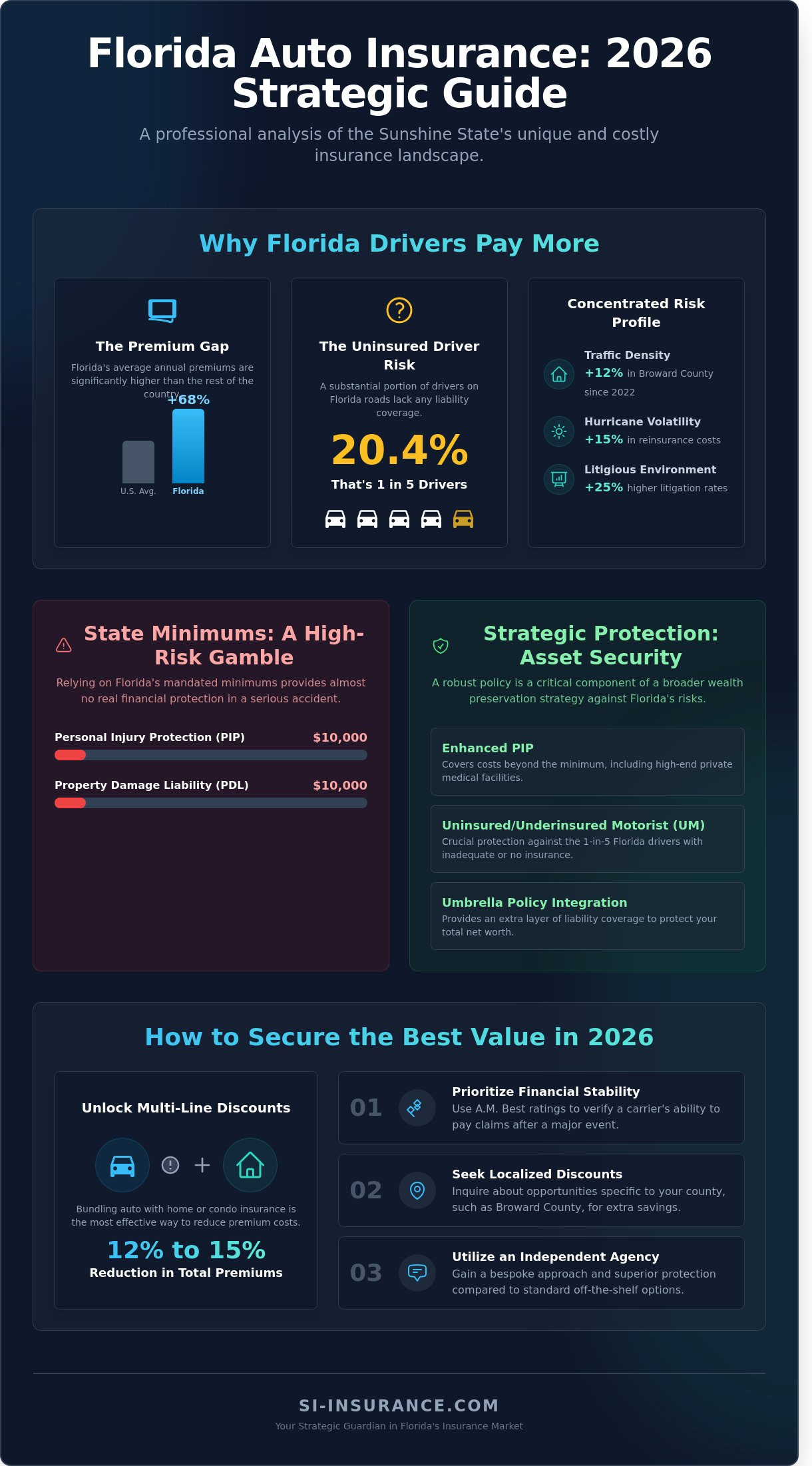
To pick the best auto insurance in Florida, you must first understand the legal framework governing the state's roads. Florida is a "no-fault" state governed by Florida Statute § 627.736, which requires all registered vehicle owners to carry Personal Injury Protection (PIP) and Property Damage Liability (PDL) insurance.
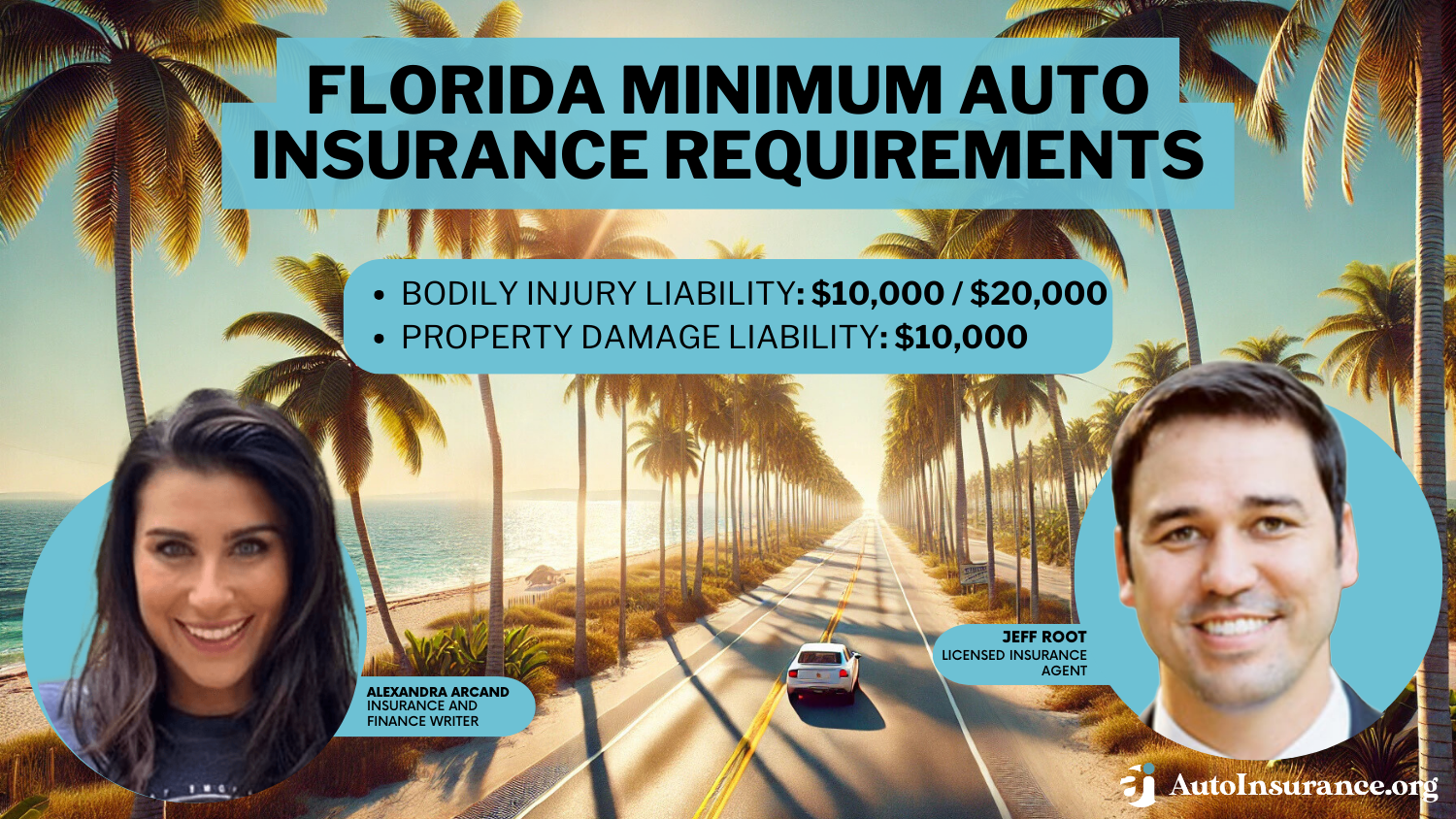
- Personal Injury Protection (PIP): Florida law mandates at least $10,000 in PIP coverage. This covers a portion of your medical bills and lost wages if you are injured in an accident, regardless of who caused it.
- Property Damage Liability (PDL): Florida requires at least $10,000 in PDL coverage. This pays for damage you cause to someone else's property, such as their vehicle, guardrails, or buildings.
Relying solely on these statutory minimums is rarely sufficient. Because PIP only pays 80% of necessary medical expenses up to $10,000 and has strict treatment timelines, a minor accident can quickly exhaust these funds, leaving you personally liable for remaining medical bills and vehicle repairs.
2. Prioritize Uninsured and Underinsured Motorist (UM/UIM) Coverage
One of the most critical decisions when selecting auto insurance in Florida is whether to purchase Uninsured and Underinsured Motorist (UM/UIM) coverage. Insurance industry data consistently shows that Florida has one of the highest percentages of uninsured drivers in the country.
If an uninsured driver hits you, standard PDL and PIP will not cover the damage to your car or your extensive medical bills beyond your PIP limits. UM/UIM coverage steps in to bridge this gap, paying for your medical expenses, lost wages, and pain and suffering when the at-fault driver lacks adequate insurance or flees the scene.
- Non-Stacked UM: Limits coverage to the specific vehicle listed on the policy.
- Stacked UM: Allows you to multiply your UM coverage limits by the number of vehicles on your policy or household, providing significantly higher protection.
While adding UM/UIM increases your premium, it is widely considered an indispensable safeguard for Florida drivers.
3. Balance Comprehensive, Collision, and Deductibles
Beyond liability and PIP, you must decide whether to add physical damage coverages to protect your own vehicle.
- Collision Coverage: Pays for damage to your car resulting from a collision with another vehicle or object, such as a tree or fence.
- Comprehensive Coverage: Protects your car from non-collision events, including theft, vandalism, fire, animal strikes, and weather events like floods or windstorms associated with hurricanes.
If you are financing or leasing your vehicle, your lender will mandate both comprehensive and collision coverages. If your car is fully paid off, you must evaluate its actual cash market value against the cost of the coverage. A common strategy to reduce the premium on these coverages is raising your deductible—the amount you pay out-of-pocket before insurance kicks in—from $500 to $1,000. Ensure you maintain an emergency fund capable of covering this deductible if you file a claim.
4. Evaluate Insurer Financial Strength and Customer Service
The cheapest policy from an unstable or poorly rated insurance company can become a liability if the company delays payouts or denies legitimate claims. Before committing to an auto insurance provider in Florida, examine their financial stability ratings and consumer complaint indexes.
Independent rating agencies such as AM Best evaluate the financial strength of insurance carriers, indicating their ability to pay out claims even after catastrophic natural disasters. Additionally, the Florida Office of Insurance Regulation (FLOIR) provides regulatory oversight, consumer resources, and market conduct examinations. Reviewing consumer feedback regarding claims-handling speed and customer service satisfaction helps ensure you select a carrier that performs reliably when an accident occurs.
5. Leverage All Available Discounts
Insurance companies offer numerous discounts that can substantially lower your overall premium without sacrificing coverage quality. When gathering quotes, explicitly ask carriers to apply every discount for which you qualify. Common discounts in Florida include:
- Safe Driver Discounts: Rewarding drivers with clean motor vehicle records free of accidents or moving violations over a 3- to 5-year period.
- Bundle Discounts: Combining your auto insurance policy with homeowners, renters, or umbrella insurance through the same carrier.
- Safety and Anti-Theft Equipment: Equipping your vehicle with factory-installed airbags, anti-lock brakes, alarm systems, or GPS tracking devices.
- Paperless and Auto-Pay: Enrolling in automatic monthly electronic fund transfers and receiving policy documents online.
- Defensive Driving Course: Completing an approved defensive driving or mature driver course.
6. Compare Quotes from Multiple Licensed Carriers
Insurance pricing is calculated using complex actuarial algorithms that weigh your age, zip code, vehicle make and model, credit history, and driving record differently. Because every carrier calculates risk through a proprietary model, premiums for identical coverage limits can vary drastically from one company to another.
To find the best value, obtain quotes from at least three different insurers. You can work with an independent insurance agent who represents multiple carriers or use online comparison tools. When comparing quotes, ensure that the coverage limits, deductibles, and policy riders are identical across all proposals so you are making an accurate "apples-to-apples" evaluation.
7. Review and Adjust Your Policy Annually
Auto insurance is not a "set-it-and-forget-it" purchase. Your life circumstances, vehicle value, and the insurance market change over time. Reviewing your policy at least once a year—ideally before your policy renewal date—ensures your coverage aligns with your current needs.
| Life Event / Factor | Potential Impact on Auto Insurance | Recommended Action |
|---|---|---|
| Relocation | Premium changes based on local traffic density and crime rates. | Update address immediately; compare local rates. |
| Paid-Off Vehicle | You no longer have a lender requirement for physical damage coverage. | Evaluate dropping collision/comprehensive on older, low-value cars. |
| Teen Driver Added | Significant premium increase due to lack of driving experience. | Add good-student discounts; assign teen to the safest vehicle. |
| Improved Credit Score | Lower risk profile in states where credit-based insurance scores are legal. | Request a policy re-rating to check for rate reductions. |
Frequently Asked Questions
What is the minimum auto insurance required in Florida?
Florida law requires all vehicle owners to carry a minimum of $10,000 in Personal Injury Protection (PIP) and $10,000 in Property Damage Liability (PDL). If you have a vehicle loan or lease, your lender will also require comprehensive and collision coverages.
Why is auto insurance so expensive in Florida?
Florida auto insurance tends to be higher than the national average due to a high density of uninsured drivers, a litigious legal environment, high rates of auto insurance fraud, and vulnerability to severe weather events, such as hurricanes and tropical storms, that cause widespread vehicle damage.
Should I get collision coverage on an older car in Florida?
If your older vehicle has a low market value that is close to or less than the total cost of your annual collision premium plus your deductible, it is often financially prudent to drop collision and comprehensive coverage and rely solely on liability and PIP.
Does Florida auto insurance cover rental cars?
If you carry comprehensive and collision coverage on your personal auto policy, those coverages typically extend to a temporary rental vehicle used for personal travel within the United States. However, you should verify policy terms and check whether your credit card offers secondary or primary rental car collision damage waiver protection.
How can I check if a Florida auto insurance company is legitimate?
You can verify whether an insurance company is licensed and check its regulatory compliance history by searching company records through the Florida Office of Insurance Regulation (FLOIR) website or the Florida Department of Financial Services.
Finding the best auto insurance in Florida requires a careful balance between meeting legal requirements, guarding against high uninsured motorist rates, and managing out-of-pocket costs through strategic deductibles and discounts. Start by obtaining multiple comparative quotes from financially stable carriers, ensure your liability and UM/UIM limits reflect your personal asset protection needs, and review your policy annually to capture new discounts.