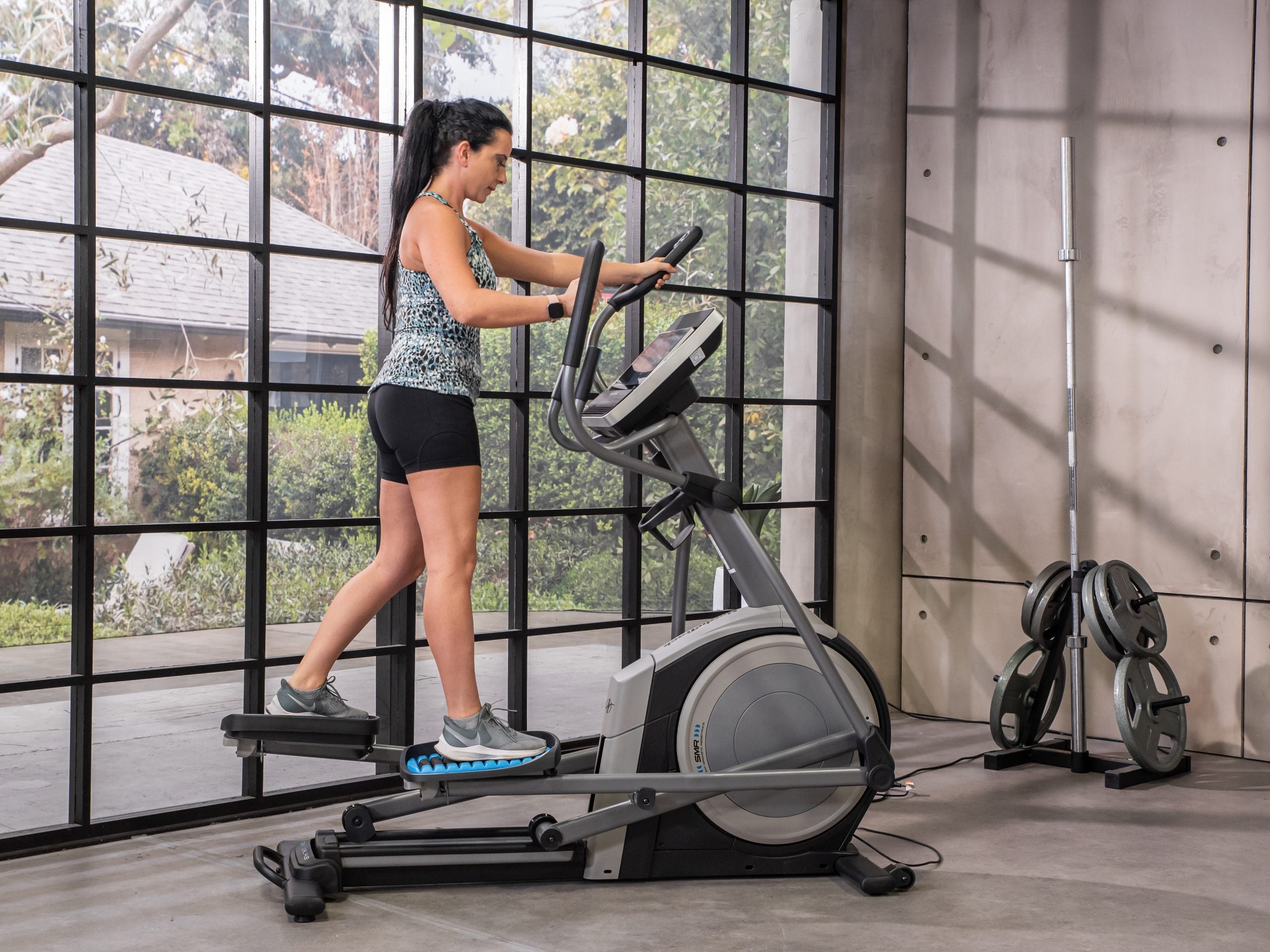
Finding the right home elliptical requires balancing biomechanical comfort, footprint constraints, and structural durability across varying price points. This guide examines the seven best options across distinct budget brackets to help you select a machine that matches your fitness goals and spatial limitations.
Selecting a home elliptical is an investment in your long-term cardiovascular health, joint longevity, and daily routine. However, the market spans a massive financial spectrum, ranging from budget-friendly folding models under $500 to commercial-grade, multi-thousand-dollar engineering marvels equipped with interactive touchscreen programming. Navigating this landscape requires an understanding of how drive systems, stride lengths, resistance mechanisms, and frame weights translate into actual workout quality.
Whether you are looking for a compact unit to fit inside a spare bedroom, an ergonomic front-drive system that mimics natural running motions, or a heavy-duty rear-drive trainer designed to withstand intense daily interval training, finding the sweet spot between cost and capability is essential. Below is a comprehensive evaluation of the seven best home ellipticals categorized by budget, technical specifications, and user suitability to guide your purchasing decision.
Understanding Elliptical Anatomy and Budget Tiers
Before comparing individual models, it helps to understand what separates a budget machine from a mid-range or premium commercial alternative. The primary cost drivers in an elliptical trainer include the flywheel weight, drive mechanism location (front, rear, or center), console technology, and maximum user weight capacity.
Budget machines (typically under $800) often feature lighter flywheels and manual or basic motorized magnetic resistance. They are ideal for casual users, light walking motions, and smaller spaces. Mid-range models ($800 to $1,800) introduce heavier flywheels for a smoother pedal stroke, power incline features, and integration with fitness applications via Bluetooth. Premium units (exceeding $1,800) provide gym-quality stability, advanced ergonomic adjustments, high weight thresholds, and heavy-duty steel frames built for multi-user households and heavy training volumes.
The 7 Best Home Ellipticals Compared
| Model Name | Budget Tier | Drive Type | Stride Length | Resistance Levels | Best Suited For |
|---|---|---|---|---|---|
| Schwinn 411 | Budget-Friendly | Rear-Drive | 18 Inches | 16 Levels | Compact spaces and light cardio |
| Sole E25 | Entry Mid-Range | Front-Drive | 20 Inches | 20 Levels | Durable performance and natural stride |
| NordicTrack Commercial 14.9 | Premium Tech | Center/Front | 17.8–20 Inches (Auto) | 26 Levels | Immersive, interactive iFIT training |
| Bowflex Max Trainer M6 | Hybrid Cardio | Center-Drive | Variable | 16 Levels | High-intensity, calorie-burning intervals |
| ProForm Carbon E7 | Value Mid-Range | Rear-Drive | 19 Inches | 20 Levels | Tech-integrated budget-conscious training |
| Horizon Ex-59 | Entry-Level | Rear-Drive | 18 Inches | 20 Levels | Quiet operation and simple device streaming |
| True Fitness ES900 | Ultra-Premium | Rear-Drive | 21–23 Inches (Adjustable) | 30 Levels | Commercial-grade longevity and tall users |
Detailed Reviews
1. Schwinn 411: Best Compact Budget Elliptical
The Schwinn 411 is engineered specifically for users who need a space-saving cardiovascular machine without sacrificing structural reliability. Operating on a compact footprint, this rear-drive elliptical delivers a surprisingly fluid motion despite its scaled-down dimensions.
- Key Specifications: 18-inch fixed stride length, 16 levels of magnetic resistance, and a transport-wheel-friendly lightweight frame.
- Performance and Comfort: The 18-inch stride fits most users under 5 feet 10 inches comfortably. Because it is a rear-drive machine, the pedal motion feels flat and horizontal, closely mimicking walking or light jogging.
- Pros: Highly affordable, exceptionally small footprint for small apartments, and features an integrated media rack for tablets.
- Cons: Lacks power incline capabilities, lighter flywheel means intense sprints can feel slightly less anchored, and the console is relatively basic.
2. Sole E25: Best Overall Value for Durability
The Sole E25 is widely recognized by fitness experts as a benchmark for home gym durability. Sole Fitness builds its reputation on heavy-duty steel frames and mechanical reliability, making the E25 a staple for households looking for gym-quality performance at a mid-range price.
- Key Specifications: 20-inch fixed stride, 20 levels of power incline, 20 levels of magnetic resistance, and a heavy-duty 20-pound flywheel.
- Performance and Comfort: The front-drive design combined with a 20-pound flywheel creates a smooth, downward-sloping elliptical path that emphasizes glute and hamstring activation, especially when the power incline is engaged. The oversized pedals feature a 2-degree inward slope to reduce ankle and knee strain.
- Pros: Exceptional frame stability, lifetime warranty on the frame, and heavy-duty steel construction that accommodates multiple daily users.
- Cons: The console interface is utilitarian and lacks modern HD touchscreen flair, and the machine is quite heavy and difficult to move alone.
3. NordicTrack Commercial 14.9: Best Interactive Tech Experience
For trainees who thrive on virtual coaching, scenic global routes, and automated resistance adjustments, the NordicTrack Commercial 14.9 stands out as an elite interactive training tool.
- Key Specifications: Auto-adjustable stride (17.8 to 20 inches), 26 digital resistance levels, 20-degree power incline, and a 14-inch rotating HD touchscreen.
- Performance and Comfort: Powered by an integrated iFIT subscription, this machine automatically adjusts its incline and resistance to match virtual terrain or trainer instructions. The auto-adjusting stride length accommodates various user heights seamlessly during long sessions.
- Pros: Immersive HD touchscreen display, automatic trainer control, and heavily padded, multi-grip moving handlebars.
- Cons: Heavy reliance on the iFIT subscription ecosystem for full functionality, and the unit demands substantial vertical ceiling clearance.
4. Bowflex Max Trainer M6: Best for High-Intensity Interval Training (HIIT)
The Bowflex Max Trainer M6 is not a traditional elliptical; it is a hybrid vertical climber and elliptical designed to maximize calorie burn in minimal time through short, intense workout intervals.
- Key Specifications: Vertical-biased motion path, 16 resistance levels, interactive Burn Rate console display, and a compact vertical tower footprint.
- Performance and Comfort: The motion path forces an upright posture that heavily engages the core and upper body alongside the lower extremities. It is optimized for 14-minute HIIT routines rather than steady-state endurance walking.
- Pros: Extremely compact floor footprint, intense upper-body engagement, and visual "Burn Rate" meter that motivates rapid calorie expenditure.
- Cons: The vertical climbing motion can feel unnatural or taxing on the knees for individuals with pre-existing joint issues, and it lacks standard horizontal stride fluidity.
5. ProForm Carbon E7: Best Mid-Range Tech Integration
The ProForm Carbon E7 bridges the gap between affordable pricing and advanced interactive software capabilities, utilizing a design heavily influenced by its NordicTrack sister brand.
- Key Specifications: 19-inch stride length, 20 digital resistance levels, 20-degree power incline, and a 7-inch interactive HD touchscreen (with tablet integration options).
- Performance and Comfort: The rear-drive setup provides a balanced, natural stride. The inclusion of power incline allows users to target different muscle groups dynamically while following trainer-led programs.
- Pros: Compatible with iFIT without requiring a massive upfront console investment, solid build quality for its price tier, and adjustable leveling feet.
- Cons: The built-in screen is smaller than premium alternatives, and assembly is complex and time-consuming.
6. Horizon EX-59: Best Quiet Entry-Level Trainer
The Horizon EX-59 is engineered for quietness and simplicity, making it an ideal choice for multi-story apartments, shared living spaces, or early-morning workouts where noise reduction is paramount.
- Key Specifications: 18-inch stride length, 20 resistance levels, zero-gap pedal spacing, and an intuitive, simplified console design.
- Performance and Comfort: Horizon utilizes a Zero-Gap pedal design to eliminate the lateral space between pedals, reducing lateral hip and lower back strain. The ECB (Eddy Current Brake) resistance system ensures silent transitions between resistance levels.
- Pros: Highly affordable, exceptionally quiet belt-drive system, and quick-dial resistance controls built directly into the moving handlebars.
- Cons: Fixed incline means fewer workout variety options, and the maximum user weight limit is lower than heavy-duty commercial alternatives.
7. True Fitness ES900: Best Ultra-Premium Commercial Choice
For users with an unrestricted budget who demand absolute commercial-grade performance, the True Fitness ES900 represents the pinnacle of home elliptical engineering.
- Key Specifications: Adjustable stride length (21 to 23 inches), 30 resistance levels, soft touch orthopedic footpads, and orthopedic-grade multi-grip handles.
- Performance and Comfort: True Fitness designs its machines with patented motion technology that replicates natural human biomechanics without placing excessive shear force on the patellar tendon. The adjustable stride length accommodates taller users and varying athletic drills effortlessly.
- Pros: Commercial-grade durability, ultra-smooth rear-drive feel, extensive warranty coverage, and high-end orthopedic footbeds.
- Cons: Prohibitively expensive for casual home exercisers, and the machine requires significant permanent floor space.
Key Factors to Evaluate Before Buying
When narrowing down your options, evaluating four critical technical specifications will ensure your purchase aligns with your physical dimensions and training goals.
1. Stride Length and User Height
Stride length dictates how far apart your feet travel during a full revolution. A stride that is too short will feel like marching in place, while a stride that is too long will strain your hip flexors.
- Under 5’3”: 16 to 17-inch stride length.
- 5’3” to 5’10”: 18 to 20-inch stride length.
- Over 5’10”: 20 to 22-inch (or adjustable) stride length.
2. Drive System Location
- Rear-Drive: Offers a flatter, longer stride path resembling outdoor walking or running. Tends to have fewer moving mechanical parts.
- Front-Drive: Creates a slightly steeper, elliptical climbing motion. Often features power incline ramps that lift the front of the machine.
- Center-Drive: Positions the flywheel on both sides of the user, resulting in an exceptionally compact, upright machine that minimizes stress on the lower back.
3. Flywheel Weight
A heavier flywheel stores more kinetic energy, smoothing out the "dead spots" at the top and bottom of each pedal stroke. Look for a flywheel weighing at least 15 to 20 pounds if you want a fluid, joint-friendly motion during high-resistance training.
4. Incline and Resistance Mechanisms
Motorized power incline significantly increases calorie burn and allows you to isolate quadriceps, hamstrings, and glutes by altering the ramp angle. Combined with magnetic resistance, these systems offer silent, friction-free adjustments.
Common Mistakes to Avoid
Purchasing a home fitness machine is a significant commitment. Avoiding these common pitfalls will save you money and frustration:
- Ignoring Room Dimensions: Many buyers measure only the floor footprint of the elliptical without accounting for vertical ceiling clearance (especially when using an incline) or the space required to step on and off the rear of the machine.
- Neglecting Weight Capacities: Always choose a machine with a maximum user weight rating at least 30 to 50 pounds higher than the heaviest user in your household to ensure structural rigidity during aggressive workouts.
- Prioritizing Screens Over Build Quality: Fancy touchscreens and subscription apps are engaging, but if the underlying frame flexes or bearings squeak within six months, the software will not compensate for poor mechanical engineering.
Frequently Asked Questions
Are home ellipticals effective for weight loss?
Yes, ellipticals provide an effective low-impact cardiovascular workout that burns substantial calories when performed at moderate to high intensities. Because they engage both upper and lower body muscle groups simultaneously, they elevate heart rates efficiently while protecting the knees, hips, and ankles from the repetitive impact stress associated with outdoor running.
How much maintenance do home ellipticals require?
Most modern magnetic resistance ellipticals require very little maintenance. Basic upkeep involves wiping down sweat after workouts to prevent salt corrosion, periodically checking and tightening frame bolts, and occasionally lubricating guide rails if specified in the manufacturer's manual.
Front-drive vs. rear-drive: which is better?
Neither is objectively superior; they offer different ergonomic profiles. Rear-drive ellipticals typically provide a flatter, more natural running motion, whereas front-drive models often feature power incline ramps that simulate hill climbing. Your choice depends on whether you prefer a running-style stride or steep hill simulation.
Do I need a subscription to use a home elliptical?
No. While brands like NordicTrack and ProForm heavily integrate subscription services like iFIT for automated trainer-led workouts, the vast majority of ellipticals feature manual resistance modes and built-in preset programs that operate fully without any monthly fees or internet connection.
How much floor space should I allocate for an elliptical?
Standard ellipticals typically require a floor footprint of approximately 6 feet by 2.5 feet. However, you should add an additional 2 feet of clearance around the perimeter of the machine for safe mounting, dismounting, and full handlebar movement.
Conclusion and Next Action
Investing in a home elliptical comes down to aligning your budget with your biomechanical needs and spatial limitations. If you are looking for an affordable, space-saving unit for light daily cardio, models like the Schwinn 411 or Horizon EX-59 provide reliable entry points. For those seeking a long-term investment in durability, the Sole E25 offers unmatched structural integrity. Take precise measurements of your designated workout space, verify your required stride length based on your height, and select the machine that best bridges your fitness objectives with your financial plan.