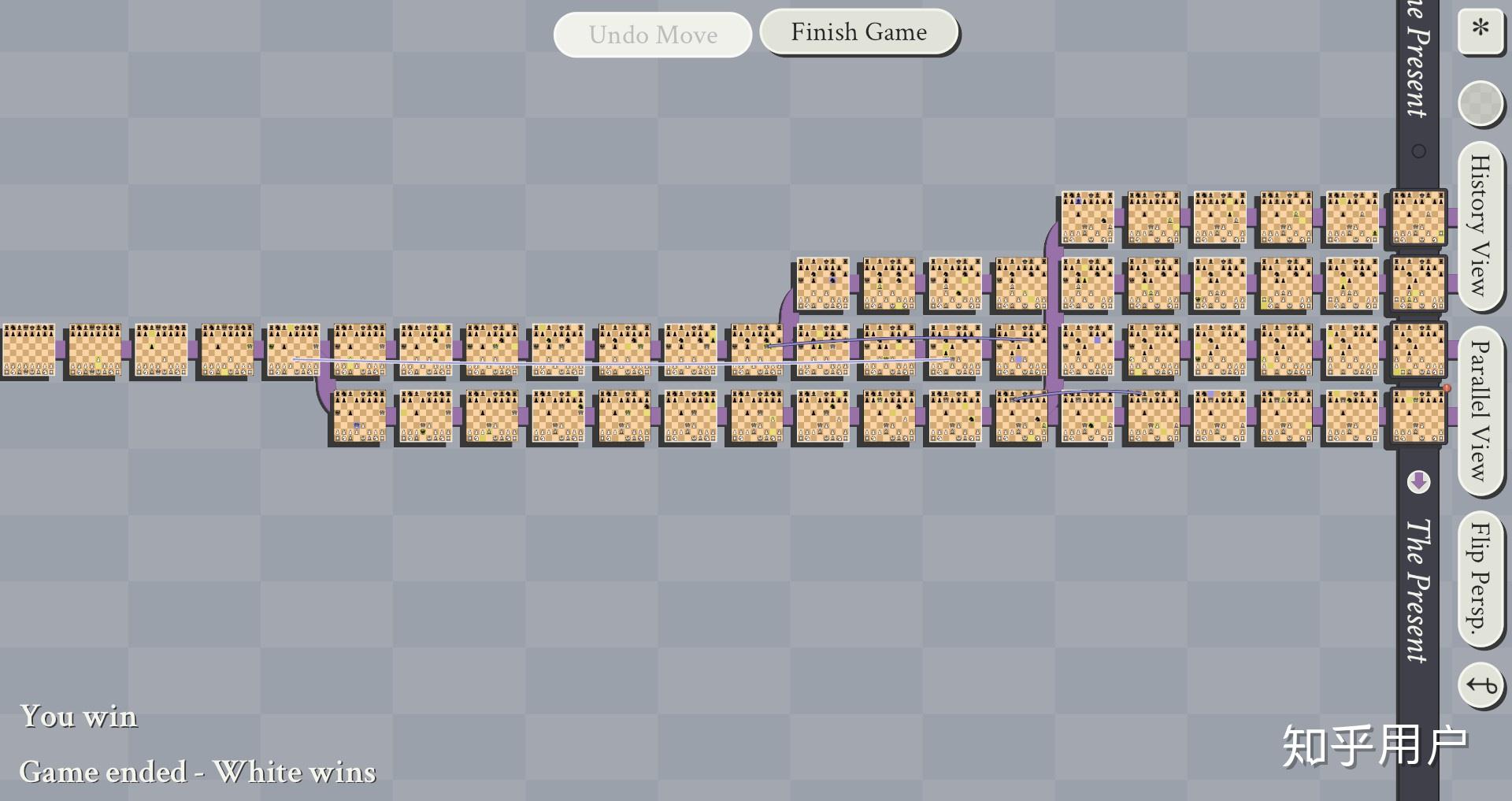
5D Chess with Time Travel (specifically known as 5D Chess With Multiverse Time Travel) is a tactical puzzle and strategy video game that expands traditional chess into multiple timelines and spatial dimensions. By allowing pieces to move backward and forward through time and across parallel boards, the game transforms standard deterministic opening theory into a sprawling, multidimensional test of spatial reasoning, bifurcation management, and temporal geometry.
Understanding the Multidimensional Premise of 5D Chess
To master 5D Chess with Time Travel, players must unlearn traditional board game intuition. Standard chess operates on a static two-dimensional grid consisting of 64 squares, where time moves linearly: White moves, Black moves, and the board state updates sequentially. This game shatters that paradigm by introducing two additional dimensions: space-time coordinates and parallel universes.
In this environment, a board is no longer the sole theater of war. Instead, games begin with a single standard 8x8 chessboard, but every time a piece travels backward through time or creates a new timeline, a brand-new chessboard is spawned. The game state is a collection of these boards existing simultaneously.
Your objective is not merely to trap a king on a single board, but to attack the opponent's past and present kings across multiple parallel dimensions simultaneously. Because past boards remain active and can be altered, actions taken on turn 10 can retroactively disrupt the board state of turn 2.
[Timeline 1: Turn 1] ---> [Timeline 1: Turn 2] ---> [Timeline 1: Turn 3 (Active)] | v [Timeline 2: Turn 2] ---> [Timeline 2: Turn 3 (Active)]
Core Mechanics: How Spatial and Temporal Movement Work
Every piece in 5D Chess retains its familiar geometric movement rules from standard chess, but these movements are remapped to accommodate the extra dimensions. Movement can now occur across spatial ranks and files, temporal turns, and structural universes.
Temporal Movement Rules
Time travel is not restricted to science fiction abstractions; it is a mechanical resource governed by strict structural rules.
- The Past Bound: A piece can travel backward in time only to an earlier turn within the same universe or an accessible parallel universe.
- Line of Sight: Just as a rook requires an open file to travel across a board, a piece initiating temporal movement requires an unobstructed vector through the temporal axis.
- Timeline Creation: When a piece travels to a different turn in the past, it does not rewrite history retroactively; instead, it creates a bifurcation—a brand-new parallel timeline diverging from that specific past turn. Both the original timeline and the new timeline continue to exist and require management.
Spatial and Dimensional Coordinates
The game interface tracks moves using an expanded coordinate system. A square is defined not just by its file ($a-h$) and rank ($1-8$), but also by its timeline index and turn number.
- Rooks can move along spatial ranks/files or along temporal turns if no pieces obstruct the time-turn vector.
- Bishops move diagonally across space, or diagonally across space-time (combining spatial diagonal movement with temporal advancement).
- Knights retain their L-shaped jumps, which can now be executed in mixed dimensions—for instance, two squares along a spatial rank and one square backward in time.
Comparative Overview: Standard Chess vs. 5D Chess
To appreciate the tactical shift required for 5D Chess, examine how core concepts change when transitioning from traditional chess to a multidimensional framework.
| Feature | Standard Chess (2D) | 5D Chess with Time Travel |
|---|---|---|
| Dimensions | 2 (Rank, File) | 4+ (Rank, File, Turn, Timeline) |
| Time Progression | Linear and sequential | Non-linear, branching timelines |
| Board Count | Exactly 1 board | Dynamically scaling (often 5 to 20+) |
| Win Condition | Checkmate the single enemy king | Checkmate any enemy king across all active timelines |
| Opening Memorization | Extensive theory (Openings, Gambits) | Highly volatile; tactical adaptation dominates |
| Draw Conditions | Stalemate, threefold repetition, 50-move rule | Complex multidimensional stalemate rules |
Setting Up Your First Match: Prerequisites and Interface
Jumping into a live match without understanding the user interface leads to immediate cognitive overload. Before clicking "Play," configure your setup and prepare your workspace.
- Hardware and Software: Ensure you are running a stable version of the game (developed by Conifer Software). A multi-monitor setup or a high-resolution display is advantageous, as it allows you to zoom out and view multiple boards simultaneously without excessive panning.
- Learn the Notation: The game utilizes an extended algebraic notation that incorporates timeline numbers and turn counters. Pay close attention to the HUD indicators at the bottom and side of your screen, which highlight active threats across different boards.
- Puzzles First: Do not start with multiplayer matches. The game includes a robust single-player puzzle mode. Complete these scenarios sequentially. They are specifically engineered to teach you how pieces move through time and how temporal forks operate.
Advanced Tactical Patterns and Strategic Principles
Surviving a match of 5D Chess requires adopting strategic mindsets that diverge sharply from classical positional play.
The Temporal Fork
Just as a knight can fork a king and a rook on a single board, a piece in 5D Chess can execute a temporal fork. By threatening a past king on an older turn while simultaneously threatening a piece on the current board, you force your opponent into an impossible dilemma. If they defend the current board, their past self is checkmated, terminating the match instantly.
Timeline Management and Pruning
Creating too many timelines is a common beginner trap. Every active timeline you spawn requires defender pieces and attention. If you open up four parallel universes, you must defend four separate kings. Effective players often look for ways to "prune" or neutralize timelines by forcing checkmates on localized boards, reducing the complexity of the game state back down to manageable levels.
Initiative in the Past
Controlling the past is more powerful than controlling the present. If you can sneak a rook or queen into your opponent’s past turns, you can intercept their pieces before they ever make the moves that threaten you in the present. Always scan older turns for enemy pieces that are attempting deep temporal journeys.
Common Pitfalls and Troubleshooting
When learning the game, players frequently encounter specific tactical traps and interface confusion.
- Forgetting Past Boards: Beginners often tunnel-vision on the newest, rightmost boards, completely ignoring that an enemy rook traveled three turns back into the past two minutes ago. Solution: Make a habit of scanning the entire board matrix from left to right (chronologically) before ending your turn.
- The Passive King Trap: Moving your king too early across timelines makes it vulnerable to cross-temporal sniper attacks. Keep your kings tucked away behind pawn structures until the mid-game requires active defense.
- Clock Management: In timed matches, the sheer combinatorial explosion of boards can cause severe analysis paralysis. Practice recognizing forcing sequences quickly to preserve your clock.
Conclusion and Next Actions
Mastering 5D Chess with Time Travel is a gradual process of retraining your brain to process non-linear spatial geometry. Start by completing all built-in single-player puzzles to solidify your understanding of temporal piece movement. From there, transition to AI matches before entering online lobbies. Focus on maintaining control over your timelines rather than aggressively spawning new ones, and always verify the state of past boards before committing to your current move.