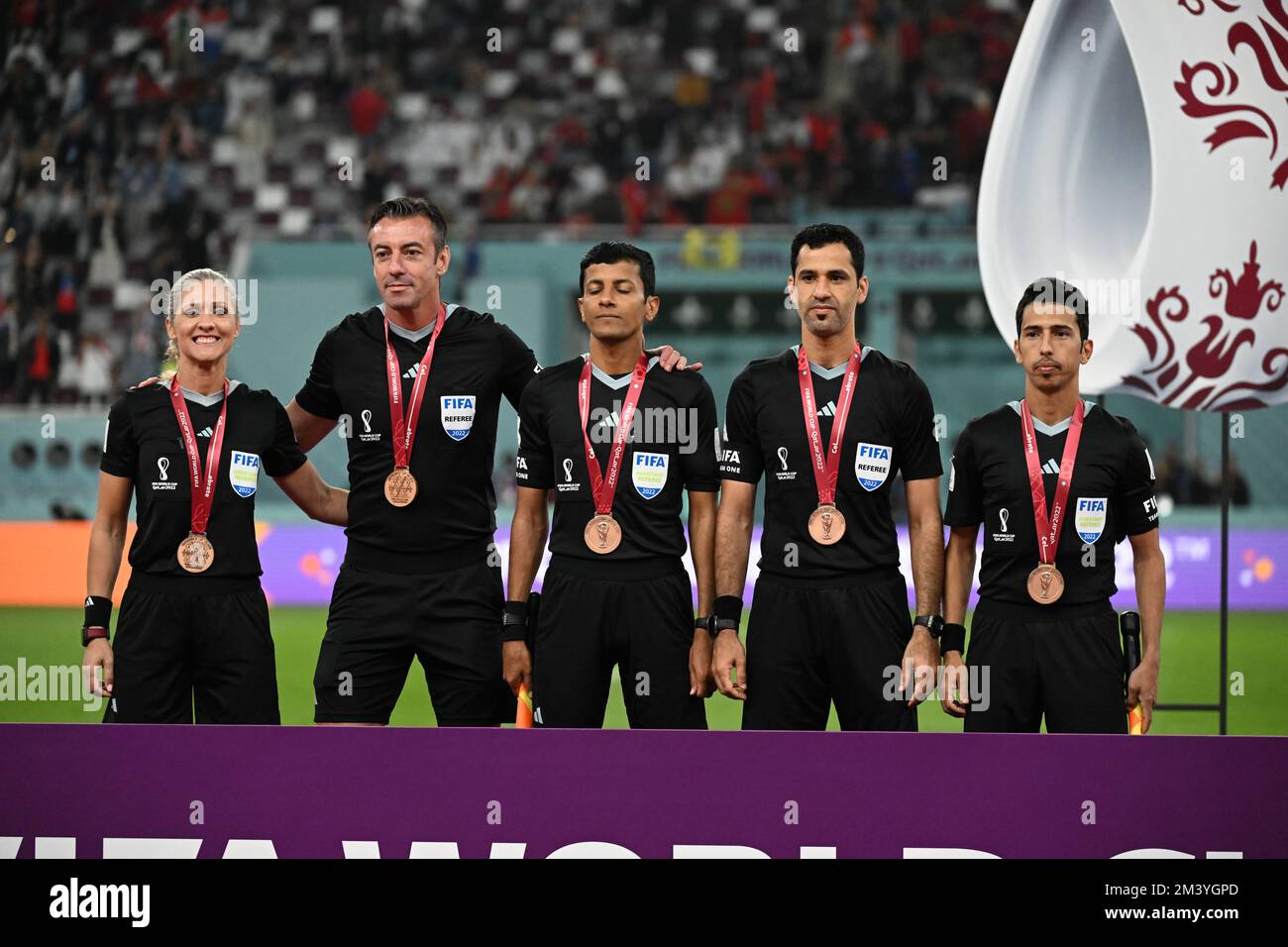
While the World Cup final attracts the largest global audience, the third-place play-off is often the tournament's most entertaining and high-scoring fixture. It offers a unique blend of tactical freedom, individual trophy races, and emotional farewells, making it a must-watch event for serious football fans and casual viewers alike.
The Evolution and Significance of the "Bronze Medal" Match
The FIFA World Cup third-place play-off, often referred to as the "consolation final," has been a staple of the tournament since 1934. Despite occasional criticism that the match is unnecessary, it remains a fixture that consistently delivers high drama and statistical anomalies. As we navigate the 2026 World Cup across North America, the significance of finishing on the podium has never been higher, especially with the expanded 48-team format.
Historically, the match serves as a bridge between the heartbreak of the semi-finals and the spectacle of the grand final. For the two teams involved, it is a final opportunity to represent their nation on the world stage before the four-year cycle resets. While European championships (UEFA Euro) abolished the third-place match after 1980, FIFA has maintained it, citing the importance of determining a definitive ranking for the top four teams in the world. This ranking influences FIFA coefficients and, perhaps more importantly, the historical legacy of the participating nations.
In 2026, with the tournament spread across the United States, Mexico, and Canada, the third-place match takes on a regional significance. Fans in the host cities view this as a premier event, often featuring two of the top four teams on the planet who, just days earlier, were considered favorites for the title.
Reason 1: A Tradition of High-Scoring Offensive Football
The primary reason to tune into the third-place play-off is the sheer volume of goals. Unlike the final, which is frequently a cagey, defensive affair where the fear of losing outweighs the desire to attack, the third-place match is characterized by "abandon." Since the stakes of the championship are removed, managers often release the tactical handbrake, allowing for a more expansive and fluid style of play.
Data from previous tournaments illustrates this trend clearly. In the 2022 World Cup, Croatia defeated Morocco 2-1 in a vibrant match that saw more attacking intent than many of the knockout rounds. Looking further back, the 2010 play-off between Germany and Uruguay ended 3-2, and the 2002 clash between Turkey and South Korea also finished 3-2. In fact, since 1978, only one third-place play-off (2018) has seen fewer than three goals scored.
The psychology behind this is simple: the "do-or-die" pressure of the final is absent. Defenders are often less cynical, and midfielders are given more license to roam. For viewers, this results in a high-speed game with frequent transitions and numerous shots on goal. If you are looking for the "Pure Football" experience where the primary objective is to score rather than to prevent, this is the match for you.
Reason 2: The Deciding Factor for the Golden Boot
The race for the Golden Boot—the award given to the tournament's top goalscorer—is often decided during the third-place play-off. Because the match tends to be higher scoring, it provides a "stat-padding" opportunity for elite strikers who are still in the running for the individual trophy.
A classic example occurred in 1958 when Just Fontaine scored four goals in the third-place match against West Germany to set an all-time record of 13 goals in a single tournament. More recently, players like Thomas Müller (2010) and Davor Šuker (1998) utilized this fixture to solidify their leads or overtake rivals in the scoring charts.
In the 2026 edition, the Golden Boot race is expected to be tighter than ever due to the increased number of matches. A striker entering the play-off with four or five goals knows that a brace or a hat-trick in this "looser" environment could secure their place in history. For fans, tracking these individual narratives adds a layer of competitive intensity to a game that some might otherwise dismiss. It is not just about the bronze medal; it is about who leaves the tournament as the most clinical finisher on Earth.
Reason 3: Emotional Farewells for National Team Legends
The third-place match is frequently the final international appearance for some of the sport's greatest icons. After a grueling month-long tournament and a career spanning over a decade, many veteran players choose this stage to take their final bow. Unlike a final, where the atmosphere is tense, or an early exit, which is bitter, the play-off provides a respectful environment for a standing ovation.
In 2026, several high-profile stars are reaching the twilight of their international careers. For these players, the bronze medal match is a chance to say goodbye to the fans without the suffocating pressure of a title on the line. It allows the manager to give these legends a "cameo" or a full 90-minute tribute.
Watching a legend like Luka Modrić (who led Croatia to third place in 2022) or other modern greats compete for the final time in their national colors is a powerful experience. These moments often transcend the scoreline, offering a human element to the professional game. The "Last Dance" narrative is a significant draw for viewers who have followed these players' journeys through multiple World Cup cycles.
Reason 4: The Prestige of Finishing Third
For many nations, finishing third in a World Cup is a monumental achievement that defines a generation of football. While "football giants" might view anything less than first as a failure, for emerging nations or those experiencing a "Golden Generation," a bronze medal is a cause for national celebration.
Consider the impact of Morocco’s run in 2022. Although they lost the play-off to Croatia, their presence in that match was a historic milestone for African and Arab football. For teams like Sweden (1994), Turkey (2002), and Croatia (1998 and 2022), the third-place finish remains a point of immense pride and a benchmark for future success.
In the context of 2026, the expanded field means that reaching the semi-finals is even more difficult. A team that wins the third-place match has essentially outlasted 45 other nations. This prestige carries over into FIFA rankings, which impacts seeding for future tournaments like the 2030 World Cup and continental championships. For the players, receiving a FIFA World Cup medal of any color is a career-defining moment that very few individuals ever achieve.
Reason 5: Tactical Freedom and a Preview of the Future
Coaches often use the third-place play-off to reward squad players who haven't seen much game time or to test young prospects in a high-stakes environment. This makes the match a fascinating case study for tactical analysis and a "sneak peek" at the team's future.
Without the rigid tactical requirements of a final, we often see:
- Experimental Formations: Coaches might trial a 3-man backline or an aggressive 4-2-4.
- Youth Integration: The "next big thing" in national football often gets their first start in this game.
- Goalkeeper Rotations: It is common for the second-choice goalkeeper to be given a start as a gesture of appreciation for their role in the camp.
This makes the match highly appealing to "tactics nerds" and scouts. You aren't just watching a game; you are watching the first steps of the 2030 cycle. Seeing how a 19-year-old talent handles the pressure of a World Cup play-off provides a glimpse into the next decade of the sport.
Comparison: The Final vs. The Third-Place Play-Off
To understand why the play-off is often more entertaining, it helps to look at the statistical differences typically observed in these two types of matches.
| Feature | World Cup Final | 3rd Place Play-Off |
|---|---|---|
| Average Goals | Historically Lower (often 1-0 or 2-1) | Historically Higher (often 3+) |
| Tactical Approach | Conservative / Risk-Averse | Expansive / Risk-Tolerant |
| Yellow/Red Cards | High (High tension/fouls) | Lower (Less "desperation" fouling) |
| Player Rotation | None (Best XI only) | Frequent (Squad players involved) |
| Main Incentive | The Trophy (Winner takes all) | Individual Awards / National Pride |
| Pressure Level | Maximum / Career-Defining | Moderate / Performance-Focused |
2026 Context: Why This Year's Play-Off is Different
The 2026 World Cup is unique because of its scale and geography. The third-place match is scheduled to be held at the Hard Rock Stadium in Miami Gardens, Florida, on July 18, 2026. This venue is known for its incredible atmosphere and state-of-the-art facilities, providing a fitting stage for the tournament's penultimate game.
Because the 2026 tournament features 48 teams, the physical toll on the players reaching the final four is unprecedented. We may see more fatigue, which ironically often leads to more defensive errors and even higher scores. Furthermore, with the tournament being hosted in North America, the commercial and entertainment value is being emphasized more than ever before. Expect the "bronze medal" match to be treated with the pomp and circumstance usually reserved for a championship game.
Official updates regarding ticket availability and final match logistics can be found on the official FIFA website.
Frequently Asked Questions
Does the World Cup third-place match go to extra time?
Yes, if the scores are level after 90 minutes, the match proceeds to two 15-minute periods of extra time. If the deadlock remains, it is decided by a penalty shoot-out. Historically, however, these matches are rarely decided by penalties because of the high-scoring nature of open play.
Do players actually receive medals for third place?
Yes, FIFA awards bronze medals to the players, coaching staff, and officials of the team that wins the third-place play-off. These medals are highly coveted and are considered a major honor in a player's professional career.
Why do some people want to abolish the third-place match?
Critics argue that the match is a "game that nobody wants to play" because it occurs shortly after the devastating disappointment of losing a semi-final. Some managers believe it puts unnecessary physical strain on tired players. However, fans and broadcasters generally support it due to the entertainment value and revenue it generates.
Who has won the most third-place play-offs in history?
Germany (including West Germany) holds the record for the most third-place finishes, having won the bronze medal match four times (1934, 1970, 2006, 2010). Their consistent performance in this fixture highlights the seriousness with which some top-tier nations approach the game.
Is the third-place match always high-scoring?
While not a guarantee, statistics show a significant trend. Since 1934, the average number of goals in a third-place match is approximately 3.8 per game, which is considerably higher than the overall tournament average.
Final Recommendation for Fans
If you are a fan who values the tactical "chess match" of football, the World Cup Final is your priority. However, if you want to see the world's best players performing with freedom, flair, and a desire to entertain, the third-place play-off is often the superior viewing experience.
For the 2026 match in Miami, ensure you tune in early to catch the individual narratives—the Golden Boot race, the veteran farewells, and the emergence of new stars. It is the last chance to see top-tier international football before the long wait for the next major cycle begins. Don't dismiss it as a "consolation prize"; treat it as the tournament's ultimate showcase of offensive talent.