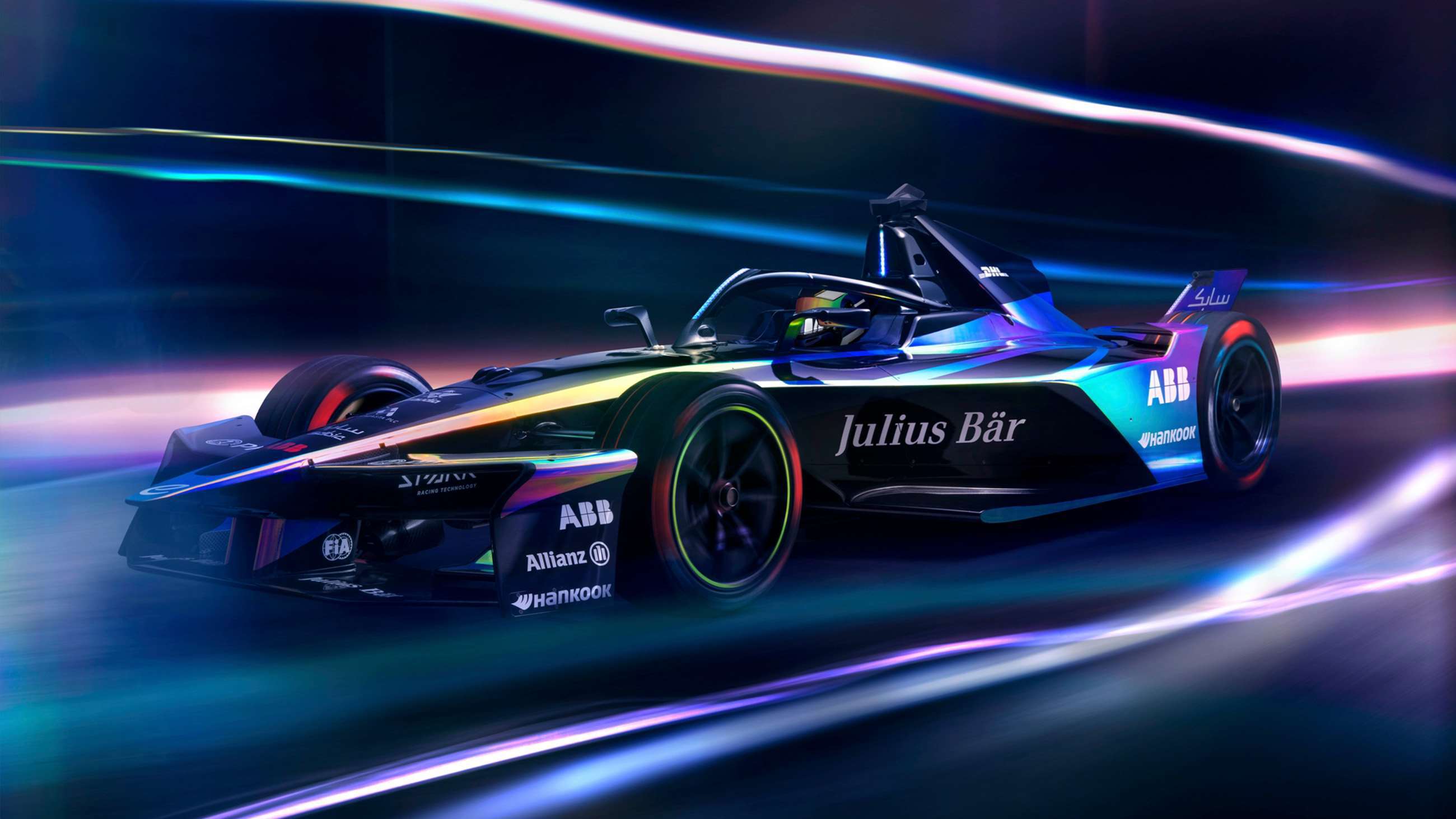
IndyCar is faster than Formula One primarily in terms of absolute top speed and sustained velocity on oval tracks. While Formula One cars dominate lap times on road circuits due to superior cornering and acceleration, IndyCars reach higher terminal velocities, often exceeding 235 mph at the Indianapolis Motor Speedway compared to F1’s typical 210–220 mph range.
When enthusiasts debate whether IndyCar or Formula One (F1) is the "faster" series, the answer depends entirely on how "speed" is measured. In 2026, the landscape of open-wheel racing has reached a technological peak, with both series utilizing sophisticated hybrid powertrains. However, if we define speed by the highest number on a speedometer, IndyCar consistently takes the crown.
The distinction lies in the engineering philosophy. F1 cars are designed for "peak performance" over a variable lap, involving heavy braking and rapid direction changes. IndyCars, particularly in their "speedway" configuration, are engineered for "sustained velocity." Below are the five primary technical and structural reasons why IndyCar holds the advantage in top-end speed.
1. Aerodynamic Configuration: The Speedway Aero Kit
The most significant reason an IndyCar can outpace a Formula One car in a straight line is the specialized aerodynamic "Speedway Kit" used on large oval tracks. Unlike F1, which uses a relatively consistent aerodynamic philosophy across all tracks (with minor adjustments for high-speed venues like Monza), IndyCar employs two distinct bodywork packages: the Road Course/Short Oval kit and the Superspeedway kit.
Drag Reduction and Wing Profiles
On a superspeedway like Indianapolis or Talladega, drag is the ultimate enemy. The IndyCar speedway kit features remarkably small, thin wings that are often set at near-zero degrees of incidence. These wings provide just enough downforce to keep the car glued to the banking while minimizing the "parachuting effect" that slows a car down.
In contrast, an F1 car is a high-drag machine by design. Even with the Drag Reduction System (DRS) open, an F1 car's rear wing and intricate "dirty air" management systems create significant aerodynamic resistance. F1 cars generate massive amounts of downforce to navigate corners at 150 mph, but that same downforce creates "induced drag," which acts as a physical brake at higher speeds. The 2026 F1 regulations continue to prioritize cornering speeds and wheel-to-wheel racing, which necessitates a more complex and drag-heavy aerodynamic profile than the streamlined IndyCar.
Ground Effect Underbodies
Both series utilize ground effect—the use of the car's floor to create a vacuum that pulls the chassis toward the tarmac. However, IndyCar’s Dallara IR-18 chassis relies more heavily on the underbody for its total downforce on ovals. By generating grip from the bottom of the car rather than the wings on top, IndyCar reduces the aerodynamic wake and drag, allowing the car to punch a much smaller hole through the air at 240 mph.
2. Sustained Power Delivery and the Hybrid Era
In 2026, both IndyCar and Formula One utilize hybrid power units, but the way they deploy that power differs significantly, affecting their top-end performance.
The 2.2L Twin-Turbo V6 vs. the 1.6L V6 Turbo Hybrid
IndyCar uses a 2.2-liter twin-turbocharged V6 engine, which, when combined with its hybrid ERS (Energy Recovery System), produces upwards of 800–900 horsepower in qualifying trim. F1 cars actually produce more total horsepower (often exceeding 1,000 hp), but F1's power delivery is optimized for acceleration out of slow corners.
The crucial difference is "clipping." In Formula One, the electrical energy is harvested and deployed in bursts. On a long straight, an F1 car will often "clip," meaning it runs out of electrical boost before it reaches the end of the straight, causing the car to stop accelerating or even slow down slightly. IndyCar’s engine map for ovals is designed for a constant, high-output drone. Because IndyCar drivers are at Wide Open Throttle (WOT) for nearly 100% of a lap on a superspeedway, the engine and turbochargers are tuned to maintain maximum boost and RPM for minutes at a time, rather than seconds.
Turbocharger Boost Pressures
In IndyCar, the boost pressure can be adjusted by the series officials. For the Indianapolis 500 qualifying, the "fast Friday" boost levels are increased, allowing the engines to breathe more deeply and push the cars toward the 240 mph mark. F1’s fuel flow and boost limits are more strictly regulated to favor efficiency over raw terminal velocity.
3. Track Geometry and the "Wide Open Throttle" Factor
A car's speed is a product of the environment it is built to conquer. Formula One is a series of road and street circuits. Even the fastest track on the calendar, Monza (the "Temple of Speed"), requires the car to slow down for chicanes and tight corners.
The Infinity of the Oval
IndyCars are the only elite open-wheel cars specifically designed to handle the unique physics of an oval. On a 2.5-mile superspeedway, the "corners" are actually long, banked arcs that can be taken at full throttle. When a driver never has to touch the brakes, the car can continue to build momentum.
While an F1 car might reach 220 mph at the end of the Baku City Circuit straightaway, it must immediately brake for a 90-degree turn. An IndyCar at Indianapolis enters Turn 1 at 235 mph and exits it at 232 mph. This ability to maintain a high "minimum speed" allows the car to reach higher peak speeds because it is starting its "straightaway" run from a much higher baseline velocity.
Banking and Lateral G-Forces
The banking on American ovals helps counteract the lateral forces that would otherwise push the car off the track. This allows IndyCar engineers to trim the wings out even further. If an F1 car were placed on the Indianapolis Motor Speedway, it would likely struggle to match the IndyCar’s top speed because its gearbox and aerodynamic package are not geared to sustain those velocities for 200 consecutive laps.
4. Transmission and Gear Ratio Customization
The internal mechanics of the transmission play a vital role in why IndyCar is faster in a straight line.
Long Gearing for Top Speed
In Formula One, the eight-speed gearboxes are "homologated," meaning the ratios are largely fixed for the season. These ratios are a compromise, designed to provide enough "punch" to get out of a hair-pin turn in Monaco while still having enough top end for the straights at Spa-Francorchamps.
IndyCar utilizes a six-speed Xtrac gearbox, and for the Indianapolis 500, the gear ratios are specifically customized for the event. Teams spend weeks "fine-tuning" sixth gear to ensure that the engine hits its redline exactly at the fastest point of the track. By using "longer" gears (gears that take longer to reach max RPM but allow for higher speeds), IndyCar can push the car’s top-end ceiling far beyond what an F1 car's standardized transmission would allow.
Mechanical Simplicity
While F1 transmissions are marvels of seamless-shift technology, they are also heavy and complex. IndyCar’s transmission is relatively straightforward, designed for durability and high-speed efficiency. The reduction in parasitic power loss through a drivetrain optimized for a single, high-speed range allows more of the engine's 800+ horsepower to reach the wheels at 230+ mph.
5. Technical Philosophy: Reliability vs. Complexity
The final reason IndyCar holds the speed advantage is the philosophy of the series itself. Formula One is an engineering competition where teams build their own chassis and power units. IndyCar is a "spec" series where every driver uses the same Dallara chassis.
The Focus on the "Greatest Spectacle in Racing"
Because the Indianapolis 500 is the centerpiece of the IndyCar season, the car is fundamentally designed to be the fastest vehicle in that specific environment. The Dallara IR-18 was built with the specific goal of breaking track records at Indy.
Formula One's technical regulations are currently focused on sustainability, road relevance, and "close racing" (reducing the wake of turbulent air). These goals often come at the expense of raw top speed. For example, F1 cars have become significantly heavier in the 2020s to accommodate safety structures and hybrid batteries, now weighing around 798kg (approx. 1,760 lbs). While IndyCars have also gained weight due to the "Aeroscreen" and hybrid units, their speedway configuration remains leaner in terms of aerodynamic surface area, allowing them to slice through the air with less resistance than the bulkier F1 cars.
Technical Specification Comparison (2026 Season)
| Feature | IndyCar (Speedway Trim) | Formula One (Standard Trim) |
|---|---|---|
| Top Speed | 235–240+ mph | 210–225 mph |
| Engine | 2.2L Twin-Turbo V6 Hybrid | 1.6L V6 Turbo Hybrid |
| Horsepower | ~800–900 hp | ~1,000+ hp |
| Chassis | Dallara IR-18 (Spec) | Team-Specific (Custom) |
| Weight | ~1,650 lbs (without fuel) | ~1,760 lbs (minimum) |
| Aero Focus | Ultra-low drag / Sustained speed | High downforce / Cornering |
| Brakes | Carbon / Steel (Oval dependent) | Carbon-Carbon |
Frequently Asked Questions
Does IndyCar accelerate faster than Formula One?
No. Formula One cars accelerate significantly faster than IndyCars. Due to their higher horsepower-to-weight ratio and more sophisticated traction control (integrated into the hybrid deployment), an F1 car can go from 0 to 60 mph in roughly 2.4 seconds and reaches 180 mph much quicker than an IndyCar. IndyCar is "faster" only in terms of its maximum terminal velocity on ovals.
Why doesn't F1 race on ovals to show their speed?
F1 cars are not built for the sustained lateral loads of an oval. The suspension, tires, and oil systems of an F1 car are designed for the varying G-forces of a road course. Furthermore, F1's "open wheel" design (without the robust wheel-to-wheel protection of an IndyCar) and the lack of specialized oval safety barriers at most F1-grade tracks make it a safety risk the series is not willing to take.
Is an IndyCar faster than an F1 car on a road course?
No. On a road course like Circuit of the Americas (COTA), where both series have historically competed, an F1 car is significantly faster. In fact, an F1 car is typically 10 to 15 seconds faster per lap than an IndyCar on a standard road circuit. This is due to F1's superior braking, higher downforce in corners, and faster acceleration out of slow turns.
Have F1 cars ever hit 240 mph?
In a controlled test environment, yes. In 2006, the Honda F1 team took a modified car to the Bonneville Salt Flats and reached 246 mph. However, in a sanctioned race environment, F1 cars rarely exceed 230 mph, whereas IndyCars regularly hit those speeds during the month of May in Indianapolis.
How does the 2026 hybrid system affect IndyCar speed?
The 2026 hybrid system provides IndyCar with an "overtake" or "push-to-pass" capability that is more robust than previous years. On ovals, this energy is used more for maintaining stability and recovery when caught in "dirty air" rather than just top-end speed, but the extra electrical torque helps the cars reach their terminal velocity faster coming out of the pits or after a restart.
Final Recommendation: Where to See the Speed
If your goal is to witness the fastest speeds in world motorsport, the Indianapolis 500 remains the definitive event. To truly appreciate the technical difference, watch the qualifying sessions where cars are "trimmed out" to their absolute minimum drag levels. For those interested in technical engineering, comparing the telemetry of an F1 car at Monza and an IndyCar at Indianapolis reveals the fascinating trade-offs between cornering efficiency and raw, straight-line velocity.