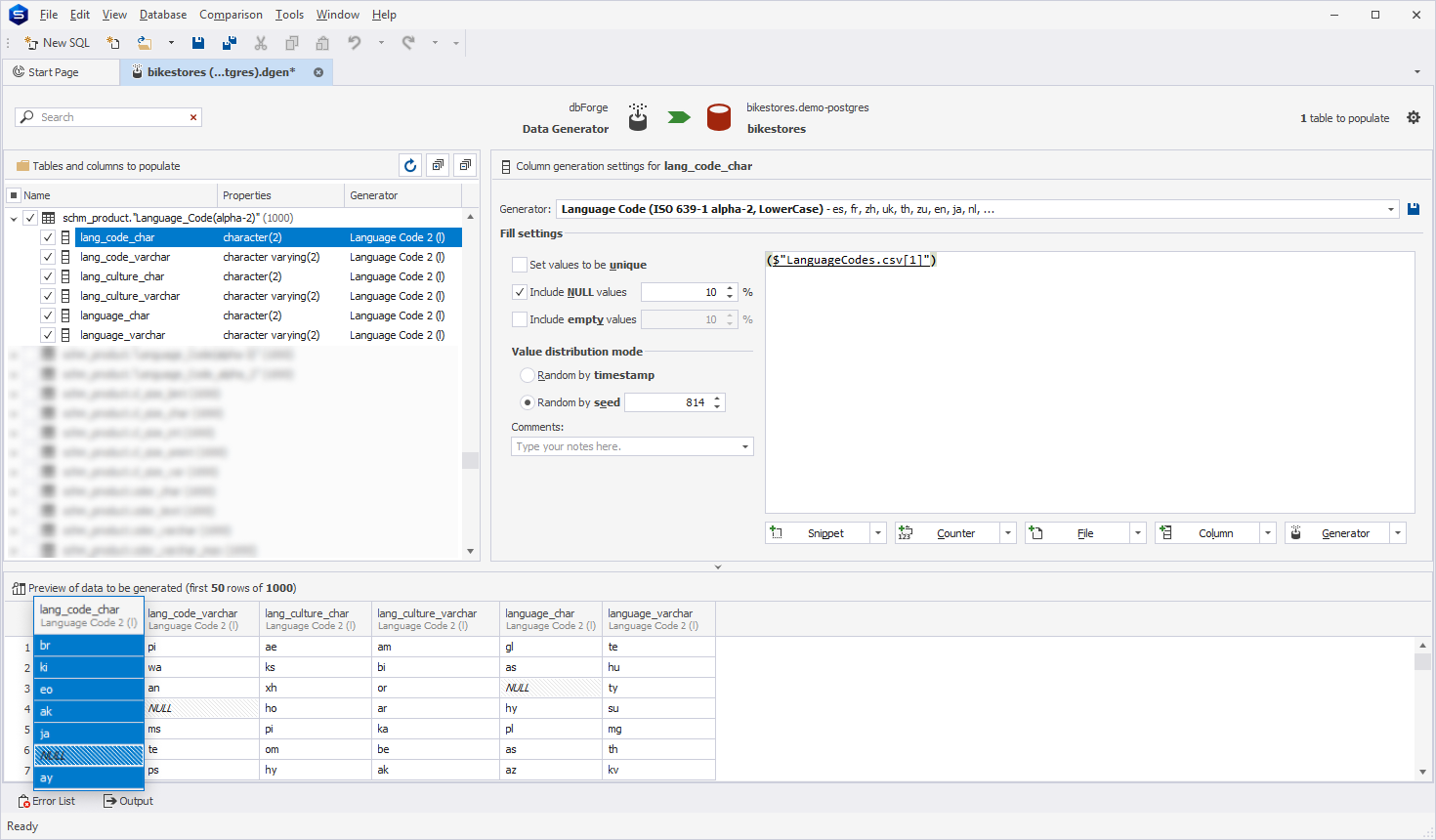
The ISO 639-1 standard defines two-letter codes used worldwide to represent languages in software, database architecture, and digital communication protocols. Mastering these standardized identifiers helps developers, localization engineers, and content managers streamline multilingual user interfaces, web metadata tags, and internationalized system design.
Understanding the Foundation of ISO 639-1
International standards shape how modern information technology handles human communication. At the heart of multilingual web development and software localization lies a robust nomenclature that prevents conflicting terminology across disparate database systems. The ISO 639 family of standards, maintained by the International Organization for Standardization, provides the definitive framework for classifying languages. Within this family, the ISO 639-1 standard represents the most widely adopted tier for concise, two-letter language identifiers.
Operating systems, web browsers, and content management systems rely on these predictable abbreviations to determine localization parameters, font rendering behaviors, and text direction. Rather than spelling out English, French, or Japanese in full text—which introduces spelling variations, localization discrepancies, and data storage bloat—systems parse lightweight codes like "en", "fr", and "ja". Understanding how these codes are structured, assigned, and deployed is essential for anyone building scalable digital infrastructure for a global audience.
Point 1: Two-Letter Designations for Core World Languages
The defining characteristic of ISO 639-1 is its compact structure. Every language included in this standard receives a unique, lowercase, two-letter alphabetical code derived from the Latin alphabet. This design choice optimizes data storage, minimizes bandwidth consumption in web transmissions, and aligns neatly with established computing conventions.
The Scope of the Two-Letter Matrix
Because the Latin alphabet consists of 26 letters, a two-letter permutation yields a theoretical maximum of $26 \times 26 = 676$ distinct combinations. However, the standard does not exhaust every possible pairing. Only a fraction of these combinations are officially assigned, carefully curated to represent languages with substantial literary, historical, or modern administrative usage.
Common examples include:
- en: English
- es: Spanish
- de: German
- zh: Chinese
- ar: Arabic
Efficiency in Data Architecture
In database engineering and hypertext markup, payload size matters. Transmitting "en" instead of "English" saves bytes across millions of API requests, database entries, and localization lookups. Furthermore, these two-letter tokens integrate smoothly into file naming conventions, URL slugs, and localization asset directories without introducing unwieldy string lengths.
Point 2: Integration with HTML, XML, and Web Standards
Beyond database design, ISO 639-1 codes serve as the mandatory foundation for web accessibility and semantic markup. The World Wide Web Consortium (W3C) incorporates these identifiers directly into core web standards to inform browsers, screen readers, and search engine crawlers about the linguistic context of a document.
The lang Attribute in HTML
When building accessible web pages, developers must declare the primary language of the document using the lang attribute. For instance, an English-language document begins with .
Global Content Strategy Welcome to our international portal.
This declaration allows screen assistive technologies to switch phonetic pronunciation dictionaries automatically, ensuring accurate auditory rendering for visually impaired users. Search engine crawlers also evaluate this attribute to index regional content correctly and serve appropriate search results to users based on their localized search queries.
HTTP Content Negotiation
Web servers and clients negotiate language preferences using the Accept-Language HTTP header, which heavily relies on ISO 639-1 codes. When a browser sends a request, it includes a string such as Accept-Language: fr-CA,fr;q=0.9,en;q=0.8. Here, "fr" and "en" are the ISO 639-1 codes signaling the user's preference for French and English, allowing servers to deliver the optimal localized variant automatically.
Point 3: Relationship with Other ISO 639 Standards
ISO 639-1 does not exist in isolation. It forms the most compact tier of a broader, multi-part standard maintained by the International Organization for Standardization and the Network Development and MARC Standards Office of the Library of Congress, which serves as the registration authority for ISO 639-2. Navigating multilingual projects often requires understanding how these different parts interact.
Comparison of ISO 639 Tiers
| Standard Tier | Code Length | Primary Use Case | Coverage Scope |
|---|---|---|---|
| ISO 639-1 | Two Letters | User interfaces, web tags, locales | Major modern languages |
| ISO 639-2 | Three Letters (Bibliographic/Terminology) | Library catalogs, bibliographic records | Broader historical and literary coverage |
| ISO 639-3 | Three Letters | Comprehensive linguistic mapping | Virtually all known living and extinct human languages |
Choosing the Right Tier
While ISO 639-1 is ideal for user-facing applications and modern web development due to its brevity, it lacks codes for thousands of lesser-known, regional, or extinct languages. When software projects require comprehensive linguistic coverage—such as anthropological databases or extensive translation memories—engineers turn to ISO 639-3, which assigns a three-letter code to every known human tongue. Conversely, library science historically favored ISO 639-2 due to legacy cataloging systems.
Point 4: Distinction from Locale Identifiers and BCP 47
A common pitfall among developers new to internationalization is confusing ISO 639-1 language codes with full locale identifiers. While a language code defines what language is spoken, a locale defines where it is spoken, incorporating regional variations, script differences, and formatting conventions.
Language vs. Territory
The ISO 639-1 code for Spanish is "es". However, Spanish spoken in Mexico differs grammatically, culturally, and lexically in subtle ways from Spanish spoken in Spain or Argentina. Furthermore, currency, date formats, and number formatting change across these regions.
To address this, modern web and software engineering relies on BCP 47 (Best Current Practice 47), which combines ISO 639-1 language codes with ISO 3166-1 alpha-2 country codes:
es-ES: Spanish as used in Spaines-MX: Spanish as used in Mexicoen-US: English as used in the United Statesen-GB: English as used in the United Kingdom
Relying solely on ISO 639-1 is sufficient for basic text translation routing, but complex applications requiring localized currency symbols, sorting algorithms, and legal compliance must utilize full BCP 47 locale tags.
Point 5: Maintenance, Governance, and Lifecycle Management
Languages are living systems; they evolve, split, merge, and occasionally fade from active administrative use. Consequently, the ISO 639-1 standard is subject to ongoing governance to ensure its codes remain accurate and stable over time.
The Registration Authority
The maintenance agency for ISO 639-1 is the Infoterm (International Information Centre for Terminology), operating under formal ISO procedures. This body reviews proposals for new language additions, modifications, or deprecations. Because changing an established code can break legacy software systems and database relationships, additions and alterations are implemented conservatively.
Handling Deprecations and Updates
When historical or geopolitical shifts occur, language codes may be reassigned or deprecated. Developers building robust enterprise software should implement resilient parsing libraries that handle standard updates gracefully. Hardcoding a static list of language codes into application logic without accounting for future updates can lead to integration failures when new linguistic regions gain digital infrastructure support.
Common Questions About ISO 639 1 Language Code
How many languages are covered by ISO 639-1?
ISO 639-1 officially defines codes for 183 languages. This curated subset focuses exclusively on major world languages that possess substantial written literature, software localization support, or official administrative status globally.
Can I create custom two-letter codes for fictional or unlisted languages?
No. Custom codes should never duplicate official ISO 639-1 identifiers to avoid collisions with standard software libraries. For private use, internal systems, or constructed languages, BCP 47 and ISO 639-3 provide reserved extension ranges and user-assigned namespaces.
Is ISO 639-1 case-sensitive?
By convention and specification, ISO 639-1 codes are written in lowercase letters (e.g., en, fr). However, many web parsers and database systems perform case-insensitive comparisons to accommodate user input errors, though lowercase remains the strict engineering best practice.
What is the difference between ISO 639-1 and Unicode CLDR?
ISO 639-1 provides the raw two-letter language identifiers. The Unicode Common Locale Data Repository (CLDR) builds upon these identifiers, supplying massive datasets regarding how numbers, dates, currencies, and time zones are formatted for each specific language and region.
How do I check if a language code is valid?
Developers can verify language codes programmatically using standard internationalization libraries built into modern programming environments, such as Python's langcodes package or JavaScript's built-in Intl API, which validate codes against official Unicode and ISO repositories.
Practical Next Steps for Implementation
When integrating multilingual support into your next digital project, start by auditing your database schemas to ensure text fields and locale columns accommodate standard two-letter or full BCP 47 strings without arbitrary character limits. Implement established internationalization libraries rather than writing custom validation regex patterns, as standard libraries maintain up-to-date mappings aligned with official ISO and W3C guidelines. Finally, ensure your frontend markup consistently declares the correct language attribute on every document to optimize accessibility and search engine indexing performance.