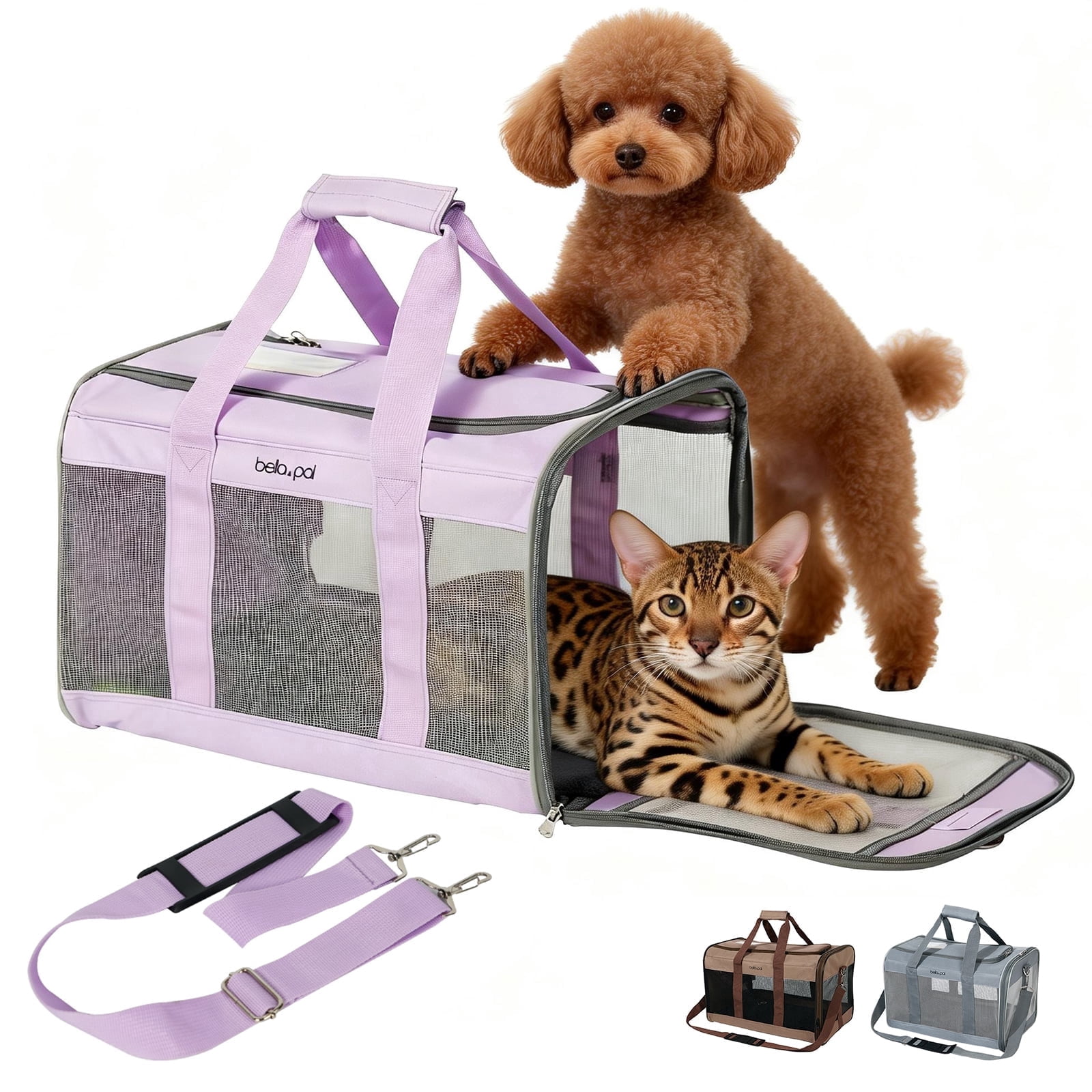
Navigating air travel with a pet requires selecting a carrier that meets strict airline dimensions, ensures animal safety and comfort, and features durable construction. The five best pet carriers for air travel are the Sherpa Original Deluxe, Sleepypod Air, SturdiBag Pro Large, Mr. Peanut's Gold Series, and Amazon Basics Soft-Sided. These options balance regulatory compliance, ventilation, and structural integrity.
Preparing for air travel with an animal companion introduces a complex set of logistical hurdles, regulatory hurdles, and safety considerations. Whether you are relocating across the country or taking a vacation, the journey begins long before you arrive at the airport security checkpoint. It starts with selecting the right pet carrier. Choosing an inadequate enclosure can lead to denied boarding at the gate, stressful delays, or, worse, compromised safety for your animal. To ensure a seamless trip, you must evaluate structural durability, ventilation metrics, ease of cleaning, and—most importantly—compliance with individual airline dimensions.
Because commercial airlines enforce strict rules regarding under-seat storage and cargo holds, understanding the nuances of soft-sided versus hard-sided carriers is vital. This comprehensive guide examines the five best pet carriers for air travel, detailing their specific features, dimensional specifications, airline compatibility, and operational pros and cons to help you make an informed decision.
Understanding Airline Requirements for Pet Carriers
Before investing in a pet carrier, you must master the regulatory landscape governed by the International Air Transport Association (IATA) and individual commercial carriers. No two airlines maintain identical rules, and a carrier that slips comfortably beneath a seat on a wide-body Boeing aircraft might prove too tall for a regional Embraer jet.
In-Cabin Versus Cargo Regulations
When transporting an animal by air, you generally face two distinct categories: in-cabin travel and checked baggage or cargo travel.
- In-Cabin Carriers: These must be soft-sided or flexible enough to compress slightly to fit under the seat directly in front of you. Airlines typically mandate that the pet must be able to stand up, turn around, and lie down comfortably inside the closed carrier. Ventilation mesh must be present on at least two or three sides to maintain adequate airflow.
- Cargo and Checked Carriers: Governed by strict IATA Container Requirement 82, these require rigid, heavy-duty plastic or fiberglass construction with metal hardware. They are designed for larger animals that cannot fit in the cabin and must travel in the temperature-controlled cargo hold.
Dimension Variances Among Carriers
Commercial airlines do not publish a universal size standard for under-seat storage. While legacy carriers like Delta, United, and American Airlines offer general guidelines (often around 18 x 11 x 11 inches for soft carriers), budget carriers such as Spirit or Frontier enforce much tighter height restrictions—frequently dropping the maximum height requirement to 8 or 9 inches. Consequently, flexible, compressible frames are often necessary to prevent gate checks.
Detailed Reviews of the 5 Best Pet Carriers for Air Travel
Selecting the top carriers requires analyzing real-world performance, hardware quality, ventilation design, and user feedback from frequent pet travelers.
1. Sherpa Original Deluxe Airline-Approved Pet Carrier
The Sherpa Original Deluxe remains an industry benchmark for in-cabin air travel. Known for its patented spring-wire frame, this carrier allows the rear end of the roof to be pushed down several inches to conform to under-seat clearances without collapsing on the animal inside.
- Key Specifications: Available in small, medium, and large sizes. The medium size measures roughly 17 x 11 x 10.5 inches.
- Material and Construction: Constructed from durable, quilted nylon with mesh panels on top and sides for ventilation. It includes a machine-washable faux lambskin liner.
- Airline Compatibility: Widely accepted by major domestic and international carriers, including Delta, American, and United, provided you select the size matching your pet's dimensions and your specific aircraft.
The primary advantage of the Sherpa Original Deluxe is its structural adaptability. The spring-wire frame is resilient, bouncing back to its original shape once removed from tight spaces. However, it lacks exterior storage pockets on some variations, meaning treats and documents must be packed in a separate carry-on.
2. Sleepypod Air In-Cabin Pet Carrier
The Sleepypod Air is engineered specifically to solve the problem of varying airline under-seat dimensions through an innovative telescoping design.
- Key Specifications: Measures 22 x 10.5 x 10.5 inches at its full size, but can fold down on both ends to reduce its length to 16 or 19 inches.
- Material and Construction: Features a luggage-grade ballistic nylon exterior, a secure privacy panel, and a plush, shock-absorbing black polyester bed insert that is removable and washable.
- Airline Compatibility: Highly versatile due to its adjustable length, making it ideal for travelers who frequently switch between large aircraft and smaller regional jets.
Beyond its adjustable frame, the Sleepypod Air integrates a safety tether and seatbelt straps, allowing it to double as a crash-tested car seat. The trade-off for this heavy-duty engineering is weight; it is visibly heavier than standard nylon carriers, which can add strain when hauling it through expansive airport terminals.
3. SturdiBag Pro Large Flexible Pet Carrier
The SturdiBag Pro is legendary among frequent flyers and rescue organizations for its incredible weight capacity and featherlight frame. Despite its spacious interior, it is designed to flex and bend significantly.
- Key Specifications: Measures 18 x 12 x 12 inches (Large), but its flexible fiberglass rod framework allows it to compress vertically down to fit under low airline seats.
- Material and Construction: Built using heavy-duty, 600-denier polyester with claw-proof mesh windows.
- Airline Compatibility: Fits comfortably under most major airline seats due to its flexible arch design, though owners of larger pets must verify that the compressed height still leaves adequate headroom.
The standout feature of the SturdiBag Pro is its feather-light weight (often under 3 pounds empty) combined with a high weight tolerance capable of holding cats or small dogs up to 40 pounds (though airline weight limits for in-cabin pets typically hover around 20 pounds including the carrier). The minimalist aesthetic lacks rigid structure when empty, which requires pets to be comfortable in a softer environment.
4. Mr. Peanut's Gold Series Lexicon Pet Carrier
Mr. Peanut's Gold Series focuses on premium aesthetics without sacrificing the functional demands of air transit. The Lexicon model incorporates self-locking zippers and a reinforced structured base to prevent sagging.
- Key Specifications: Measures roughly 18 x 11 x 11 inches.
- Material and Construction: Premium waterproof nylon, ballistic exterior trim, faux-fleece bedding over a plywood baseboard, and heavy-gauge metal hardware.
- Airline Compatibility: Conforms to standard under-seat dimensions for major domestic carriers.
The Gold Series stands out for its meticulous attention to safety hardware, replacing cheap plastic D-rings with metal clasps and introducing YKK zippers with locking loops. It also includes integrated trolley sleeves to slide over rolling luggage handles. The rigid base provides a stable floor for the animal, but it offers less vertical flexibility than spring-wire models if an airline has an exceptionally low seat clearance.
5. Amazon Basics Soft-Sided Mesh Pet Carrier
For travelers seeking a dependable, budget-friendly option without sacrificing core safety features, the Amazon Basics Soft-Sided carrier offers straightforward utility.
- Key Specifications: Available in medium (16.5 x 10 x 10 inches) and large sizes.
- Material and Construction: Polyester fabric with durable mesh panels for ventilation, plus a removable fleece bed cover.
- Airline Compatibility: Complies with standard under-seat rules for most domestic airlines, particularly in the medium size.
While it lacks the advanced engineering of the Sleepypod or the flexible frame of the SturdiBag, the Amazon Basics carrier provides reliable daily performance. Dual zippered openings allow top or side loading, and adjustable carrying straps simplify transport. The zippers, however, are standard grade and require careful handling to avoid snagging on the interior fabric lining.
Comparison of the 5 Best Pet Carriers for Air Travel
| Carrier Name | Frame Type | Dimensions (Inches) | Max Recommended Weight | Standout Feature |
|---|---|---|---|---|
| Sherpa Original Deluxe | Spring-Wire (Flexible top) | 17 x 11 x 10.5 (Medium) | Up to 16 lbs | Patented spring-wire frame |
| Sleepypod Air | Telescoping/Adjustable | 22 x 10.5 x 10.5 (Adjustable) | Up to 18 lbs | Crash-tested car seat integration |
| SturdiBag Pro Large | Fiberglass Rod (Arch) | 18 x 12 x 12 | Up to 40 lbs (Structurally) | Feather-light weight & high load capacity |
| Mr. Peanut's Gold Series | Rigid Base / Nylon | 18 x 11 x 11 | Up to 15 lbs | YKK locking zippers & metal hardware |
| Amazon Basics Soft-Sided | Standard Wire/Fabric | 16.5 x 10 x 10 (Medium) | Up to 15 lbs | Cost-effective accessibility |
Essential Factors to Evaluate Before Purchase
Choosing the right carrier requires balancing your pet's physical dimensions with airline constraints. Ignoring these core metrics can result in a stressful travel day.
Measuring Your Pet Accurately
Never guess your pet's size. Measure your animal from the tip of the nose to the base of the tail (excluding the tail itself), and from the top of the head (or ears if erect) down to the floor while standing. Compare these measurements against the interior dimensions of the carrier. Your pet must be able to stand up and turn around completely uninhibited. If your pet touches the ceiling or sides continuously, step up to a larger size or adjust your airline selection.
Ventilation and Visibility
Air circulation is paramount in pressurized cabin environments. Look for carriers featuring heavy-gauge mesh on at least three sides. Mesh not only ensures steady airflow but also allows your pet to see your face, which significantly reduces travel anxiety. Avoid carriers with heavy opaque fabric flaps that completely seal the animal in darkness unless they are specifically designed for quick opening during security screenings.
Durability and Zippers
Insecure zippers are a frequent failure point during travel. Clever cats and determined dogs can force open standard zippers if they are not locked together. Always inspect the closure mechanisms. Carriers featuring metal self-locking sliders or loops to clip zippers together provide essential security against escapes in crowded airport terminals.
Frequently Asked Questions About Air Travel Pet Carriers
Do airlines charge an additional fee for pet carriers?
Yes. Commercial airlines charge a pet-in-cabin fee, which generally ranges from $95 to $150 each way, depending on the carrier and destination. This fee is separate from your checked baggage or carry-on baggage fees. You must register your pet in advance, as airlines enforce strict caps on the number of animals permitted in the cabin per flight.
Can my pet carrier double as a car seat?
Certain premium carriers, such as the Sleepypod Air, feature dedicated seatbelt straps and rigorous crash-testing certifications for automobile travel. Standard soft-sided carriers can usually be secured in a vehicle backseat by passing a lap belt through the rear luggage sleeve or around the carrying handles, but they may not offer certified impact protection.
What should I pack inside the carrier during the flight?
Line the bottom with a moisture-absorbing pad or a machine-washable fleece liner. Pack a few familiar-smelling items, such as a favorite toy or a worn t-shirt, to comfort your pet. Avoid packing heavy bowls of water inside the carrier during taxi and takeoff, as turbulence can cause spills. Instead, offer water using a travel bottle during lulls in the flight.
Can I take my pet out of the carrier during the flight?
No. Federal aviation regulations and airline policies strictly mandate that pets must remain inside their fully zipped carriers under the seat in front of you for the entire duration of taxi, takeoff, flight, and landing. Opening the carrier or placing the animal on your lap is a violation of safety guidelines.
What happens if my carrier exceeds the airline's size limits?
If gate agents determine that your carrier does not fit under the seat or violates dimension policies, you may be denied boarding, or you may be forced to check the animal as cargo (if the carrier qualifies for cargo transport and space is available). To prevent this, always measure your carrier while it is lightly compressed to match the tightest airline limits you expect to encounter.
Conclusion and Next Action
Selecting the optimal pet carrier for air travel requires balancing your animal's comfort with the uncompromising dimensional rules of commercial airlines. Prioritize flexible frames like the Sherpa Original Deluxe or SturdiBag Pro if you fly on varied aircraft types, or opt for reinforced safety hardware like Mr. Peanut's Gold Series if security and structural rigidity are your top priorities. Your next step is to measure your pet today, verify the precise pet policies and cabin dimensions of your chosen airline for 2026, and purchase your carrier at least two weeks before departure. This window allows you to introduce your pet to the enclosure gradually, transforming the carrier into a familiar, safe sanctuary before takeoff.