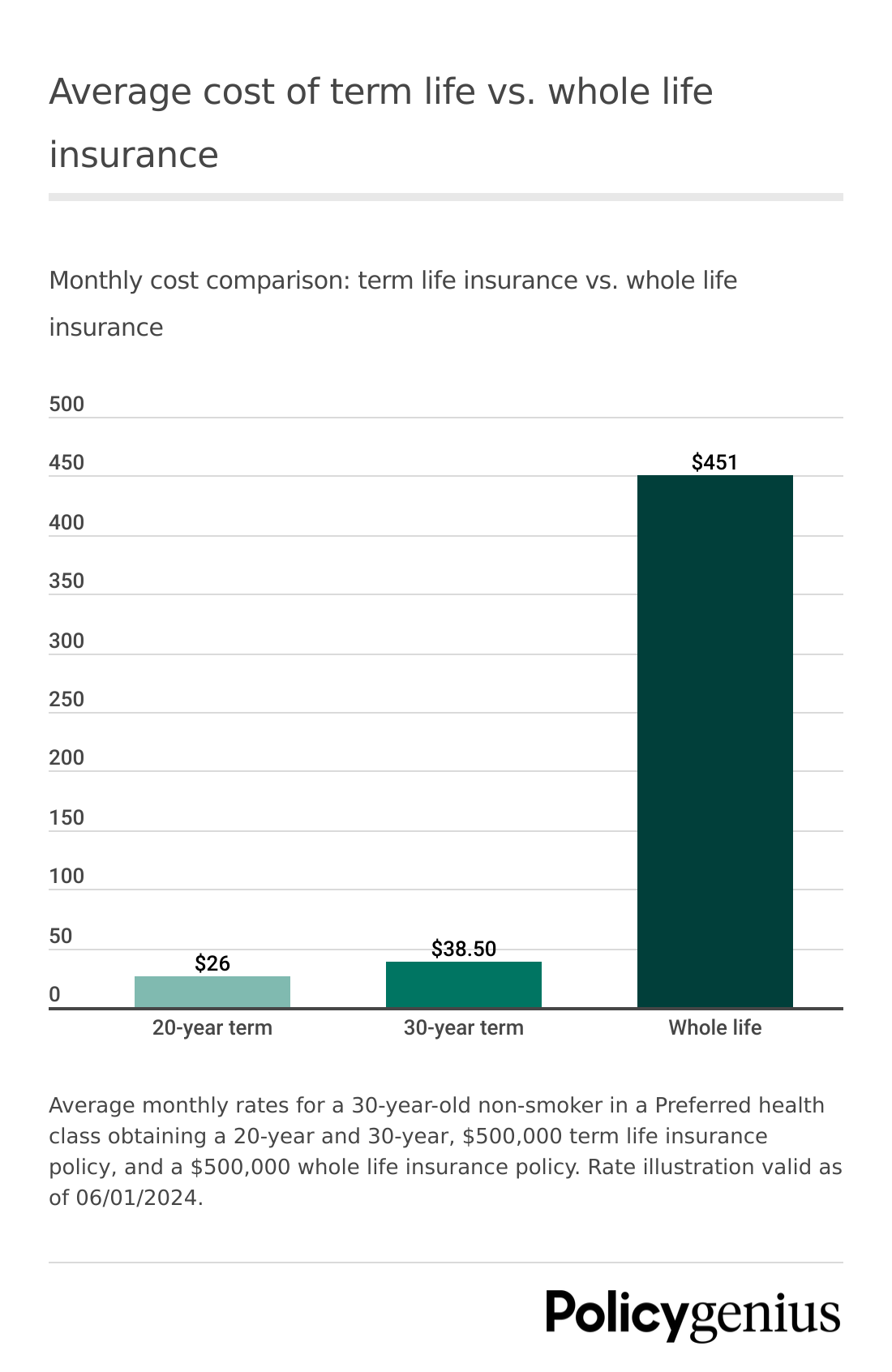
Securing a 30-year term life insurance policy provides a fixed premium and guaranteed death benefit over three decades, making pricing heavily dependent on the policyholder's age, health status, and lifestyle factors at the time of application. Because insurance companies evaluate mortality risk over a long horizon, rates increase incrementally with each year of age, meaning that locking in a policy earlier in life yields significantly lower cumulative costs than waiting until later decades.
Choosing a term life insurance policy requires navigating a complex landscape of underwriting guidelines, medical exams, health classifications, and pricing structures. For individuals planning long-term financial security for dependents, a 30-year term offers a balance of affordability and extended protection. Understanding how insurers calculate these rates by age allows applicants to anticipate costs, prepare for underwriting requirements, and select the right coverage amount for their household needs.
Disclaimer: The following information is for educational purposes and does not constitute financial, legal, or professional insurance advice. Insurance rates vary significantly based on individual underwriting results, geographic location, and specific carrier guidelines.
The Mechanics of 30-Year Term Life Insurance
Term life insurance functions as pure protection, offering a death benefit to designated beneficiaries if the insured passes away during the specified term. A 30-year term is one of the longest standard durations available on the market, designed to cover major long-term financial obligations such as a 30-year mortgage, raising young children through college, or replacing decades of future earnings.
Unlike permanent life insurance policies such as whole or universal life, term policies do not build cash value. They exist solely to provide high coverage amounts at a lower initial cost. The defining feature of a 30-year term policy is its level premium guarantee. Once an insurer approves an application and issues the policy, the monthly or annual premium remains identical for the entire 30-year duration, provided the policyholder continues paying on time.
Why Age Matters Most in Life Insurance Pricing
Actuaries determine life insurance rates using statistical models that calculate the probability of mortality within a given timeframe. As human beings age, that probability increases. Consequently, insurance companies charge higher premiums to older applicants to offset the elevated statistical risk of a claim occurring during the 30-year window.
Furthermore, a 30-year term policy pushes older applicants closer to or beyond traditional retirement ages. For example, a 50-year-old purchasing a 30-year term policy will be insured until age 80. The mortality curve accelerates steeply in a person’s 60s and 70s, which makes long-term policies for older applicants substantially more expensive than shorter terms or policies issued to younger individuals.
Average 30-Year Term Life Insurance Rates by Age and Gender
Insurance carriers group applicants into broad pricing tiers based on age, gender, and health status. Because women statistically have a longer life expectancy than men, female applicants generally enjoy lower baseline rates across all age brackets.
The table below illustrates estimated monthly premiums for a $500,000 30-year term life insurance policy for a healthy individual categorized under a "Preferred Plus" (or equivalent top-tier) non-smoker health classification. Actual rates vary based on individual underwriting, choice of carrier, and state regulations.
| Age at Application | Estimated Monthly Premium (Male) | Estimated Monthly Premium (Female) | Total 30-Year Cost (Male) | Total 30-Year Cost (Female) |
|---|---|---|---|---|
| 25 | $28 – $35 | $24 – $30 | $10,080 – $12,600 | $8,640 – $10,800 |
| 30 | $32 – $40 | $27 – $35 | $11,520 – $14,400 | $9,720 – $12,600 |
| 35 | $45 – $55 | $38 – $48 | $16,200 – $19,800 | $13,680 – $17,280 |
| 40 | $70 – $85 | $58 – $70 | $25,200 – $30,600 | $20,880 – $25,200 |
| 45 | $120 – $145 | $95 – $115 | $43,200 – $52,200 | $34,200 – $41,400 |
| 50 | $210 – $250 | $160 – $190 | $75,600 – $90,000 | $57,600 – $68,400 |
Note: These figures represent baseline estimates for healthy non-smokers. Applicants with pre-existing medical conditions, tobacco use, or hazardous occupations will see higher premiums.
Age Thresholds and Underwriting Cutoffs
As applicants age, they cross specific thresholds that impact not only their pricing tier but also their eligibility for certain policy lengths. Navigating these boundaries requires strategic timing when applying for coverage.
The Age 50 Threshold
Most major insurance carriers set an age limit of 50 or 55 for issuing a 30-year term policy. Because the policy extends into the insured's 80s, the financial risk to the insurer increases dramatically after age 50. Applicants aged 55 and older are typically restricted to 10-, 15-, or 20-year term policies, or must explore permanent life insurance options.
"Insurance Age" vs. "Calendar Age"
When calculating rates, life insurance companies generally use an applicant's nearest age rather than their exact calendar age. If an individual is within six months of their birthday, most insurers round up to the next age for pricing purposes. This "age rollback" or "age nearest" rule means that applying just before a birthday can save thousands of dollars over the life of a 30-year policy.
Key Factors Beyond Age That Influence Rates
While age serves as the primary baseline for pricing, several other underwriting criteria determine whether an applicant qualifies for the lowest rate classes shown in pricing tables.
1. Health Classifications and Medical History
Underwriters divide applicants into distinct health categories, such as:
- Preferred Plus / Preferred Best: Exceptional health, ideal height-to-weight ratio, no family history of major genetic illnesses, and clean personal medical records.
- Standard Plus / Standard: Good overall health with minor, well-managed issues (such as mild hypertension or controlled cholesterol) or slightly outside ideal weight ranges.
- Substandard (Table Ratings): Higher risk profiles due to chronic conditions, diabetes, past heart issues, or tobacco use. Substandard rates are typically expressed as a percentage increase over standard rates (e.g., Table B or Table 2).
2. Tobacco and Nicotine Use
Cigarette smokers pay significantly higher premiums—often three to four times more than non-smokers of the same age and health profile. This surcharge extends to cigars, pipes, chewing tobacco, e-cigarettes, and nicotine replacement therapies in many underwriting guidelines. Quitting tobacco for a sustained period (typically 1 to 3 years, depending on the carrier) allows policyholders to request a rate re-evaluation and secure non-smoker status.
3. Lifestyle and Occupation
Insurers evaluate high-risk hobbies (such as skydiving, scuba diving, rock climbing, or private aviation) and hazardous occupations. Engaging in these activities can result in flat extras—an additional dollar amount added per $1,000 of face value—or outright exclusion from certain coverage tiers.
Choosing the Right Coverage Amount and Term Length
Before locking in a 30-year term policy, applicants must verify that both the term length and the death benefit align with their financial obligations.
- Income Replacement: A common guideline is multiplying annual income by 10 to 15, adjusting for the number of working years remaining.
- Debt Obligations: Factoring in the remaining balance of a mortgage, student loans, and other major liabilities ensures dependents are not burdened financially.
- Future Expenses: Anticipating future costs such as college tuition for children helps determine whether a $250,000, $500,000, or $1,000,000 policy is necessary.
For individuals whose financial obligations will diminish over time—such as empty nesters or homeowners nearing the end of their mortgage—a shorter 15- or 20-year term may offer a more cost-effective alternative to a 30-year commitment.
Common Mistakes to Avoid When Buying Term Life Insurance
Navigating the life insurance market involves potential missteps that can lead to higher costs or delayed coverage. Avoid these common pitfalls:
- Waiting for a Birthday: Delaying an application past your "age nearest" birthday permanently increases your locked-in rate for 30 years.
- Underestimating Coverage Needs: Purchasing too little coverage to save on monthly premiums leaves beneficiaries vulnerable to inflation and unexpected financial shortfalls.
- Failing to Disclose Medical History: Omission or misrepresentation of medical history on an application can lead to a denied claim or policy rescission during the contestability period.
- Relying Solely on Employer-Sponsored Plans: Group life insurance through an employer is convenient, but it is typically capped at one or two times salary and does not transfer if you change jobs.
Frequently Asked Questions
Can I convert my 30-year term life insurance policy into permanent coverage later?
Most reputable term life insurance policies include a conversion rider. This contractual feature allows the policyholder to convert all or part of their term policy into a permanent life insurance policy (such as whole life) without undergoing a new medical exam or proving insurability. This is useful for individuals who develop health conditions during the 30-year term and wish to secure lifelong coverage.
What happens when the 30-year term expires?
When the 30-year term ends, the policy expires, and the coverage terminates unless renewed. Most policies offer an annual renewable term option, but the premiums increase drastically every year based on your attained age at that time. Alternatively, policyholders can let the policy lapse if their financial obligations have ended and they no longer need dependents protected.
Do I need a medical exam to qualify for a 30-year term policy?
While traditional underwriting requires a paramedical exam (blood draw, urine sample, height, weight, and blood pressure check), many modern insurers offer accelerated underwriting programs. Qualified applicants who meet specific age and health criteria can secure a policy without a physical exam, relying instead on electronic health records, prescription databases, and motor vehicle reports.
Is it better to buy a 30-year term policy or multiple shorter terms?
Purchasing a single 30-year term policy locks in your rate based on your current age for the entire duration. Buying shorter policies (such as two consecutive 15-year terms) exposes you to significantly higher rates when you reapply at an older age for the second term, making a single 30-year term generally more cost-effective for long-term needs.
Can I have multiple life insurance policies at the same time?
Yes. Insurers allow individuals to hold multiple term policies simultaneously, a strategy known as "layering" or "laddering." For example, an applicant might purchase a $500,000 30-year term policy to cover a mortgage and a separate $500,000 15-year term policy to cover child-rearing years. This approach reduces overall costs as shorter-term obligations expire.
Next Steps and Action Plan
To secure the most competitive 30-year term life insurance rates for your age, take a methodical approach:
- Calculate your needs: Determine the exact death benefit and term length required to protect your family's financial future.
- Review your timeline: Check your birthdate to ensure you apply before your "age nearest" increases your baseline rates.
- Compare quotes: Obtain quotes from multiple independent insurance brokers who can shop across dozens of top-rated carriers to find the best underwriting fit for your health profile.
- Complete underwriting: Prepare for medical exams or gather health records to ensure a smooth approval process and lock in your level premium.