A 3% down conventional home loan is a mortgage that allows qualified borrowers to purchase a primary residence with a down payment as low as 3% of the purchase price. These loans are typically backed by Fannie Mae or Freddie Mac and offer a low-barrier entry point into homeownership for those with strong credit but limited upfront cash.
For decades, the "20% down" rule was the gold standard of real estate. However, in the 2026 housing market, rising property values and the necessity of liquidity have made low-down-payment options the new norm. Conventional loans with 97% Loan-to-Value (LTV) ratios provide an alternative to government-insured loans, such as FHA or VA mortgages, often providing lower long-term costs for those who qualify.
Understanding the Framework of Conventional 97 Loans
The term "3% down conventional loan" is often used as a catch-all for several specific mortgage products. These are "conventional" because they are not directly insured or guaranteed by the federal government (unlike FHA, VA, or USDA loans). Instead, they follow the underwriting guidelines set by Government-Sponsored Enterprises (GSEs), specifically Fannie Mae and Freddie Mac.
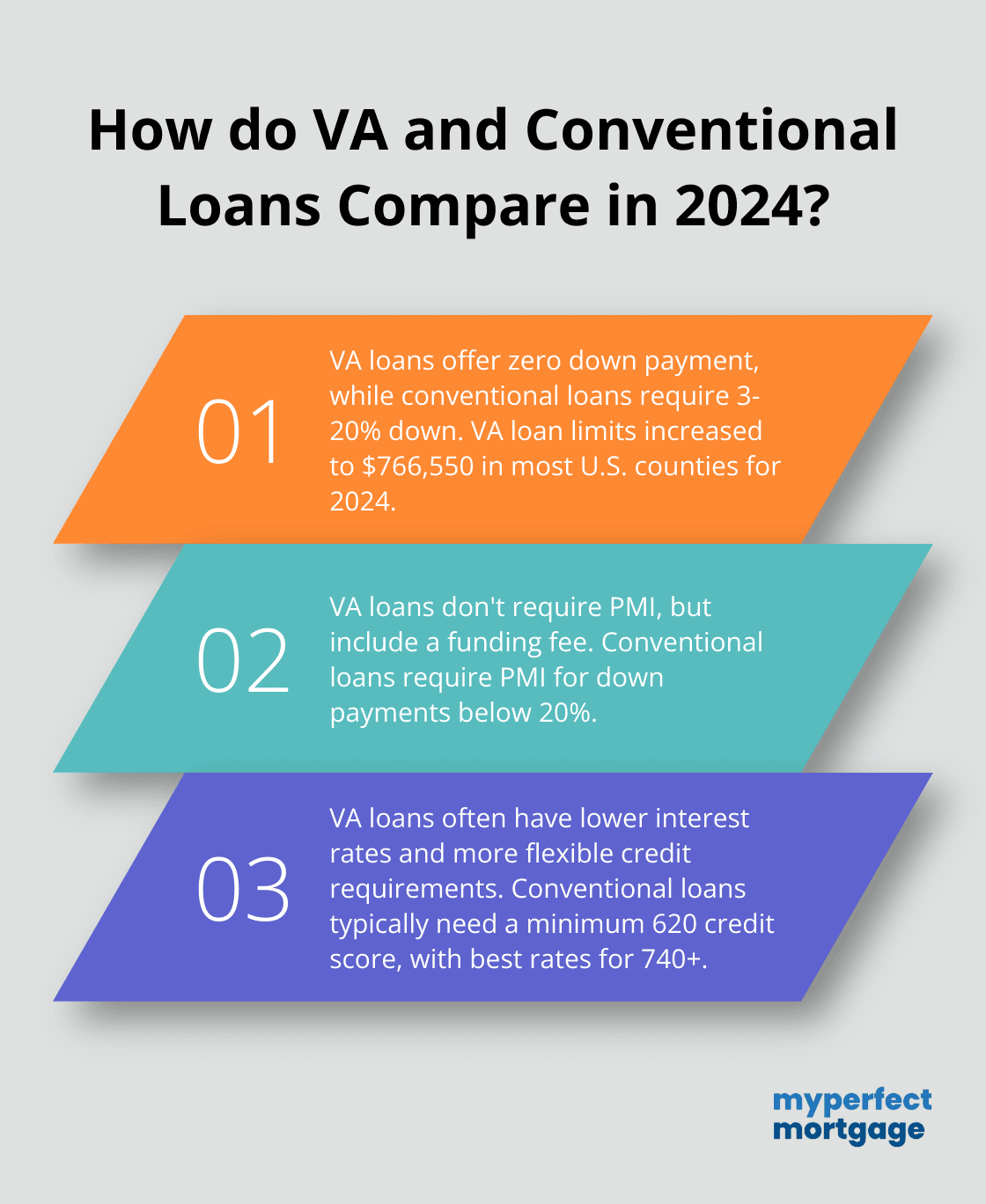
When a lender issues a conventional loan with only 3% down, they are essentially taking on a higher risk of default. To mitigate this risk, the GSEs require Private Mortgage Insurance (PMI) on any loan where the borrower invests less than 20% equity. This insurance protects the lender, not the borrower, but it is the mechanism that makes 3% down payments possible in the private sector.
The Primary 3% Down Loan Programs
In 2026, four primary programs dominate the 3% down landscape. While they all share the same minimum down payment, their eligibility requirements regarding income and homebuyer status differ significantly.
1. Fannie Mae HomeReady®
The HomeReady program is designed for low-to-moderate-income borrowers. One of its most distinctive features is the flexibility in "income pooling." Borrowers can often use income from household members who are not on the loan application (such as parents or adult children) as a compensating factor to help qualify, even if that income isn't used to calculate the Debt-to-Income (DTI) ratio.
- Income Limit: Generally capped at 80% of the Area Median Income (AMI).
- Credit Requirement: Typically a minimum score of 620, though 680+ results in significantly better pricing.
- Education: Completion of a homebuyer education course is required.
2. Freddie Mac Home Possible®
Home Possible is the direct competitor to HomeReady. It targets a similar demographic and offers competitive interest rates. A unique aspect of Home Possible is its treatment of multi-unit properties; while many 3% down programs are restricted to single-family homes, Home Possible sometimes allows for 2-4 unit properties if certain occupancy and income requirements are met.
- Income Limit: Capped at 80% of the AMI.
- Flexibility: Allows for sweat equity in some cases, where the borrower's labor in renovating the property counts toward the down payment.
3. Freddie Mac HomeOne®
The HomeOne mortgage is specifically geared toward first-time homebuyers. Unlike HomeReady or Home Possible, HomeOne does not have geographic or income restrictions. This makes it an ideal choice for high-earning professionals who are buying their first home and want to preserve their capital for investments or renovations rather than a large down payment.
- Eligibility: At least one borrower must be a first-time homebuyer.
- Property Type: Limited to one-unit primary residences (including condos and townhomes).
4. Standard Conventional 97 (Fannie Mae)
This is the standard 97% LTV program offered by Fannie Mae. Like HomeOne, it is restricted to first-time homebuyers but does not impose the strict income limits found in the HomeReady program. It is the "baseline" 3% down option for many retail lenders.
Eligibility and Technical Requirements
To secure a 3% down conventional loan in 2026, borrowers must meet specific financial benchmarks. Lenders use these criteria to ensure the borrower has the capacity to manage a high-LTV mortgage.
Credit Score Thresholds
While the official minimum credit score for a conventional loan is 620, the "real-world" requirements for a 3% down loan are often higher. Because the LTV is so high, lenders may impose "overlays" (additional requirements). Most borrowers will find that a score above 720 is necessary to get an interest rate and PMI premium that makes the 3% down option more affordable than an FHA loan.
Debt-to-Income (DTI) Ratios
DTI is the percentage of your gross monthly income that goes toward paying debts. For 3% down conventional loans, lenders typically look for a DTI of 43% or lower. However, if a borrower has high cash reserves or a high credit score, automated underwriting systems (like Fannie Mae’s Desktop Underwriter) may allow a DTI as high as 50%.
Reserve Requirements
"Reserves" refer to the amount of liquid cash you have left in the bank after the down payment and closing costs are paid. While some 3% down programs do not strictly require reserves, having two to six months of mortgage payments (Principal, Interest, Taxes, and Insurance - PITI) in savings significantly increases the likelihood of loan approval.
Homebuyer Education
Almost all 3% down conventional programs require at least one borrower to complete a homeownership education course. These courses, such as those provided by Framework or HUD-approved housing counseling agencies, cover budgeting, the closing process, and the long-term responsibilities of owning a home.
The Cost of Private Mortgage Insurance (PMI)
The most significant "catch" of the 3% down conventional loan is Private Mortgage Insurance. Since the lender is financing 97% of the home's value, they require insurance to cover their losses if the borrower defaults.
How PMI is Calculated
Unlike FHA insurance, which is a flat percentage for everyone, conventional PMI is risk-based. The cost is determined by:
- Credit Score: Higher scores pay lower premiums.
- LTV Ratio: A 97% LTV loan will have a higher PMI rate than a 95% LTV loan.
- DTI Ratio: Higher debt loads can sometimes increase PMI costs.
The Advantage of Cancellation
The primary reason borrowers choose conventional 3% down over FHA is the ability to remove PMI. Under the Homeowners Protection Act, PMI must be automatically canceled when your loan balance is scheduled to reach 78% of the original value of your home. Borrowers can also request cancellation once they reach 80% equity through principal payments or market appreciation (usually after a new appraisal). In contrast, FHA mortgage insurance usually lasts for the entire life of the loan.
3% Down Conventional vs. FHA: A Comparison
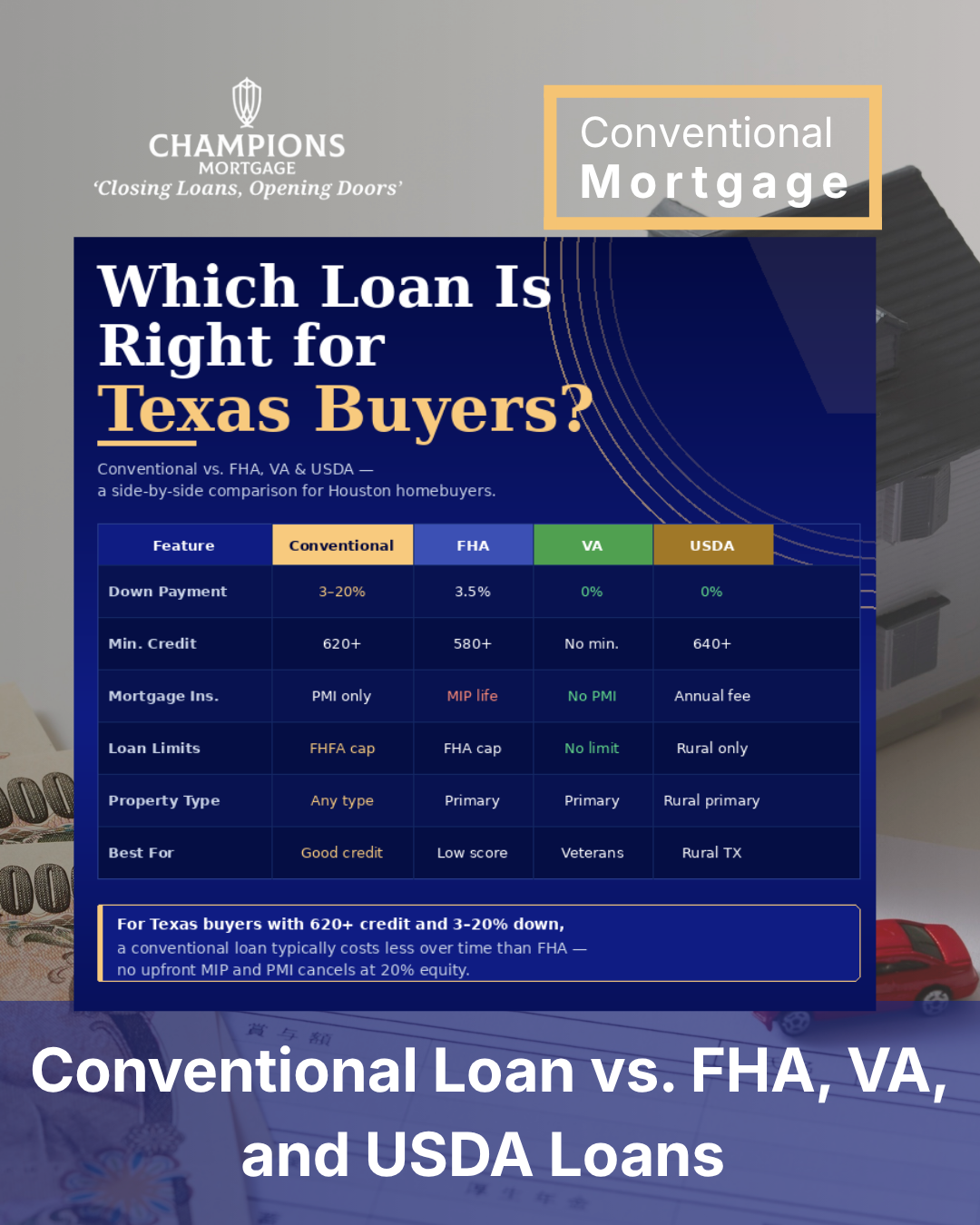
Choosing between a 3% down conventional loan and a 3.5% down FHA loan is one of the most common dilemmas for homebuyers. The following table highlights the material differences in 2026.
| Feature | Conventional 3% Down | FHA 3.5% Down |
|---|---|---|
| Minimum Down Payment | 3% | 3.5% |
| Minimum Credit Score | 620 (720+ recommended) | 580 (or 500 with 10% down) |
| Mortgage Insurance | Risk-based PMI | Fixed MIP (Upfront + Monthly) |
| MI Cancellation | Yes, at 20% equity | Usually never (if <10% down) |
| Property Standards | Strict | Very Strict (Safety/Health focus) |
| Income Limits | Only for HomeReady/Possible | None |
| First-Time Buyer Req. | Often required for 3% down | Not required |
Pros and Cons of 3% Down Conventional Loans
Advantages
- Lower Upfront Cost: Allows buyers to enter the market years sooner than if they were saving for 20% down.
- Competitive Interest Rates: Interest rates are often comparable to those with higher down payments, provided the borrower has excellent credit.
- PMI Portability: PMI can be paid as a monthly premium, a one-time upfront fee, or built into the interest rate (Lender Paid Mortgage Insurance).
- Appraisal Flexibility: Conventional appraisals are generally less stringent than FHA appraisals regarding minor repairs and cosmetic issues.
Disadvantages
- Higher Monthly Payments: A smaller down payment means a larger loan balance, which results in higher interest costs and the addition of PMI.
- Strict Credit Requirements: Borrowers with credit scores below 680 may find the PMI premiums prohibitively expensive compared to FHA options.
- Market Competitiveness: In a "seller's market," some sellers may perceive a 3% down offer as "weaker" than a 20% down offer, fearing the loan might fall through during underwriting.
Steps to Secure a 3% Down Mortgage
- Audit Your Credit Report: Ensure there are no errors. In 2026, even a 20-point difference in your score can save you thousands in PMI over the life of the loan.
- Determine Your AMI: Check the Fannie Mae AMI Lookup Tool to see if you qualify for HomeReady or Home Possible, as these offer the lowest rates.
- Get Pre-Approved: Work with a lender who specifically handles Fannie Mae and Freddie Mac products. Ask for a "Loan Estimate" that breaks down the PMI costs.
- Complete Homebuyer Education: Don't wait until you are under contract; complete the required certification early to avoid closing delays.
- Budget for Closing Costs: Remember that in addition to the 3% down, you will need 2% to 5% of the home price for taxes, title fees, and origination charges.
Frequently Asked Questions
Can I use a 3% down conventional loan for an investment property?
No. These programs are strictly for primary residences. If you intend to use the property as a rental or a second home, conventional guidelines typically require a minimum of 10% to 25% down.
Is the 3% down payment required to be my own money?
Not necessarily. Most conventional 3% down programs allow for "gift funds." This means a family member or domestic partner can provide the cash for your down payment, provided they provide a "gift letter" and proof that the funds do not need to be repaid.
What happens if I don't qualify as a first-time homebuyer?
If you have owned a home in the last three years, you are generally not considered a first-time homebuyer. In this case, you may not qualify for the standard Conventional 97 or HomeOne programs. However, you might still qualify for HomeReady or Home Possible if you meet the income requirements.
How does the 2026 interest rate environment affect these loans?
While interest rates fluctuate, the spread between 3% down and 20% down interest rates has remained relatively narrow. The primary impact of higher rates is on the DTI ratio; as rates rise, the monthly payment increases, which may push some borrowers over the 43-50% DTI limit.
Can I get a 3% down loan for a condo?
Yes, but the condominium project itself must be "warrantable." This means the condo association must meet specific criteria regarding insurance, financial reserves, and the percentage of units owned by investors.
Practical Recommendation
If you have a credit score of 740 or higher and meet the income limits for Fannie Mae HomeReady, the 3% down conventional loan is almost certainly your best path to homeownership in 2026. It combines the low entry cost of an FHA loan with the superior long-term flexibility of a conventional mortgage. However, if your credit score is below 660, you should ask your lender to run a side-by-side comparison with an FHA loan; the fixed mortgage insurance premiums of the FHA may actually result in a lower monthly payment despite the higher down payment requirement.