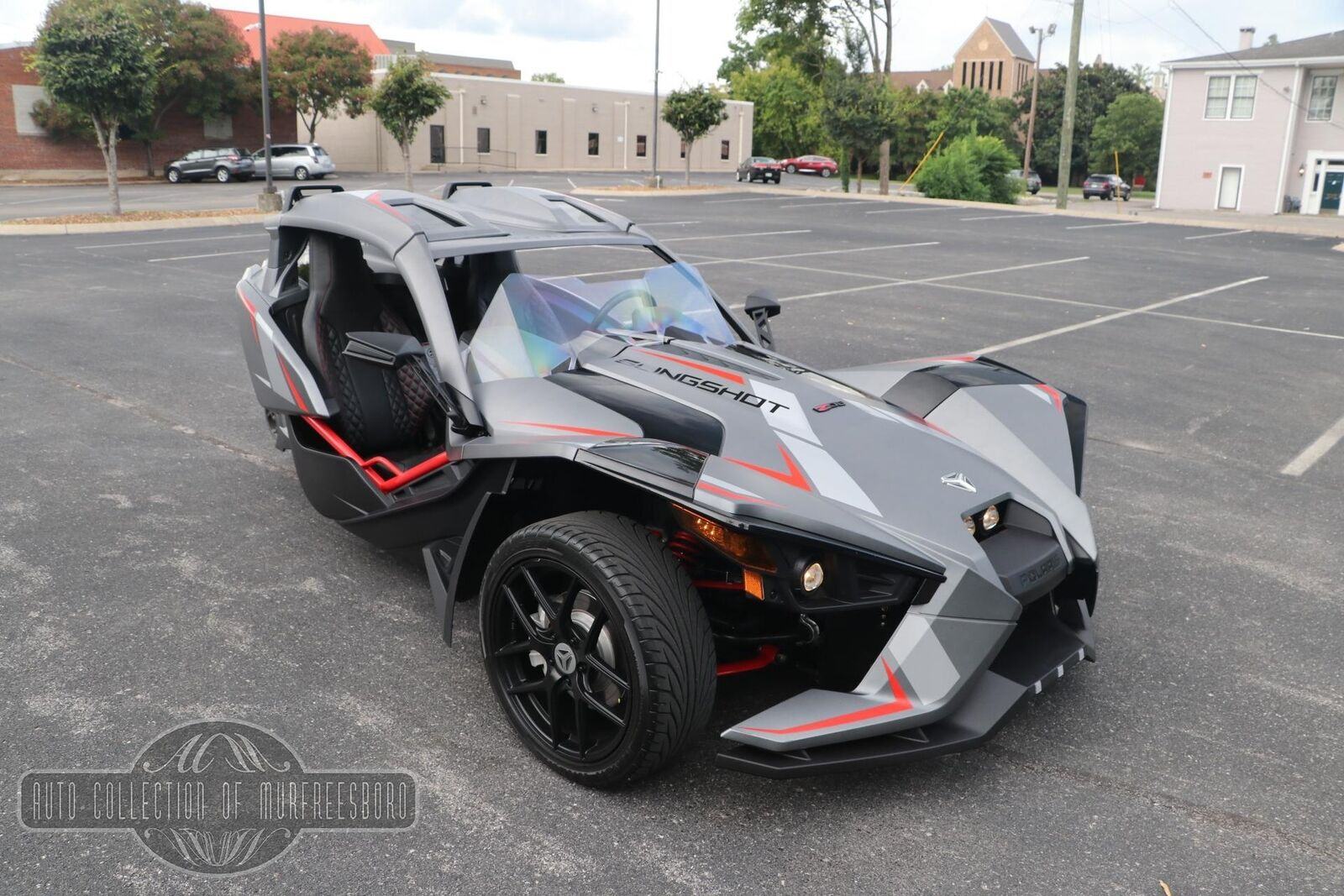
The 2018 Polaris Slingshot S serves as the entry-level trim for the Slingshot lineup, offering a raw, minimalist experience defined by a three-wheeled open-cockpit design. It features a 2.4-liter GM Ecotec engine paired with a five-speed manual transmission, focusing on core driving engagement rather than premium electronic amenities, making it a popular choice for those seeking a purist autocycle experience.
The Polaris Slingshot is categorized as an autocycle, a vehicle class that bridges the gap between a high-performance motorcycle and an agile sports car. By the 2018 model year, Polaris had solidified the Slingshot’s identity as a bold, non-traditional vehicle. The "S" trim was introduced specifically to provide a more accessible price point for enthusiasts who prioritize performance and handling over the luxury features found in higher-tier models like the SL or SLR.
Understanding the 2018 Polaris Slingshot S Architecture
The architecture of the 2018 Slingshot S is centered on its unique "trike" configuration—two wheels in the front and one in the rear. This layout is not merely an aesthetic choice; it significantly impacts the vehicle's driving dynamics. Because the front wheels handle the majority of the steering and braking duties while the single rear wheel provides the drive, the driving experience feels more akin to a lightweight sports car than a traditional motorcycle.
The chassis is constructed from a tubular steel frame, which provides the rigidity necessary to handle the torque produced by the 2.4-liter engine. This frame is exposed in many areas, reinforcing the "raw" aesthetic. The S trim, being the baseline model, lacks some of the creature comforts such as the premium audio systems or the larger, more sophisticated infotainment displays found in other trims. However, it retains the fundamental safety and performance equipment that defines the Slingshot platform, such as the Electronic Stability Control (ESC) and Traction Control, which are vital given the vehicle’s high power-to-weight ratio.
Technical Specifications and Performance
At the heart of the 2018 Slingshot S is the General Motors-sourced 2.4-liter DOHC 4-cylinder engine. This powerplant delivers approximately 173 horsepower and 166 lb-ft of torque. While these figures may seem modest in the context of modern hyper-cars, they are substantial when considering the Slingshot’s weight, which sits just under 1,750 pounds.
The power is sent to the rear wheel through a five-speed manual transmission. The gear ratios are tuned for acceleration, allowing the Slingshot S to provide an exhilarating experience at lower speeds.
Key Technical Specifications Table
| Feature | Specification |
|---|---|
| Engine Type | 2.4L DOHC 4-Cylinder |
| Horsepower | 173 hp @ 6,200 rpm |
| Torque | 166 lb-ft @ 4,700 rpm |
| Transmission | 5-Speed Manual |
| Curb Weight | ~1,743 lbs |
| Wheel Configuration | 2 Front, 1 Rear |
| Steering | Rack and Pinion |
The handling is managed by a double-wishbone independent front suspension with an anti-roll bar. This setup ensures that the front end remains planted during aggressive cornering. The rear suspension utilizes a swingarm design with a single shock absorber. Drivers often find that the 2018 S trim feels more connected to the road because of the absence of advanced electronic driver aids that might otherwise intervene too aggressively.
Practicality and Ownership Requirements
Owning a 2018 Polaris Slingshot S requires a clear understanding of the regulatory environment in the jurisdiction where you intend to operate it. Because the Slingshot is classified as an autocycle, the licensing requirements vary significantly by state. Some regions classify it as a motorcycle, requiring a specific M-class endorsement on a driver's license, while others categorize it as an autocycle, allowing it to be operated with a standard Class C driver’s license. Always consult your local Department of Motor Vehicles (DMV) or equivalent transit authority to verify current local requirements before purchase.
From a maintenance perspective, the GM Ecotec engine is a well-known quantity, which makes sourcing parts and finding competent mechanics easier than with proprietary, highly specialized motorcycle engines. The primary maintenance tasks include standard oil changes, tire rotations (or replacements), and periodic inspections of the belt drive system. The rear tire, specifically, tends to wear faster than the front tires due to the nature of the rear-wheel drive setup and the weight distribution of the vehicle.
The Driving Experience: A Purist's Perspective
The 2018 Slingshot S is frequently lauded for its "visceral" feel. Unlike a passenger car, there is no roof, and in many iterations, there is minimal windshield protection unless specifically added as an accessory. This exposes the driver and passenger to the elements, providing an unfiltered sensory experience.
Because the S trim does not include the high-end infotainment features of its siblings, the driver is encouraged to focus entirely on the mechanical feedback of the machine. The steering is heavy and communicative, providing direct input from the road surface. The absence of a traditional doors-and-windows enclosure means the driver must be mindful of environmental conditions; this is a fair-weather vehicle that demands engagement and situational awareness.
Pros and Cons of the S Trim
When evaluating the 2018 Slingshot S, it is helpful to compare it against its intended utility.
Pros:
- Direct Engagement: The minimalist interior and manual controls keep the driver focused on the road.
- Cost Efficiency: As the entry-level model, it provides the same fundamental Slingshot chassis and engine as the more expensive trims at a lower buy-in.
- Customization Potential: Because the S model is "stripped down," it serves as an excellent canvas for aftermarket performance and aesthetic modifications.
- Proven Engine Platform: The GM Ecotec is widely supported, making long-term maintenance predictable.
Cons:
- Lack of Tech: The absence of integrated GPS, high-end audio, or advanced connectivity may be a drawback for those seeking a modern connected car experience.
- Exposure: The lack of a roof and minimalist fairings means limited protection from road debris and weather.
- Storage Limitations: Storage compartments are confined to lockable bins behind the seats, which are not suitable for large amounts of luggage.
Common Mistakes to Avoid
Prospective owners often make the mistake of treating the Slingshot like a standard sports car. One common error is underestimating the learning curve of the three-wheel configuration. While it is stable, the rear-wheel drive combined with the lack of weight over the single rear tire can lead to traction loss if the driver is too aggressive with the throttle in a turn.
Another common mistake is ignoring the importance of tire maintenance. Owners must monitor the rear tire’s tread depth consistently, as a bald rear tire in an autocycle significantly compromises both wet and dry handling. Finally, failing to verify the legal classification in one’s home state is a critical oversight that can lead to registration complications or licensing issues.
Comparison to Higher Trims (SL and SLR)
The difference between the S and the higher trims (SL and SLR) in 2018 was primarily one of luxury and style rather than core structural integrity. The SL trim added a windshield, the RideCommand infotainment system, and a backup camera, whereas the SLR trim leaned further into performance with wider rear tires, upgraded seats, and specialized aesthetic packages.
For the buyer who intends to use the vehicle on a race track or for canyon carving where weight reduction is prioritized, the S trim is often the preferred choice. For the buyer who intends to use the vehicle for casual cruising or road trips, the missing amenities of the S trim might be felt keenly, necessitating either aftermarket additions or a move to the SL trim.
Frequently Asked Questions
1. Does the 2018 Polaris Slingshot S require a motorcycle license to operate? It depends on your state of residence. Many states have updated their laws to classify the Slingshot as an "autocycle," allowing it to be driven with a standard driver’s license. However, some states still mandate a motorcycle endorsement. Verify with your local DMV to ensure compliance.
2. Can I install an aftermarket infotainment system in the S trim? Yes. Because the S trim does not come with the factory-installed RideCommand system, it is a popular vehicle for aftermarket audio and navigation installations. Many owners choose to install high-quality marine-grade audio components that can withstand exposure to the elements.
3. How often should the rear tire be replaced? The rear tire typically requires more frequent replacement than the front tires. Depending on driving habits, many owners find they need to replace the rear tire every 5,000 to 8,000 miles. Aggressive acceleration and cornering will significantly reduce this interval.
4. Is the 2018 Slingshot S suitable for daily commuting? The Slingshot can be used for commuting, but its utility is limited by its lack of weather protection and storage. It is better suited for recreational use or short-distance fair-weather commuting rather than as a primary vehicle for inclement weather or heavy cargo needs.
5. How does the 2018 model compare to newer versions? While the core architecture remains similar, later models introduced more sophisticated engine tuning and electronic features. The 2018 model remains a reliable, simpler alternative for those who prefer an older-school mechanical feel without the complexity of newer, more computerized powertrain management systems.
Final Recommendation
The 2018 Polaris Slingshot S is an ideal choice for the enthusiast who wants the Slingshot experience without paying for features they do not intend to use. It offers a reliable mechanical platform and an authentic, raw driving experience. Before finalizing a purchase, ensure you are comfortable with the manual transmission and the specific handling characteristics of a three-wheeled vehicle. If you value customization and direct driving feedback, the S trim provides the best value within the 2018 lineup. Always perform a pre-purchase inspection focusing on the rear tire, the belt drive system, and the state of the chassis to ensure that previous modifications have not compromised the vehicle's structural integrity.