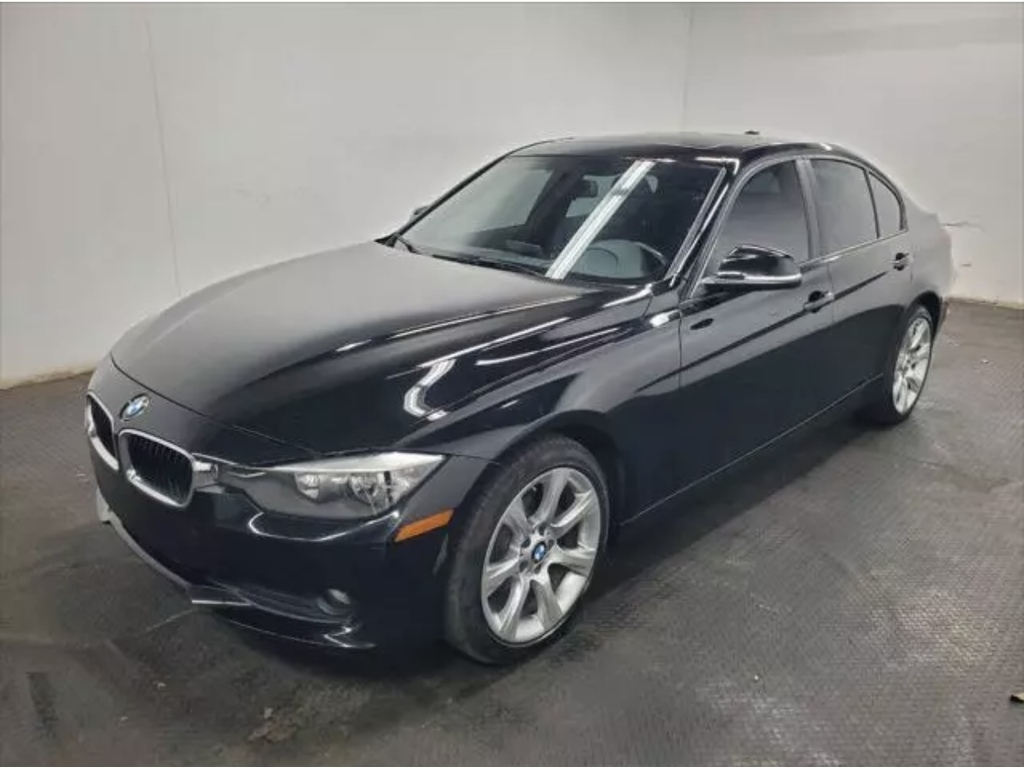
The 2014 BMW 320i xDrive features an official factory rating of 180 horsepower at 5,000–6,250 RPM and 200 lb-ft of torque at 1,250–4,500 RPM. Powered by BMW’s 2.0-liter N20 TwinPower Turbo engine, this all-wheel-drive luxury sedan balances fuel economy with responsive low-end engine output for daily driving conditions.
Factory Horsepower and Torque Breakdown
The 2014 BMW 320i xDrive represents the entry point for the F30 generation 3 Series in North America, equipped with BMW’s intelligent all-wheel-drive system (xDrive). To understand how the car performs on the road, it is necessary to examine how its power is generated across the rev range.
RPM Range vs. Engine Output (2014 BMW 320i xDrive)
| RPM Range | Output Type | Measured Value |
|---|---|---|
| 1,250 - 4,500 RPM | Peak Torque | 200 lb-ft (270 Nm) |
| 5,000 - 6,250 RPM | Peak Horsepower | 180 hp (134 kW) |
The N20B20 Engine Architecture
Under the hood of the 2014 320i xDrive sits the N20B20, a 2.0-liter inline four-cylinder engine engineered with several core BMW powertrain technologies:
- Twin-Scroll Turbocharger: Uses two separate spiral passages (scrolls) in the exhaust housing to direct exhaust pulses into the turbine wheel. This reduces exhaust scavenging interference and minimizes turbo lag.
- Valvetronic Variable Valve Lift: Eliminates the traditional throttle butterfly during normal operation by continuously varying intake valve lift height. This reduces pumping losses and improves throttle response.
- Double-VANOS Variable Camshaft Timing: Continuously adjusts timing for both intake and exhaust camshafts to optimize power delivery and emissions across all engine speeds.
- High-Precision Direct Fuel Injection: Injectors placed centrally adjacent to the spark plugs deliver fuel at pressures up to 200 bar (2,900 psi), ensuring precise fuel atomization and efficient combustion.
Why Low-End Torque Matters
While 180 horsepower may sound modest for a modern executive sedan, the key to the 320i xDrive's acceleration lies in its torque delivery. Peak torque of 200 lb-ft arrives at just 1,250 RPM and remains flat up to 4,500 RPM.
Because maximum rotational force is available almost immediately off idle, the 320i xDrive feels livelier in stop-and-go traffic and highway merging than naturally aspirated four- or six-cylinder competitors that require high engine speeds to build power.
Factory Specifications vs. Real-World Chassis Dyno Results
Automakers calculate vehicle performance using engine dynamometers, measuring power at the engine crankshaft before mechanical losses through the transmission, driveshafts, and differentials occur. BMW is historically conservative with its published power figures, and independent testing reveals distinct differences between advertised numbers and actual performance.
Wheel Horsepower vs. Crank Horsepower
When vehicle enthusiasts test the 2014 BMW 320i xDrive on a chassis dynamometer (dyno), power is measured directly at the wheels (wheel horsepower, or WHP).
- Advertised Crank Power: 180 hp / 200 lb-ft
- Measured Wheel Power (Dynojet averages): ~165–175 WHP / ~190–205 WTQ
In standard all-wheel-drive vehicles, mechanical friction and rotational inertia in the transmission, transfer case, front differential, rear differential, and four drive axles typically result in a 15% to 20% drivetrain loss.
If a 2014 320i xDrive delivers 170 hp to the wheels through an xDrive system, simple mathematics suggests the engine actually produces closer to 195–200 horsepower at the crankshaft. BMW rates its engines under strict ambient conditions and ensures every production unit achieves its advertised rating under worst-case thermal scenarios.
2014 BMW 320i xDrive vs. 328i xDrive: Understanding the Power Gap
A common point of confusion among BMW buyers and owners is the distinction between the 2014 320i xDrive and the 2014 328i xDrive. Both models share the exact same 2.0-liter N20 engine block displacement, yet the 328i xDrive is rated at 240 horsepower and 255 lb-ft of torque.
Mechanical & Performance Comparison: 320i xDrive vs. 328i xDrive
| Feature / Metric | 2014 BMW 320i xDrive | 2014 BMW 328i xDrive |
|---|---|---|
| Engine Code | N20B20U0 | N20B20O0 |
| Piston Compression | 10.0:1 Compression | 10.0:1 (Diff. Part #s) |
| Turbocharger Boost | ~8 to 9 PSI (Stock) | ~16 to 17 PSI (Stock) |
| Peak Horsepower | 180 hp @ 5,000–6,250 RPM | 240 hp @ 5,000–6,500 RPM |
| Peak Torque | 200 lb-ft @ 1,250–4,500 | 255 lb-ft @ 1,250–4,800 |
| Exhaust Diameter | 60 mm Main Piping | 70 mm Main Piping |
| 0–60 MPH Acceleration | ~7.1 Seconds | ~5.7 Seconds |
Key Technical Differences
- Engine Management & Boost Pressure: The primary difference lies in the Engine Control Unit (ECU) software maps. The 320i runs conservative target boost pressure (~8–9 psi), whereas the 328i requests roughly double the turbocharger boost (~16–17 psi).
- Internal Component Variations: While both engines share identical block dimensions, BMW utilized different piston part numbers for the 320i (N20B20U0) and 328i (N20B20O0) variants to accommodate thermal load differences under sustained high boost.
- Exhaust System: The 320i uses a slightly smaller diameter exhaust mid-pipe and single-outlet rear muffler, offering higher backpressure, whereas the 328i features larger piping and a twin-tip muffler outlet for higher flow volume.
- Braking Systems: To match the additional power, the 328i xDrive came equipped with larger front brake rotors and calipers than the 320i xDrive.
Comprehensive 2014 BMW 3 Series Powertrain Comparison Table
To contextualize where the 320i xDrive sat in BMW's 2014 lineup, the table below highlights key specifications across the F30 3 Series gasoline engine family.
| Model | Engine Type | Displacement | Peak Horsepower | Peak Torque | Drivetrain | EPA Est. Fuel Economy (City/Hwy) |
|---|---|---|---|---|---|---|
| 320i xDrive | Turbocharged Inline-4 (N20) | 2.0L (1,997 cc) | 180 hp @ 5,000 RPM | 200 lb-ft @ 1,250 RPM | All-Wheel Drive | 23 / 35 MPG |
| 320i RWD | Turbocharged Inline-4 (N20) | 2.0L (1,997 cc) | 180 hp @ 5,000 RPM | 200 lb-ft @ 1,250 RPM | Rear-Wheel Drive | 24 / 36 MPG |
| 328i xDrive | Turbocharged Inline-4 (N20) | 2.0L (1,997 cc) | 240 hp @ 5,000 RPM | 255 lb-ft @ 1,250 RPM | All-Wheel Drive | 22 / 33 MPG |
| 335i xDrive | Turbocharged Inline-6 (N55) | 3.0L (2,979 cc) | 300 hp @ 5,800 RPM | 300 lb-ft @ 1,200 RPM | All-Wheel Drive | 20 / 30 MPG |
| ActiveHybrid 3 | Turbo Inline-6 + Electric | 3.0L (2,979 cc) | 335 hp (Combined) | 330 lb-ft (Combined) | Rear-Wheel Drive | 25 / 33 MPG |
How xDrive All-Wheel Drive Affects Power Delivery and Acceleration
The 2014 BMW 320i xDrive pairs its engine with an electronically controlled multi-plate clutch system housed inside a center transfer case.
Engine Power Flow in xDrive System:
- N20 2.0L Turbo Engine
- ZF 8-Speed Automatic Transmission
- xDrive Transfer Case (Multi-Plate)
- Front Differential (40%)
- Rear Differential (60%)
Traction vs. Parasitic Drag
Under normal driving conditions, the xDrive transfer case divides torque in a 40:60 front-to-rear ratio. If sensor data detects slip at any wheel, an electric actuator compresses the multi-plate clutch in milliseconds, sending up to 100% of available engine torque to the axle with the most traction.
- Acceleration Benefits: Off-the-line launches in rain, snow, or loose gravel are smooth and immediate. Unlike the rear-wheel-drive 320i, which may trigger traction control intervention under heavy throttle from a stop, the xDrive model converts engine torque directly into forward movement.
- Weight and Friction Penalties: The transfer case, front differential, drive axles, and additional hardware add approximately 145 pounds (66 kg) to the vehicle's curb weight. The added mass and rotational resistance reduce zero-to-60 mph sprint times slightly at highway speeds compared to a rear-wheel-drive model with identical power, despite superior launching capabilities on low-friction surfaces.
The Role of the ZF 8-Speed Transmission
Every 2014 BMW 320i xDrive sold in North America came standard with the ZF 8HP45 8-speed automatic transmission. This gearbox plays a critical role in maximizing the engine's 180-horsepower output:
- Short Lower Gears: First gear (4.71:1) and second gear (3.14:1) provide aggressive mechanical leverage, allowing the vehicle to accelerate swiftly despite a modest power-to-weight ratio.
- Rapid Gear Shifts: The ZF 8HP shifts in approximately 200 milliseconds, ensuring continuous boost pressure from the twin-scroll turbocharger during acceleration.
- Tall Overdrive Ratios: Seventh (0.84:1) and eighth (0.67:1) gears allow cruising at 70 mph while maintaining engine speed under 2,000 RPM, improving highway fuel economy and reducing internal wear.
Engine Tuning Potential and Modifying the 320i xDrive
Because the N20 engine in the 320i xDrive is detuned from the factory, it offers substantial aftermarket tuning potential. Enthusiasts frequently seek to bridge the power gap between the 320i and 328i using Engine Control Unit (ECU) recalibration.
Power Gains Across Tuning Stages (320i xDrive)
| Tune Level | Peak Horsepower (WHP) | Peak Torque (WTQ) |
|---|---|---|
| Stock Factory | ~165–170 WHP | ~190–200 WTQ |
| Stage 1 (Flash) | ~220–230 WHP | ~260–280 WTQ |
| Stage 2 (Bolt-Ons) | ~240–260 WHP | ~290–310 WTQ |
Tuning Stages Breakdown
- Stage 1 Flash Tune: Requires no mechanical modifications. By increasing target turbo boost pressure from ~8 psi to ~15 psi and optimizing ignition timing, a Stage 1 tune raises output to roughly 220–230 wheel horsepower and 270 lb-ft of torque.
- Stage 2 Flash Tune: Requires an upgraded high-flow downpipe, upgraded intercooler, and aluminum charge pipes. Output can reach 250+ wheel horsepower, surpassing a bone-stock 328i xDrive.
Engine Reliability Considerations
When modifying or evaluating a used 2014 BMW 320i xDrive, several key mechanical factors require attention:
- Timing Chain Guide Assembly: N20 engines manufactured prior to March 2015 feature plastic timing chain guides prone to premature wear and failure. If the guide breaks, slack in the timing chain can cause valve-to-piston contact, resulting in severe engine failure. Inspecting the timing chain assembly via the oil filler cap is essential before tuning.
- Plastic Charge Pipe: The factory plastic charge pipe connecting the intercooler to the throttle body becomes brittle with heat cycles and age. Increasing boost levels often causes the factory plastic pipe to burst under load; replacing it with an aftermarket aluminum pipe is standard practice.
- Oil Maintenance Interval: While BMW originally recommended 10,000-to-15,000-mile oil change intervals, high-performance turbo four-cylinders benefit from strict 5,000-to-7,500-mile synthetic oil change schedules to protect turbo bearings and valve gear.
For detailed maintenance schedules and safety recalls, owners can consult official documentation directly through the BMW USA Owner Services Portal.
Frequently Asked Questions
How fast is a 2014 BMW 320i xDrive from 0 to 60 mph?
The 2014 BMW 320i xDrive accelerates from 0 to 60 mph in approximately 7.1 seconds. Vehicle test results vary between 6.9 and 7.2 seconds depending on tire type, ambient temperature, fuel quality, and launching conditions.
Is the 2014 BMW 320i xDrive underpowered for daily driving?
No. While 180 horsepower appears lower than modern luxury sports sedans, the peak torque of 200 lb-ft is available starting at just 1,250 RPM. This low-end torque, paired with the responsive ZF 8-speed automatic transmission, provides brisk acceleration for daily commutes and highway passing.
What is the difference between horsepower and torque in the 320i xDrive?
Torque measures the rotational force produced by the engine, which dictates how quickly the vehicle pulls away from a standstill or accelerates out of a low-speed corner. Horsepower measures how quickly that work is performed at higher engine speeds (RPM). The 320i xDrive relies primarily on its early torque delivery rather than top-end horsepower to feel responsive.
Does the xDrive system rob horsepower from the engine?
Yes. All-wheel-drive systems introduce additional parasitic drag due to the transfer case, front differential, and front drive shafts. The 320i xDrive experiences approximately 15% to 20% mechanical loss between the engine crankshaft and the tires, compared to roughly 12% to 15% loss on rear-wheel-drive models.
Can you safely tune a 2014 BMW 320i xDrive to 328i power levels?
Yes, ECU flash tunes can safely increase engine output to matching 328i levels (~240 crank horsepower). However, owners must ensure the N20 engine's timing chain guides are in good condition, replace the factory plastic charge pipe with a metal unit, and strictly adhere to shortened oil change intervals.
Final Buyer and Owner Recommendations
The 2014 BMW 320i xDrive offers a well-balanced luxury sedan experience where daily drivability and low-end throttle response are prioritized over raw high-RPM horsepower.
If you own or are considering buying a 2014 model:
- Verify Timing Chain Health: Ensure the N20 timing chain assembly has been inspected or upgraded with redesigned BMW parts (components produced after March 2015).
- Match Expectations to Purpose: If ultimate speed is a priority, consider starting with a 328i xDrive or 335i xDrive to gain stronger factory internal engine components, larger brakes, and higher stock thermal limits.
- Maintain Drivetrain Fluids: While BMW considers xDrive transfer case and differential fluids "lifetime," replacing these fluids every 50,000 to 60,000 miles ensures consistent power transfer and extends all-wheel-drive system service life.