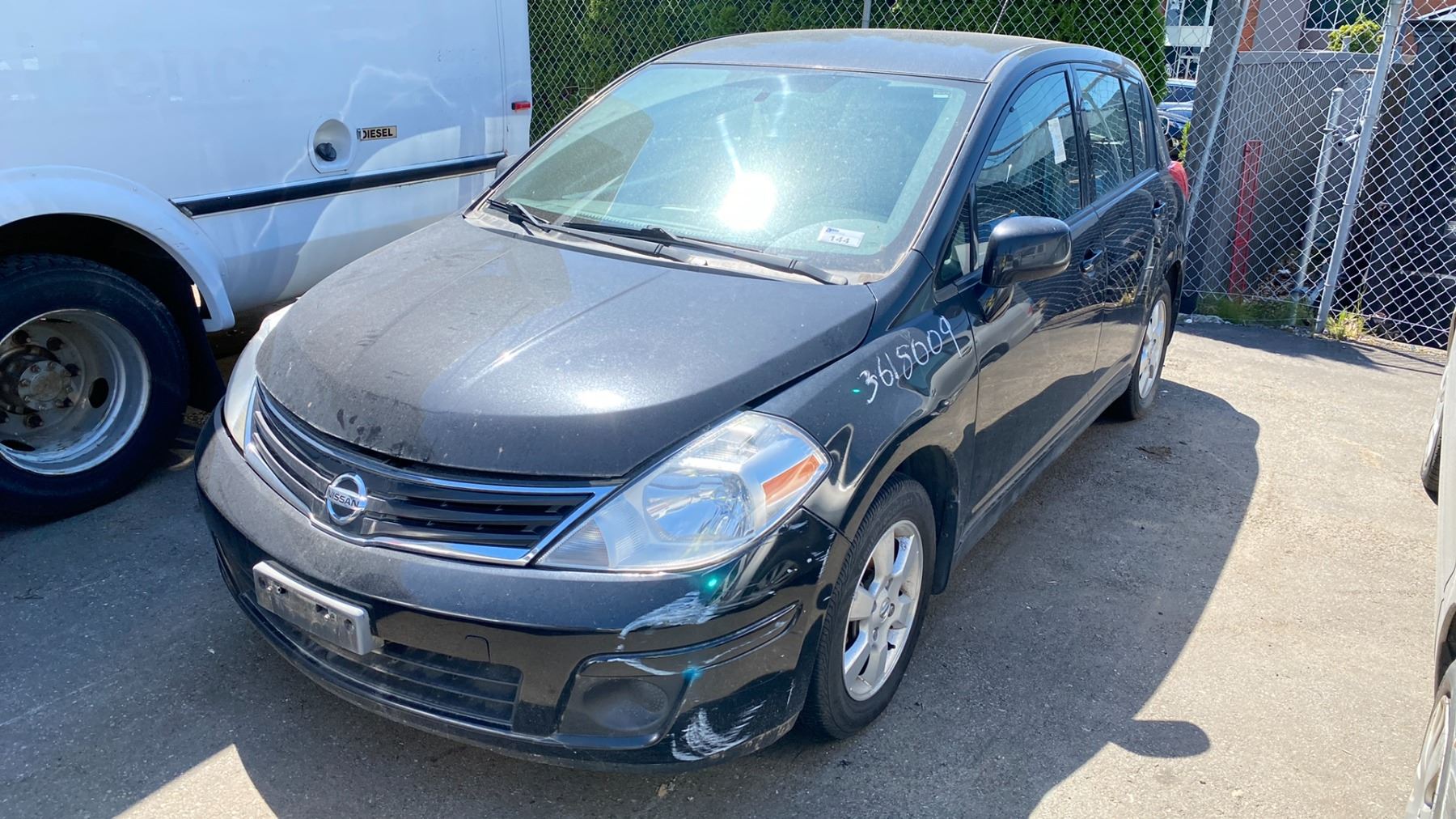
The 2012 Nissan Versa Hatchback delivers an EPA-estimated fuel economy ranging from 24 city / 32 highway mpg with the four-speed automatic transmission to 28 city / 34 highway mpg when equipped with the Continuously Variable Transmission (CVT). All hatchback models utilize a 1.8-liter four-cylinder engine, balancing interior utility with respectable subcompact efficiency.
While the 2012 model year marked a significant transition for the Nissan Versa lineup, it is crucial to distinguish between the two body styles. In 2012, the Versa Sedan was completely redesigned (the "Versa Sedan 1.6"), moving to a new platform with a smaller engine optimized for high fuel economy. Conversely, the 2012 Nissan Versa Hatchback remained on the previous-generation platform, continuing to offer more horsepower and a larger cabin at the cost of slightly lower fuel efficiency compared to its sedan counterpart.
The Engineering Behind the 2012 Versa Hatchback's Efficiency
To understand the fuel economy of the 2012 Nissan Versa Hatchback, one must look at the powertrain that remained the heart of this vehicle until its eventual redesign in 2013. Unlike many of its competitors in the subcompact segment that utilized 1.5-liter or 1.6-liter engines, Nissan opted for a larger 1.8-liter displacement for the hatchback.
The MR18DE Engine Dynamics
The 1.8-liter DOHC 16-valve 4-cylinder engine, internal code MR18DE, was designed to provide a "big car" feel in a small package. It produces 122 horsepower and 127 lb-ft of torque. While this extra displacement provides better merging power on highways, it naturally consumes more fuel than the 1.6-liter engine found in the 2012 Sedan.
The engine features friction-reducing technologies, such as micro-finished cam journals and crankpins, which help maximize the energy extracted from every drop of gasoline. However, by 2026 standards, this naturally aspirated port-injected engine is considered conventional, lacking the direct injection or turbocharging seen in modern subcompacts.
Aerodynamics and Weight
The 2012 Versa Hatchback features a relatively tall roofline, contributing to its class-leading interior volume (94.7 cubic feet for passengers). This "tall-boy" design, while excellent for utility, creates a larger frontal area that increases aerodynamic drag at highway speeds. With a drag coefficient (Cd) of approximately 0.31, the vehicle is reasonably aerodynamic for its era, but its height remains a limiting factor for hypermiling at speeds above 70 mph.
Detailed MPG Breakdown by Transmission Type
The transmission choice is the single most significant factor in the 2012 Versa Hatchback’s fuel consumption. Nissan offered three distinct gearboxes for this model year, leading to three different sets of EPA ratings.
1. The Xtronic CVT (Continuously Variable Transmission)
The most efficient option is the Xtronic CVT. Unlike traditional transmissions with a fixed number of gears, the CVT uses a system of belts and pulleys to provide an infinite range of ratios. This allows the engine to stay at its most efficient RPM (revolutions per minute) regardless of vehicle speed.
- EPA Rating: 28 City / 34 Highway / 30 Combined.
- Why it’s better: On the highway, the CVT can "stretch" the ratio further than a traditional gear, allowing the engine to cruise at lower RPMs, which directly reduces fuel consumption.
2. The 6-Speed Manual Transmission
The 1.8 S trim was available with a 6-speed manual, which was rare for the subcompact segment in 2012, as most competitors used 5-speed manuals.
- EPA Rating: 26 City / 31 Highway / 28 Combined.
- Analysis: While the sixth gear helps on the highway, the mechanical losses and the tendency for drivers to hold gears longer in city traffic result in lower efficiency than the CVT. However, for many owners in 2026, the manual is often preferred for long-term reliability over the early-generation CVT.
3. The 4-Speed Automatic Transmission
The 4-speed automatic was the entry-level "traditional" automatic option, typically found on the 1.8 S trim.
- EPA Rating: 24 City / 32 Highway / 27 Combined.
- Analysis: With only four gears, the "steps" between ratios are large. This often forces the engine to rev higher than necessary during acceleration, leading to the lowest city fuel economy in the lineup.
| Configuration | City MPG | Highway MPG | Combined MPG | Annual Fuel Cost (Est.) |
|---|---|---|---|---|
| 1.8L CVT | 28 | 34 | 30 | $1,550 |
| 1.8L 6-Speed Manual | 26 | 31 | 28 | $1,650 |
| 1.8L 4-Speed Automatic | 24 | 32 | 27 | $1,750 |
Note: Annual fuel cost estimates are based on 15,000 miles per year and 2026 average fuel prices of $3.15 per gallon.
Real-World Fuel Economy Expectations
While EPA ratings provide a standardized baseline, real-world performance for a vehicle of this age can vary. Many owners of the 2012 Versa Hatchback report that achieving the 34-mpg highway rating requires disciplined driving.
Impact of Speed and Load
Because the Versa Hatchback is a lightweight vehicle (roughly 2,700 to 2,800 lbs), its fuel economy is highly sensitive to external factors. Carrying four adult passengers and cargo can reduce highway MPG by 10-15%. Furthermore, while the CVT is rated for 34 mpg, this is typically achieved at 60-65 mph. Driving at 75-80 mph often sees the economy drop into the high 20s due to the aerodynamic drag mentioned earlier.
Fuel Type and Quality
The 2012 Versa is designed to run on 87-octane regular unleaded gasoline. Using premium fuel (91+ octane) does not provide a measurable increase in fuel economy or performance for this specific naturally aspirated engine. However, ensuring the use of "Top Tier" gasoline can help prevent carbon buildup on the intake valves, which preserves efficiency over time.
Factors Influencing MPG in Older Versa Models
As of 2026, a 2012 Nissan Versa Hatchback is 14 years old. Several mechanical factors can cause these vehicles to deviate from their original factory fuel economy ratings. If your Versa is currently getting poor gas mileage, consider the following technical checkpoints:
1. CVT Fluid Health
In models equipped with the Xtronic CVT, the health of the transmission fluid is paramount. Degraded fluid can cause the belt to slip slightly or the pulleys to respond sluggishly, forcing the engine to work harder. Nissan recommends inspecting the CVT fluid every 30,000 miles. In 2026, if the fluid has never been changed, a professional "drain and fill" may restore some lost efficiency.
2. Oxygen Sensors and Air-Fuel Ratio
The 2012 Versa uses an upstream oxygen sensor to monitor the exhaust gases and adjust the air-fuel mixture. Over time, these sensors can become "lazy," causing the engine to run slightly rich (too much fuel). This often happens before a Check Engine Light (CEL) even appears, resulting in a 2-3 mpg drop.
3. Spark Plug Intervals
The MR18DE engine uses iridium-tipped spark plugs designed to last 105,000 miles. If your vehicle is approaching the 200,000-mile mark in 2026, a second set of plugs is likely due. Worn electrodes result in inefficient combustion and wasted fuel.
4. Tire Pressure and Rolling Resistance
The Versa Hatchback originally came with low-rolling-resistance tires. Replacing these with "all-season" tires that prioritize grip or longevity can sometimes decrease fuel economy by 1-2 mpg. Furthermore, because the Versa is light, even a 5-PSI drop in tire pressure significantly increases the "footprint" of the tire, creating more drag.
Comparative Analysis: Versa vs. 2012 Competitors
When the 2012 Versa Hatchback was released, it competed in a crowded field of subcompacts. Understanding its fuel economy requires looking at its peers from that same era.
- 2012 Honda Fit: The Fit achieved 27 city / 33 highway with its 5-speed automatic. The Versa CVT slightly edges out the Fit in highway efficiency, though the Fit's smaller 1.5L engine was often more efficient in stop-and-go city driving.
- 2012 Toyota Yaris: The Yaris was the efficiency leader at the time, offering 30 city / 35 highway. However, the Yaris was significantly smaller and less powerful than the Versa Hatchback.
- 2012 Hyundai Accent: The Accent featured a direct-injection engine and achieved 28 city / 37 highway. This highlights the technical gap between the aging platform of the 2012 Versa Hatchback and the newer designs of its rivals that year.
The 2012 Versa Hatchback's primary selling point was not being the absolute "MPG king," but rather offering the most interior volume per dollar while still maintaining a combined 30 mpg with the CVT.
Practical Steps to Maximize Your Versa’s MPG
For owners looking to squeeze the most out of their fuel budget in 2026, these vehicle-specific tips are effective:
- Monitor the "Instant Fuel Economy" Display: If your Versa is an SL trim, use the trip computer to monitor live fuel consumption. This teaches you the "sweet spot" for throttle input, especially with the CVT.
- Clean the Mass Air Flow (MAF) Sensor: A dirty MAF sensor can send incorrect data to the ECU about the amount of air entering the engine. Cleaning this with a specialized spray is a 10-minute DIY job that can improve throttle response and MPG.
- Check for Brake Drag: The Versa uses rear drum brakes. If the self-adjusters become seized or the parking brake cable is tight, the shoes may rub against the drum, creating constant resistance.
- Remove Roof Racks: Many Versa Hatchbacks were fitted with aftermarket roof rails. Removing these when not in use can improve highway fuel economy by as much as 5% by reducing aerodynamic turbulence.
Frequently Asked Questions
Does the 2012 Nissan Versa Hatchback require premium gas?
No, the 2012 Nissan Versa Hatchback is designed to operate on 87-octane regular unleaded gasoline. Using higher octane fuel will not improve MPG or engine performance, as the engine's compression ratio (9.9:1) does not require the knock-resistance of premium fuel. For more details on fuel requirements, refer to the official U.S. government fuel economy guide.
Why is the 2012 Hatchback less efficient than the 2012 Sedan?
The 2012 Sedan was the first year of the second-generation Versa, featuring a smaller 1.6L engine and a lighter chassis. The 2012 Hatchback was a "carryover" model from the first generation, using a larger 1.8L engine and a heavier body structure, which results in approximately 4-6 fewer highway mpg than the redesigned sedan.
How many miles can I drive on a full tank?
The 2012 Versa Hatchback has a fuel tank capacity of 13.2 gallons. Based on the combined EPA rating of 30 mpg for the CVT model, the theoretical maximum range is 396 miles. However, most drivers will see a low-fuel warning light at around 300-330 miles, as the car keeps a 2-gallon reserve.
Is the CVT reliable for long-term fuel economy?
In 2026, the reliability of early Nissan CVTs is a known variable. While the CVT provides the best fuel economy, it requires strict maintenance. If the CVT begins to fail, you will often notice a "shuddering" or a "drone" that corresponds with a significant drop in fuel efficiency. Regular fluid changes are the best way to ensure the transmission continues to operate at peak efficiency.
What is the best speed for the highest MPG in this car?
Technically, the most efficient speed for the 2012 Versa Hatchback is generally between 45 and 55 mph in top gear (or the highest CVT ratio). At these speeds, the engine is under low load and aerodynamic drag is minimal. Once you exceed 65 mph, fuel consumption increases exponentially due to wind resistance.
Final Recommendation for 2026 Owners
The 2012 Nissan Versa Hatchback remains a practical choice for those prioritizing interior space and a low purchase price in the used car market. While it does not achieve the 40+ mpg of modern hybrids, its 30-mpg combined rating (with CVT) is still respectable.
To maintain this efficiency in 2026, the most critical action is to verify the maintenance history of the Xtronic CVT and ensure that the engine's air-fuel system (MAF sensor and Oxygen sensors) is functioning correctly. If you are shopping for one of these vehicles, prioritize the SL trim with the CVT for the best fuel economy, or the S trim with the 6-speed manual if you are concerned about the long-term repair costs of an older transmission.