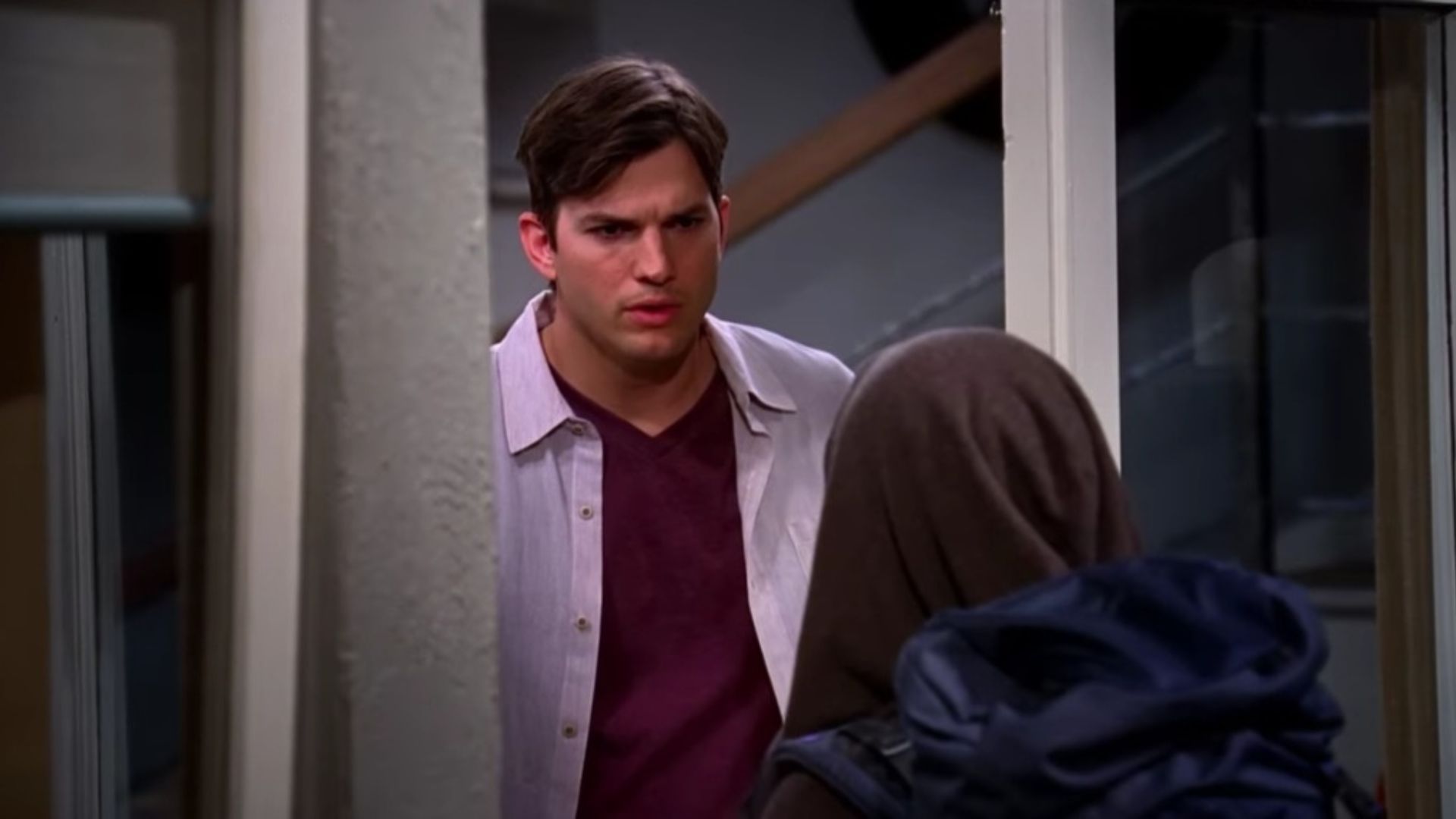
Ashton Kutcher’s tenure on Two and a Half Men remains one of the most polarizing yet fascinating case studies in modern television history. Stepping into a powerhouse sitcom to replace a dismissed, iconic lead is a nearly impossible task, yet Kutcher signed on to rescue a multi-million-dollar production machine. His four-season run as internet billionaire Walden Schmidt reshaped the show's narrative framework, audience expectations, and long-term syndication viability. Rather than imitating his predecessor, Charlie Sheen, Kutcher brought a very different comedic energy, a shift that permanently altered how television historians view the later years of the series.
Evaluating this legacy requires looking closely at the two fundamental changes that defined his era: the complete reinvention of the show's core character dynamic from hedonistic cynicism to vulnerable romanticism, and the structural pivot toward serialized storytelling within a traditional multi-camera sitcom format. Together, these modifications transformed the show's identity, ensuring that the second half of its broadcast history stands as a distinct television era rather than a mere continuation of the past.
The Context of Replacement: Inheriting a Television Juggernaut
To understand the weight of Ashton Kutcher’s arrival in 2011, one must recall the unprecedented media storm surrounding the termination of Charlie Sheen. Two and a Half Men was CBS's premier comedy asset, generating immense advertising revenue and dominating global syndication markets. When creator Chuck Lorre and Warner Bros. Television cut ties with Sheen following a highly publicized public meltdown, the show's future hung in the balance. Canceling the series would have meant forfeiting billions of dollars in downstream syndication and keeping hundreds of crew members out of work.
Bringing in Ashton Kutcher was an exercise in high-stakes corporate damage control and creative rehabilitation. Kutcher was already a well-established film star and a massive early adopter of social media, giving him a distinct cross-demographic appeal. However, placing a romantic-comedy lead into a raunchy, cynical, multi-camera sitcom recorded live in front of a studio audience required a total re-engineering of the series' DNA. The producers could not simply cast another hard-drinking, misanthropic bachelor; doing so would invite direct, unfavorable comparisons. Instead, they opted for an entirely different archetype, setting the stage for the first major structural change.
Change One: Shifting from Cynical Hedonism to Vulnerable Romanticism
The foundational pillar of Two and a Half Men during its first eight seasons was Charlie Harper’s unapologetic, predatory hedonism. Charlie was a misanthropic jingle writer who viewed women as disposable and family responsibilities as a nuisance. When Ashton Kutcher stepped onto the set as Walden Schmidt, the show abandoned this cynical worldview entirely. Walden was introduced as a suicidal, heartbroken internet billionaire whose immense wealth was matched only by his profound emotional naivety and earnest desire for traditional romance.
This shift altered the psychological dynamics of the Malibu beach house. Instead of a battle of wits between a cynical libertine and his uptight, anxious brother Alan (Jon Cryer), the dynamic became a bizarre surrogate-family sitcom. Alan transitioned from a put-upon sibling to a manipulative freeloader taking advantage of an endlessly forgiving, emotionally fragile billionaire.
| Attribute | The Charlie Harper Era (Seasons 1–8) | The Walden Schmidt Era (Seasons 9–12) |
|---|---|---|
| Core Archetype | Cynical, predatory bachelor and jingle writer | Naive, romantic internet billionaire |
| Primary Motivation | Avoiding commitment and maximizing self-indulgence | Finding true love, family, and emotional fulfillment |
| Relationship with Alan | Antagonistic, co-dependent sibling rivalry | Exploitative caretaker dynamic with a surrogate brother |
| Comedic Tone | Edgy, misanthropic, and sexually cynical | Slapstick, wholesome vulnerability, and absurd wealth tropes |
| Narrative Arc | Episodic status quo with minimal long-term growth | Serialized relationship struggles and personal maturation |
This pivot was initially jarring for longtime fans who tuned in for the biting, misanthropic edge of the early years. However, it successfully softened the show's tone, steering it away from repetitive sexual cynicism toward mainstream romantic comedy tropes. Walden’s journey was defined by awkward proposals, messy divorces, and a sincere yearning for domestic stability. By trading misanthropy for earnestness, Kutcher’s character forced the entire ensemble to adapt, creating a gentler, more absurdly surreal environment that relied heavily on physical comedy and high-concept tech-billionaire gags.
Change Two: Embracing Serialized Storytelling and Stunt Casting
The second major change shaping Kutcher's legacy on the show was the deliberate embrace of serialized multi-episode arcs and high-profile stunt casting. Traditional network sitcoms of the 2000s—and Two and a Half Men in particular—relied heavily on a reset button at the end of each episode. Character developments were frequently ignored to preserve syndication flexibility, allowing viewers to watch episodes out of order without losing the plot.
Under Kutcher, the series began leaning heavily into serialized storytelling, particularly concerning Walden's romantic pursuits and complex business ventures. Multi-episode arcs involving characters like Zoey Hyde-Pressure (Sophie Winkleman) and Bridget Schmidt (Judy Greer) gave the sitcom a narrative momentum it previously lacked. The writing room used Walden’s wealth and tech-industry background to pull off absurd, high-concept storylines that would have felt out of place during the grounded, middle-class-adjacent struggles of the Charlie Harper years.
Furthermore, the later seasons leaned into meta-humor and unconventional narrative gambits to maintain viewership. This era culminated in the final season's absurd storyline where Walden and Alan enter a sham same-sex marriage to adopt a child, a plot device that pushed the boundaries of network television farce. By bending the rules of standard sitcom pacing and welcoming high-profile guest stars, Kutcher's tenure ensured the show remained a pop-culture talking point, even as traditional linear television viewership began to decline.
Critical Reception, Ratings, and Syndication Realities
Assessing the impact of Ashton Kutcher's run requires balancing critical reception against commercial metrics. Commercially, the gamble paid off immediately. Season 9 premiered to a staggering 28.7 million viewers, marking a series high in total viewership driven by intense curiosity over how the show would reinvent itself. While ratings naturally declined in subsequent seasons as the initial novelty wore off, the show maintained stable numbers that made it one of the most profitable comedies on television for CBS.
Critically, however, the response was deeply divided. Traditionalists argued that the show lost its dangerous edge, transforming from a sharp, adult-oriented comedy into a softer, more predictable broad-appeal sitcom. Reviewers frequently pointed out that the chemistry between Kutcher and Jon Cryer, while strong in its own right, lacked the chaotic electricity that defined the Sheen years. Yet, over time, television historians have come to appreciate Kutcher’s professionalism and ability to stabilize a sinking ship under immense public pressure. Without his casting, Two and a Half Men would have faced premature cancellation, forfeiting the massive global syndication footprint that continues to generate revenue today.
Frequently Asked Questions
Why was Ashton Kutcher brought into Two and a Half Men?
Producers brought in Ashton Kutcher in 2011 to replace Charlie Sheen after Sheen was fired following a series of public disputes with showrunner Chuck Lorre. The goal was to preserve the multi-million-dollar production and syndication machine by introducing a completely new lead character rather than recasting the original role.
How did Walden Schmidt differ from Charlie Harper?
Charlie Harper was a cynical, self-absorbed jingle writer who avoided emotional commitment. In contrast, Walden Schmidt was an emotionally vulnerable, wealthy internet entrepreneur who wore his heart on his sleeve and actively sought marriage, family, and genuine emotional connection.
Did the ratings drop after Ashton Kutcher joined the show?
Season 9 actually premiered to record-high numbers, drawing nearly 28.7 million viewers due to massive public curiosity. While ratings gradually stabilized and declined over the final four seasons as standard audience attrition set in, the show remained a top-performing asset for CBS.
How did Jon Cryer's role change during the Kutcher era?
With Charlie gone, Jon Cryer's character, Alan Harper, shifted from a stressed, put-upon brother into an increasingly parasitic freeloader. Alan lived off Walden's immense wealth, which altered the comedic power dynamic of the Malibu beach house.
How did Ashton Kutcher's era end?
Ashton Kutcher's run concluded with the series finale in February 2015, titled "Of Course He's Dead." The creators chose to end the series on their own terms after 12 seasons, culminating in a bizarre, self-referential finale that famously sidestepped Charlie Sheen's actual return.
Practical Takeaways for Television Historians and Fans
For those analyzing the trajectory of long-running network television, the Kutcher era of Two and a Half Men offers valuable lessons in creative pivoting:
- Character Contrast Over Imitation: When replacing an iconic lead, introducing a diametrically opposed archetype is safer and more effective than attempting a direct imitation.
- Capitalizing on Novelty: High-concept casting can temporarily spike viewership, but long-term retention relies on successfully re-engineering the supporting character dynamics to support the new lead.
- Syndication Preservation: Corporate television decisions are frequently driven by downstream asset protection; a restructured show that maintains basic profitability is often preferred over a premature cancellation.
Ultimately, Ashton Kutcher's time on the show proved that a major sitcom can survive the loss of its central figure, provided it is willing to undergo a fundamental identity shift. By trading biting cynicism for vulnerable romantic comedy, Kutcher carved out a unique space in television history that ensures his chapter of the series remains an essential study in modern broadcast adaptation.