The boiling point of calcium chloride solutions varies significantly based on concentration, often reaching approximately 102 degrees Celsius for specific aqueous mixtures. This elevated boiling point is a direct result of boiling point elevation, a colligative property where dissolved ions disrupt solvent vaporization, creating essential operational parameters for industrial drying, deicing, and chemical manufacturing.
Understanding the Boiling Point Elevation of Calcium Chloride Solutions
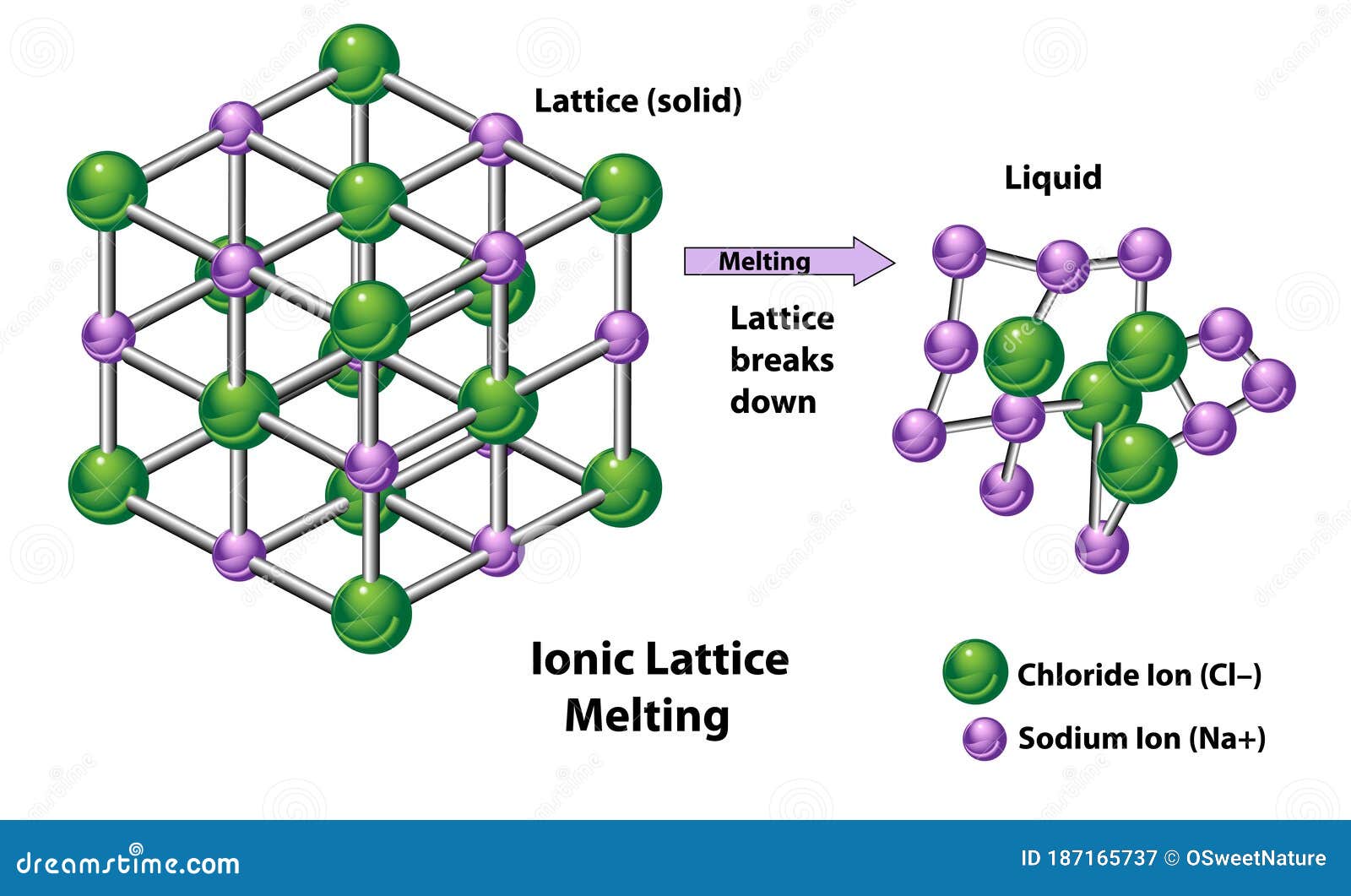
When an ionic solid like calcium chloride ($\text{CaCl}_2$) dissolves in pure water, it dissociates completely into one calcium cation ($\text{Ca}^{2+}$) and two chloride anions ($\text{Cl}^{-}$). This dissociation produces three distinct moles of particles for every single mole of calcium chloride dissolved. In thermodynamic terms, the introduction of these solute particles lowers the chemical potential of the liquid phase relative to the vapor phase, which requires a higher input of thermal energy to force the vapor pressure of the solution to equal the external atmospheric pressure.
The extent of this thermal shift is governed by the boiling point elevation formula:
$$\Delta T_b = i \cdot K_b \cdot m$$
In this equation, $\Delta T_b$ represents the change in boiling point, $i$ is the van 't Hoff factor (which theoretically approaches 3 for complete dissociation in dilute solutions), $K_b$ is the ebullioscopic constant of the solvent (water, approximately $0.512 , ^\circ\text{C}\cdot\text{kg/mol}$), and $m$ is the molality of the solution. Because of this multi-ion dissociation, calcium chloride depresses freezing points and elevates boiling points much more efficiently than non-electrolytes like sucrose or even single-ion electrolytes like sodium chloride ($\text{NaCl}$), which only yields two ions per formula unit.
Pinpointing a specific value like 102 degrees Celsius requires looking closely at the concentration gradient. Pure water boils at 100 degrees Celsius under standard atmospheric pressure ($1 , \text{atm}$ or $101.3 , \text{kPa}$). An aqueous solution of calcium chloride achieving a boiling point of 102 degrees Celsius typically corresponds to a moderate molal concentration—often in the range of 10% to 15% by weight, depending on ambient pressure conditions. Understanding this baseline allows engineers and chemists to predict thermal behavior across diverse commercial and industrial workflows.
Thermodynamic Principles and Colligative Properties
Colligative properties depend solely on the total number of dissolved solute particles in a given amount of solvent, rather than on the chemical identity of those particles. In the context of aqueous calcium chloride, the strong electrostatic forces between the divalent calcium ions, monovalent chloride ions, and polar water molecules create a highly interactive solvation shell. This hydration sphere requires additional thermal energy to break before water molecules can escape into the gas phase.
Furthermore, real-world solutions deviate from idealized mathematical models due to ion-pairing effects at higher concentrations. As more calcium chloride is added, ions frequently associate into temporary neutral pairs or clusters, effectively reducing the active number of independent particles. Consequently, calculating the exact boiling point of a concentrated calcium chloride brine requires empirical lookup tables rather than simple linear extrapolation from dilute equations.
| Concentration (% by Weight) | Approximate Boiling Point ($^\circ\text{C}$) | Primary Phase State |
|---|---|---|
| Pure Water ($0%$) | $100.0$ | Liquid / Gas Equilibrium |
| Dilute Brine ($\approx 5%$) | $100.8$ | Unsaturated Solution |
| Moderate Brine ($\approx 12%$) | $102.0$ | Unsaturated Solution |
| Concentrated Brine ($\approx 20%$) | $104.5$ | Unsaturated Solution |
| Saturated Solution ($\approx 35%-40%$) | $110.0$ to $120.0+$ | High-Concentration Solution |
This table highlights how escalating solute weight percentages drive the boiling point upward. While a 102 degrees Celsius reading points toward a manageable, moderately concentrated mixture, industrial processes often utilize much higher concentrations where boiling points exceed 115 or 120 degrees Celsius, demanding specialized materials of construction for vessels and heat exchangers.
Practical Applications in Industrial and Chemical Processes
The thermal characteristics of calcium chloride solutions—exemplified by elevated boiling thresholds like 102 degrees Celsius—are leveraged heavily across several industrial sectors. Chief among these is chemical manufacturing, where calcium chloride serves as a powerful desiccant and drying agent. Because concentrated solutions hold onto water tightly and exhibit elevated boiling points, they are utilized in gas-drying units and dehumidification systems to strip moisture from industrial gas streams.
Another major domain is the formulation of heavy brines used in oil and gas well-drilling operations. Well-bore fluids must remain stable under high-temperature and high-pressure subsurface conditions. By dissolving calcium chloride into drilling muds, operators can adjust fluid density and thermal stability, preventing premature vaporization or fluid breakdown downhole. The predictable boiling point profile ensures that heat transfer calculations remain accurate during deep-earth extraction activities.
Refrigeration and secondary cooling loops also benefit from these thermodynamic properties. Calcium chloride brines possess low freezing points alongside elevated boiling characteristics, giving them a broad liquid operating window. This wide thermal envelope allows closed-loop secondary refrigeration systems to operate efficiently in food processing plants, cold-storage warehouses, and skating rinks without risking crystallization or boiling off under heavy mechanical loads.
Safety, Handling, and Equipment Considerations
Working with heated calcium chloride solutions introduces specific safety and material compatibility challenges. When calcium chloride dissolves in water, the process is intensely exothermic, releasing significant amounts of heat. If solid pellets or flakes are added to near-boiling water, the rapid localized thermal spike can cause violent boiling, splattering, or steam generation, posing severe chemical and thermal burn hazards to personnel.
Corrosion management is another critical operational parameter. Chloride ions are notoriously aggressive toward conventional carbon steels and many stainless steel alloys, inducing pitting corrosion, stress corrosion cracking, and crevice corrosion at elevated temperatures. Facilities handling hot calcium chloride brines—such as those operating at or above 102 degrees Celsius—must utilize specialized metallurgy, including high-nickel alloys, titanium, or rubber-lined containment vessels to maintain structural integrity.
- Personal Protective Equipment (PPE): Operators must wear chemical-resistant aprons, neoprene or nitrile gloves, face shields, and splash-proof safety goggles when handling dry salts or hot solutions.
- Thermal Protection: Insulate all transfer lines and reaction vessels operating at elevated temperatures to prevent accidental contact burns.
- Ventilation: Ensure adequate local exhaust ventilation if heating processes generate irritating mists or aerosols containing salt residues.
- Spill Containment: Keep neutralizing absorbents and dry clean-up materials on hand, avoiding water flushing into uncontained storm drains where high salinity could harm local ecosystems.
Troubleshooting Common Thermal and Concentration Issues
Industrial processes relying on precise solution concentrations can experience operational drift due to evaporation or water ingress. When monitoring a system designed to maintain a specific boiling point—such as a 102 degrees Celsius operational threshold—technicians often encounter anomalies that disrupt system efficiency.
- [System Temperature Stable at 102°C]
- [Symptom: Temperature Drops Below 102°C]
- Cause: Ingress of moisture / Dilution
- Action: Verify feed water valves; increase salt dosing.
- [Symptom: Temperature Rises Above 102°C]
- Cause: Excessive evaporation / Over-concentration
- Action: Add makeup water; check for heater malfunctions.
- [Symptom: Temperature Drops Below 102°C]
If the system temperature drops below the target threshold while heat input remains constant, it typically indicates unwanted dilution from condensate return or external water leaks, lowering the solute molality. Conversely, if the temperature climbs significantly past 102 degrees Celsius, water is evaporating faster than it is being replenished, driving the solution toward crystallization limits and potential pipe-clogging saturation. Maintaining automated conductivity or density sensors alongside thermal probes helps operators catch and correct these imbalances before equipment shutdown occurs.
Frequently Asked Questions
What causes a calcium chloride solution to boil at 102 degrees Celsius?
A boiling point of 102 degrees Celsius occurs due to boiling point elevation, a colligative property. When calcium chloride dissolves and dissociates into three ions per molecule, it reduces the vapor pressure of the water, requiring an extra two degrees of thermal energy above the standard 100 degrees Celsius boiling point for vapor escape.
How does calcium chloride compare to sodium chloride in elevating boiling points?
Calcium chloride is significantly more effective at elevating boiling points than sodium chloride. Because one formula unit of calcium chloride dissociates into three ions ($\text{Ca}^{2+}$ and two $\text{Cl}^{-}$), whereas sodium chloride dissociates into only two ions ($\text{Na}^{+}$ and $\text{Cl}^{-}$), calcium chloride generates more total particles per mole, producing a larger boiling point elevation at equivalent concentrations.
Is a calcium chloride solution operating at 102 degrees Celsius corrosive to metals?
Yes. Chloride ions are highly corrosive to standard carbon steels and lower-grade stainless steels, particularly at elevated temperatures. Facilities utilizing heated brines must employ corrosion-resistant materials such as specialized nickel alloys, titanium, or heavy-duty polymer linings to prevent equipment degradation.
Can I use household table salt to replicate a 102 degrees Celsius boiling point solution?
While sodium chloride can elevate the boiling point of water, achieving an exact 102 degrees Celsius threshold requires different mass concentrations for different salts due to variations in molecular weight, van 't Hoff dissociation factors, and dissociation efficiency. Calcium chloride reaches this target at a lower weight percentage than sodium chloride.
Conclusion
Mastering the thermal behavior of aqueous salt mixtures—such as understanding the dynamics behind the 102 degrees Celsius boiling point of calcium chloride—is essential for optimizing industrial drying, chemical processing, and heat transfer systems. By carefully balancing solution concentration, accounting for colligative property shifts, and implementing proper corrosion-resistant metallurgy, engineers can ensure safe, efficient, and reliable long-term operations across demanding industrial environments.