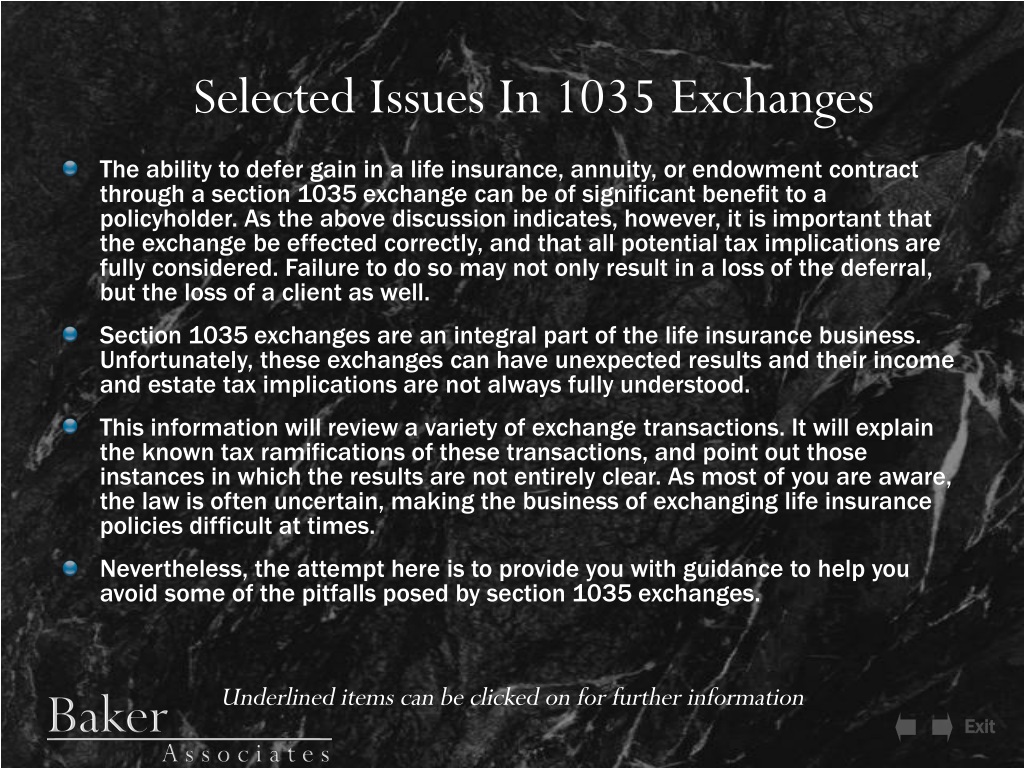
When you decide to transition from one life insurance policy to another, you are essentially choosing between a standard replacement and a 1035 exchange. While both actions involve canceling an old policy in favor of a new one, a 1035 exchange is a tax-advantaged mechanism under Section 1035 of the Internal Revenue Code that allows you to move accumulated cash value into a new policy without triggering immediate income tax liability, whereas a standard replacement often triggers taxable events.
Defining the Core Concepts
To understand the mechanics of moving life insurance, one must distinguish between the contractual action (replacement) and the fiscal classification (1035 exchange).
What is a Life Insurance Replacement?
A life insurance replacement occurs when an existing policy is terminated, lapsed, or surrendered, and the proceeds are used to fund a new policy. This is a common practice when a policyholder finds a product with better benefits, lower premiums, or features more aligned with their current financial goals. From a regulatory perspective, insurance carriers are required to notify the existing insurer when a replacement is initiated to ensure the policyholder is aware of the consequences, such as the potential loss of surrender charges, suicide clauses, or incontestability periods.
What is a 1035 Exchange?
Named after Section 1035(a) of the Internal Revenue Code, a 1035 exchange is a specific, tax-advantaged process that allows a policyholder to swap one life insurance policy for another without the IRS viewing the move as a taxable event. Without this provision, if you surrendered a policy with a cash value higher than the premiums you paid, the "gain" (the difference between the cash value and your cost basis) would be considered taxable income. A 1035 exchange effectively "moves" that basis to the new policy, deferring the tax liability until you withdraw the funds or surrender the new policy.
The Critical Distinction: Tax Implications
The primary difference between a simple replacement and a 1035 exchange is the treatment of your "cost basis"—the total amount of premiums paid into the policy.
The Taxable Event in a Standard Replacement
If you surrender an old policy for cash and then purchase a new policy with that money, the IRS views the transaction in two parts. First, the gain on the old policy is realized and taxable. Second, you are purchasing a new product with after-tax dollars. If your cash value has grown significantly over the years, this can result in a substantial tax bill in the year of the surrender, effectively reducing the amount of capital available to fund your new policy.
The Deferral Benefit of a 1035 Exchange
In a 1035 exchange, the insurance carrier transfers the funds directly from the old company to the new company. Because the money does not pass through your hands, the IRS does not consider it a distribution. Consequently, the gain remains untaxed, and your cost basis is transferred to the new contract. This allows for seamless asset shifting, preserving the full value of your investment for the new policy.
Comparative Overview: Replacement vs. 1035 Exchange
| Feature | Standard Replacement | 1035 Exchange |
|---|---|---|
| Tax Status | Taxable event on gains | Tax-deferred |
| Cash Transfer | Payout to policyholder | Direct transfer (carrier-to-carrier) |
| Documentation | Standard surrender forms | 1035 exchange forms |
| Suitability | Short-term liquidity needs | Long-term asset migration |
| IRS Reporting | Reported via Form 1099-R | Not reported as taxable income |
When to Consider a Replacement
While a 1035 exchange is often preferred for cash-value policies (like Universal or Whole Life), a standard replacement is sometimes the only viable path if the existing policy has no cash value to transfer. Term life insurance policies, for example, typically do not have a cash component. Replacing a term policy with another term policy is a straightforward process because there is no investment component to protect or tax.
Furthermore, if you are planning to surrender an old policy that has a loss—meaning the cash surrender value is less than the premiums you have paid—a 1035 exchange may not be necessary, as there is no gain to tax. In some specific cases, you might even prefer to take the cash surrender value and use it for other immediate financial requirements, provided you understand the implications of losing the insurance coverage.
Procedural Steps for a 1035 Exchange
Executing a 1035 exchange requires precision. If you accidentally take possession of the funds, you lose the 1035 tax status.
- Suitability Review: Consult with your financial advisor to ensure the new policy is objectively better for your long-term goals. Verify that the new policy’s death benefit, premiums, and cash value growth potential justify the change.
- Request 1035 Forms: Your new insurance agent will provide specific 1035 exchange forms. These forms authorize the new carrier to request the cash value directly from your old carrier.
- Submit Application: The application for the new policy is submitted concurrently with the 1035 paperwork.
- Carrier-to-Carrier Transfer: The new carrier contacts the old carrier to facilitate the transfer of funds. This process can take several weeks, as the old carrier verifies the status of your existing policy.
- Policy Issuance: Once the funds are received, the new policy is officially put in force.
Potential Pitfalls and Risks
Transitioning policies involves more than just tax math. You must account for the mechanical risks involved in policy replacement.
Incontestability and Suicide Clauses
Life insurance policies have an "incontestability period"—usually two years—during which the insurer can contest a claim based on misrepresentations in the application. When you replace a policy, the new policy restarts this clock. If you pass away during this new window, the insurer could potentially deny a claim if they uncover discrepancies. Similarly, the suicide clause restarts with the new contract.
Surrender Charges
Many permanent life insurance policies have a "surrender charge" period that lasts for the first 10 to 15 years. If you attempt to exchange a policy during this period, the old insurer may withhold a significant portion of your cash value. It is vital to check your existing policy’s "table of surrender charges" before initiating an exchange. If the surrender charge outweighs the benefits of the new policy, the exchange may not be financially sound.
Changing Health Status
Since a new policy requires medical underwriting, you must qualify based on your health as of 2026. If your health has declined since you purchased your original policy, you may find that the new policy has significantly higher premiums, or you may not be insurable at all. Never surrender an existing policy until the new one is fully issued and in force.
The Role of the "Free Look" Period
In 2026, most jurisdictions mandate a "free look" period (usually 10 to 30 days) after you receive your new policy. During this time, you can cancel the new policy and receive a full refund of any premiums paid. This provides a safety net; if you discover that the new policy is not as promised, you have a window to walk away. However, note that if you have already surrendered your old policy as part of a 1035 exchange, reversing that decision may be complex and often impossible.
Frequently Asked Questions
Can I do a 1035 exchange from a life insurance policy to an annuity?
Yes, the IRS permits a 1035 exchange from a life insurance policy into an annuity, but you cannot exchange an annuity into a life insurance policy. This is often done by individuals nearing retirement who wish to convert their death benefit into a stream of income.
Will I lose my death benefit during the exchange?
You should aim for "overlapping coverage." By ensuring the new policy is issued and in force before you finalize the surrender of the old policy, you prevent any gaps in your life insurance protection.
Does a 1035 exchange affect my cost basis?
A 1035 exchange preserves your cost basis. The total amount you paid in premiums for your old policy becomes the cost basis for your new policy. This ensures that you are only taxed on the growth that occurs after the transition.
Can I exchange a policy that is currently being used as collateral for a loan?
Generally, no. If you have an outstanding loan against your cash value, you must pay off that loan before the insurance company will process a 1035 exchange. The presence of a loan lien prevents the tax-free transfer of the assets.
Is it ever better to just take the cash and pay the taxes?
In rare instances, if the gain is small and you have an immediate, critical need for cash that outweighs the long-term benefit of the insurance, you might opt for a standard surrender. However, this is rarely the most efficient strategy from a wealth-preservation standpoint.
Recommendation for Next Actions
If you are considering moving your life insurance policy, start by requesting an in-force illustration from your current carrier. This document provides the current cash value, the remaining surrender charges, and the cost basis of your policy. Compare this against the features of the proposed new policy. If the objective is to maintain tax-deferred growth, ensure your agent specifically handles the transaction as a 1035 exchange. Always confirm the medical underwriting status of the new policy before authorizing the termination of your current coverage. Given that insurance regulations and tax laws can be complex and vary by jurisdiction, consult with a licensed financial advisor or tax professional to review your specific contract before making a final decision.