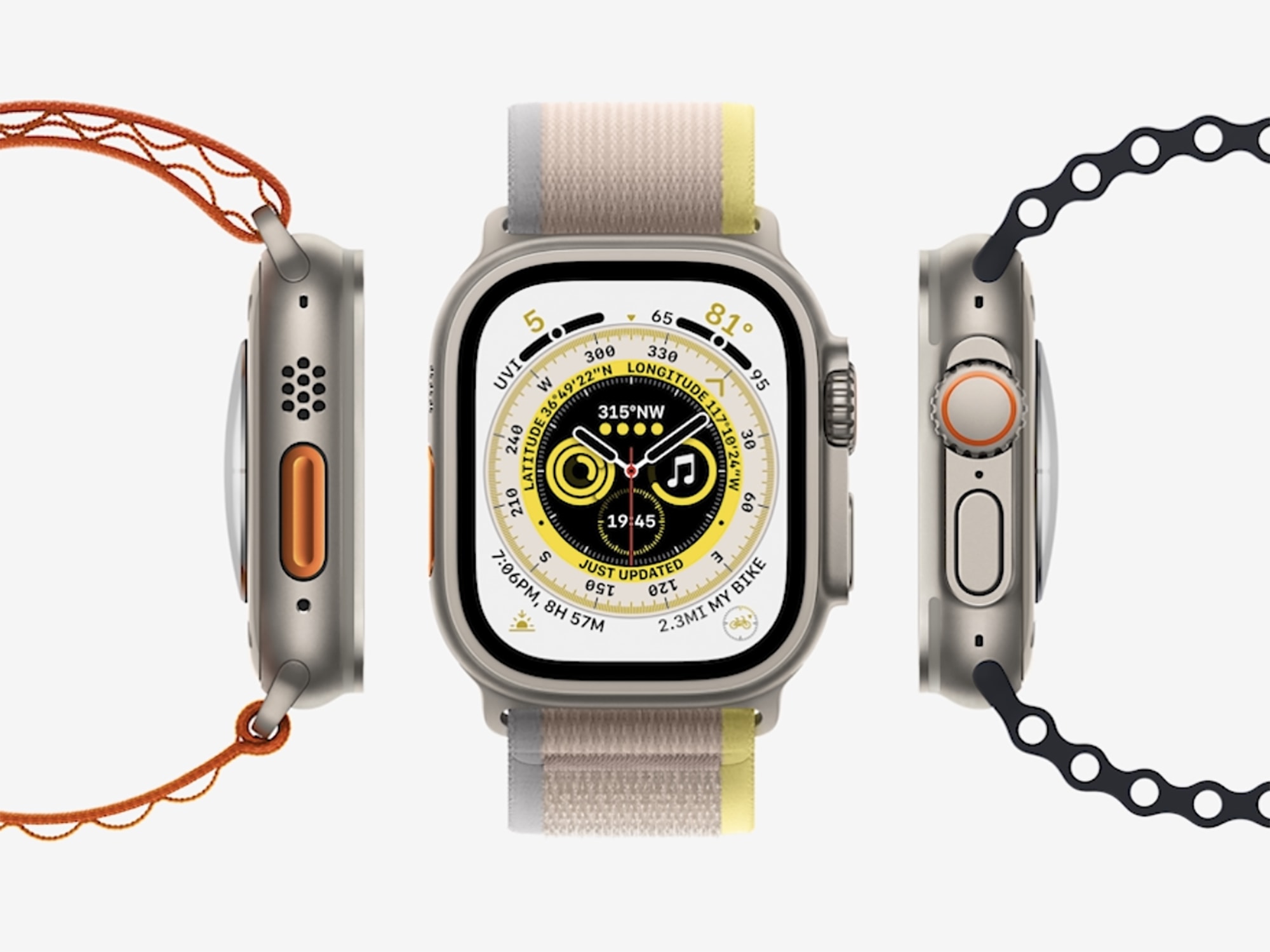
The Apple Watch Ultra (1st Generation) represents a definitive shift in Apple’s wearable strategy, moving beyond general fitness into the realm of professional-grade endurance and adventure hardware. Featuring an aerospace-grade titanium chassis, a 2,000-nit flat sapphire display, and specialized dual-frequency GPS, it remains a high-performance tool for athletes and explorers requiring multi-day battery life and rugged durability.
The Evolution of the Ultra Series: Context and Construction
When the Apple Watch Ultra 1 was first introduced in late 2022, it broke the established design language of the Series line. In 2026, we can look back at this device as the foundation for what has now become the standard for "pro" wearables. Unlike the rounded edges of the standard Apple Watch models, the Ultra 1 features a ruggedized design intended to protect the screen from side impacts—a common point of failure for mountain climbers and trail runners.
Aerospace-Grade Titanium Housing
The primary housing of the Apple Watch Ultra 1 is crafted from aerospace-grade titanium. This material was selected for its high strength-to-weight ratio and its inherent resistance to corrosion, particularly from salt water. The 49mm case is significantly larger than its predecessors, but because it is titanium, it remains lighter than a comparable steel watch would be.
The edges of the case rise up to surround the flat sapphire crystal front. This "lip" acts as a protective barrier, ensuring that if the watch is scraped against a rock or a hard surface, the metal takes the impact rather than the glass. This design choice is a hallmark of the Ultra 1's architecture, prioritizing survival in extreme environments over the "jewelry-first" aesthetic of the Series watches.
The Specialized Digital Crown and Action Button
The Ultra 1 introduced the Action Button, a high-contrast International Orange button on the left side of the chassis. This button is fully customizable, allowing users to launch specific apps, set a waypoint, or start a workout with a single press—critical when wearing gloves or when fingers are wet.
On the opposite side, the Digital Crown and the side button are housed in a raised protrusion. The Crown itself is larger and features deeper grooves than the standard Apple Watch, designed specifically for use with gloves. The haptic feedback was tuned to be more pronounced, providing tactile confirmation of interactions even when the user’s tactile sensitivity might be reduced by cold or vibration.
Display Technology: Brightness and Visibility
One of the standout features of the Apple Watch Ultra 1 is its Always-On Retina LTPO OLED display. In 2026, while newer models have pushed brightness levels even higher, the 2,000 nits of the original Ultra remains highly effective for almost all outdoor scenarios.
Peak Brightness and Direct Sunlight
Standard wearables often struggle with legibility in high-glare environments, such as snow-covered mountains or open deserts. The Ultra 1's display can reach a peak brightness of 2,000 nits, which is twice as bright as the Series 8 released alongside it. This ensures that even under the harsh mid-day sun, data fields remain crisp and readable.
The Exclusive Wayfinder Face and Night Mode
To complement the hardware, Apple designed the Wayfinder watch face specifically for the Ultra. This face includes a live compass dial and space for up to eight complications. One of the most useful software features tied to this hardware is the Night Mode. By rotating the Digital Crown, the entire UI turns a deep red. This preserves the user's night vision during late-night navigation or star-gazing by filtering out blue light, a feature often found in specialized maritime and aviation instruments.
Advanced Navigation and Dual-Frequency GPS
For many users, the most significant upgrade in the Apple Watch Ultra 1 is the introduction of Precision Dual-Frequency GPS. Traditional GPS (L1) often fails in "urban canyons" (areas with tall buildings) or under dense forest canopies because the signal bounces off surfaces before reaching the device.
Integrating L1 and L5 Frequencies
The Ultra 1 integrates both the legacy L1 frequency and the newer, more sophisticated L5 frequency.
- L1 Frequency: The standard signal used for basic positioning and timing.
- L5 Frequency: An advanced signal that provides a more consistent pulse, which is less susceptible to interference and atmospheric distortion.
By combining these two, the Apple Watch Ultra 1 provides the most accurate distance, pace, and route maps in the history of Apple’s lineup up to that point. For marathon runners and trail explorers, this means more reliable tracking of metrics where every meter counts.
The Compass App and Backtrack
The redesigned Compass app on the Ultra 1 includes two critical features for wilderness safety:
- Compass Waypoints: Users can drop a marker at a specific location, such as a trailhead or a campsite. The watch then shows the direction and distance to that point in real-time.
- Backtrack: Using GPS data, this feature creates a digital breadcrumb trail of where the user has been. If the user becomes lost, Backtrack can guide them back along their exact path, even if there is no cellular or Wi-Fi signal.
Diving Capabilities and Water Resistance
The Apple Watch Ultra 1 isn't just "water-resistant"; it is a certified dive computer. It carries a WR100 water resistance rating and is certified to EN13319, which is an internationally recognized standard for diving accessories and dive computers.
The Depth App and Oceanic+
The device features a built-in depth gauge and a water temperature sensor. When submerged, the Depth app launches automatically, displaying current depth, maximum depth achieved, and time spent underwater.
For more serious recreational divers, the Apple Watch Ultra 1 supports the Oceanic+ app. This app transforms the watch into a full-featured dive computer that can handle decompression limits, ascent rates, and safety stops. While it is limited to a depth of 40 meters (the limit for most recreational diving), it provides a level of utility that no previous Apple Watch could offer.
Health, Safety, and Emergency Features
Beyond adventure, the Ultra 1 retains all the high-end health sensors found in the Apple Watch Series 8, but adds several layers of safety equipment tailored for extreme situations.
The 86-Decibel Emergency Siren
If a user is injured or lost, the Apple Watch Ultra 1 features a powerful 86-decibel siren. This siren uses a unique sound pattern that includes a high-pitched "distress" chirp and a standardized SOS signal. Apple designed the siren to be audible up to 600 feet (180 meters) away, providing a crucial tool for rescue in remote areas where voice calls might not be heard over wind or water.
Vital Health Monitoring
The Ultra 1 includes a comprehensive suite of sensors:
- Blood Oxygen (SpO2): Important for monitoring acclimatization at high altitudes.
- ECG App: Allows users to take an electrocardiogram to check for atrial fibrillation.
- Temperature Sensing: Two sensors (one on the back crystal and one under the display) allow for baseline temperature tracking, primarily used for retrospective ovulation estimates and general wellness monitoring.
- Crash Detection: Using high-g accelerometers and a gyroscope, the watch can detect a severe car crash and automatically contact emergency services if the user is unresponsive.
Battery Life and Performance Specifications
In 2026, battery longevity remains the most cited reason for choosing an Ultra over a standard Series model. The Apple Watch Ultra 1 was the first to break the "18-hour" cycle that had defined the product for years.
Extended Usage Cycles
Under normal usage, the Apple Watch Ultra 1 is rated for 36 hours of battery life. This includes a mix of GPS workouts, LTE usage, and sleep tracking. With the Low Power Mode enabled (and the "Fewer GPS and Heart Rate Readings" setting), this can be extended up to 60 hours. This makes it the first Apple Watch capable of supporting a multi-day backpacking trip or a full Ironman triathlon without a mid-event charge.
The S8 System in Package (SiP)
At its core, the Ultra 1 runs on the S8 SiP. While subsequent years brought faster chips, the S8 remains highly capable in 2026 for handling watchOS updates, complex complications, and smooth UI transitions. The 64-bit dual-core processor, combined with the W3 wireless chip and the U1 Ultra Wideband chip, ensures low-latency connectivity with iPhones and other Apple ecosystem devices.
Feature Comparison: Ultra 1 vs. Contemporaries
To understand the value of the Ultra 1 in 2026, it is helpful to compare its core specifications against the standard Series 8 (its launch peer) and the Ultra 2.
| Feature | Apple Watch Ultra 1 | Apple Watch Series 8 | Apple Watch Ultra 2 |
|---|---|---|---|
| Case Material | Aerospace Titanium | Aluminum / Stainless Steel | Aerospace Titanium |
| Display Size | 49mm | 41mm / 45mm | 49mm |
| Peak Brightness | 2,000 Nits | 1,000 Nits | 3,000 Nits |
| GPS | Precision Dual-Frequency | Single Frequency (L1) | Precision Dual-Frequency |
| Battery Life | 36 Hours (Standard) | 18 Hours (Standard) | 36 Hours (Standard) |
| Water Resistance | 100m (40m Dive) | 50m (Swimproof) | 100m (40m Dive) |
| Siren | Yes (86 dB) | No | Yes (86 dB) |
| Action Button | Yes (Customizable) | No | Yes (Customizable) |
Specialized Bands for Every Environment
Apple didn't just redesign the watch; they created three entirely new band types for the Ultra 1, each targeting a specific demographic:
- Alpine Loop: Made from two integrated layers of textile woven together without stitching. It uses a titanium G-hook for a secure fit, ideal for climbers.
- Trail Loop: The thinnest Apple Watch band to date, designed for runners. It features high elasticity and a "tab" for quick adjustments on the go.
- Ocean Band: Molded from a high-performance elastomer with a tubular geometry. It is designed to stretch over a wetsuit and uses a titanium buckle and adjustable loop to stay secure during high-speed water sports.
Software Longevity and Ecosystem Integration in 2026
As of 2026, the Apple Watch Ultra 1 continues to receive major watchOS updates. Because it was launched with high-tier specifications—32GB of storage and a robust processor—it has handled the evolution of the OS well.
The integration with the broader Apple ecosystem remains a key feature. This includes:
- Precision Finding: Using the U1 chip to find a misplaced iPhone.
- Apple Pay: Secure contactless payments via NFC.
- HomeKit Control: Managing smart home devices directly from the wrist.
- Fitness+: Seamless syncing with Apple’s workout platform, displaying real-time metrics on the screen of an Apple TV, iPad, or iPhone.
Frequently Asked Questions
Is the Apple Watch Ultra 1 still a good buy in 2026?
Yes, the Apple Watch Ultra 1 remains a highly relevant device in 2026, particularly on the refurbished or secondary market. While newer versions offer higher peak brightness and slightly faster processors, the core "Ultra" experience—the titanium build, the 36-hour battery, the Action Button, and the dual-frequency GPS—is fully present in the first generation. It offers a more rugged and longer-lasting alternative to the newest standard Series watches at a often lower price point.
Can I use the Apple Watch Ultra 1 for professional scuba diving?
The Ultra 1 is certified to EN13319 and rated for depths up to 40 meters (130 feet). This covers almost all recreational diving. However, it is not designed for technical diving, cave diving, or depths exceeding 40 meters. For professional or saturation diving, a dedicated, high-depth dive computer is still required.
How does the battery life hold up after several years of use?
Like all lithium-ion devices, the battery capacity will naturally degrade over time. However, because the Ultra 1 started with such a large battery (nearly double the capacity of the Series 8), even a slightly degraded Ultra 1 in 2026 typically outlasts a brand-new standard Series watch. Apple's "Optimized Battery Charging" feature has also helped preserve the long-term health of these units.
Does the Ultra 1 support the "Double Tap" gesture?
The native, hardware-accelerated Double Tap gesture was officially introduced with the S9 chip in the Ultra 2. While the Ultra 1 has "AssistiveTouch" features that allow for similar hand-gesture controls, they are found in the Accessibility settings rather than being a core part of the primary UI interaction model like they are on newer models.
Is the 49mm size too big for smaller wrists?
The 49mm size is substantial, but the lug-to-lug distance was designed to minimize overhang. Many users with smaller wrists find it comfortable due to the lightweight titanium construction. However, it is significantly thicker than the standard models, which can be a consideration if you frequently wear tight-cuffed shirts or jackets.
Practical Recommendation for Potential Users
If you are an outdoor enthusiast, a frequent traveler, or someone who values hardware durability, the Apple Watch Ultra 1 is an excellent choice. In 2026, its feature set remains in the top 5% of all wearables globally.
Next Steps:
- Assess Your Needs: If you require more than 18 hours of battery life or accurate GPS in mountainous terrain, the Ultra 1 is a significant upgrade over any non-Ultra model.
- Check Battery Health: If buying used in 2026, ensure the battery health is above 85% to ensure you still get the multi-day benefits.
- Choose the Right Band: The band is as much a part of the "system" as the watch itself. Choose the Trail Loop for comfort or the Alpine Loop for security.