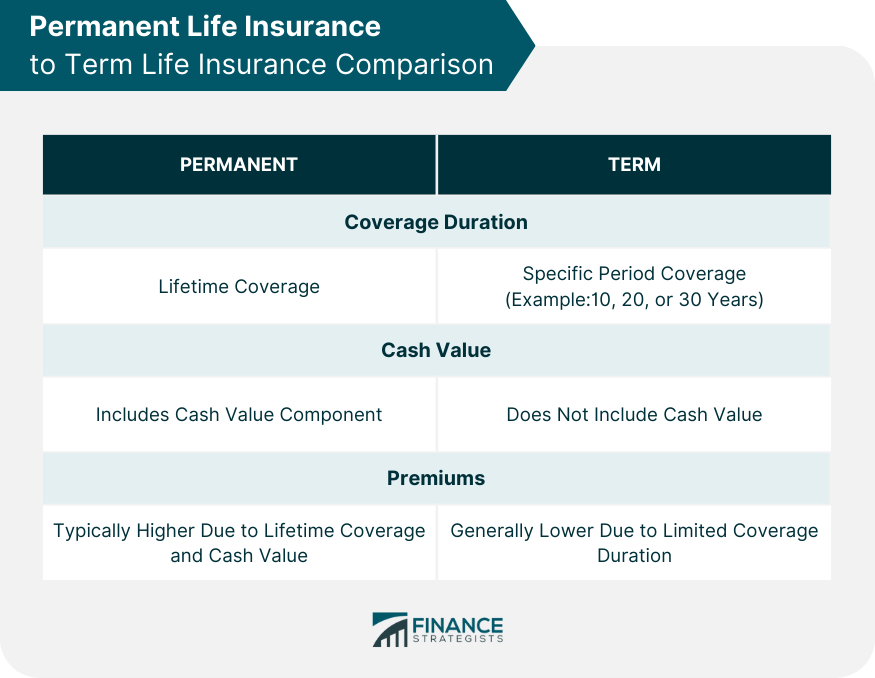
Permanent life insurance represents one of the most significant financial innovations in history, evolving from communal burial funds in Ancient Rome to the complex, cash-accumulating assets used in 2026. Unlike temporary term insurance, permanent life insurance was designed to provide lifelong coverage by combining a death benefit with a savings component known as cash value. This evolution was driven by a shift from simple mutual aid to sophisticated actuarial science, allowing individuals to manage the financial risks of mortality with mathematical precision.
The Primitive Roots of Mutual Aid and Burial Societies
The concept of "permanent" protection—the idea that a community or institution would provide a guaranteed benefit regardless of when a person died—predates the modern insurance company by nearly two millennia. In Ancient Rome, "collegia" or burial societies were formed among the lower classes and military units. Members paid an entry fee and monthly dues; in return, the society guaranteed a proper funeral and a small payment to the surviving family.
These early iterations were not based on mathematical risk assessment. They were social contracts rooted in the necessity of communal support. During the Middle Ages, European guilds adopted similar practices. A guild would support the widows and orphans of its members, funded by the collective contributions of the living. However, these systems were frequently unstable. Because they did not account for the varying ages of members or the statistical probability of death, many societies collapsed when too many members died simultaneously or when younger members stopped joining, a phenomenon we now recognize as a "death spiral."
The true transition toward a permanent, sustainable model required a marriage of social intent and mathematical rigor. This began to emerge in the late 17th century with the development of the first life tables by Edmund Halley and others, which allowed for the prediction of life expectancy based on age.
The 18th Century: The Birth of Actuarial Science
The formal history of permanent life insurance as a commercial product began in London. In 1706, the Amicable Society for a Perpetual Assurance Office was founded. This was the first "permanent" life insurance company, though it still functioned on a relatively primitive model. Members paid a fixed annual contribution, and the year’s total pot was divided among the families of those who had died. There was no "cash value," and the benefit amount fluctuated based on the number of deaths that year.
The pivotal moment for permanent life insurance occurred in 1762 with the founding of the Society for Equitable Assurances on Lives and Survivorships, commonly known as "The Old Equitable." This institution, spearheaded by Edward Rowe Mores and based on the work of James Dodson, was the first to use "scientific" principles.
The Old Equitable introduced several concepts that define permanent life insurance today:
- Level Premiums: Instead of premiums increasing every year as the insured got older (which makes insurance unaffordable in old age), the company calculated a flat rate that remained the same for life.
- Actuarial Reserves: Because the level premium in the early years is higher than the actual cost of insuring a young person, the excess funds were set aside (the reserve) to pay for the higher risk in later years.
- The Life Table: Premiums were based on the age of the applicant at the time of entry, utilizing statistical data to ensure the company’s solvency.
The American Expansion and the Rise of Whole Life
While life insurance crossed the Atlantic in the mid-18th century—marked notably by the 1759 founding of the "Corporation for Relief of Poor and Distressed Presbyterian Ministers and of the Poor and Distressed Widows and Children of Presbyterian Ministers"—it did not become a mainstream financial tool in the United States until the mid-19th century.
During the 1840s and 1850s, many of the major mutual insurers that still exist today were founded. These companies popularized "Whole Life" insurance. This product was marketed as a "permanent" solution that served two purposes: an immediate estate for the family and a long-term savings vehicle. By 1860, life insurance had become a cornerstone of American middle-class respectability.
The "mutual" structure of these companies was essential to their growth. Since the policyholders were technically the owners of the company, they were entitled to "dividends"—a return of excess premiums that could be used to increase the death benefit or reduce future payments. This reinforced the "permanent" nature of the contract, as it encouraged long-term participation and the accumulation of what we now call "cash value."
The Armstrong Investigation and the Era of Regulation
By the dawn of the 20th century, the life insurance industry had grown so powerful that it became a target of political and social scrutiny. Companies were accused of extravagant spending, political bribery, and unfair "tontine" policies (where the survivors of a group inherited the benefits of those who died, leaving the families of the deceased with nothing).
In 1905, the New York State Legislature launched the Armstrong Investigation. This was a watershed moment in the history of permanent life insurance. The investigation, led by Charles Evans Hughes, resulted in strict regulations that shaped the industry for the next century. It mandated transparency, limited the expenses companies could incur, and forced the elimination of speculative products like tontines.
Post-Armstrong, permanent life insurance became a "boring" but incredibly stable financial instrument. For the first half of the 20th century, and especially during the Great Depression, Whole Life insurance was one of the few assets that remained liquid and safe. While banks failed and the stock market crashed, life insurance companies, backed by their conservative actuarial reserves, continued to pay claims and provide policy loans to struggling families.
The 1970s: The Great Unbundling and Universal Life
The period of stability ended in the late 1960s and 1970s. As inflation rose and interest rates climbed into the double digits, traditional Whole Life insurance began to lose its luster. Consumers realized that the internal rate of return on their cash value (often 2% to 4%) was significantly lower than what they could earn in a money market account or a high-yield savings bond. This led to the rise of the mantra: "Buy term and invest the difference."
The industry responded with a revolutionary "unbundled" product: Universal Life (UL). Introduced in 1979 by E.F. Hutton Life and championed by actuary James Anderson, Universal Life separated the protection component from the savings component.
Unlike Whole Life, which has fixed premiums and a rigid structure, Universal Life allowed policyholders to:
- Adjust their premium payments.
- Increase or decrease the death benefit (subject to underwriting).
- See exactly how much of their premium was going toward the cost of insurance and how much was going into the cash account.
- Earn a market-sensitive interest rate on their cash value.
This shift marked the move from "static" permanent insurance to "flexible" permanent insurance. It allowed permanent coverage to function more like a modern financial account, but it also introduced a new risk: if interest rates fell and premiums weren't high enough, the policy could lapse.
The 1980s to 2000s: Market Integration and Indexed Products
As the financial markets became more integrated into the lives of everyday consumers, permanent life insurance continued to adapt. The 1980s saw the rise of Variable Life and Variable Universal Life (VUL). These products allowed policyholders to invest their cash value directly into sub-accounts (similar to mutual funds) containing stocks and bonds. This offered the potential for significantly higher growth but removed the "guaranteed" nature of the cash value growth, making the policyholder responsible for the investment risk.
In 1997, a middle-ground product emerged: Indexed Universal Life (IUL). IUL was designed for people who wanted more growth than traditional Universal Life but less risk than Variable Life. The cash value growth in an IUL is tied to the performance of a stock market index (like the S&P 500), but with a "floor" (usually 0%) that protects against market losses.
By the early 2000s, permanent life insurance had branched into four distinct "species," each reflecting different consumer appetites for risk and flexibility.
Comparison of Primary Permanent Life Insurance Types
| Feature | Whole Life | Universal Life (GUL/Current) | Variable Universal Life | Indexed Universal Life |
|---|---|---|---|---|
| Premiums | Fixed for life | Flexible within limits | Flexible within limits | Flexible within limits |
| Cash Value Growth | Guaranteed minimum | Current interest rate | Market sub-accounts | Equity-indexed credits |
| Investment Risk | Borne by the insurer | Borne by the insurer | Borne by the owner | Shared (Floor vs. Cap) |
| Death Benefit | Guaranteed | Guaranteed (if funded) | Variable/Flexible | Flexible |
| Complexity | Low | Moderate | High | Moderate-High |
Permanent Life Insurance in 2026: The Modern Landscape
As of 2026, the history of permanent life insurance has reached a stage of high technological integration and personalized risk management. Several factors define the current status of these products:
1. Principles-Based Reserving (PBR): The way insurance companies calculate their required reserves has shifted from static formulas to complex, stochastic modeling. This allows for more efficient pricing of permanent products, often making them more competitive for younger, healthier applicants compared to twenty years ago.
2. Accelerated Underwriting: Historically, getting a permanent policy took weeks and required a medical exam (paramedical). In 2026, the use of "Big Data"—including prescription histories, motor vehicle records, and even clinical lab data algorithms—allows many applicants to receive permanent coverage instantly without a physical exam.
3. Long-Term Care (LTC) Integration: One of the most significant modern developments is the "hybrid" policy. Recognizing that the greatest financial threat to a permanent policyholder is often the cost of late-life care, most permanent policies now offer "living benefits." These allow the policyholder to access a portion of the death benefit while they are still alive to pay for nursing homes or home health care.
4. Tax Environment Awareness: With the ongoing discussions regarding federal debt and potential changes to the tax code in the mid-2020s, the tax-advantaged status of permanent life insurance (tax-deferred growth and tax-free death benefits under Internal Revenue Code Section 101(a)) remains its primary selling point for high-net-worth individuals.
Factual Context and Legal Limitations
It is important to note that life insurance is regulated primarily at the state level in the United States. While the general history provided here reflects the broad development of the industry, specific policy features, rider availability, and consumer protections can vary significantly between jurisdictions (e.g., New York often has stricter regulations on permanent products than other states).
Permanent life insurance is a long-term financial commitment. Most policies involve significant "surrender charges" in the early years (often 10-15 years), meaning that if you cancel the policy early, you may receive little to none of your paid premiums back. Furthermore, "guarantees" are always subject to the claims-paying ability of the issuing insurance company.
Common Misconceptions in the History of Permanent Insurance
A frequent misunderstanding is the idea that "Whole Life" has always existed in its current form. In reality, the early American policies often lacked the non-forfeiture values we take for granted today. Before the work of Elizur Wright (the "father of insurance regulation" and the first insurance commissioner of Massachusetts in 1858), if a policyholder missed a single payment, the company could keep every cent of the accumulated reserve. Wright championed the creation of "legal reserve" requirements and "non-forfeiture" laws, ensuring that policyholders had a right to the cash value they had built up.
Another misconception is that Universal Life was designed to replace Whole Life. While it was marketed that way in the 1980s, the two products now coexist to serve different needs. Whole Life is used for its absolute guarantees and dividend potential, while Universal Life is used for its premium flexibility and lower initial costs.
Frequently Asked Questions
When was the first permanent life insurance policy issued?
The first scientifically calculated permanent life insurance policies were issued by the Society for Equitable Assurances on Lives and Survivorships in London starting in 1762. Earlier versions existed, such as those from the Amicable Society (1706), but they lacked the level premiums and actuarial reserves that define modern permanent insurance.
Why did Universal Life insurance become so popular in the late 20th century?
Universal Life gained popularity because it "unbundled" the insurance and savings components. During the high-interest-rate environment of the late 1970s and 1980s, consumers wanted more transparency and higher returns on their cash value than traditional Whole Life offered. The flexibility to adjust premiums was also highly attractive during economic uncertainty.
How did the Great Depression affect permanent life insurance?
Permanent life insurance was one of the few financial products to survive the Great Depression relatively unscathed. Because life insurance companies were required to hold massive, conservative reserves in high-quality bonds and mortgages, they remained solvent while thousands of banks failed. Many Americans used their policy's cash value as an emergency fund during this period.
What is the difference between "Permanent" and "Whole" life insurance?
"Permanent" is a broad category that includes any policy designed to last a lifetime and build cash value. "Whole Life" is a specific type of permanent insurance characterized by fixed premiums, guaranteed cash value growth, and the potential for dividends. All Whole Life is permanent, but not all permanent insurance is Whole Life (e.g., Universal Life and Variable Life are also permanent).
Is the cash value in a permanent policy taxable?
In the United States, the cash value in a permanent life insurance policy grows on a tax-deferred basis. Under current 2026 tax laws, you can generally withdraw up to your "basis" (the amount of premiums paid) tax-free. Loans taken against the cash value are also generally tax-free, provided the policy does not lapse. If a policy is classified as a Modified Endowment Contract (MEC), the tax treatment is less favorable.
Summary and Next Steps
The history of permanent life insurance is a chronicle of the human effort to quantify uncertainty and provide lasting security for future generations. From the burial clubs of Rome to the algorithm-driven policies of 2026, the core mission remains the same: ensuring that a family's financial stability is not tied to the lifespan of a single individual.
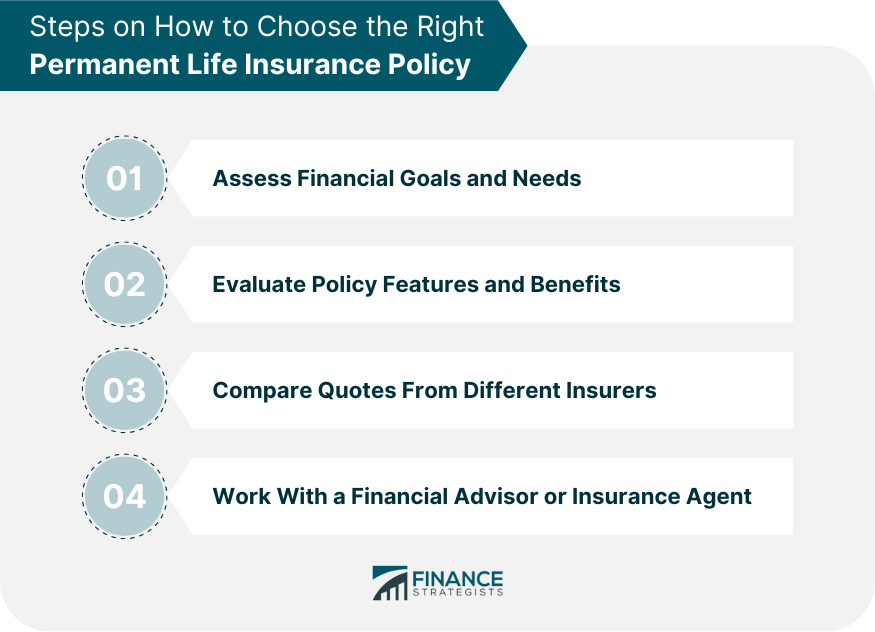
For those considering permanent life insurance today, the next logical step is to perform a needs analysis. This involves calculating the total financial obligations that would exist upon your passing (mortgage, education, income replacement) and comparing them against your current assets. Because permanent insurance is complex, it is advisable to consult with a professional who can provide a detailed "ledger illustration," which projects how a policy's cash value and death benefit might perform over several decades based on current interest rates or market assumptions.