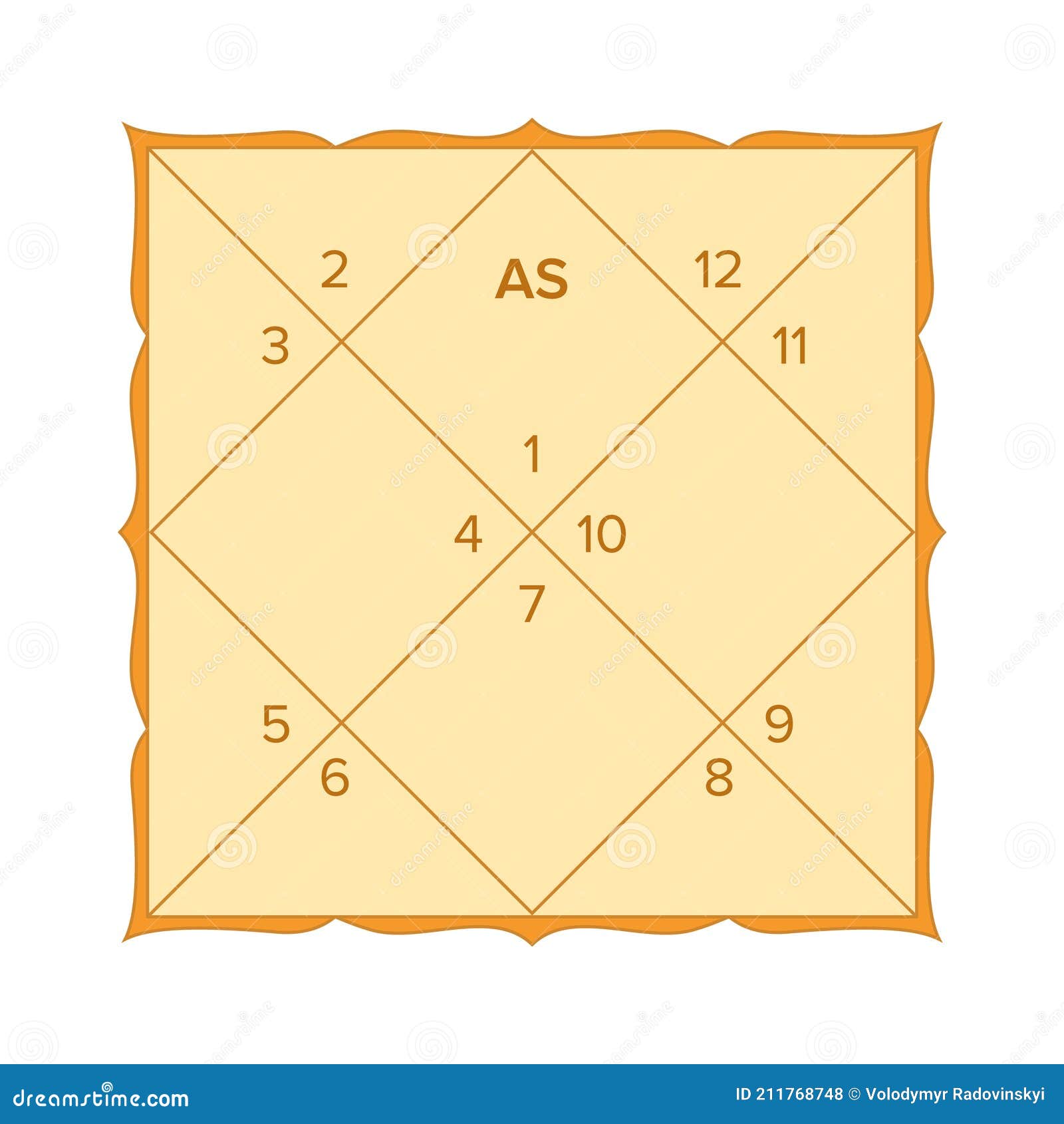
Indian astrology, known traditionally as Jyotisha, is a sophisticated sidereal system that interprets the influence of celestial bodies on human affairs based on the exact time and location of birth. Unlike Western astrology, it prioritizes the Moon sign and the Ascendant over the Sun sign, utilizing a fixed zodiac that accounts for the Earth’s precession to provide high-precision life path mapping and predictive timing.
The Foundational Principles of Indian Astrology
Indian astrology is one of the six auxiliary disciplines of the Vedas, the ancient scriptures of India. As of 2026, it remains one of the most widely practiced systems of divination and life planning in the world. To understand an Indian horoscope, one must first grasp the concept of the Sidereal Zodiac. While Western astrology uses the Tropical Zodiac (linked to the seasons), Indian astrology uses the actual observable positions of the constellations.
This system incorporates the Ayanamsa, which is the longitudinal difference between the Tropical and Sidereal zodiacs. Because the Earth wobbles on its axis, the stars appear to shift slightly over centuries. Indian astrology corrects for this shift, ensuring that if a planet is said to be in the constellation of Aries, it is astronomically located there. This technical precision is what many practitioners believe gives Jyotisha its predictive accuracy.
Another core tenet is the belief in Karma and Reincarnation. A horoscope (Janma Kundli) is viewed as a blueprint of an individual’s past karma, manifesting as tendencies, challenges, and opportunities in the current life. It is not considered fatalistic; rather, it is a map that highlights "Prarabdha Karma" (destiny) while leaving room for "Purushartha" (conscious effort).
The Anatomy of an Indian Horoscope (Janma Kundli)
The Indian horoscope is a visual representation of the heavens at the specific moment of an individual’s birth. In 2026, most charts are generated using high-precision software that calculates planetary degrees down to the second. The chart consists of three primary components: the Houses (Bhavas), the Signs (Rashis), and the Planets (Grahas).
The Twelve Houses (Bhavas)
Each of the twelve houses in an Indian horoscope represents a specific domain of human experience. The chart begins with the Lagna (Ascendant), which is the sign rising on the eastern horizon at the moment of birth.
- First House (Tanu Bhava): Represents the self, physical appearance, vitality, and overall life path.
- Second House (Dhana Bhava): Governs wealth, speech, family, and accumulated assets.
- Third House (Sahaja Bhava): Relates to siblings, courage, communication, and short travels.
- Fourth House (Bandhu Bhava): Focuses on the mother, home, happiness, and landed property.
- Fifth House (Putra Bhava): The domain of intelligence, creativity, children, and past-life merits.
- Sixth House (Ari Bhava): Covers debts, enemies, obstacles, and health challenges.
- Seventh House (Yuvati Bhava): The primary house for marriage, partnerships, and public relations.
- Eighth House (Randhra Bhava): Deals with longevity, transformation, inheritance, and hidden knowledge.
- Ninth House (Dharma Bhava): Represents the father, religion, higher learning, and fortune.
- Tenth House (Karma Bhava): Focuses on career, status, reputation, and public life.
- Eleventh House (Labha Bhava): The house of gains, friendships, and the fulfillment of desires.
- Twelfth House (Vyaya Bhava): Covers losses, liberation (Moksha), foreign lands, and the subconscious.
The Nine Planets (Grahas)
In Jyotisha, the term "Graha" translates more accurately to "seizer" or "influencer." The system uses nine primary influencers, including the two lunar nodes.
- Surya (Sun): Represents the soul, authority, father, and willpower.
- Chandra (Moon): The most important graha for emotional stability, the mind, and the mother.
- Mangala (Mars): Governs energy, courage, property, and conflict.
- Budha (Mercury): The planet of intellect, communication, and commerce.
- Guru (Jupiter): Represents wisdom, expansion, children, and wealth.
- Shukra (Venus): Governs love, luxury, art, and relationships.
- Shani (Saturn): The significator of discipline, delay, hard work, and karma.
- Rahu (North Node): An analytical shadow planet representing worldly desires and innovation.
- Ketu (South Node): A shadow planet representing detachment, spirituality, and past-life skills.
The Role of Nakshatras: The 27 Lunar Mansions
One of the most distinctive features of Indian astrology is the use of Nakshatras. While the 12 signs provide a broad overview, the 27 Nakshatras offer a granular, deep-dive analysis of a person's character and destiny. Each Nakshatra spans 13 degrees and 20 minutes of the zodiac.
The Moon’s position in a specific Nakshatra at birth determines the "Janma Nakshatra," which is considered more vital than the Sun sign in Indian culture. It dictates the starting point of the planetary periods (Dashas) and is the primary factor used in marriage compatibility (Guna Milan). Each Nakshatra is ruled by a planet and associated with a specific deity, animal symbol, and primary motivation (Dharma, Artha, Kama, or Moksha). For example, someone born under the Ashwini Nakshatra is often characterized by speed and healing abilities, while those born under Rohini are associated with growth and magnetism.
Time Cycles: The Vimshottari Dasha System
Predictive Indian astrology relies heavily on the Vimshottari Dasha system, a 120-year cycle of planetary periods. This system explains why a person might have a brilliant birth chart but struggle during certain phases of life.
The Dasha system operates on the principle that at any given time, one planet is the "major lord" (Mahadasha) of a person's life, exerting the dominant influence. This period is further subdivided into "Antardashas" (minor periods).
For instance, if an individual enters a Jupiter Mahadasha, they may experience a 16-year period focused on growth, learning, and prosperity, provided Jupiter is well-placed in their horoscope. Conversely, a Saturn Mahadasha (19 years) often brings periods of intense restructuring, hard work, and the repayment of karmic debts. This temporal element allows Indian astrologers to provide specific windows of time for when marriage, career shifts, or health issues are likely to occur.
Comparing Indian and Western Astrology
While both systems use houses, signs, and planets, their technical applications differ significantly. The following table highlights the primary distinctions as understood in the 2026 astrological landscape.
| Feature | Indian (Vedic) Astrology | Western Astrology |
|---|---|---|
| Zodiac System | Sidereal (Fixed stars) | Tropical (Seasonal/Equinox-based) |
| Ayanamsa Correction | Yes (Approx. 24 degrees currently) | No |
| Primary Focus | Moon Sign and Ascendant | Sun Sign |
| Chart Style | Square (North/South Indian formats) | Circular |
| Lunar Mansions | 27 Nakshatras | Generally not used |
| Predictive Tool | Dashas (Planetary periods) | Progressions and Solar Arcs |
| Nodes of the Moon | Rahu/Ketu (Crucial influencers) | Often secondary |
| Outer Planets | Traditionally excluded (Uranus, Neptune, Pluto) | Included (Modern Western) |
Practical Applications of the Indian Horoscope in 2026
In the modern era, the use of Indian horoscopes has transitioned from traditional temple settings to sophisticated digital consulting. The applications remain deeply rooted in practical life management.
Marriage and Compatibility (Ashta Kuta)
Horoscope matching, or Kundli Milan, remains a cornerstone of Indian astrology. It uses a 36-point system (Gunas) based on the Moon’s Nakshatra. It evaluates mental compatibility, health, progeny, and the "Manglik" factor (the placement of Mars). In 2026, this is often used not to mandate an arranged marriage, but as a tool for couples to understand their psychological dynamics and potential areas of friction.
Career and Financial Guidance
By analyzing the 2nd (wealth), 10th (profession), and 11th (gains) houses, an astrologer can identify the most suitable industries for an individual. For example, a strong Mercury and Rahu connection might suggest success in technology or data science, while a dominant Sun and Jupiter might point toward government service or education.
Remedial Measures (Upayas)
A unique aspect of Indian astrology is the prescription of remedies to mitigate the negative effects of planets or enhance positive ones. These include:
- Mantras: Chanting specific Sanskrit sounds to align with planetary frequencies.
- Charity (Dana): Giving to specific causes on specific days (e.g., donating black lentils on Saturday for Saturn).
- Gemstones: Wearing high-quality stones like Yellow Sapphire or Blue Sapphire (requires extreme caution and expert advice).
- Yagyas: Conducting Vedic fire rituals to harmonize environmental influences.
Common Myths and Misconceptions
As Indian astrology has gained global popularity, several misconceptions have surfaced. One common myth is that a "Manglik" (Mars-afflicted) person can never have a happy marriage or must only marry another Manglik. In reality, Mars's influence often softens with age or is cancelled by other planetary placements (Yoga).
Another misconception is that the horoscope is a tool of "fate" that cannot be changed. Vedic philosophy emphasizes that while the "cards we are dealt" are fixed, how we play the hand is a matter of free will. Astrology is intended to be a lamp in a dark room—it doesn't change the room, but it prevents you from tripping over the furniture.
How to Get an Accurate Indian Horoscope
To generate a precise Janma Kundli in 2026, three pieces of information are non-negotiable:
- Date of Birth: Day, month, and year.
- Time of Birth: Accurate to the minute. Even a four-minute difference can shift the degrees of the Ascendant or the divisional charts (Vargas).
- Place of Birth: Latitude and longitude are essential to determine the exact horizon at the moment of birth.
Verification is key. When using digital platforms, ensure they use a reliable Ayanamsa (such as Lahiri or Pushya-Paksha). A reputable astrologer will usually perform a "birth time rectification" by checking past major life events against the chart's timing to ensure the birth time provided is accurate.
Frequently Asked Questions
Why is my Indian sign different from my Western sign?
Because Indian astrology uses the Sidereal Zodiac, it accounts for the Earth's precession (Ayanamsa). This shift is currently approximately 24 degrees. Consequently, if your Western Sun sign is Aries, there is a high probability that your Indian Sun sign is Pisces.
What is the "Sade Sati" period?
Sade Sati is a significant seven-and-a-half-year transit of Saturn over the natal Moon, the sign before it, and the sign after it. It is often feared as a time of hardship, but astrologically, it is viewed as a period of profound cleansing, maturity, and long-term foundation building.
Can Indian astrology predict the exact date of death?
While there are technical calculations for longevity (Ayurdaya), most ethical Vedic astrologers avoid predicting the exact date of death. The focus is instead on "Maraka" periods, which indicate times of low vitality or health risks where extra caution and remedial measures are advised.
Is Indian astrology a religion?
No, it is a "Vidya" or a branch of knowledge. While it is rooted in Vedic culture and uses Hindu deities as archetypes for planets and Nakshatras, its mathematical and observational principles are applied by people of various faiths as a psychological and predictive tool.
What are "Yoga" in a horoscope?
Yogas are specific planetary combinations or "unions" that produce certain results. For example, a "Gaja Kesari Yoga" (Jupiter and Moon in a quadrant) is said to bring fame and intelligence, while a "Pancha Mahapurusha Yoga" occurs when a non-luminary planet is in its own or exalted sign in a quadrant from the Ascendant, indicating exceptional human qualities.
Practical Recommendation: Navigating Your Astrology Journey
If you are seeking guidance through an Indian horoscope, begin by obtaining a high-quality chart from a source that provides the Dasha breakdowns and Nakshatra details. Avoid over-relying on "generic" daily horoscopes, as Indian astrology is highly individualized. Focus on the position of your Lagna Lord (the planet ruling your first house), as its strength determines your ability to handle life's challenges. If you are facing a difficult planetary period, explore simple remedies like meditation or specific acts of service before turning to expensive gemstones. Use the insights as a roadmap for self-improvement and strategic planning rather than a rigid script for your life.