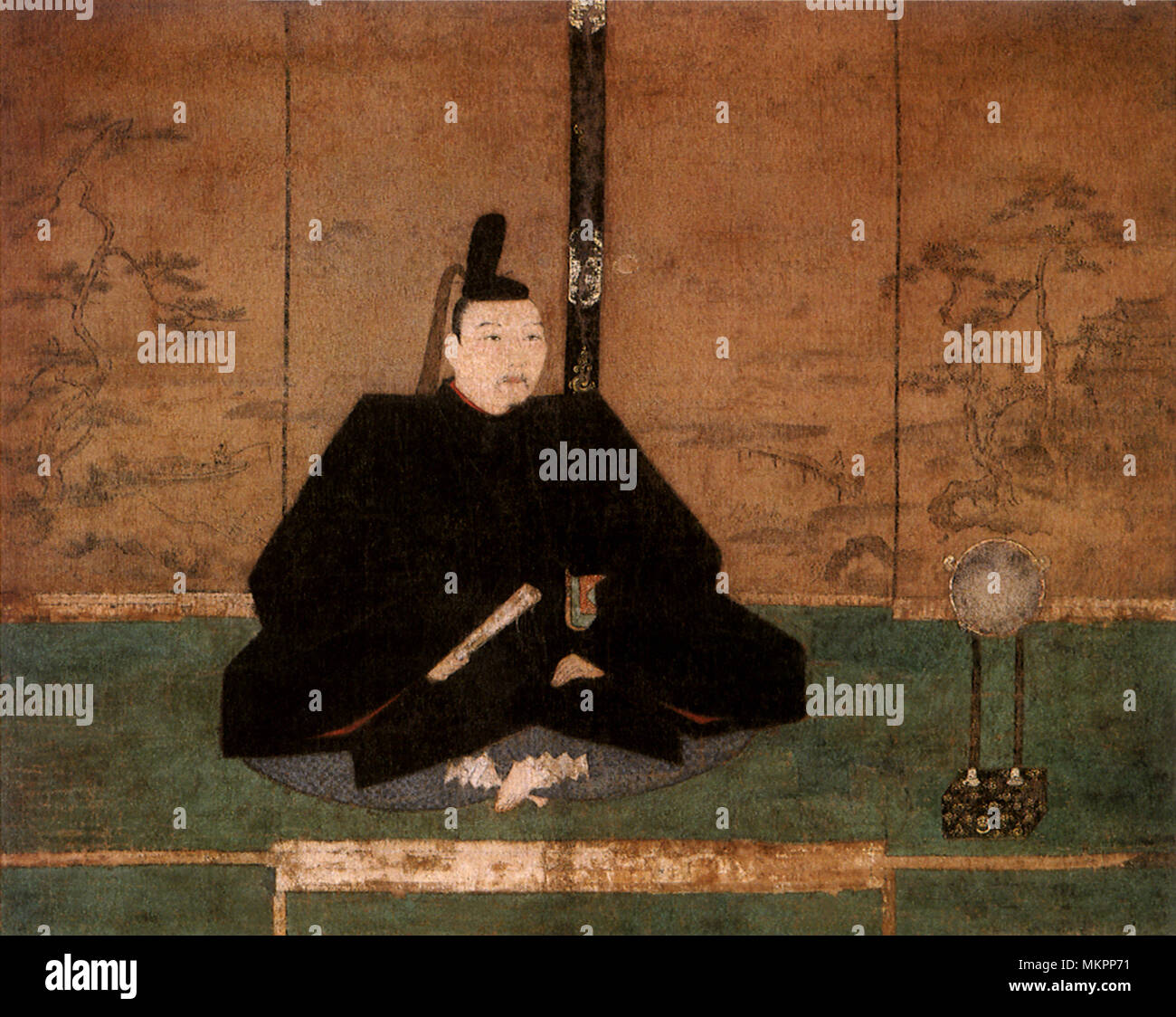
Ashikaga Yoshimasa, the eighth shogun of the Muromachi shogunate, presided over one of the most culturally vibrant yet politically disastrous eras in Japanese history. Ruling from 1449 to 1473, Yoshimasa is a dual figure of historical fascination: a weak and ineffectual military leader whose governance failures triggered the devastating Onin War, yet an extraordinary aesthetic visionary whose patronage birthed Higashiyama culture, shaping traditional Japanese arts like the tea ceremony, flower arranging, and minimalist interior design.
Introduction to Ashikaga Yoshimasa and Historical Context
Born in 1436 into the powerful Ashikaga warrior clan, Yoshimasa stepped into a volatile political landscape at a remarkably young age. The Muromachi shogunate, established by Ashikaga Takauji in 1336, was structurally decentralized, relying on a delicate balance of power between the central military government in Kyoto and regional military governors known as shugo. By the mid-15th century, this system was fraying. Factional disputes, economic instability, peasant uprisings (ikki), and famine plagued the capital and provinces alike.
When Yoshimasa took office as shogun in 1449, Japan was primed for structural collapse. Rather than engaging with the grinding demands of statecraft, tax policy, and samurai factionalism, Yoshimasa increasingly retreated into the world of arts, architecture, and philosophical introspection. While his political legacy is defined by the fragmentation of the state and the onset of the Sengoku period (Warring States period), his cultural legacy endures as the bedrock of traditional Japanese aesthetics. Understanding Yoshimasa requires examining both his catastrophic political failures and his peerless artistic contributions.
Early Life, Accession, and Political Background
Yoshimasa was the son of the sixth shogun, Ashikaga Yoshinori, whose authoritarian rule earned him many enemies and culminated in his assassination in 1441 during the Kakitsu Incident. Following a brief interregnum marked by the rule of his older brother, Ashikaga Yoshikatsu—who died young after falling from a horse—Yoshimasa was installed as shogun at the age of thirteen.
Because of his youth, governance initially fell to regents and powerful councilors. However, as Yoshimasa matured, he displayed little inclination toward the pragmatic compromises required to manage the rivalries of powerful shugo families, most notably the Hosokawa and the Yamana clans.
The Shogunal Succession Crisis
The central political crisis of Yoshimasa's tenure stemmed from the issue of succession. For many years, Yoshimasa and his wife, Hino Tomiko, had no male heir. Consequently, Yoshimasa persuaded his younger brother, Ashikaga Yoshimi, to leave a Buddhist monastery, return to secular life, and be named as the official heir to the shogunate.
Complications arose shortly thereafter when Hino Tomiko gave birth to a son, Ashikaga Yoshihisa, in 1465. Driven by maternal ambition and political calculation, Tomiko sought to secure the shogunate for her newborn son. This dynamic split the shogunal household and dovetailed dangerously with existing tensions between the major regional daimyo families, setting the stage for national conflict.
The Onin War: Prelude, Outbreak, and Devastation
The Onin War (1467–1477) was the cataclysmic conflict that destroyed Kyoto and shattered the authority of the Muromachi shogunate, plunging Japan into a century of civil war. Yoshimasa's indecisiveness and detachment were central catalysts for the disaster.
The Catalyst of Factionalism
The conflict pitted two of the most powerful military houses in the country against one another: the Hosokawa family, supporting Yoshimi, and the Yamana family, supporting the infant Yoshihisa. Yoshimasa largely abdicated his responsibility to arbitrate these disputes. Instead of using his authority to enforce a compromise, he waffled between factions, influenced by court favorites and his wife, Hino Tomiko, who funded both sides of the conflict at various points for financial and political leverage.
Destruction of the Capital
In 1467, open warfare broke out in the heart of Kyoto. Over the next decade, armies numbering in the tens of thousands fought street by street, burning temples, noble mansions, and commercial districts to the ground. Kyoto was reduced to smoldering ruins. Yoshimasa remained insulated within his residential compounds, occasionally moving locations to avoid the fighting, while continuing to commission poetry gatherings and artistic displays even as the city burned around him.
The Onin War marked a permanent shift in Japanese history. The shogunate lost its military supremacy and national taxation power, empowering regional warlords (sengoku daimyo) to carve out autonomous domains. Yoshimasa officially abdicated the shogunate in 1473 in favor of his son Yoshihisa, though real power had long since evaporated.
| Feature / Aspect | Political & Military Reality | Cultural & Artistic Impact |
|---|---|---|
| Primary Focus | Feudal administration, daimyo mediation, tax collection | Aesthetics, architecture, Zen philosophy, fine arts |
| Key Figures | Hosokawa Katsumoto, Yamana Sozen, Hino Tomiko | Zeami, Soami, Jikoan, Zen monks |
| Major Outcome | Outbreak of the Onin War and the Sengoku period | Birth of Higashiyama Culture and refined minimalism |
| Legacy | Viewed as a weak leader who lost central state control | Celebrated as a master patron of traditional Japanese arts |
Higashiyama Culture and Aesthetic Contributions
While Yoshimasa's political record is severely criticized, his cultural achievements remain monumental. Retiring to the eastern hills (Higashiyama) of Kyoto in the 1480s, Yoshimasa fostered an environment where court culture (kuge), samurai tastes (buke), and Zen Buddhist philosophy merged. This synthesis is known as Higashiyama Bunka (Higashiyama Culture), which stands in stark contrast to the extravagant, ostentatious Kitayama culture of his grandfather, Ashikaga Yoshimitsu (builder of the Golden Pavilion, Kinkaku-ji).
Higashiyama culture prioritized wabi-sabi—an aesthetic centered on asymmetry, simplicity, austerity, natural materials, and an appreciation of the passage of time and imperfection. Yoshimasa gathered a circle of refined artists, landscape gardeners, poets, and tea masters to realize this vision.
Key Artistic Developments Under Yoshimasa's Patronage
- The Japanese Tea Ceremony (Chanoyu): Transformed from a lavish aristocratic pastime into a meditative, disciplined ritual practiced in small, rustic huts.
- Flower Arranging (Ikebana): Evolution of structural arrangements into symbolic, minimalist compositions reflecting natural landscapes.
- Architecture and Interior Design: Invention of the shoin-zukuri architectural style, featuring sliding doors (fusuma), tatami mats, recessed alcoves (tokonoma), and staggered shelves (chigaidana).
- Landscape Gardening: Development of dry landscape gardens (karesansui), utilizing gravel, rocks, and moss to represent natural elements through abstract minimalism.
The Ginkaku-ji: The Silver Pavilion
The most enduring physical monument to Ashikaga Yoshimasa’s cultural legacy is Jisho-ji, universally known as Ginkaku-ji (The Silver Pavilion). Modeled after the Golden Pavilion built by his grandfather, Yoshimasa began construction on his retirement villa in 1482.
Despite its popular name, the main pavilion at Ginkaku-ji was never actually covered in silver leaf. While historical debates continue regarding whether Yoshimasa intended to coat the exterior in silver before running out of funds due to the economic ruin of the Onin War, or whether the name simply reflected the shimmering moonlight reflecting off its dark wood, the structure today remains a masterpiece of understated elegance.
- Ginkaku-ji Complex Layout Overview:
- Ginkaku (The Silver Pavilion) - Two-story rustic architectural template
- Togudo - Contains the Doshido, the oldest extant tea-ceremony study room
- Karesansui Gardens - Sand and stone meditative landscape features
- Ginshadan (Sea of Silver Sand) - Raked geometric gravel mounds
- Kogetsudai (Moon-Viewing Platform) - Conical sand sculpture
- Moss Garden - Shaded pathways integrated with natural hillside flora
The Togudo hall within the complex contains the Jonan-sai, a four-mat study room that is widely recognized as the archetype of modern Japanese residential interior design and the birthplace of the architectural style used for authentic tea houses. The integration of the interior space with the surrounding natural environment reflects the deep influence of Zen Buddhism on Yoshimasa's later life.
Comparison: Kitayama Culture vs. Higashiyama Culture
To fully appreciate Yoshimasa's cultural revolution, it is helpful to contrast the cultural epoch he inspired with that of his predecessor and grandfather, Ashikaga Yoshimitsu.
| Cultural Era | Reign / Period | Primary Aesthetic | Architectural Symbol | Core Influences |
|---|---|---|---|---|
| Kitayama Culture | Late 14th to early 15th Century | Opulence, luxury, syncretism, public display | Kinkaku-ji (Golden Pavilion) | Court aristocracy, continental Chinese influence, wealth |
| Higashiyama Culture | Late 15th Century | Austerity, simplicity, wabi-sabi, Zen minimalism | Ginkaku-ji (Silver Pavilion) | Zen Buddhism, rustic isolation, natural imperfection |
While Yoshimitsu sought to project imperial majesty and worldly power through glittering gold leaf and grand halls, Yoshimasa turned inward, seeking spiritual peace and artistic refinement amidst a collapsing world.
Later Years, Death, and Historical Assessment
In his final years, Yoshimasa took tonsure and became a Zen Buddhist monk, dedicating his time entirely to poetry, garden design, and the supervision of his artists. He passed away in 1490 at the age of fifty-four, leaving behind a nation profoundly altered by civil war.
Historians have long wrestled with this sharp dichotomy. From a political standpoint, Yoshimasa is frequently judged harshly. His inability to manage factions, his failure to secure a stable succession without sparking a civil war, and his detachment from governance led directly to the century of bloodshed that defined the Sengoku period.
Conversely, from a cultural standpoint, Japan would be entirely unrecognizable without him. The quintessential elements of traditional Japanese culture—the tea ceremony, flower arrangement, tatami-mat living spaces, rock gardens, and the appreciation of rustic simplicity (wabi-sabi)—were catalyzed, funded, and championed by Yoshimasa during his retreat in the eastern hills of Kyoto.
Frequently Asked Questions
Why is Ashikaga Yoshimasa famous?
Ashikaga Yoshimasa is famous for two contrasting reasons. Politically, his weak leadership and preoccupation with arts during a succession crisis precipitated the devastating Onin War (1467–1477), which plunged Japan into the Sengoku period. Culturally, he was a visionary patron who established Higashiyama culture, giving rise to traditional Japanese tea ceremonies, flower arranging, minimalist architecture, and Zen rock gardens.
Did Ginkaku-ji (The Silver Pavilion) ever actually have silver on it?
There is no definitive historical evidence proving that the pavilion was ever covered in silver leaf. While some scholars suggest Yoshimasa planned to plate it like his grandfather’s Golden Pavilion but ran out of funds due to the Onin War and economic turmoil, most historians believe the name "Silver Pavilion" arose during the Edo period as a poetic counterpart to the Golden Pavilion, referencing how moonlight reflects off its dark, weathered wood.
What was the Onin War, and what was Yoshimasa's role in it?
The Onin War was a civil war that lasted from 1467 to 1477, fought largely within Kyoto between rival samurai houses backed by powerful regional lords. Yoshimasa played a central role in its outbreak through his indecisiveness regarding the shogunal succession and his failure to mediate disputes between the Hosokawa and Yamana clans. Rather than stopping the conflict, he retreated into artistic pursuits while the capital burned.
What is Higashiyama culture?
Higashiyama culture refers to the artistic and aesthetic movement that flourished during Yoshimasa's retirement in the eastern hills of Kyoto in the late 15th century. It synthesized Zen Buddhism, court traditions, and samurai tastes, emphasizing wabi-sabi—the beauty of imperfection, simplicity, natural materials, and austere elegance.
How did Ashikaga Yoshimasa influence modern Japanese interior design?
Yoshimasa’s patronage led to the development of the shoin-zukuri architectural style and the classic tea house layout. Features common in traditional Japanese homes today—such as sliding partitions (fusuma), tatami straw mats, decorative alcoves (tokonoma), and staggered display shelves (chigaidana)—were standardized and refined during his era.
Conclusion and Next Actions
Ashikaga Yoshimasa remains one of history's most complex figures—a cautionary tale of political abdication paired with an inspired master of artistic curation. For those seeking to explore his legacy further, examining primary architectural sites in Kyoto, such as Ginkaku-ji and Daitoku-ji, provides tangible insight into the aesthetics that shaped modern Japanese identity. To deepen your understanding, study the evolution of Zen Buddhist philosophy in medieval Japan or research the structural dynamics of the Onin War and the rise of the Sengoku daimyo.