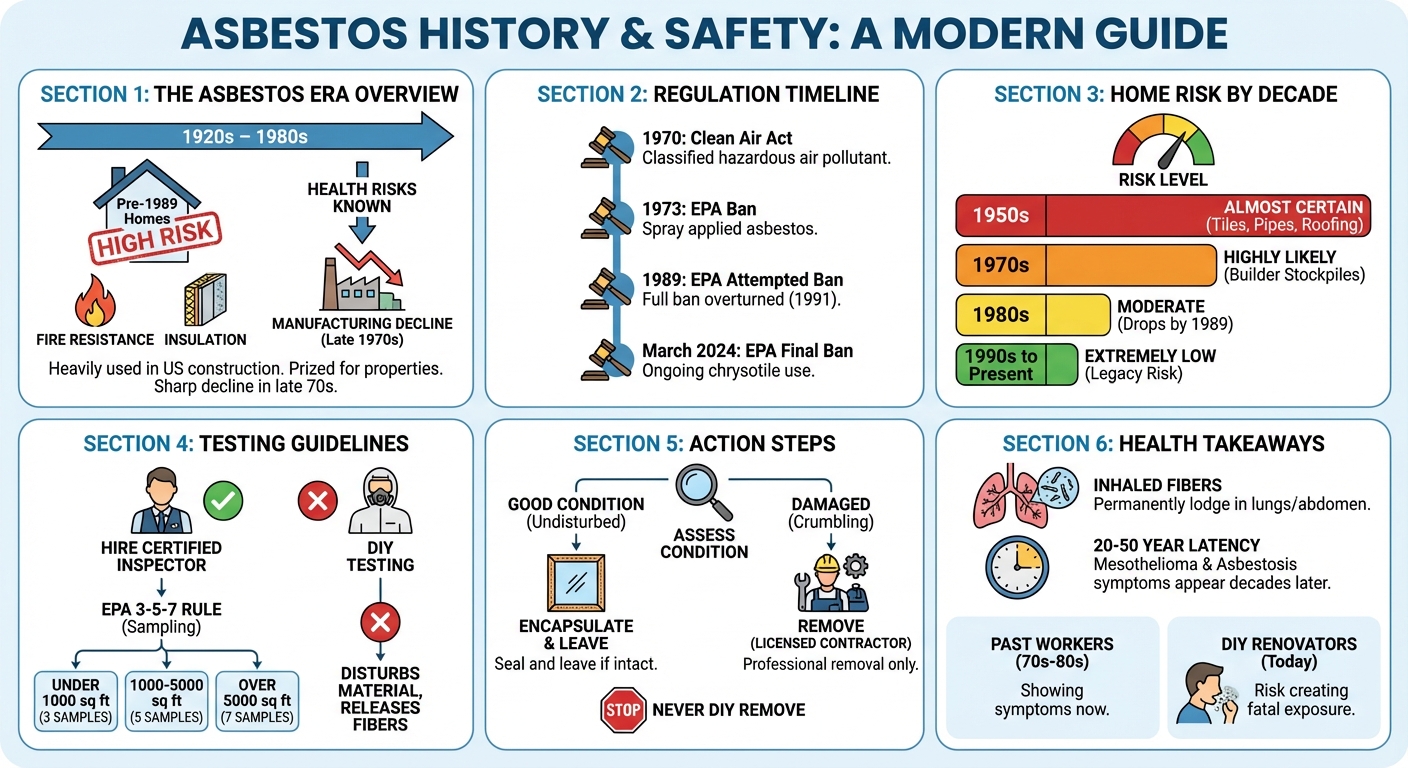
The commercial use of asbestos spans from the late 19th century through the late 20th century, peaking between the 1940s and 1970s. While industrial reliance began to decline in the 1980s due to stringent safety regulations and health findings, asbestos-containing materials remain present in millions of structures built before the 1990s, requiring ongoing vigilance during renovation or demolition.
The Era of Industrial Expansion and Asbestos Integration
The industrial application of asbestos grew rapidly because of its remarkable physical properties: it is heat-resistant, fireproof, chemically inert, and possess high tensile strength. During the mid-20th century, manufacturers identified these traits as ideal for a wide range of consumer and industrial goods. Between 1930 and 1980, asbestos was incorporated into thousands of building products, automotive parts, and consumer appliances.
In the post-World War II building boom, asbestos became a staple in the construction industry. It was inexpensive, abundant, and offered a simple solution for fireproofing steel frames, insulating steam pipes, and strengthening floor tiles. By the 1960s, its use was so ubiquitous that many building codes actually mandated the inclusion of asbestos in certain fireproofing applications. This period represents the "peak" years of use, during which the total volume of imported asbestos fiber reached its highest levels in many industrialized nations.
Identifying Asbestos Years of Use in Residential Construction
When evaluating a structure for potential asbestos-containing materials (ACMs), the age of the building is the most significant indicator of risk. Although regulations restricting asbestos began in the 1970s, it is a common misconception that use stopped immediately. Instead, the phase-out process was incremental.
- Pre-1950s: Asbestos was primarily used in industrial applications, pipe insulation, and fireproofing for large-scale buildings.
- 1950s to 1970s: This is the high-risk period for residential homes. Asbestos-cement siding, vinyl-asbestos floor tiles, attic insulation (such as vermiculite), and acoustic ceiling textures (often called "popcorn ceilings") were standard.
- 1970s to 1980s: Regulatory bodies, including the Environmental Protection Agency (EPA) in the United States, began issuing bans on specific products, such as spray-on insulation and fireproofing materials.
- 1990s and Beyond: While many countries implemented broader bans, some commercial and industrial products continued to utilize asbestos under strict manufacturing controls. In 2026, any building constructed before 1990 should be treated as potentially containing asbestos until proven otherwise by a certified inspector.
Typical Asbestos-Containing Products by Construction Decade
| Era of Construction | Common Asbestos-Containing Materials |
|---|---|
| 1920s–1940s | Pipe insulation, steam boiler gaskets, transite cement siding. |
| 1950s–1960s | Floor tiles, mastic adhesives, acoustic ceiling textures, roof shingles. |
| 1970s | Vinyl flooring, decorative plaster, wallboard joint compounds, cement piping. |
| 1980s | Specialized gaskets, brake linings, clutch facings, remaining legacy materials. |
The Regulatory Shift and the Decline of Usage
The transition away from asbestos was driven by the medical realization that inhaling microscopic asbestos fibers leads to severe respiratory illnesses, including asbestosis, lung cancer, and mesothelioma. Because these diseases often manifest decades after the initial exposure, the danger was not fully recognized by the general public until long after the materials were installed.
In the United States, the Clean Air Act of 1970 provided the EPA with the authority to regulate hazardous air pollutants. Subsequent actions included the 1973 ban on spray-on asbestos for fireproofing and the 1975 ban on specific insulation products. By 1989, the EPA attempted a more comprehensive ban on almost all asbestos-containing products; however, that ruling was largely overturned in 1991, leaving a complex landscape of partial bans and industry-specific regulations that persist in various capacities today.
Safety Protocols for Handling Legacy Materials
If you are a homeowner or a contractor working on a structure built during the peak asbestos years, your priority must be identifying the presence of materials before disturbing them. Asbestos is generally considered non-hazardous when left intact (non-friable). The danger occurs when materials are cut, sanded, crushed, or demolished, which releases fibers into the air.
Assessment and Verification Steps
- Professional Inspection: Always hire an EPA-certified asbestos inspector. They possess the necessary equipment to safely take physical samples of suspect materials.
- Laboratory Testing: Samples must be analyzed by a laboratory accredited under the National Voluntary Laboratory Accreditation Program (NVLAP). Never rely on visual identification; many modern non-asbestos materials mimic the look of older asbestos products.
- Hazard Assessment: An inspector will provide a report identifying if the material is friable (easily crumbled) or non-friable. Friable materials pose a higher immediate risk.
- Mitigation: If asbestos is confirmed, you must decide between encapsulation (sealing the material) or abatement (professional removal). For most home renovation projects, abatement should be performed by a licensed professional abatement contractor, not a general handyman.
Practical Considerations for Property Owners
For those managing properties from the mid-20th century, proactive management is superior to reactive emergency response. Maintaining an "asbestos inventory" for your property can assist in future planning and prevent accidental exposure during routine maintenance.
- Document Locations: Clearly label or map where known ACMs exist.
- Prevent Damage: Avoid drilling into, cutting, or sanding surfaces like old ceiling tiles or floor tiles.
- Maintenance Awareness: Inform all plumbers, electricians, and HVAC technicians that the building is of an age that may contain asbestos, particularly before they work on insulation or older mechanical systems.
- Legal Compliance: In many jurisdictions, property owners are legally required to disclose the presence of asbestos to prospective buyers or tenants. Failure to do so can result in significant legal and financial liabilities.
Frequently Asked Questions
Is it safe to leave asbestos in my home if it is in good condition?
Yes. Generally, if the material is in good condition and left undisturbed, it does not pose a health risk. Asbestos only becomes a danger when it is damaged or deteriorated, which causes fibers to release into the air. If you choose to leave it in place, you should monitor it regularly for signs of wear, such as cracking or peeling.
What are the most common places to find asbestos in a 1960s house?
In a house from the 1960s, you should look for asbestos in vinyl floor tiles (and the mastic glue beneath them), "popcorn" acoustic ceiling texture, pipe insulation, exterior cement siding, and potentially in the vermiculite insulation found in some attics.
Can I remove asbestos materials myself?
It is strongly discouraged to remove asbestos-containing materials yourself. Asbestos abatement requires specialized respiratory protection, negative pressure containment areas, and specific disposal protocols to prevent environmental contamination. DIY removal often leads to accidental fiber release, which can create a much higher health risk for everyone in the building.
Does the age of the house guarantee that asbestos is present?
No. While older homes are much more likely to contain asbestos, its use was not universal. Builders had choices between different materials, and some regions phased out asbestos-containing products earlier than others. Testing is the only way to confirm its presence.
What happens if I find asbestos during a renovation project?
If you discover material that you suspect contains asbestos during a renovation, stop work immediately in that area. Seal off the space to prevent dust migration, and contact a licensed asbestos abatement contractor to assess the situation and plan the removal or encapsulation.
Professional Recommendation
If your property was constructed prior to 1990, treat all suspicious building materials as asbestos-containing. Before starting any renovation project, including simple repairs or updates, obtain a professional assessment from a certified consultant. Protecting the air quality of your home is a long-term investment in your health and the future value of the property. For detailed regulatory information specific to your region, consult the website of your national environmental protection agency or local health department.
Disclaimer: This article is for informational purposes only and does not constitute professional medical, legal, or environmental advice. Asbestos exposure can lead to serious health complications; always consult with certified professionals for identification and handling.