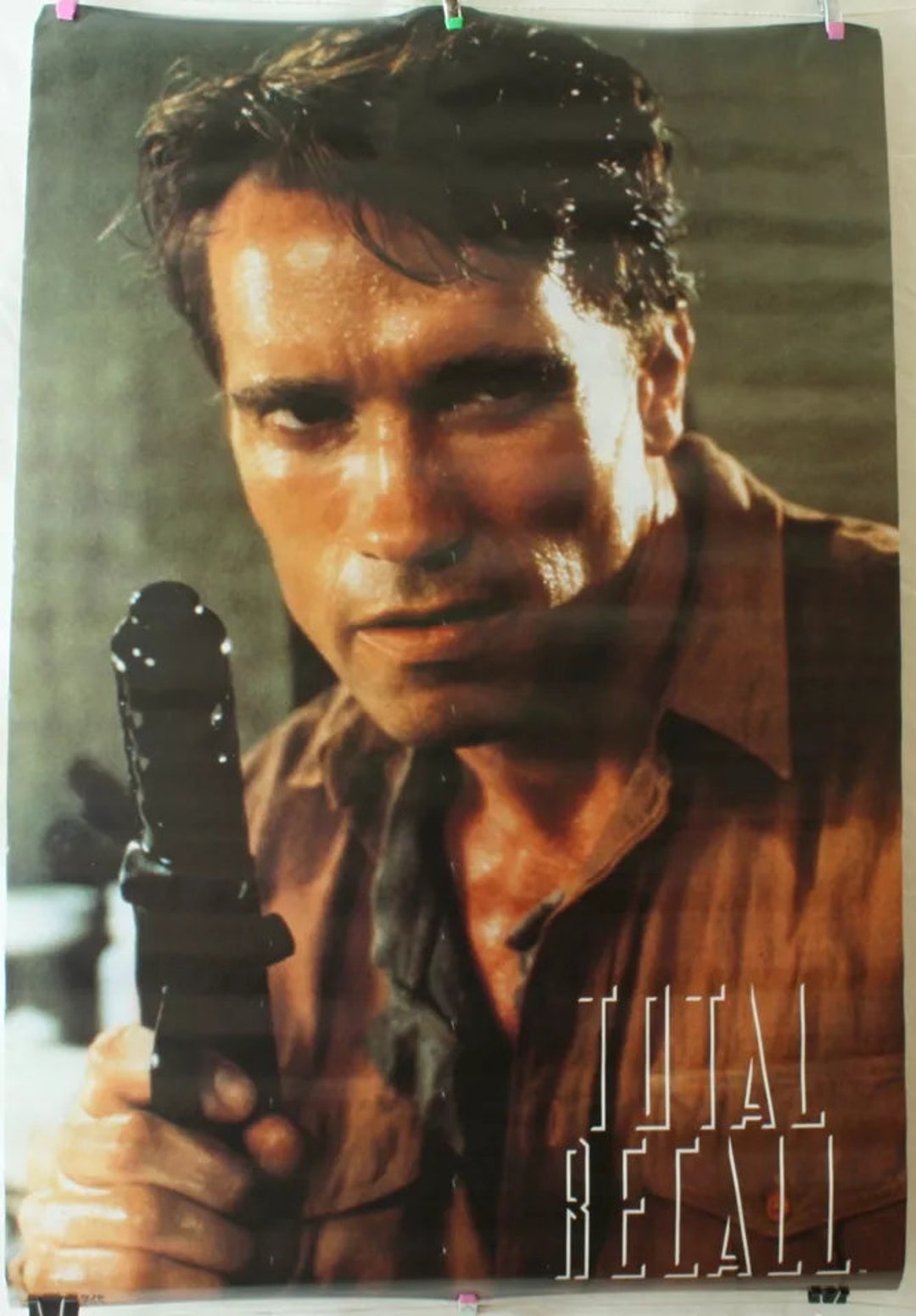
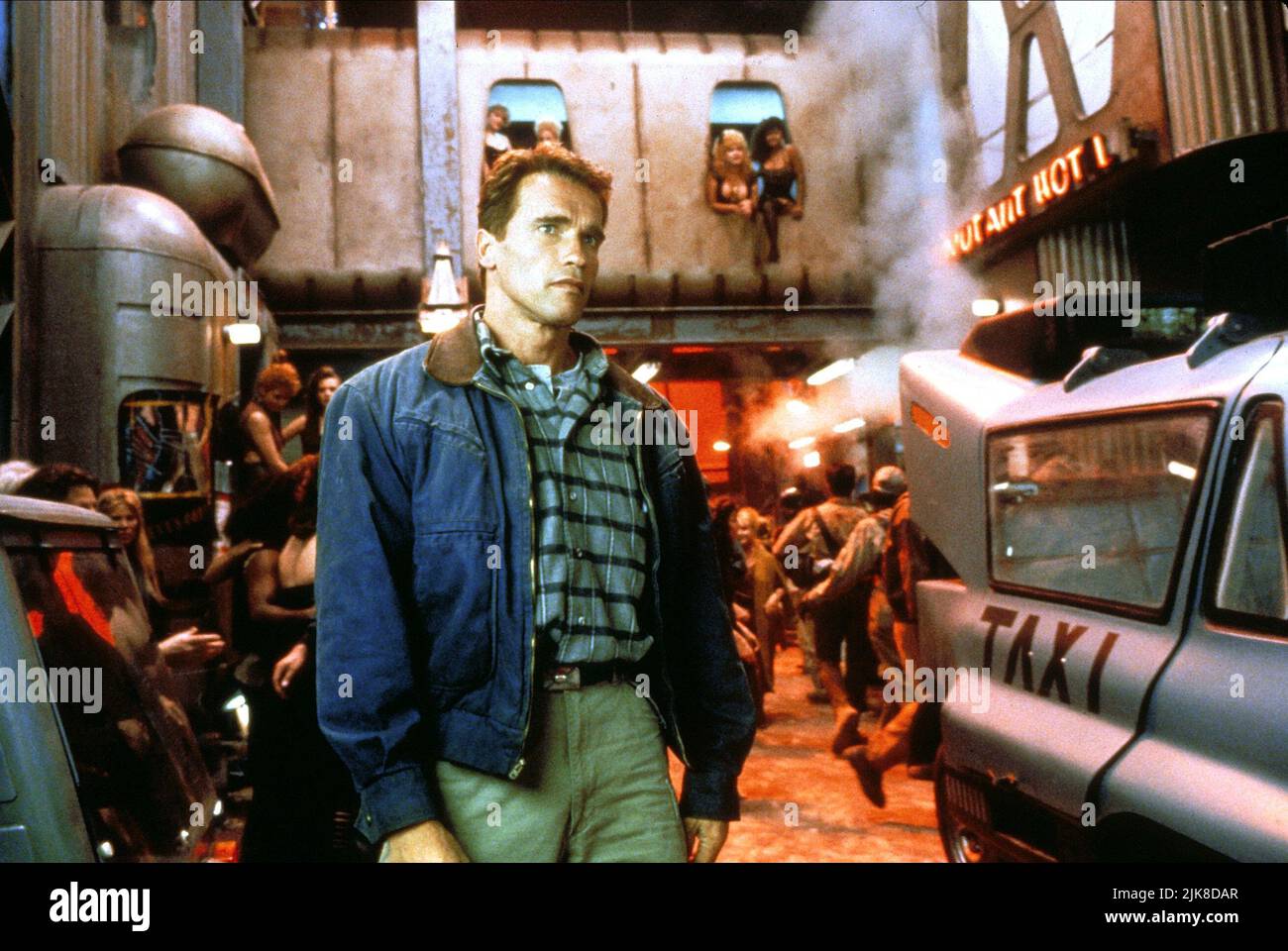
The "Arnold Schwarzenegger recall movie" refers to the 1990 science fiction masterpiece Total Recall, directed by Paul Verhoeven. Based on Philip K. Dick's short story "We Can Remember It for You Wholesale," the film stars Schwarzenegger as Douglas Quaid, a construction worker who discovers his entire memory might be a false implant.
The Origins and Development of Total Recall
To understand the impact of the Arnold Schwarzenegger recall movie, one must look at its arduous journey through "development hell." The project originated in the mid-1970s when writers Ronald Shusett and Dan O'Bannon (who later wrote Alien) bought the rights to Philip K. Dick's 1966 short story. For over a decade, the project bounced between studios, including Disney and De Laurentiis Entertainment Group (DEG).
Initially, the film was envisioned as a much smaller, more cerebral piece. Various actors were considered for the lead, including Patrick Swayze and Richard Dreyfuss. However, when DEG went bankrupt, Schwarzenegger—who had long been interested in the script—persuaded Carolco Pictures to buy the rights for $3 million. Schwarzenegger didn't just want to star in the film; he wanted creative control over the director. He specifically recruited Paul Verhoeven, whose work on RoboCop (1987) proved he could handle the visceral violence and satirical undertones required for the story.
By the time production began in 1989, Total Recall had become one of the most expensive films ever made, with a budget estimated between $50 million and $60 million. This investment was evident in every frame, from the massive sets built in Mexico City to the groundbreaking special effects that would eventually win an Academy Award.
Plot Analysis: Memory, Identity, and Mars
At its core, Total Recall is a psychological thriller wrapped in a high-octane action shell. Set in the year 2084, Douglas Quaid is a man haunted by recurring dreams of Mars, despite never having been there. His wife, Lori (played by Sharon Stone in a breakout role), dismisses these dreams as mere fantasies.
Driven by a desire for adventure, Quaid visits "Rekall," a company that sells "memory implants" of vacations. He opts for a "Secret Agent" package on Mars. However, during the procedure, something goes wrong—or perhaps something goes exactly right. Quaid suffers a violent seizure, claiming that people are trying to kill him and that his memories have already been erased.
The narrative brilliance of the film lies in its ambiguity. As Quaid flees from assassins (including his own "wife") and travels to a colonized Mars to join a mutant rebellion, the audience is left to wonder: Is this actually happening, or is Quaid still strapped into the chair at Rekall, experiencing a "schizoid embolism" as the technicians feared?
The Dual Narrative
- The Reality Path: Quaid was a high-level operative named Hauser who worked for the ruthless Martian dictator Vilos Cohaagen. He chose to have his memory wiped to infiltrate the rebellion but ultimately chose his new Quaid identity over his old Hauser persona.
- The Dream Path: Everything after the Rekall procedure is a hallucination. The "blue sky" ending, the alien artifacts, and the beautiful woman (Melina) are all elements Quaid requested during his initial consultation at the Rekall office.
Verhoeven carefully sprinkles clues throughout the film to support both interpretations, a technique that has kept fans debating the "Arnold Schwarzenegger recall movie" for over three decades.
The Influence of Philip K. Dick
While the film takes significant liberties with the original source material, "We Can Remember It for You Wholesale," it captures the quintessential "Dickian" theme: the fragility of reality. Philip K. Dick was obsessed with the idea that our perceptions are unreliable and that corporate or governmental entities could manipulate our very sense of self.
In the 1990 film, this is manifested through the Rekall corporation. The movie suggests a future where even our most private thoughts and histories are commodities that can be bought, sold, or erased. This theme has only become more relevant as we approach the mid-2020s, with debates surrounding neurotechnology, digital footprints, and the "metaverse" echoing the anxieties Verhoeven and Schwarzenegger portrayed on screen.
Practical Effects and Visual Innovation
Before the total dominance of Computer-Generated Imagery (CGI), Total Recall represented the pinnacle of practical filmmaking. The film employed a massive team of artists, led by special effects legend Rob Bottin (known for his work on The Thing).
Landmark Visual Moments
- The "Fat Lady" Mask: One of the most iconic scenes involves Quaid disguised as a middle-aged woman to sneak through Martian customs. The animatronic mask, which splits open in several layers to reveal Schwarzenegger inside, remains a marvel of mechanical engineering.
- The X-Ray Scanner: The sequence where Quaid runs through a subway X-ray scanner, showing his skeleton in real-time, was a pioneer in using digital technology to augment practical photography.
- The Mutant Makeup: From the three-breasted woman to Kuato (the psychic rebel leader growing out of a man's chest), the creature effects were disturbingly realistic. Kuato, in particular, was a sophisticated puppet that required several operators to sync its movements with the actor’s speech.
- Miniatures: The Martian landscapes and the massive "Terraforming" machine were created using intricate miniatures and motion-control photography, giving the world a physical weight that many modern CGI-heavy films lack.
In 2026, looking back at these effects, there is a tactile quality to the film that maintains its immersion. The "Total Recall 4K" restorations released in recent years highlight the incredible detail of the sets and the vibrant, almost comic-book-like color palette of the Martian colony.
Comparing the Schwarzenegger Original and the 2012 Remake
In 2012, Sony Pictures released a remake of Total Recall starring Colin Farrell and directed by Len Wiseman. While the remake attempted to ground the story in a more "realistic" visual style, it failed to capture the cultural zeitgeist in the same way the Arnold Schwarzenegger recall movie did.
| Feature | Total Recall (1990) | Total Recall (2012) |
|---|---|---|
| Lead Actor | Arnold Schwarzenegger | Colin Farrell |
| Director | Paul Verhoeven | Len Wiseman |
| Setting | Earth and Mars | The United Federation of Britain and The Colony (Earth-bound) |
| Primary Theme | Psychological ambiguity/Satire | High-tech corporate conspiracy |
| Visual Style | Practical effects, bold colors | Heavy CGI, desaturated "gritty" look |
| Antagonist | Vilos Cohaagen (Ronny Cox) | Chancellor Cohaagen (Bryan Cranston) |
| Rotten Tomatoes | 82% (Certified Fresh) | 31% (Rotten) |
The most significant difference lies in the setting. The 2012 version removed the Mars element entirely, keeping the action on a futuristic Earth. For many fans, the absence of the Martian mutants and the alien "Turbinium" reactor removed the sense of wonder and weirdness that defined Schwarzenegger’s version. Schwarzenegger’s physicality and "larger-than-life" presence also fit the absurd nature of the plot far better than Farrell's more grounded performance.
The Cultural Legacy and 2026 Status
As of 2026, Total Recall remains a staple of the science fiction genre. It is frequently cited by filmmakers like Christopher Nolan and Denis Villeneuve as a milestone in high-concept action cinema. The film’s dialogue—loaded with Schwarzenegger’s signature one-liners like "Consider that a divorce!" and "See you at the party, Richter!"—has become part of the pop-culture lexicon.
The film has also seen a resurgence in academic circles, where it is studied for its critique of colonialism (the exploitation of Martian mutants for resources) and its prophetic vision of intrusive technology. In the current landscape of 2026, where "Deepfakes" and AI-generated content have made us question the validity of visual evidence, the core question of Total Recall—"How do you know what's real?"—is more pressing than ever.
Availability and Viewing Options
For those looking to watch or re-watch the Arnold Schwarzenegger recall movie in 2026, several high-quality options exist:
- 4K Ultra HD Blu-ray: The 30th-anniversary restoration (and subsequent 35th-anniversary updates) offers the best visual fidelity, showcasing the practical effects in stunning detail.
- Digital Streaming: The film is widely available on major platforms like Amazon Prime, Apple TV, and specialized sci-fi streaming services.
- Theatrical Re-releases: Independent cinemas often include Total Recall in "90s Retro" or "Paul Verhoeven" marathons due to its enduring popularity.
Frequently Asked Questions
Did Arnold Schwarzenegger actually go to Mars in the movie?
This is the film’s central mystery. In the context of the story's "Reality" path, yes, Quaid travels to Mars, joins the rebellion, and saves the planet by activating an alien atmosphere generator. However, the film provides several clues—such as the "Blue Sky" ending being described by a Rekall employee early in the film—suggesting that the entire Martian adventure is a hallucination triggered by the Rekall machine.
Who directed the Arnold Schwarzenegger recall movie?
The movie was directed by Paul Verhoeven. Verhoeven is known for his unique style that blends extreme violence with sharp social satire. His other major English-language works include RoboCop, Basic Instinct, and Starship Troopers.
Is Total Recall based on a book?
It is based on the short story "We Can Remember It for You Wholesale" by Philip K. Dick. While the story shares the initial premise of a man wanting to buy memories of Mars and discovering he was an actual spy, the film significantly expands the plot, particularly the Martian revolution and the alien technology.
Why is the movie called Total Recall?
The title refers to the "total" memory restoration that Quaid undergoes. It also refers to the name of the company, Rekall, which promises to provide customers with the "total" experience of memories they never actually had.
What happened to the planned sequel to Total Recall?
A sequel based on another Philip K. Dick story, The Minority Report, was originally planned to star Schwarzenegger. However, the project evolved over time, eventually losing its connection to Total Recall and becoming the standalone 2002 film Minority Report directed by Steven Spielberg and starring Tom Cruise.
Final Recommendation
If you are a fan of science fiction, action, or the career of Arnold Schwarzenegger, Total Recall (1990) is essential viewing. Unlike many action films from the early 90s that rely on dated tropes, Verhoeven’s masterpiece remains fresh due to its complex narrative structure and its reliance on incredible practical effects that still hold up in 2026. For the best experience, seek out the 4K HDR restoration, which preserves the original film grain while making the vibrant Martian landscapes pop. Whether you view it as a straightforward action flick or a deep dive into the philosophy of the mind, it remains the gold standard of the "Arnold Schwarzenegger recall movie."