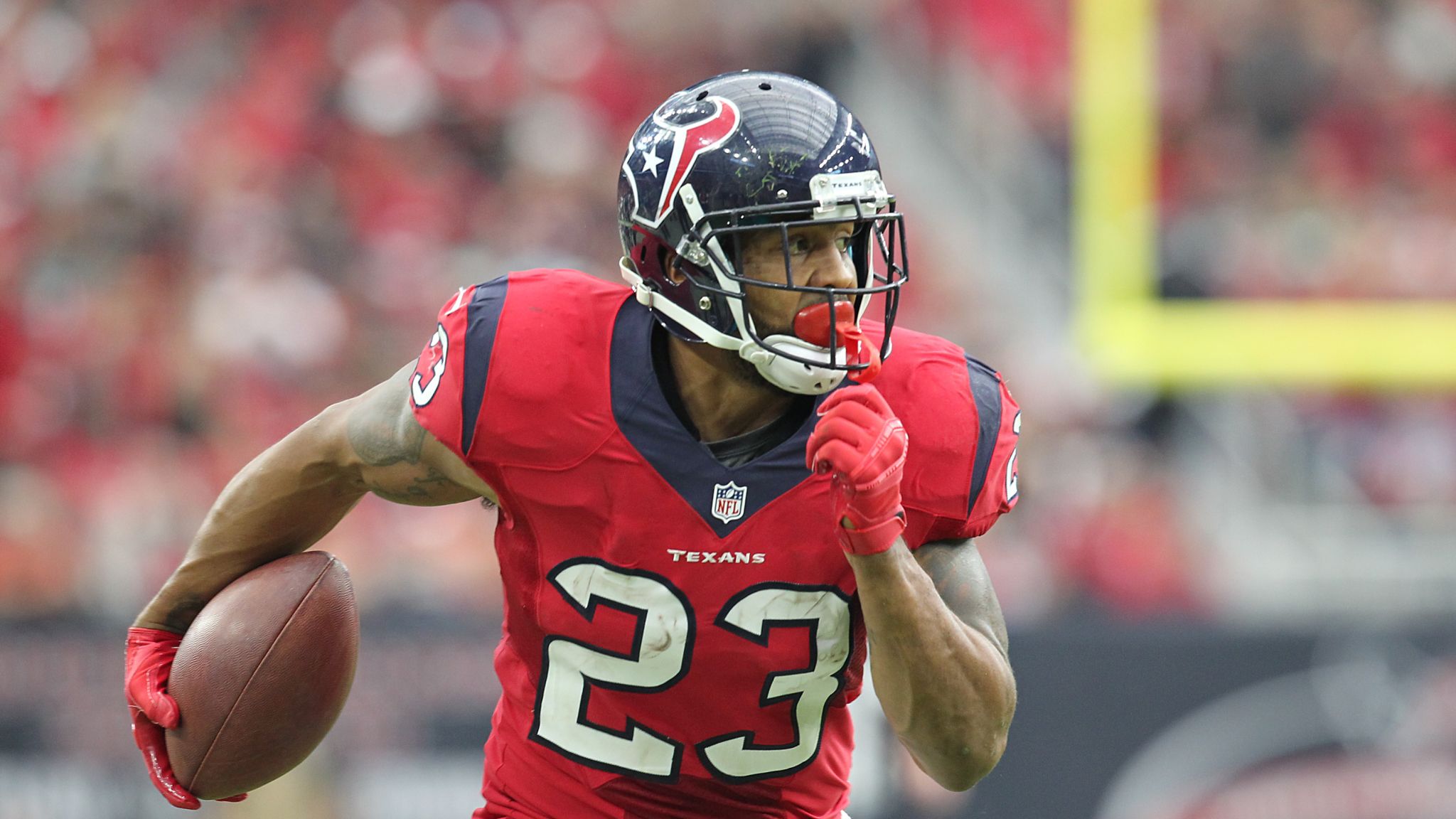
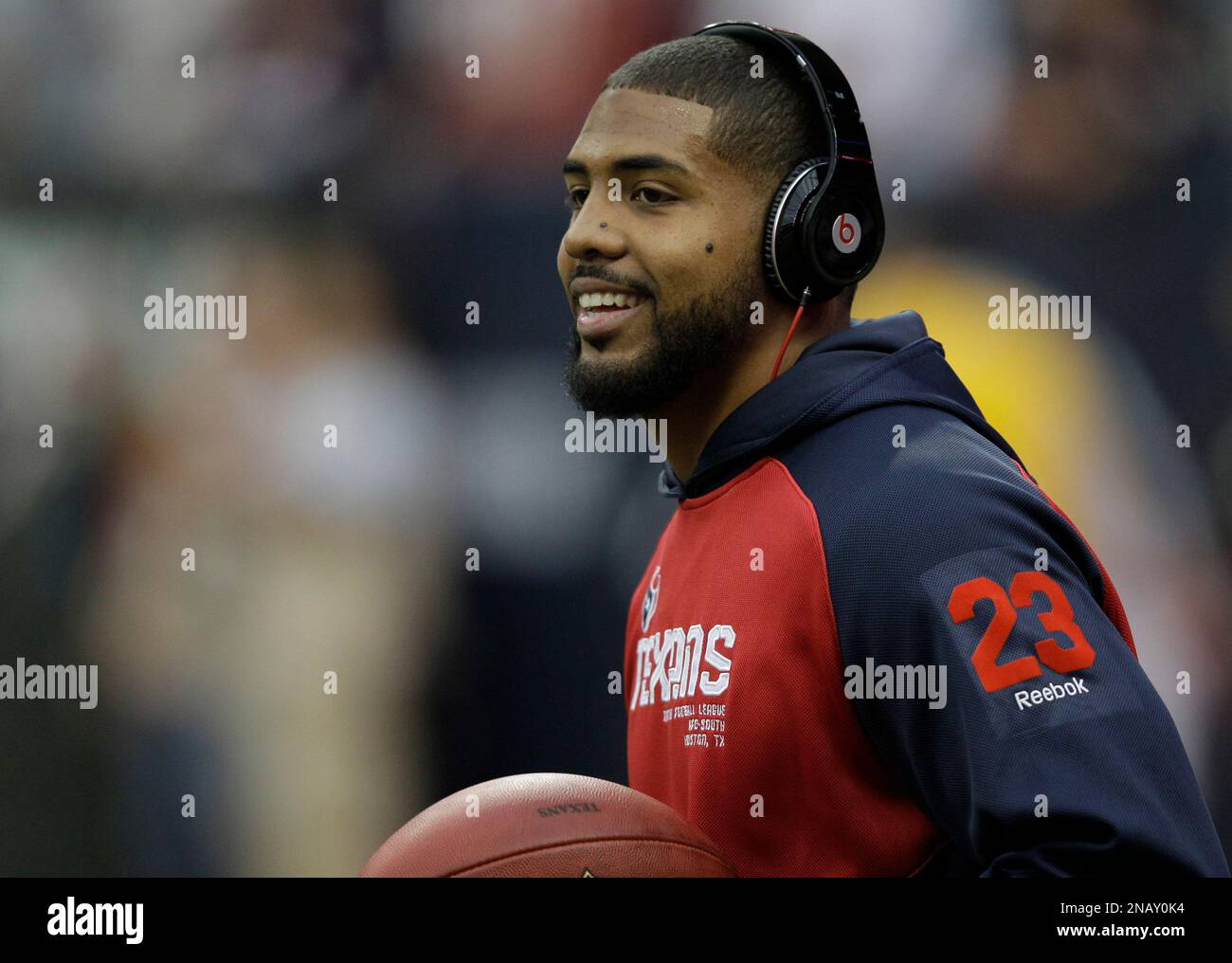
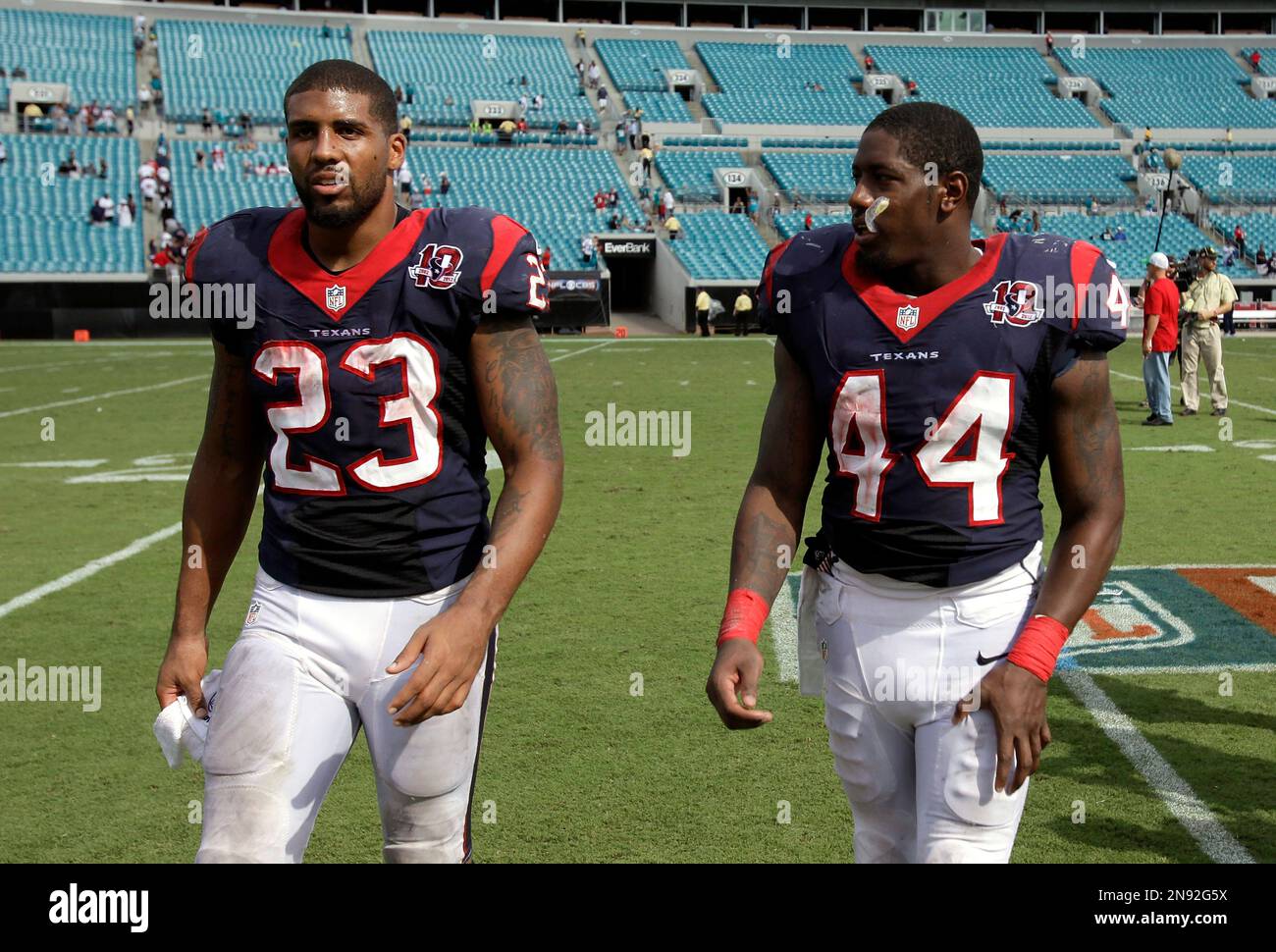
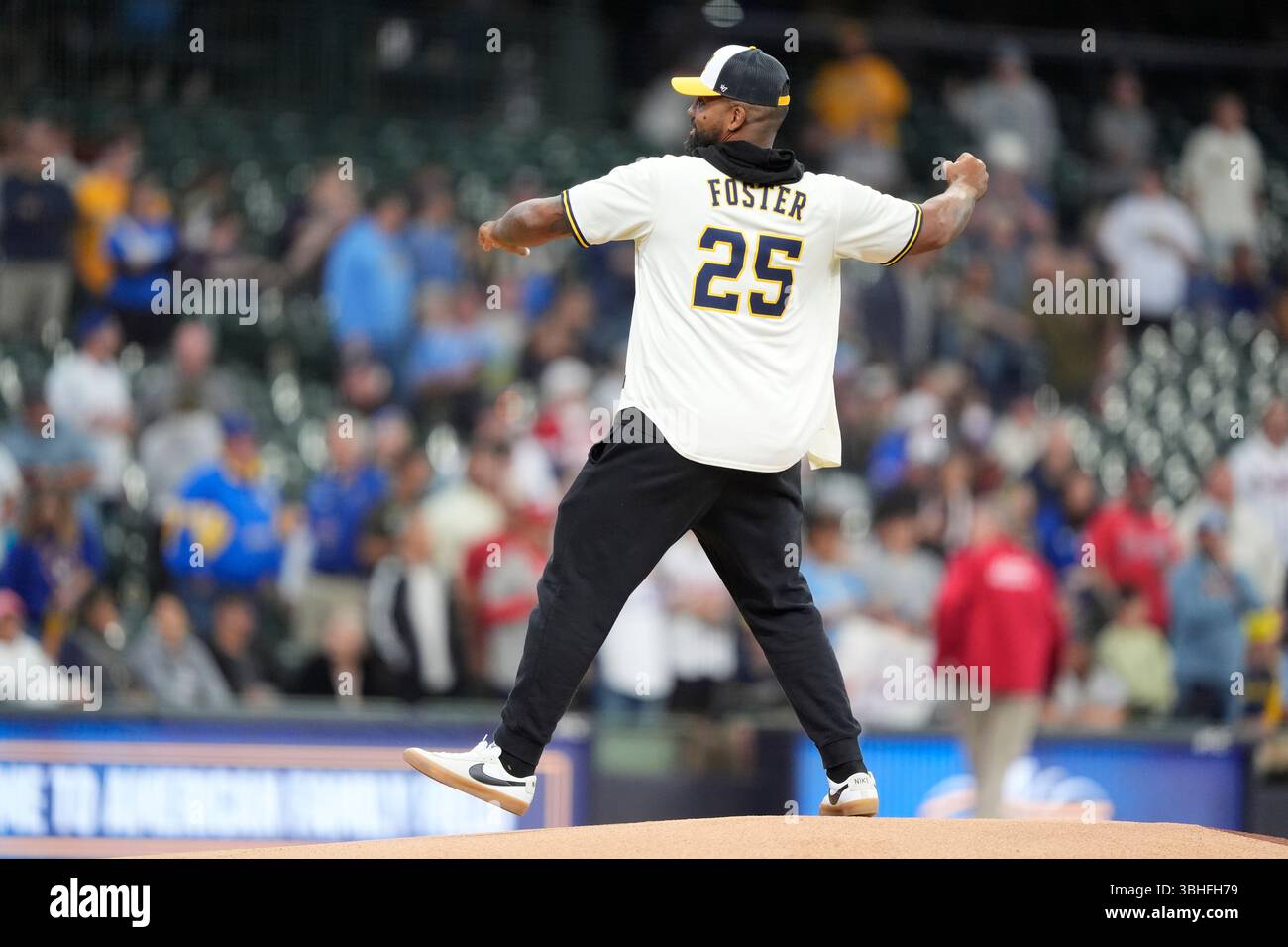
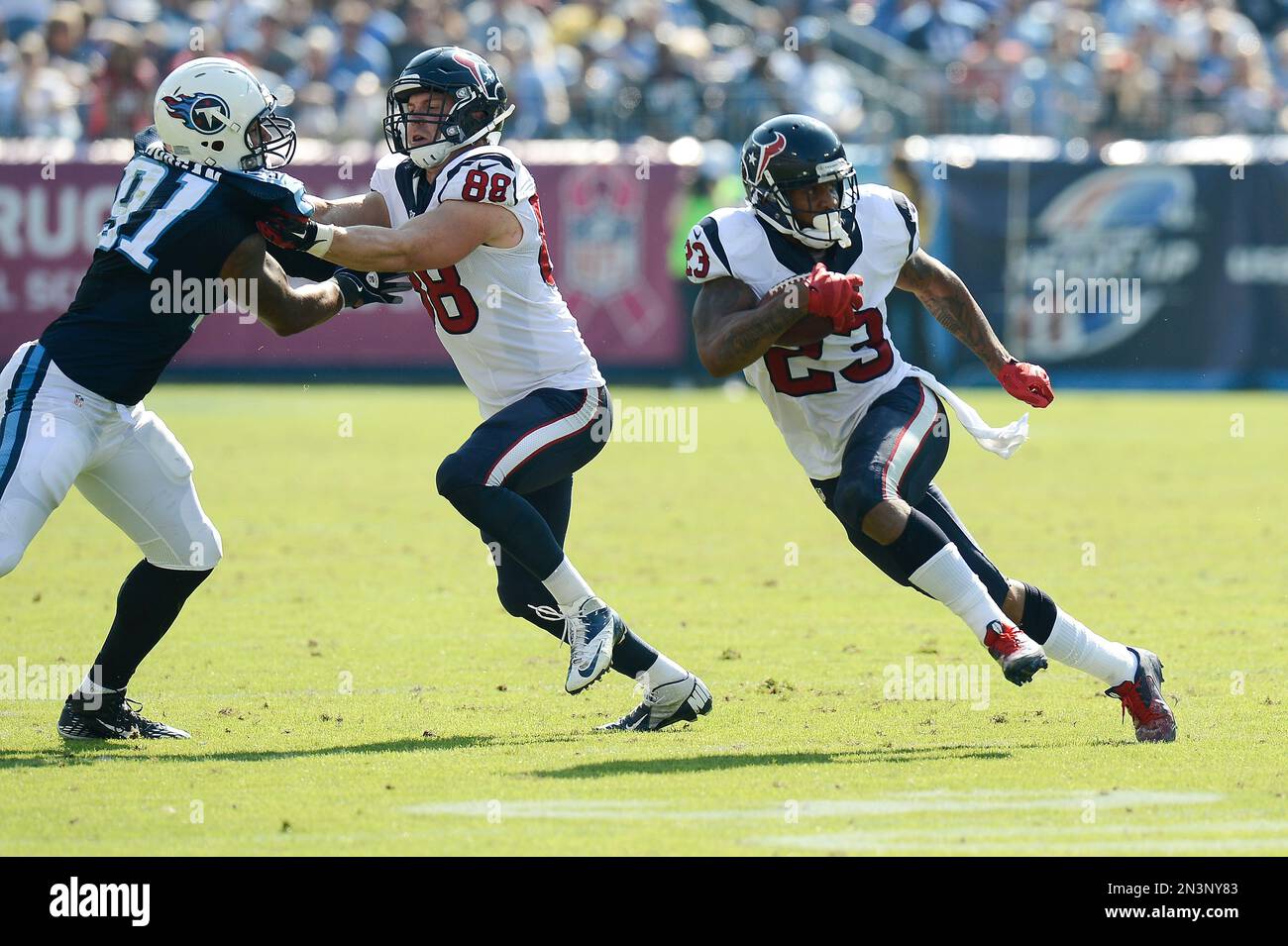
Arian Foster carved out one of the most remarkable and improbable careers in modern NFL history, rising from an undrafted free agent out of the University of Tennessee to become a dominant, four-time Pro Bowl running back and the offensive centerpiece of the Houston Texans. Renowned for his exceptional patience, zone-scheme vision, and elite pass-catching ability, Foster redefined the physical demands and stylistic grace of the position during his prime years in the 2010s.
The Undrafted Origin and Rise to Prominence
The narrative of Arian Foster’s professional football journey is a testament to perseverance, patience, and eventual alignment with a tactical system that maximized his unique athletic traits. Born on August 24, 1986, in Albuquerque, New Mexico, Foster played his college football at the University of Tennessee. While he showed flashes of brilliance with the Volunteers, inconsistent playing time, fumbling issues, and a lack of blazing straight-line speed caused his draft stock to plummet. When the 2009 NFL Draft concluded, Foster had heard his name called by zero franchises.
Undeterred, Foster signed with the Houston Texans as an undrafted free agent. His rookie year was spent mostly on the practice squad and operating as a depth piece, where he absorbed the nuances of the National Football League and refined his understanding of blocking schemes. However, the foundational turning point of his career arrived late in the 2009 season and carried directly into the 2010 training camp. Under head coach Gary Kubiak and offensive coordinator Kyle Shanahan, the Texans utilized a zone-blocking scheme. This specific offensive philosophy did not require a running back to simply hit a pre-designated hole with brute force; instead, it demanded elite vision, patience behind the line of scrimmage, and the sudden decisiveness to exploit a cutback lane once the defense over-pursued.
Foster possessed these exact mental and physical traits in abundance. In Week 1 of the 2010 NFL season against the Indianapolis Colts, Foster announced his arrival to the league in spectacular fashion, rushing for 231 yards and three touchdowns. That performance was not an anomaly; it was the launching pad for a historic breakout campaign. Foster finished the 2010 regular season leading the NFL in rushing yards with 1,616, adding another 604 receiving yards and totaling 18 touchdowns from scrimmage. He earned his first Pro Bowl selection and First-Team All-Pro honors, instantly transitioning from an anonymous roster bubble player to one of the most feared offensive weapons in professional football.
Defining Era with the Houston Texans
Following his stunning 2010 breakout, Arian Foster established himself as the undisputed offensive engine of the Houston Texans franchise. Over the next several seasons, he delivered a level of production that placed him in the upper echelon of NFL running backs, characterized by high-volume usage as both a runner and a receiver out of the backfield.
In 2011, Foster missed the first three games due to a hamstring injury, yet he still managed to rush for 1,224 yards and 10 touchdowns while securing 61 receptions for 617 yards and two scores. His stellar play helped guide the Texans to their first-ever playoff appearance and victory in franchise history. His postseason debut was legendary; he gashed the Cincinnati Bengals for 153 rushing yards and two touchdowns, setting a tone for Houston's burgeoning playoff identity.
The pinnacle of Foster's individual statistics occurred during the 2012 NFL season. He played in all 16 games and carried the offensive load with an astounding 351 rushing attempts, translating to 1,424 yards and a league-leading 15 rushing touchdowns. Furthermore, he remained a premier weapon in the passing game, catching 40 passes for 217 yards. This dominant multi-dimensional output earned him his third consecutive Pro Bowl nod.
| Season | Team | Rushing Attempts | Rushing Yards | Yards Per Carry | Rushing Touchdowns | Receptions | Receiving Yards | Receiving Touchdowns |
|---|---|---|---|---|---|---|---|---|
| 2009 | Houston Texans | 54 | 257 | 4.8 | 3 | 7 | 81 | 0 |
| 2010 | Houston Texans | 327 | 1,616 | 4.9 | 16 | 66 | 604 | 2 |
| 2011 | Houston Texans | 278 | 1,224 | 4.4 | 10 | 61 | 617 | 2 |
| 2012 | Houston Texans | 351 | 1,424 | 4.1 | 15 | 40 | 217 | 0 |
| 2013 | Houston Texans | 121 | 542 | 4.5 | 2 | 22 | 185 | 1 |
| 2014 | Houston Texans | 260 | 1,246 | 4.8 | 8 | 38 | 327 | 5 |
| 2015 | Houston Texans | 63 | 163 | 2.6 | 1 | 22 | 227 | 2 |
| 2016 | Miami Dolphins | 22 | 55 | 2.5 | 0 | 3 | 22 | 0 |
Throughout this dominant four-year window from 2010 to 2014, Foster was heavily utilized by coach Gary Kubiak and later Bill O'Brien. His unique running style mesmerized fans and baffled linebackers. While many running backs relied on explosive acceleration, Foster moved with an almost hypnotic fluidity. He would decelerate behind his pulling guards, allow the blocking blocks to develop in real-time, and then explode through the smallest crease with sudden burst. This methodical pacing earned him a reputation as one of the most intellectual runners of his era.
Playing Style, Scheme Fit, and Technical Mastery
Arian Foster’s success cannot be properly understood without examining the specific mechanics of the zone-blocking scheme and how his physical attributes aligned with it. Traditional gap-scheme running relies on pulling linemen to clear a pre-determined path through a specific gap. In contrast, the zone scheme requires offensive linemen to block the defender in their immediate zone, creating a horizontal flow across the line of scrimmage.
Foster mastered this system by utilizing the "read" step. Instead of committing blindly to a hole, he would press the line of scrimmage horizontally, forcing linebackers to flow laterally to maintain their gap integrity. The moment a defender over-committed or a defensive tackle was sealed off by a guard, Foster planted his foot and cut vertically upfield. This required supreme lateral agility, exceptional body control, and immense trust in his offensive line.
Beyond his rushing prowess, Foster was an elite pass catcher. In an era where many running backs were specialized solely for early-down work, Foster stayed on the field for passing downs because of his refined route-running and reliable hands. He could execute option routes out of the backfield, run wheel routes down the sideline, and isolate himself against linebackers in man-to-man coverage, making him a matchup nightmare for defensive coordinators.
Injuries, Adversity, and the Physical Toll
The high-volume workload that defined Foster's career ultimately exacted a heavy physical toll. The running back position is widely recognized as the most punishing in professional sports, and players who absorb hundreds of direct hits per season rarely escape long-term durability issues.
In 2013, Foster’s season was cut short after just eight games due to a severe back injury that required surgery. Critics wondered if the wear and tear had permanently sapped his effectiveness. However, Foster silenced doubters in 2014 by returning with a vengeance. Despite missing three games due to hamstring and groin strains, he still rushed for 1,246 yards and scored 13 total touchdowns, proving that his vision and tactical understanding remained elite even as his raw acceleration faced challenges.
The true turning point arrived prior to the 2015 season. During training camp, Foster suffered a severe Achilles tendon tear, an injury that requires an arduous rehabilitation process and frequently robs skill-position players of their requisite explosion. Although he managed to return to the field midway through the 2015 season, his trademark burst was visibly diminished. Another groin injury later that year ended his campaign prematurely, bringing a painful conclusion to his tenure in Houston.
Final Chapter with the Miami Dolphins and Retirement
Looking for a fresh start and a final opportunity to prove he could still contribute at a high level, Foster signed a one-year contract with the Miami Dolphins ahead of the 2016 NFL season. The hope was that he could serve as a veteran presence and a complementary piece in Adam Gase’s offense.
However, the physical injuries that accumulated over his career caught up with him definitively. Foster appeared in just four games for Miami, struggling to find traction behind a banged-up offensive line while battling chronic hamstring and soft-tissue issues. Recognizing that his body could no longer withstand the violent collisions of professional football, Foster made the stunning and courageous decision to retire mid-season in October 2016.
In an eloquent retirement statement published through The Players' Tribune, Foster wrote about the inevitable reality of football: "It’s time to bow out. It’s been a hell of a run. My body is telling me, and I’ve got to listen." He walked away having amassed over 6,500 career rushing yards, more than 2,300 receiving yards, and 68 total touchdowns, cementing his legacy as one of the most productive undrafted players in NFL history.
Legacy and Impact on the Game
Arian Foster's impact on the NFL extends far beyond his raw statistics and Pro Bowl appearances. He challenged the traditional archetype of the hyper-masculine, stoic football player by openly discussing philosophy, poetry, and mental health during a time when sports culture was far less accommodating of multifaceted personalities. His famous yoga-inspired touchdown celebrations became a cultural touchstone in Houston and reflected his holistic approach to physical conditioning and mental well-being.
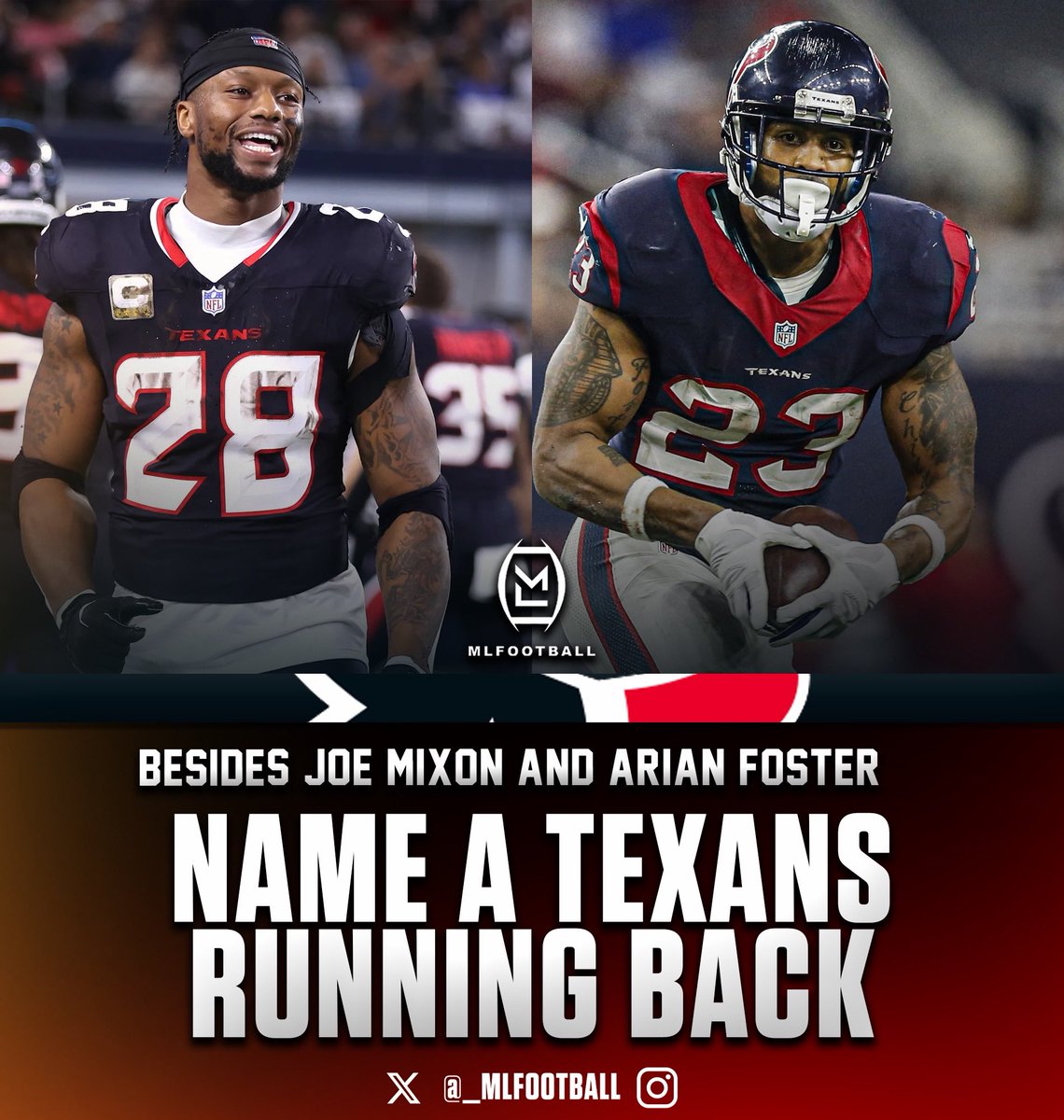
Within the context of franchise history, Foster remains the gold standard for the Houston Texans' running back position. He holds numerous franchise records, including career rushing yards, rushing touchdowns, and games with over 100 yards from scrimmage. For fantasy football enthusiasts and NFL historians alike, his name evokes a era of elite production where an undrafted player defied all mathematical and structural probabilities to dominate the sport through sheer intellect, vision, and technique.
Frequently Asked Questions
Was Arian Foster drafted into the NFL?
No, Arian Foster was not drafted. He entered the NFL as an undrafted free agent in 2009 after signing with the Houston Texans following his college career at the University of Tennessee. He used the setback as motivation, eventually working his way up from the practice squad to become a league-leading rusher and multi-time Pro Bowler.
What offensive scheme made Arian Foster so successful?
Foster thrived primarily within a zone-blocking scheme utilized by coaches like Gary Kubiak. This scheme required the running back to demonstrate exceptional patience, vision, and timing behind the line of scrimmage rather than simply running straight into a pre-determined gap. Foster's ability to press the line horizontally and cut sharply upfield made him an ideal fit for this tactical philosophy.
How many Pro Bowls did Arian Foster make?
Arian Foster was selected to four Pro Bowls during his career. He earned consecutive nods in 2010, 2011, 2012, and 2014, establishing himself as one of the premier offensive players of that decade. In 2010, he also earned First-Team All-Pro honors after leading the league in rushing yards.
What caused Arian Foster to retire from the NFL?
Foster retired in October 2016 during his stint with the Miami Dolphins due to an accumulation of severe injuries. Throughout his career, he battled persistent hamstring strains, back surgery, and a devastating Achilles tendon tear in 2015. Recognizing that his body could no longer endure the physical demands of the position, he chose to walk away voluntarily in the middle of the season.
What are Arian Foster's most notable career achievements?
Foster's notable achievements include leading the NFL in rushing yards in 2010, leading the league in rushing touchdowns in 2012, earning four Pro Bowl selections, capturing First-Team All-Pro honors, and retiring as the Houston Texans' all-time leading rusher. He remains widely celebrated as one of the most successful undrafted free agents in modern football history.