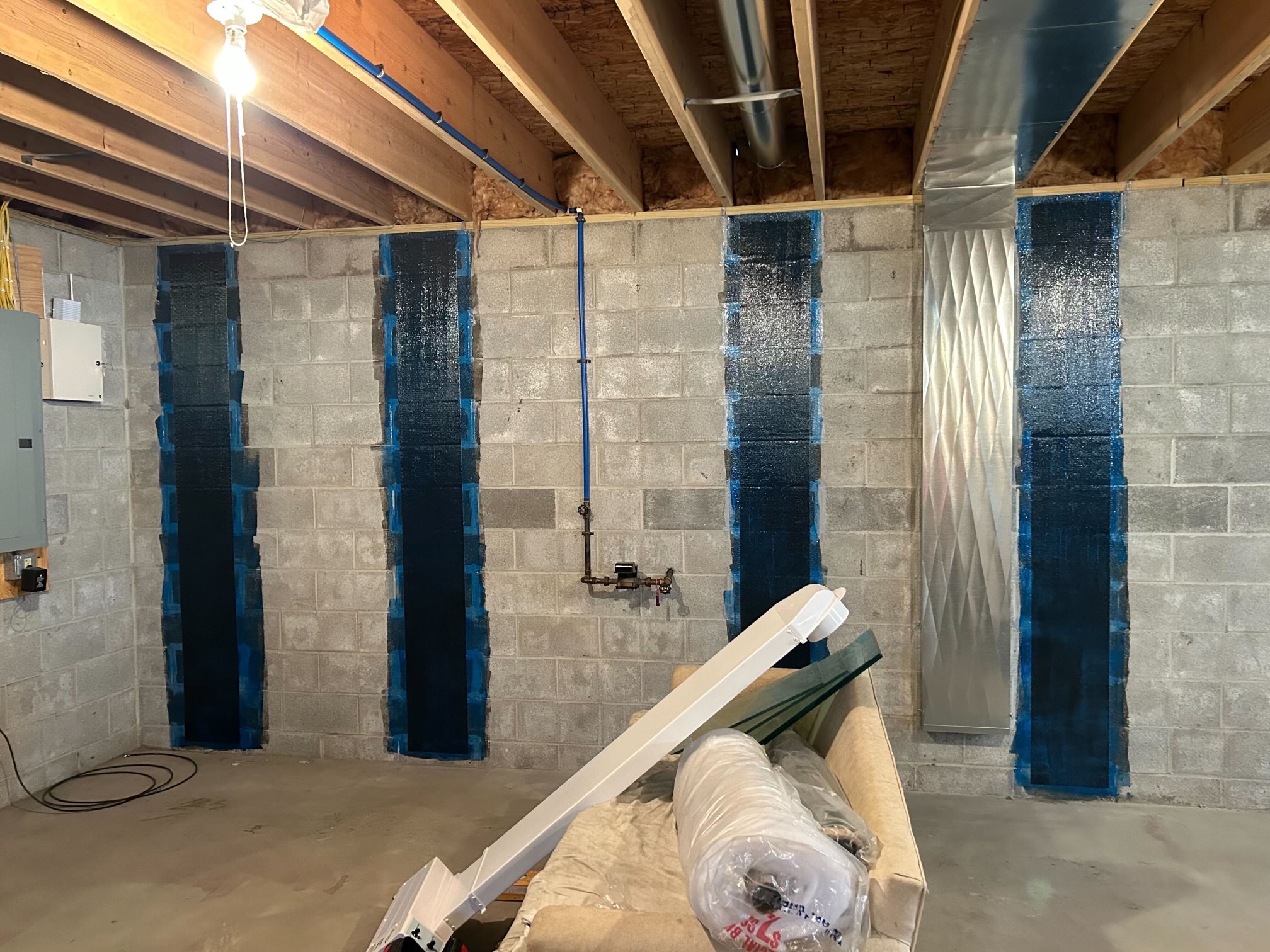
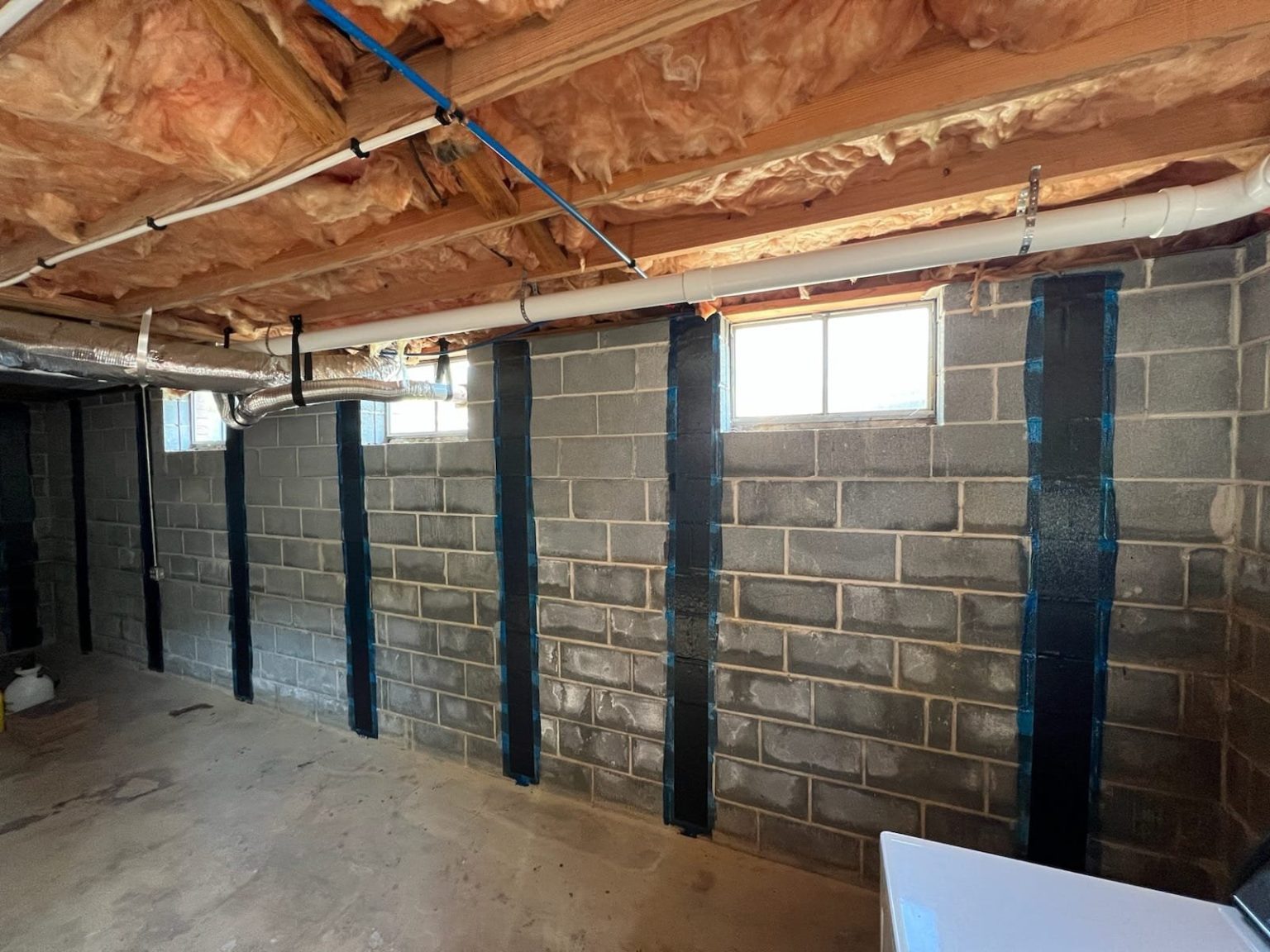
Yes, structural engineers and foundation repair professionals routinely use Carbon Fiber Reinforced Polymer (CFRP) straps to stabilize bowing or cracking basement walls. Designed to arrest inward movement caused by hydrostatic pressure, carbon fiber offers an exceptionally high tensile strength, non-corrosive, low-profile alternative to traditional steel I-beams when wall deflection is under two inches.
What Is Carbon Fiber Foundation Repair?
Carbon fiber foundation repair utilizes high-strength composite carbon fibers woven into flexible straps, sheets, or grid patterns. These carbon fabrics are saturated and bonded directly to damaged masonry or poured concrete basement walls using specialized structural epoxy adhesives. The combination of carbon fiber fabric and epoxy forms a composite material known in engineering as Carbon Fiber Reinforced Polymer (CFRP).
Originally developed for aerospace, automotive, and bridge retrofit applications, CFRP structural reinforcement was adopted by the building repair industry to address lateral soil pressure against residential basement foundations. When exterior soil absorbs moisture, it expands and exerts intense lateral earth pressure (and hydrostatic pressure) against basement walls. Over time, this pressure causes concrete block (CMU) or poured concrete walls to crack horizontally, bow inward, or shear at the base.
Because carbon fiber exhibits an extraordinarily high tensile strength—often exceeding 350,000 to 500,000 pounds per square inch (PSI), which is roughly ten times stronger than structural steel per cross-sectional area—it resists the stretching forces caused by inward wall movement. Once bonded to the inside face of a foundation wall, CFRP straps absorb the tension load, preventing the wall from leaning, bowing, or cracking any further.
- BASEMENT RIM JOIST
- TOP BRACKET / ANCHOR
- FOUNDATION WALL (Poured Concrete or CMU)
- Carbon Fiber Strap (Bonded to wall with Epoxy Resin)
- CONCRETE FLOOR SLAB
- BOTTOM ANCHOR PIN
When Is Carbon Fiber the Right Solution for Foundation Repair?
While carbon fiber is one of the most durable matrix materials available, it is not a universal cure for every type of structural damage. Understanding when CFRP is appropriate—and when alternative structural methods are required—is critical for structural integrity and building safety.
1. Inward Bowing Walls with Moderate Deflection
Carbon fiber is engineered to stabilize foundation walls that have bowed inward due to lateral pressure. However, it is structurally effective only when the inward deflection is less than 2 inches (or less than one-third the total thickness of the wall). If a 8-inch concrete block wall has bowed more than 2 inches, its structural center of gravity has shifted significantly, rendering carbon fiber straps insufficient to secure the wall without supplemental mechanical anchoring or wall push-back operations.
2. Horizontal and Stair-Step Cracking
Horizontal cracks running along mortar joints in concrete block walls (or horizontal cracks through poured concrete walls) indicate that lateral earth pressure is pushing the middle of the wall inward. Carbon fiber straps installed perpendicular to these crack lines lock the wall sections together and arrest further separation. Stair-step cracks near wall corners can also be reinforced using carbon fiber staples or diagonal CFRP straps.
3. Preventing Wall Shear at the Base or Top
Modern carbon fiber reinforcement systems do not rely on surface adhesive alone. Advanced CFRP installations include top-end mechanical brackets secured to the rim joist and bottom carbon fiber anchors or pins drilled directly into the concrete slab or footing. This engineered tie-in prevents wall shear, where the bottom course of block slides inward off the footing or the top course separates from the sill plate.
When Carbon Fiber Cannot Be Used
- Foundation Settlement: If a foundation is sinking vertically due to poor soil load-bearing capacity, carbon fiber will not resolve the issue. Vertical settlement requires resistance piers or helical piers driven down to competent bedrock or stable load-bearing soil strata.
- Severe Deflection (> 2 Inches): Walls with extreme deflection require mechanical wall pull-back, steel I-beams (gravity-held wall braces), or full foundation replacement.
- Severe Concrete Spalling or Crumbling Mortar: CFRP relies entirely on the structural integrity of the substrate beneath it. If the concrete is crumbling, water-logged, or flaking away (spalling), the epoxy cannot bond securely, and the repair will fail at the bond line.
Pros and Cons of Carbon Fiber Foundation Repair
Evaluating whether carbon fiber is right for a foundation project requires weighing its operational advantages against its physical limitations.
Advantages
- Ultra-Low Profile: Carbon fiber straps are less than 1/8-inch (approx. 2 to 3 millimeters) thick. Unlike bulky steel I-beams that extend 4 to 6 inches into usable basement floor space, carbon fiber sits flat against the wall.
- Paintable and Easy to Finish: Once cured, the epoxy-coated carbon fiber can be primed, painted, or covered directly with drywall framing, making it ideal for finished basements.
- Zero Maintenance & Non-Corrosive: Carbon fiber does not rust, oxidize, decay, or react with moisture or basement humidity over time.
- Fast Installation: A standard residential installation (4 to 8 straps) typically takes a trained crew just 1 to 2 days to complete, requiring minimal excavation or heavy machinery inside the home.
- Immense Tensile Load Capacity: CFRP straps resist extreme tension loads, locking the wall in its current position permanently when properly anchored top and bottom.
Disadvantages
- Does Not Straighten the Wall: Carbon fiber stops future inward movement, but it cannot push a bowed wall back to a plumb (vertical) position on its own. If a homeowner wants the wall pulled straight, the exterior soil must be excavated and the wall mechanically jacked back before installing the straps.
- Requires Substrate Integrity: If the concrete or mortar joints are soft, water-damaged, or deteriorating, the repair is only as strong as the surface layer of concrete behind the epoxy.
- Sensitivity to Installation Conditions: Carbon fiber epoxy resins require meticulous surface preparation and specific ambient temperatures to cure properly. Dust, oil, paint, or moisture on the concrete will prevent proper adhesion.
- Higher Upfront Material Cost: High-grade carbon fiber fabrics and structural polyamine epoxies carry higher material costs per unit than raw structural steel, though reduced labor time often balances the total project cost.
Step-by-Step Installation Process for CFRP Straps
Proper installation is critical to the performance of carbon fiber reinforcement. Standard procedures established by structural engineering guidelines, such as those evaluated under International Code Council Evaluation Service (ICC-ES) criteria AC125, follow a rigorous multi-step application process.
- Structural Evaluation
- Surface Grinding & Prep
- Structural Crack Epoxy Injection
- Epoxy Resin & Strap Application
- Top Bracket & Footing Anchor
- Curing & Final Inspection
Step 1: Structural Assessment and Grid Spacing
A structural engineer or qualified technician measures the wall length, wall height, block type, and total inward deflection. Based on these parameters, the engineering design specifies strap spacing—typically every 4 feet on center for standard residential basements.
Step 2: Mechanical Surface Preparation
The concrete wall surface where each strap will be applied must be ground down to bare, sound concrete using an industrial diamond-grinding tool equipped with a vacuum shroud.
- Paint, sealers, efflorescence (white mineral salt deposits), laitance, and loose mortar are fully removed.
- Surface grinding creates an open concrete pore profile, allowing the epoxy resin to penetrate deep into the substrate.
Step 3: Crack Repair and Surface Leveling
Any horizontal or diagonal cracks along the strap installation path are filled using high-strength structural epoxy or polyurethane injection resins. If the wall face is uneven due to shifting block lines, structural filler epoxy is troweled onto the surface to create a flat substrate. CFRP straps cannot bridge sharp dips or high spots without creating stress concentration points.
Step 4: Epoxy Primer and Strap Embedment
- A layer of two-part structural epoxy matrix resin is evenly troweled onto the prepared concrete section.
- The pre-measured carbon fiber strap is pressed firmly into the wet epoxy.
- A roller or trowel is used to saturate the strap from the front face, forcing epoxy completely through the carbon weaves to eliminate trapped air pockets and ensure complete encapsulation.
Step 5: Top and Bottom Anchor Installation
To prevent the top or bottom of the wall from shearing inward under soil loads, mechanical anchoring systems are installed:
- Top Connection: A heavy-duty steel top bracket or carbon fiber anchor system is bolted to the wooden rim joist or top sill plate, locking the top of the strap to the house structure.
- Bottom Connection: The bottom of the strap is integrated into the floor system using a carbon fiber rod/pin inserted into a drilled hole in the concrete footing or reinforced under the concrete floor slab.
Step 6: Curing and Quality Verification
The epoxy resin cures within 24 to 48 hours depending on ambient basement temperatures. Once fully cured, the installation forms an unbreakable bond between the strap and the wall. The finished surface can then be painted with latex masonry paint or left exposed for engineering inspection.
Carbon Fiber vs. Steel Beams vs. Helical Tiebacks
When choosing a basement stabilization method, structural engineers select between carbon fiber straps, steel I-beams, and exterior earth anchors (helical tiebacks). The matrix below highlights key structural parameters and operational trade-offs for each method.
| Feature / Metric | Carbon Fiber Straps (CFRP) | Steel I-Beams (Wall Braces) | Helical Tiebacks / Earth Anchors |
|---|---|---|---|
| Primary Function | Arrest inward wall bowing & cracking | Restrain bowing; can jack wall back over time | Pull wall outward back toward original position |
| Maximum Wall Deflection | Up to 2 inches (50 mm) | Up to 3+ inches (75+ mm) | Severe deflection (3+ inches) |
| Space Intrusion | Minimal (< 1/8 inch / 3 mm thickness) | High (4 to 6 inches / 100-150 mm into room) | None (installed exterior underground) |
| Exterior Excavation Required? | No (100% inside installation) | No (typically inside installation) | Yes (exterior excavation or drive path) |
| Installation Speed | 1 to 2 days | 1 to 2 days | 2 to 4 days (weather dependent) |
| Corrosion Resistance | Imperial (100% rustproof composite) | Requires paint/galvanizing to prevent rust | Galvanized steel (subject to soil chemistry) |
| Est. Cost per Location/Strap | $350 – $1,000 per strap | $400 – $1,200 per beam | $1,200 – $3,000 per anchor point |
| Basement Finishing Impact | Direct drywall cover or paintable | Requires deep stud framing to conceal | Completely hidden behind interior wall face |
Detailed Breakdown of Alternatives
Steel I-Beams (Vertical Wall Braces)
Steel I-beams are fastened to the concrete basement floor and attached to the floor joists overhead using adjustable steel brackets. While highly effective for severely bowed walls (deflections exceeding 2 inches), steel beams steal valuable interior square footage and require deep wall framing if you intend to finish the basement. Additionally, steel beams concentrate structural loads onto specific joists, which may require supplemental floor joist sistering or blocking overhead.
Helical Tiebacks and Earth Anchors
Helical tiebacks involve drilling long steel shafts with helical plates through the foundation wall into competent exterior soil outside the home. Heavy steel plates on the interior basement wall hold the anchors in place. Tiebacks are ideal when a wall must be pulled completely straight, but they require exterior lawn excavation, access for heavy machinery, and clear subterranean access free from buried utilities, deck footings, or property line constraints.
Cost Analysis of Carbon Fiber Foundation Repair
The total cost of carbon fiber foundation repair depends on the number of straps required, the complexity of structural preparation, wall height, and necessary top/bottom anchoring hardware.
Typical Cost Ranges (2026 Data)
- Per Strap Installed: $350 to $1,000 (including labor, materials, mechanical anchors, and surface prep).
- Average Residential Project (5 to 8 Straps): $3,000 to $8,000 total.
- Supplemental Crack Injection: $400 to $1,200 additional per major structural crack requiring epoxy pressure injection prior to strap placement.
- Full Wall Straightening + CFRP: $6,000 to $14,000+ (includes exterior excavation, hydraulic wall push-back, backfilling, and interior strap application).
Key Cost Factors
- Wall Height and Strap Width: Standard straps are 4 inches to 12 inches wide, running 7 to 9 feet vertically. Taller walls or heavy-duty 12-inch commercial-grade carbon grids consume more material resin and increase costs.
- Surface Condition: Walls covered in thick oil-based paint, waterproofing coatings, or severe efflorescence require extensive mechanical surface grinding, increasing labor hours.
- Engineering Seals and Permits: Many municipalities require a licensed Professional Engineer (PE) to inspect wall deflection and sign off on repair plans prior to permit issuance, which typically adds $500 to $1,500 to total project expenses.
DIY vs. Professional Installation
While DIY carbon fiber strap kits are sold online for residential purchase, professional installation is strongly recommended by structural codes. Applying carbon fiber without proper surface profile grinding, structural crack filling, or engineered top/bottom shear anchors often leads to premature debonding or structural shearing at the top plate. Incorrect installation can also result in failed home real estate sales inspections and voided homeowner insurance coverage.
Common Failure Modes and Why Carbon Fiber Repairs Fail
When carbon fiber foundation repairs fail, the failure is almost never due to the carbon fiber itself snapping. Because of carbon fiber's extreme ultimate tensile strength, structural failures occur at the bond interface, the concrete substrate, or the anchoring points.
Common Failure Modes in CFRP:
- Debonding: Poor grinding leaves paint/dirt; resin peels off wall.
- Base Shear: No bottom pins; wall slides inward off concrete slab.
- Top Separation: No rim bracket; top wall course tips inward.
- Over-Deflection: Applied to >2" bow; wall pivots under load.
1. Inadequate Concrete Surface Preparation
If the installer fails to grind away surface paint, lime, water-sealers, or loose laitance, the structural epoxy binds to the weak surface coating rather than solid aggregate concrete. Under load, the paint or loose concrete sheer-peels off the wall, causing the strap to completely debond.
2. Lack of Top and Bottom Anchors (Boundary Shear Failures)
Early carbon fiber strap installations relied solely on epoxy adhesion along the vertical wall face without securing the top and bottom ends. Over time, lateral earth pressure pushed the top block course off the sill plate or sheared the bottom block off the footing. Modern engineering codes require mechanical top brackets connected to joists and bottom anchoring pins installed into the floor slab.
3. Application on Excessively Deflected Walls
If a wall has bowed beyond 2 inches (or 1/3 of its thickness), horizontal compressive forces inside the masonry blocks begin to dominate. Carbon fiber only resists tensile forces (stretching); it cannot prevent a severely tilted wall from continuing to collapse inward under its own shifted center of gravity.
4. Unaddressed Exterior Hydrostatic Pressure and Drainage
Carbon fiber stabilizes the structure, but it does not eliminate exterior water accumulation against foundation walls. If hydrostatic pressure remains unmanaged due to clogged footing drains, missing gutters, or poor soil grading, water pressure will continue to exert force, potentially causing cracking between the carbon fiber straps. Combining CFRP installation with proper exterior or interior perimeter drainage systems (sump pumps, French drains) ensures long-term foundation health.
Frequently Asked Questions
Does carbon fiber foundation repair add home resale value?
Yes. Carbon fiber foundation repairs performed by certified installers with engineering documentation restore full structural integrity to foundation walls. Unlike bulky steel beams, carbon fiber's low profile allows basements to be finished easily, preserving usable square footage and helping satisfy home buyers and mortgage lenders during real estate inspections.
Can carbon fiber straps pull a bowed wall back straight?
No. Carbon fiber straps act as a tensile restraint system to lock a foundation wall in place and stop further inward movement. They do not possess mechanical tensioning mechanisms to push or pull a wall back to vertical alignment. If a wall must be straightened, contractors must excavate the exterior soil and push the wall back hydraulically before applying carbon fiber straps.
How long does a carbon fiber foundation repair last?
When properly applied using high-grade polyamine structural epoxy and verified anchors, carbon fiber foundation repairs are designed to last for the remaining lifespan of the building. Carbon fiber composite materials do not rot, rust, or degrade over time when protected from direct weather exposure and ultra-violet radiation inside a basement.
How far apart should carbon fiber foundation straps be spaced?
Standard engineering guidelines call for carbon fiber straps to be placed every 4 feet on center along bowed or cracked foundation walls. However, exact spacing depends on wall height, soil backfill type, wall material (CMU block vs. poured concrete), and the total inward deflection measured during the structural engineering assessment.
Can carbon fiber be installed on poured concrete and concrete block walls?
Yes. Carbon fiber is engineered for both poured concrete walls and concrete masonry unit (CMU) block walls. For CMU block walls, horizontal cracks along mortar lines are reinforced with vertical straps. For poured concrete walls, carbon fiber straps or carbon fiber stitch staples are used to bridge diagonal and vertical settlement or load cracks.
Final Verdict and Next Steps
Carbon fiber reinforcement is one of the most effective, structurally sound, and non-intrusive solutions available for stabilizing bowing basement walls with minor to moderate inward deflection (under 2 inches). By locking foundation walls in place without occupying interior living space, CFRP straps solve lateral structural stability issues efficiently.
Action Plan for Homeowners
- Measure the Deflection: Use a plumb line or long spirit level against bowing basement walls to estimate total inward deflection.
- Consult a Structural Engineer: Hire an independent licensed professional engineer (PE) to inspect wall movement, assess drainage conditions, and specify required strap spacing and anchoring requirements.
- Verify Contractor Certification: Choose a foundation repair contractor certified by composite manufacturers (such as Fortress Stabilization Systems, Simpson Strong-Tie, or Rhino Carbon Fiber) to guarantee material warranties and compliant installation.
- Fix Exterior Water Issues: Clean downspouts, extend gutter discharge pipes 5 to 10 feet away from the foundation, and adjust soil grading around the home to reduce exterior hydrostatic soil pressure.