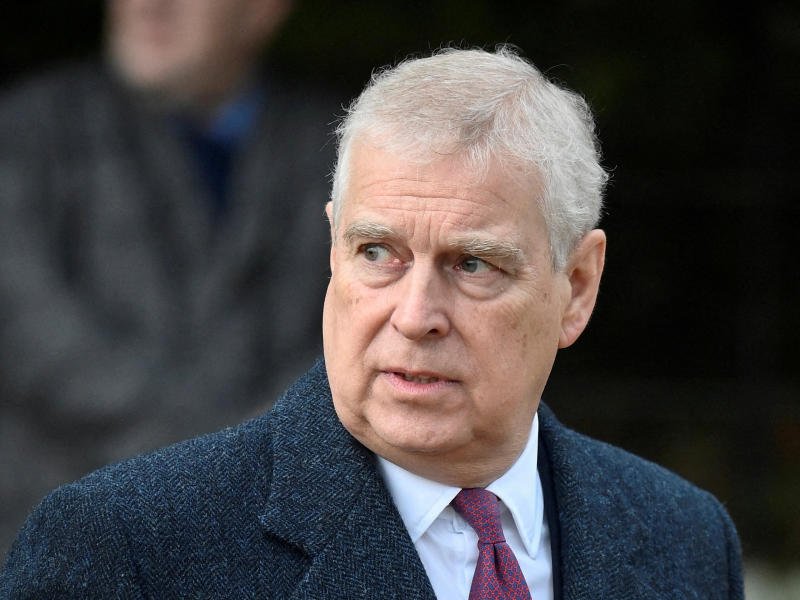
Prince Andrew remains a prince because the title is a birthright granted under the 1917 Letters Patent issued by King George V. While he has been stripped of his military honors, royal patronages, and the use of the "His Royal Highness" (HRH) style, the title of "Prince" and his peerage as the "Duke of York" can only be formally removed through an Act of Parliament.
As of 2026, the status of Prince Andrew, the Duke of York, continues to be a subject of significant constitutional and public debate. Despite his complete withdrawal from public life following the fallout from his association with Jeffrey Epstein and the subsequent legal settlement with Virginia Giuffre, Andrew’s identity as a "Prince of the Blood" remains legally intact. Understanding why he retains this specific title requires an exploration of British constitutional law, the history of royal titles, and the limitations of the Monarch’s unilateral powers.
The Legal Foundation: The 1917 Letters Patent
The primary reason Prince Andrew remains a prince is rooted in a legal document nearly 110 years old. In 1917, King George V issued Letters Patent—a type of legal instrument published by the monarch—to simplify the royal family structure and limit who could be called a prince or princess.
According to these rules, the title of Prince or Princess is automatically granted to the children of the Sovereign, the children of the sons of the Sovereign, and the eldest living son of the eldest son of the Prince of Wales (a rule later expanded by Queen Elizabeth II). As the second son of Queen Elizabeth II, Andrew was born a Prince of the United Kingdom. This is not an "office" or a "job" that one can be fired from; it is a hereditary status.
Birthright vs. Appointment
In the British honors system, there is a clear distinction between titles of birth and titles of appointment.
- Birthright Titles: Being a "Prince" is a fundamental part of Andrew's legal identity. It is inscribed on his birth certificate and recognized under common law and royal prerogative.
- Appointments: Military ranks (such as Vice Admiral) and royal patronages (such as being the patron of a golf club or a charity) are appointments. These can be given and taken away by the Sovereign at will.
When Queen Elizabeth II took action in January 2022, she focused on the appointments. She "returned" his military affiliations and patronages to the Crown. However, the title of Prince was not something she could simply "return" without a more complex legal process.
The Removal of "HRH" Style vs. The Prince Title
A common point of confusion is the "HRH" (His Royal Highness) style. In 2022, the Buckingham Palace statement noted that Andrew would no longer use the style "His Royal Highness" in any official capacity.
It is important to note that he technically still holds the style, but he is forbidden from using it. This is similar to the arrangement made for Prince Harry, the Duke of Sussex. By preventing the use of HRH, the Monarchy effectively "demotes" the individual in the public eye and prevents them from representing the Crown, even if the underlying legal status of being a Prince remains.
In 2026, this distinction remains a critical part of the King’s strategy to maintain a "slimmed-down monarchy." By ensuring that Andrew does not use the HRH style, the King reinforces the boundary between the "Working Royals" who serve the state and the "Non-Working Royals" who are merely members of the family.
The Duke of York: A Peerage Protected by Law
Beyond being a Prince, Andrew is also the Duke of York. This is a peerage—a title of nobility. Peerages are distinct from royal titles and are governed by different rules.
A peerage is a legal entity that usually requires an Act of Parliament to be revoked. The King cannot unilaterally strip a dukedom because it is considered a form of property and a legislative status. History provides very few examples of peerages being removed, the most notable being the Titles Deprivation Act 1917, which was used to strip British titles from German peers during World War I.
The Calls for Parliamentary Action
There have been repeated calls from members of Parliament and the public to use a modern version of the Titles Deprivation Act to remove Andrew’s dukedom. As of 2026, such legislation has faced hurdles. Constitutional experts argue that passing a law to target a single individual sets a dangerous legal precedent. Furthermore, the government typically avoids interfering in the internal honors of the Royal Family unless there is a clear constitutional crisis.
| Feature | Current Status (2026) | Method of Removal |
|---|---|---|
| Title of "Prince" | Retained | Letters Patent or Act of Parliament |
| Duke of York (Peerage) | Retained | Act of Parliament |
| HRH Style | Held but not used | Monarch's Directive |
| Military Titles | Removed (2022) | Monarch's Prerogative |
| Royal Patronages | Removed (2022) | Monarch's Prerogative |
| Line of Succession | Retained (8th place) | Act of Parliament |
Why the Line of Succession Matters
Prince Andrew remains in the Line of Succession to the British throne. Despite his withdrawal from public duties, he is currently 8th in line (following the children of Prince Harry).
The Line of Succession is governed by the Act of Settlement 1701 and the Succession to the Crown Act 2013. These are statutory laws. The King has no power to remove someone from the Line of Succession. Only Parliament can change who is eligible to inherit the throne. Because Andrew remains in the line of succession, his legal standing as a Prince is further solidified; it would be constitutionally inconsistent for a "non-prince" to hold a high place in the succession unless they were specifically excluded by law.
Life as a Non-Working Royal in 2026
Stepping back from royal duties means Andrew no longer receives public funding through the Sovereign Grant. His financial support is now a private matter for King Charles III. This transition from a public figure to a private individual is the most significant "real-world" change, regardless of his titles.
Security and Protocol
One of the most contentious issues in 2026 remains the provision of security. Since Andrew is no longer a working royal, he lost his taxpayer-funded police protection (provided by Ravec, the Royal and VIP Executive Committee). While he remains a Prince, the government has determined that his lack of public duties means he does not face the same level of risk as the King or the Prince of Wales. This underscores the fact that being a Prince is a title of status, not a guarantee of state-funded perks.
The Role of Counselor of State
Prince Andrew also remains a Counselor of State. Under the Regency Acts, Counselors of State are the spouse of the Sovereign and the next four people in the line of succession who are over the age of 21. They can perform certain official duties if the King is briefly indisposed or abroad.
However, in late 2022, the law was amended (the Counsellors of State Act 2022) to add Princess Anne and Prince Edward to the list. This was a strategic move to ensure that Andrew (and Prince Harry) would never actually be called upon to serve, even though they technically remain on the list due to their birthright and rank.
Constitutional Constraints on the King
Many wonder why King Charles III does not simply "fire" Andrew from the family entirely. The answer lies in the nature of the British Constitutional Monarchy. The King is the "fount of honor," but he is also bound by tradition and law.
- Legal Precedent: Stripping a birthright title would be an unprecedented move in the modern era. It would invite scrutiny into the titles of every other member of the family.
- Family vs. State: The King must balance his role as the Head of State with his role as the head of the House of Windsor. While Andrew is removed from the "State" side (duties, money, military), he remains part of the "Family" side.
- The Risk of Litigation: In a modern legal environment, even royal decisions can be challenged. By following the established route of removing "use" of titles rather than the titles themselves, the Palace avoids messy legal battles over the definition of birthrights.
The Public Perception and the Future of the Title
While the legal reality is that Andrew remains a Prince, the public perception has largely moved on. In official court circulars and media reporting in 2026, he is frequently referred to simply as "The Duke of York" or "Andrew Windsor," reflecting his diminished status.
The title "Prince" is increasingly seen as a vestigial label rather than a position of power. For the Monarchy to survive in the 21st century, it has had to decouple the prestige of the title from the scandals of the individual. By allowing Andrew to remain a Prince "in name only," the institution protects its own rules while signaling that the privileges associated with those rules have been revoked.
Frequently Asked Questions
Does Prince Andrew still receive money from the British taxpayer?
No. Since stepping back from royal duties in 2019, Prince Andrew does not receive any funding from the Sovereign Grant, which is the taxpayer-funded pot used to pay for working royals. Any financial support he receives comes privately from the King's personal estate, such as the Duchy of Lancaster.
Can Prince Andrew ever return to public life?
As of 2026, there is no indication that Prince Andrew will return to public duties. The decision rests with the King, but public sentiment and the "slimmed-down" monarchy policy make a return highly improbable. His roles have been redistributed to other working members of the family, such as Princess Anne and the Duke of Edinburgh.
Why was he allowed to keep the Duke of York title?
The Duke of York is a peerage title. Unlike military ranks, a peerage is a significant legal honor that usually requires an Act of Parliament to be stripped. Because it is a hereditary title (though Andrew has no sons to inherit it), it is governed by the laws of the peerage rather than the whims of royal protocol.
What is the difference between a "working royal" and a "prince"?
A "Prince" is a title of birth and rank within the royal hierarchy. A "working royal" is a functional role. Working royals carry out engagements, support charities, and represent the King at official events. One can be a Prince without being a working royal (like Andrew or Harry), but in the modern era, being a Prince without the "working" status carries very little public authority.
Is Prince Andrew still "His Royal Highness"?
Technically, he still holds the style, but he is legally and formally barred from using it. In all official capacities and correspondence, the style is omitted. This "non-use" policy is the middle ground the Palace chose to distance the institution from his personal legal issues without requiring an Act of Parliament.
Next Steps for Observers
For those following the evolution of the British Monarchy, the status of Prince Andrew serves as a primary case study in the tension between ancient tradition and modern accountability. To stay informed on this topic, one should monitor:
- The Court Circular: The official record of Royal engagements, which confirms who is and isn't representing the Crown.
- Parliamentary Bills: Watch for any updates to the Titles Deprivation Act or new legislation regarding the removal of peerages.
- Cabinet Office Guidance: Regarding the provision of security and the use of royal titles in official state business.
The persistence of Andrew's title is not a sign of his return to favor, but rather a reflection of the rigid legal framework that governs the world's most famous royal house.