Andrew Harvey’s Sacred Activism is a transformative paradigm that fuses deep spiritual wisdom with practical, compassionate action to address pressing global crises. Rather than treating contemplative spirituality and social engagement as opposing forces, this philosophy asserts that genuine spiritual awakening naturally mandates radical, dedicated service to heal ecological, social, and political systemic harms.
The Origins of Sacred Activism and Andrew Harvey’s Vision
Andrew Harvey, an internationally recognized scholar, poet, mystic, and author, developed the concept of Sacred Activism after decades of studying world mystical traditions and observing contemporary global upheavals. Educated at Oxford University, where he became the youngest fellow of All Souls College, Harvey spent years immersing himself in Hinduism, Buddhism, Sufism, and Christian mysticism. His encounters with spiritual teachers such as Father Bede Griffiths and his deep engagement with the poetry of Rumi and the evolutionary philosophy of Sri Aurobindo fundamentally reshaped his view of human purpose.
Through his foundational texts, including The Hope: A Guide to Sacred Activism, Harvey articulated a direct response to what he observed as two parallel tragedies in modern culture: the disengaged passivity of contemporary spirituality and the unsustainable exhaustion of purely secular political activism.
Sacred Activism was conceived not merely as a strategy for protest, but as a holistic evolutionary movement. It calls individuals to recognize that the planet's ecological destruction, economic disparity, and political fracturing are symptoms of a profound spiritual crisis. To reverse these trajectories, human beings must draw upon the infinite reserves of wisdom, peace, and energy offered by contemplative traditions, translating inner illumination into measurable outer change. Through the Institute for Sacred Activism, founded by Harvey, this framework has been taught globally to help activists, educators, religious leaders, and citizens discover their unique role in planetary transformation.
The Core Problem: Spiritual Bypass vs. Activist Burnout
To understand the necessity of Sacred Activism, one must examine the limitations of the two dominant approaches to personal and societal change. Harvey identifies these two approaches as incomplete halves of a unified truth, each carrying severe structural flaws when practiced in isolation.
- Sacred Activism (Inner Peace + Outer Action)
- Deep Spiritual Wisdom
- Radical Social Action
The Trap of Spiritual Bypass
Spiritual bypass occurs when spiritual practices, philosophy, or language are used to avoid facing uncomfortable realities, personal shadow material, or systemic injustices. In many Western spiritual circles, an emphasis on individual enlightenment, toxic positivity, or law-of-attraction frameworks leads practitioners to withdraw from societal problems.
Harvey criticizes this tendency as a form of self-absorbed escapism. When spiritual seekers treat the physical world merely as an illusion or an lower plane unworthy of direct political or social intervention, spirituality loses its ethical center. True mysticism, Harvey argues, has historically been radical and confrontational—demonstrated by figures like Jesus, the Buddha, Kabir, and Mahatma Gandhi—all of whom challenged the oppressive power structures of their times.
The Pitfall of Secular Activist Burnout
Conversely, secular activism often operates purely within political, legal, and economic structures. While driven by noble intentions to correct injustice, secular activism frequently relies on anger, outrage, and reactive opposition as its primary motivators.
Without a spiritual foundation or internal contemplative practices, activists routinely experience severe physical and psychological burnout. When action is fueled primarily by hostility toward opponents, activists risk replicating the very patterns of division, intolerance, and dogmatism they seek to overthrow. Harvey points out that anger, while a valid initial catalyst for recognizing injustice, is an unsustainable fuel source for long-term transformation.
The Synthesis of Sacred Activism
Sacred Activism unifies these two disciplines into a resilient, self-sustaining matrix. Spiritual practice provides the activist with emotional resilience, unbounded compassion, unconditional love, and protection against despair. In return, social action grounds the practitioner’s spiritual life in accountability, humility, and real-world efficacy.
| Dimension | Traditional Secular Activism | Disengaged Spiritual Bypass | Sacred Activism (Andrew Harvey) |
|---|---|---|---|
| Primary Motivation | Anger, righteous outrage, duty | Personal peace, transcendence | Compassion, sacred duty, divine love |
| View of the World | Battleground of opposing forces | Illusion or secondary manifestation | Sacred, interconnected manifestation of the divine |
| Inner Work | Often neglected or secondary | Central, but isolated from outer crisis | Essential foundation for sustained outer action |
| Handling of Opponents | Adversarial, polarizing | Avoidance, passive acceptance | Resolute resistance coupled with radical empathy |
| Sustainability | High risk of burnout and despair | Low real-world social impact | High long-term resilience and sustained output |
| Core Goal | Policy or institutional change | Individual enlightenment | Systemic transformation and inner evolution |
The Fundamental Pillars of Sacred Activism
Andrew Harvey’s methodology rests upon several core principles that guide practitioners from internal reflection to concrete external initiatives.
1. Mystical Grounding and Contemplative Practice
Every Sacred Activist requires a consistent daily contemplative discipline. This may involve silent meditation, liturgical prayer, somatic breathwork, sacred chanting, or contemplative time in nature. The purpose of this practice is not to escape the world, but to anchor the self in a reality deeper than egoic anxiety. By connecting to what mystics term the "Divine Source" or "Unconditioned Awareness," activists cultivate an inner reservoir of calm that remains undisturbed even during crisis.
2. Embracing the Global "Dark Night of the Soul"
Harvey draws heavily on the mystical concept of the "Dark Night of the Soul"—a period of profound loss, disorientation, and spiritual purging that precedes higher illumination. He expands this individual concept to a collective level, arguing that humanity is undergoing a collective Dark Night. Climate collapse, biodiversity loss, nuclear threats, and social decay represent a birthing process rather than a meaningless death. Recognizing the crisis as a birth canal enables activists to move past paralyzing grief into focused, creative labor.
3. Shadow Work and Psychological Integration
Without psychological maturity, an activist's unexamined wounds, biases, and projections will contaminate their work. Harvey stresses the necessity of rigorous shadow work—the process of identifying and integrating one's own repressed anger, fear, and desire for power. By recognizing that the capacity for greed and cruelty exists within oneself, the Sacred Activist refrains from demonizing adversaries, maintaining an attitude of profound humility and interconnectedness.
4. Radical, Compassionate Action
Spiritual devotion must culminate in concrete service. Sacred Activism requires direct engagement in specific issues, such as environmental restoration, animal protection, human rights defense, poverty alleviation, or systemic policy reform. Harvey emphasizes that action must be precise, strategic, and informed by real-world knowledge rather than noble intentions alone.
5. Sacred Community and Interconnection
Sacred Activism cannot be sustained in isolation. It relies on building networks of grace—communities of practice, action circles, and solidarity groups that support members emotionally, spiritually, and logistically. These communities serve as prototypes for the new ways of living, organizing, and relating that activists aim to establish in the broader world.
Core Disciplines and Daily Practices for Sacred Activists
To operationalize the philosophy of Sacred Activism, Harvey outlines specific routines and mental frameworks designed to maintain equilibrium while tackling high-stakes challenges.
Establishing a Sacred Daily Routine
Practitioners are advised to structure their days around clear boundaries that protect their physical and spiritual energy. A recommended framework includes:
- Morning Alignment: Dedicating the first hour of the day to silence, scripture or poetry reading, meditation, and physical movement (such as yoga or Qigong) before consuming news or digital media.
- Intentional Offering: Explicitly dedicating the day's tasks, meetings, and actions to the service of the global community and planetary healing.
- Midday Recalibration: Taking brief pauses throughout the workday to practice conscious breathing, resetting the nervous system out of fight-or-flight stress responses.
- Evening Review and Release: Engaging in a practice of gratitude and emotional release at night, surrendering outcomes that are beyond individual control to prevent carrying stress into sleep.
Converting Outrage into Fierce Compassion
One of Harvey's key psychological insights is the transformation of destructive anger into what he terms "fierce compassion." Inspired by divine archetypes across traditions—such as Kali in Hinduism, Sekhmet in ancient Egypt, or Jesus cleansing the temple in Christianity—fierce compassion is energy that protects life without harboring hatred for the transgressor.
When activists encounter systemic injustice, fierce compassion allows them to draw firm, non-negotiable boundaries and challenge destructive behavior while simultaneously recognizing the fundamental humanity of those enforcing unjust systems.
- Raw Destructive Outrage
- Shadow Work & Contemplation
- Fierce Compassion & Strategic Action
Key Works and Literature by Andrew Harvey
Andrew Harvey has authored and edited dozens of books detailing mystical traditions and the principles of Sacred Activism. His key texts provide foundational reading for understanding his work:
- The Hope: A Guide to Sacred Activism (2009): Widely considered the definitive manual for the movement. It provides a comprehensive analysis of global crisis, details practical steps for discovering one's specific activist calling, and outlines daily spiritual strategies.
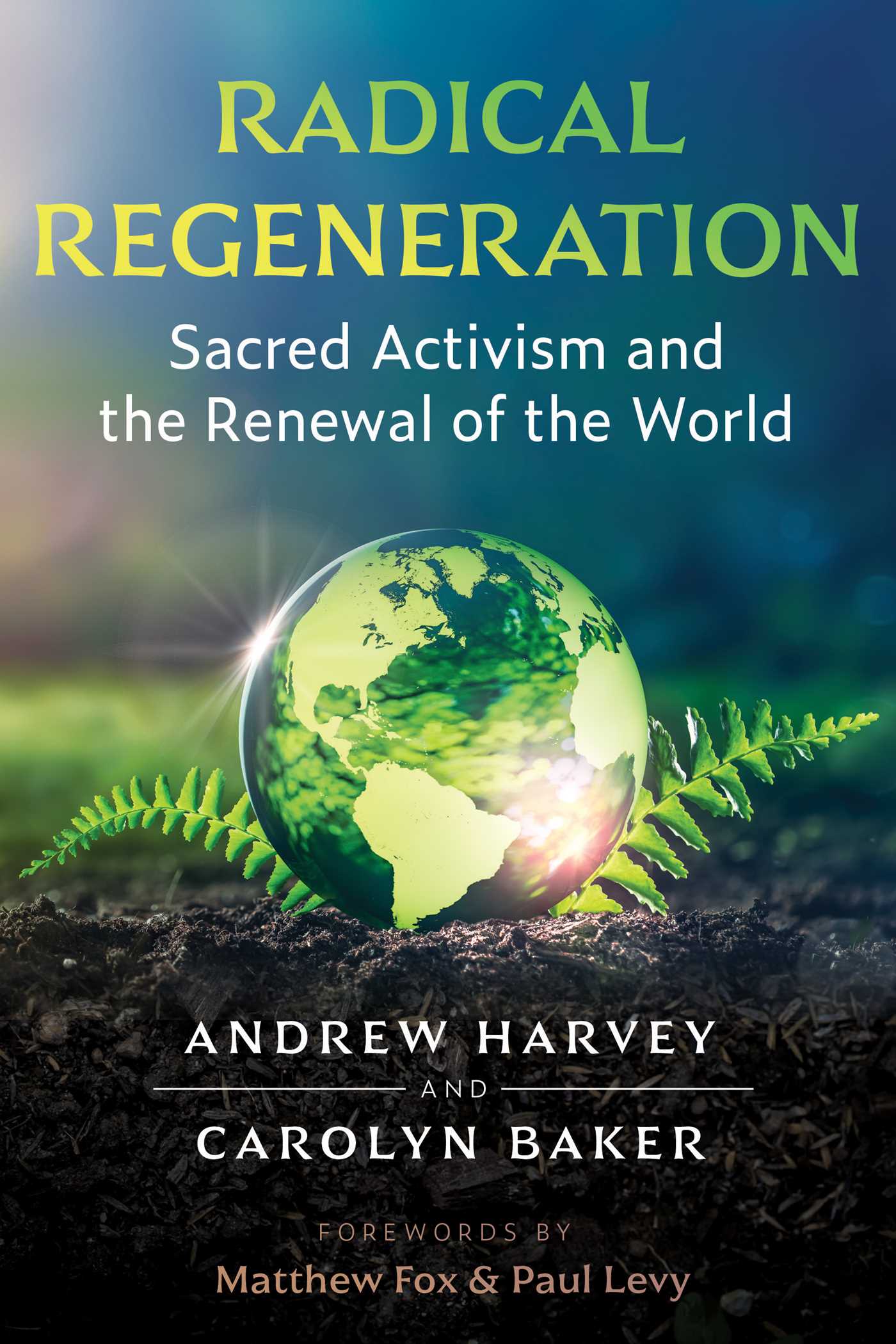
- Radical Regeneration: Birthing the New Human in the Age of Extinction (Co-authored with Carolyn Baker, 2020): A stark, unvarnished examination of global climate change, economic volatility, and civilizational crisis, offering a path for psychological resilience and deep spiritual adaptation.
- Son of Man: The Mystical Path to Christ (1998): An exploration of Jesus of Nazareth as a revolutionary sacred activist, stripping away rigid dogma to reveal an empowered vision of divine human engagement.
- The Direct Path: Creating a Personal Journey to the Divine (2000): A practical guide outlining exercises from world traditions to help individuals establish direct spiritual contact without relying on intermediary hierarchies.
- Love's Fierce Revolution: Making Hope Real in an Age of Extinction (2024): A focused work on sustaining radical hope, courage, and mystical action in the face of escalating planetary challenges.
Overcoming Challenges in Sacred Activism
Engaging in Sacred Activism involves navigating complex personal and societal dynamics. Practitioners routinely confront obstacles that require careful self-regulation and strategic adjustment.
Managing Climate Grief and Existential Anxiety
As ecological degradation accelerates, activists frequently suffer from eco-anxiety and profound sorrow. Harvey advises activists not to repress this grief, but to honor it through collective ritual and open expression. In the framework of Sacred Activism, grief is evidence of deep love for the world. Expressing sorrow in supportive communities metabolizes pain into active dedication.
Avoiding Political Polarization
A major risk for modern activists is becoming absorbed into culture-war polarization. Sacred Activism avoids partisan hostility by prioritizing core ethical principles—such as human dignity, ecological integrity, and truth—over identity politics. By anchoring arguments in universal spiritual principles, Sacred Activists build alliances across traditional political and cultural divides.
Maintaining Financial and Operational Sustainability
Sacred Activists must reconcile their idealism with practical economic realities. Harvey highlights that sustainable activism requires proper funding, realistic pacing, professional organization, and clear boundaries around personal capacity. Self-care, rest, and financial transparency are treated not as luxuries, but as ethical prerequisites for long-term effectiveness.
Frequently Asked Questions
What is the primary difference between Sacred Activism and conventional activism?
Conventional activism primarily relies on political, legal, and economic strategies driven by social outrage or policy goals. Sacred Activism incorporates deep spiritual practices, shadow work, and contemplative wisdom into social change work, ensuring that action is driven by compassion rather than anger, preventing burnout and polarization.
Do I need to belong to a specific religion to practice Sacred Activism?
No. Sacred Activism is inter-spiritual and accessible to individuals of any faith tradition, as well as those who identify as spiritual but not religious, or humanists committed to ethical duty. It focuses on universal contemplative principles—such as love, compassion, mindfulness, and service—rather than rigid dogmatic creeds.
How can a beginner start practicing Sacred Activism in daily life?
A beginner can start by establishing two daily practices: an inner contemplative routine (such as 20 minutes of daily silent meditation or prayer) and an outer commitment to service (such as volunteering with a local environmental project, advocating for human rights, or assisting underserved communities). Combining these two disciplines creates the foundation of Sacred Activism.
Is Sacred Activism effective for systemic policy change?
Yes. Sacred Activism does not replace strategic policy advocacy, community organizing, or legal action; rather, it informs and sustains them. Historically, many of the most successful systemic movements—including the Indian Independence Movement led by Mahatma Gandhi and the American Civil Rights Movement led by Dr. Martin Luther King Jr.—were rooted in the core principles of Sacred Activism.
How does Sacred Activism address activist burnout?
Sacred Activism combats burnout by anchoring the activist in daily spiritual practices that replenish emotional and physical energy. It encourages shadow work to manage anger, promotes strong community support systems, and reframes success away from immediate political victories toward faithful, long-term alignment with compassionate service.
Next Steps for Aspiring Sacred Activists
To begin implementing Sacred Activism, consider the following actionable steps:
- Audit Your Current Practices: Evaluate your routine to determine whether you lean more toward disengaged spirituality or burn-out-prone secular activism. Identify practical ways to balance inner contemplation with outer action.
- Define Your Focus Area: Rather than attempting to solve every global crisis, identify one specific cause where your talents, passions, and resources can make a direct contribution (e.g., local watershed protection, food security, prison reform).
- Establish a Daily Contemplative Discipline: Commit to a minimum of 20 to 30 minutes of daily silent meditation, prayer, or contemplative nature immersion to build psychological resilience and emotional stability.
- Engage with Recommended Texts: Read Andrew Harvey's The Hope: A Guide to Sacred Activism to deepen your theoretical foundation and learn practical exercises designed for individual and group study.
- Join or Form an Action Circle: Connect with local or online groups focused on blending spiritual growth with practical social engagement to build long-term solidarity and accountability.