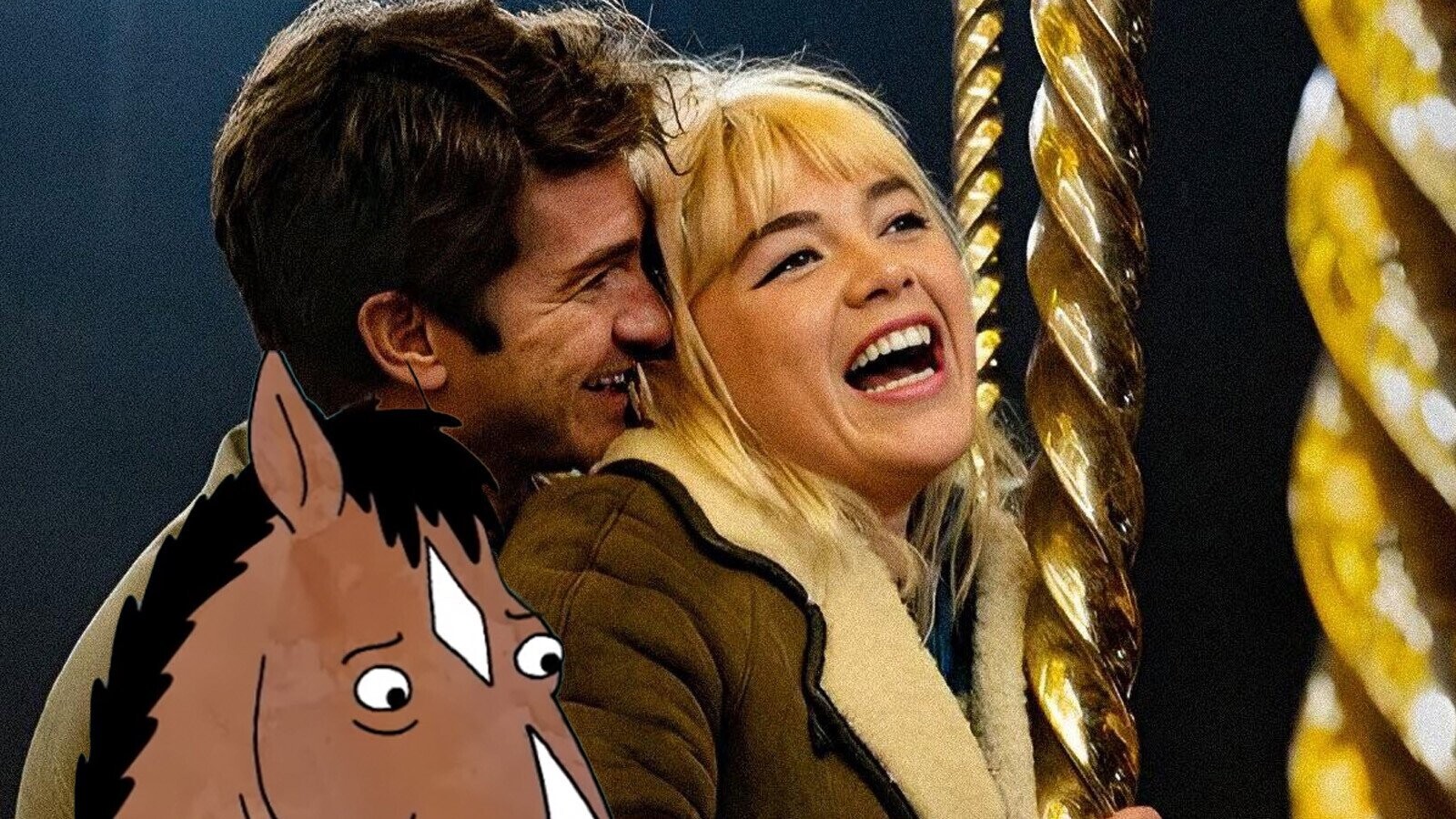
In the Netflix adult animated series BoJack Horseman, Andrew Garfield is portrayed as a fictionalized, hyper-dramatic version of himself. Voiced by comedian Paul F. Tompkins rather than the actual actor, this version of Garfield is characterized by extreme pretentiousness, a fragile physical constitution, and a bizarre obsession with lasagna and a hatred for Mondays—a direct satirical nod to the famous comic strip cat that shares his name.
The Character Profile: Who is "Andrew Garfield" in the BoJack Universe?
When BoJack Horseman premiered in 2014, it quickly established a unique approach to celebrity culture. While some celebrities voiced themselves (such as Margo Martindale or Daniel Radcliffe), others were transformed into caricatures voiced by the show’s recurring cast. The Andrew Garfield of BoJack Horseman is perhaps the most surreal of these interpretations.
In the show’s first season, Andrew Garfield is introduced as the high-profile boyfriend of Sarah Lynn, the former child star and BoJack’s one-time ward. This version of Garfield is not the charming, versatile actor known to real-world audiences for The Social Network or Tick, Tick... Boom!. Instead, he is a "Method Actor" taken to the point of absurdity. He views every minor occurrence through the lens of high drama and artistic integrity.
The defining characteristic of this fictional Garfield is his physical fragility. Throughout his brief appearances, he is frequently depicted in various states of medical distress—wearing a neck brace, using crutches, or being confined to a hospital bed. This serves as a meta-commentary on the perceived "preciousness" of Hollywood A-listers who treat their physical bodies as temple-like instruments for their "craft," only for the show to render him literally incapable of basic movement without injury.
Voice Acting and the Choice of Paul F. Tompkins
One of the most notable aspects of Andrew Garfield’s presence in BoJack Horseman is that the real Andrew Garfield does not provide the voice. Instead, the role was handled by Paul F. Tompkins, a mainstay of the series who also voiced Mr. Peanutbutter and dozens of other side characters.
The decision to use a different voice actor was likely twofold. Practically, the real Andrew Garfield was in the midst of his Amazing Spider-Man tenure and may have been unavailable or too expensive for a bit part. Creatively, however, having Tompkins voice the character allowed the writers to lean much harder into the "parody" aspect. Tompkins gives the character a breathy, overly serious, and almost Shakespearean cadence that clashes hilariously with the mundane things the character actually says.
By 2026, looking back at the series' legacy, this casting choice remains a highlight of the show’s commitment to "The Bit." It established a precedent where the show didn't need the actual celebrity to make a cutting point about that celebrity’s public image or the archetype they represented in the Hollywood ecosystem.
The "Garfield the Cat" Puns: A Layered Satirical Choice
The most enduring joke involving Andrew Garfield in BoJack Horseman is the relentless wordplay regarding his name. The writers took the coincidence of his surname and turned it into a personality trait based on the comic strip character Garfield the Cat, created by Jim Davis.
In the episode "Say Anything" (Season 1, Episode 7), the fictional Andrew Garfield famously declares his love for lasagna and his intense hatred for Mondays. The joke is delivered with such intense, dramatic gravitas that it takes the viewer a moment to realize he is quoting a cartoon cat.
This joke functions on several levels:
- Absurdism: It is inherently funny to hear a prestigious "Method Actor" speak about pasta with the intensity of a man discussing a tragedy.
- Meta-Commentary: It mocks the way Hollywood takes even the most simplistic intellectual properties and tries to give them "grit" or "depth."
- Low-Stakes Humor: In a show that often deals with heavy themes like depression, addiction, and nihilism, the "Garfield" puns provide a necessary moment of levity.
Key Episodes and Narrative Impact
While Andrew Garfield is not a central protagonist, his role in the first season is pivotal for the development of Sarah Lynn and the exploration of BoJack’s jealousy.
Season 1, Episode 7: "Say Anything"
In this episode, Garfield is mainly a background presence that complicates Princess Carolyn’s life as she tries to manage her clients. We see the start of his relationship with Sarah Lynn, which is framed as a shallow, PR-focused "Hollywood power couple" dynamic. His pretentiousness is used to highlight how vapid the industry can be; he isn't interested in Sarah Lynn as a person, but rather in the "narrative" of their relationship.
Season 1, Episode 8: "The Telescope"
This episode is more focused on BoJack’s past with Herb Kazzaz, but Andrew Garfield appears during a sequence at a party. Here, his physical fragility is pushed to the limit. When he tries to confront BoJack or engage in simple social interactions, he ends up suffering exaggerated injuries. His presence serves as a foil to BoJack’s own self-seriousness; while BoJack is genuinely miserable, Garfield is performing misery for the sake of his image.
Comparison: Real Life vs. BoJack's Andrew Garfield
To understand the depth of the parody, it is helpful to look at how the show diverged from the actual actor's trajectory.
| Feature | Real-Life Andrew Garfield (as of 2026) | BoJack Horseman's Andrew Garfield |
|---|---|---|
| Voice | British-American, naturalistic | Paul F. Tompkins (Dramatic/Breathy) |
| Physicality | Known for stunts and physical roles (Spider-Man) | Comically fragile; often in a body cast |
| Personality | Self-effacing, thoughtful in interviews | Narcissistic, pretentious, "Actor-y" |
| Dietary Habits | Normal human diet | Obsessed with lasagna |
| Public Image | Highly respected Academy Award nominee | A punchline for Sarah Lynn’s erratic life |
| Relationship | Generally private regarding dating | Publicly chaotic relationship with Sarah Lynn |
The Significance of Celebrity Parody in "Hollywoo"
Andrew Garfield’s character was one of the first major "takedowns" of a specific actor in the series, helping to build the world of "Hollywoo" (the name the town takes after BoJack steals the 'H'). The show uses these parodies to critique the cult of personality.
In the world of BoJack Horseman, celebrities are often treated as disposable commodities or as gods, with very little middle ground. By turning Andrew Garfield into a man who breaks his bones if the wind blows too hard, the show demystifies the "action hero" or "serious actor" archetype. It suggests that behind the polished veneer of a movie star is often someone just as ridiculous—or perhaps even more so—than the average person.
This trend continued throughout the series with characters like:
- Jessica Biel: Portrayed as a fire-obsessed, cult-leading version of herself.
- Daniel Radcliffe: Portrayed as a slightly smug but well-meaning version of himself who loses all his money on a game show.
- Beyoncé: Who slips on a single cardamom pod and breaks her hip (continuing the physical fragility theme).
Why the Character Resonates with Fans
Even though he only appears in a handful of episodes, the "BoJack Garfield" remains a fan favorite. This is largely due to the show's ability to create a "meme-able" character before memes were the primary currency of television success. The "lasagna" lines are frequently quoted in fan communities, and the absurdity of Paul F. Tompkins' vocal performance makes the character memorable long after he disappears from the narrative.
Furthermore, the character serves as an early indicator of the show's darkness. His relationship with Sarah Lynn is one of the many ways she is exploited and distracted from her own well-being. While Garfield is a joke to the audience, his presence in Sarah Lynn's life represents another person who doesn't actually care about her, contributing to the isolation that eventually leads to her tragic arc later in the series.
Technical Analysis of the Satire
The writers of BoJack Horseman—led by Raphael Bob-Waksberg—frequently utilized a technique called "Anti-Humor" mixed with "Deep Cut References."
- The Subversion of the "Cameo": Usually, a show brings on a celebrity to boost ratings. BoJack brings on a "celebrity" to mock the very idea of celebrity.
- Linguistic Displacement: By having a human actor act like a cat, they create a sense of "Uncanny Valley" humor. The audience knows Andrew Garfield is a human, and they know Garfield is a cat, but the show forces those two identities to merge in a way that is intellectually jarring and physically funny.
- Physical Comedy in Animation: Animation allows for "squash and stretch" physics. Garfield’s constant injuries are a literalization of the "fragile ego," a common trope in Hollywood analysis.
Frequently Asked Questions
Did the real Andrew Garfield ever comment on his portrayal?
The real Andrew Garfield has been asked about it in various interviews over the years. Generally, he has taken it in good stride, acknowledging the humor in the "Garfield the cat" comparison. By 2026, he is widely regarded as an actor with a great sense of humor regarding his own public image, which makes the show's "pretentious" version of him even more ironic.
Why does Andrew Garfield hate Mondays in the show?
This is a direct reference to the comic strip Garfield. In the comics, the cat Garfield famously hates Mondays and loves lasagna. The show’s writers applied these feline traits to the human actor Andrew Garfield as a surrealist pun.
Is Andrew Garfield in every season of BoJack Horseman?
No. He is primarily a character in Season 1. After his breakup with Sarah Lynn and a series of increasingly absurd injuries, he is phased out as the show shifts its focus toward more serialized drama and deeper character studies of the main cast.
Who voiced Andrew Garfield in BoJack Horseman?
He was voiced by Paul F. Tompkins. Tompkins is a prolific voice actor and comedian who also provided the voice for Mr. Peanutbutter, a main character in the series.
What happened to Andrew Garfield’s character in the show?
Following his appearances in Season 1, the character is largely mentioned in passing or seen in background gags. His narrative purpose—to act as a satirical foil for Hollywood relationships—was fulfilled early on.
Final Recommendation for Viewers
For those revisiting BoJack Horseman in 2026 or discovering it for the first time, pay close attention to the early Season 1 episodes featuring Andrew Garfield. While the show eventually becomes a deeply emotional meditation on trauma, these early "celebrity parodies" are essential for understanding the show's DNA. They establish the world of Hollywoo as a place where identity is fluid, names are puns, and the line between a movie star and a cartoon cat is thinner than a lasagna noodle.
To fully appreciate the joke, one should watch Season 1, Episode 7 ("Say Anything") back-to-back with Season 1, Episode 8 ("The Telescope"). These episodes represent the peak of the show’s "Andrew Garfield era" and provide a masterclass in how to use a real-world celebrity’s name to create a completely original, albeit ridiculous, piece of animation history.