Conjoined twins in America represent a rare medical phenomenon occurring in approximately one out of every 50,000 to 200,000 live births. These individuals, joined in utero, navigate complex lives involving unique surgical challenges, legal precedents, and societal shifts from historical "curiosity" to modern recognition of their individual autonomy and civil rights.
The Biological Foundations of Conjoined Twinning
To understand the reality of American conjoined twins, one must first look at the embryological origins. Conjoined twins occur when a single fertilized egg (monozygotic) fails to split completely during the first two weeks of development. There are two primary theories: the fission theory, where the egg begins to split but stops, and the fusion theory, where two separate eggs fuse early in development.
In the United States, medical classification follows the standard nomenclature based on the site of connection. The suffix "-pagus" (Greek for "fixed") is used to denote the union.
Primary Classifications of Conjoined Twins
- Thoracopagus: These twins are joined at the upper torso, often sharing a heart. This is the most common type, accounting for roughly 35% of cases. Due to the complexities of sharing a heart, surgical separation is historically difficult and often carries a high mortality rate.
- Omphalopagus: Joined at the abdomen, these twins often share a liver, diaphragm, or parts of the gastrointestinal tract. This type has the highest success rate for surgical separation because the liver is a regenerative organ.
- Pygopagus: Joined at the base of the spine (sacrum) and buttocks. These twins often share the lower gastrointestinal and urinary tracts but rarely share a heart.
- Craniopagus: Joined at the skull. These are among the rarest cases (about 2%). While they have separate brains, they may share dural sinuses and significant vascular structures, making separation a feat of neurosurgical precision.
- Dicephalic Parapagus: Twins who share a single body but have two distinct heads. This is the condition of the famous Abby and Brittany Hensel.
The Historical Evolution of Conjoined Twins in America
The history of conjoined twins in the United States is a narrative that moves from exploitation to agency. In the 19th and early 20th centuries, many conjoined twins were relegated to "dime museums" and traveling sideshows. However, several pairs managed to leverage this unwanted attention into financial independence and social standing.
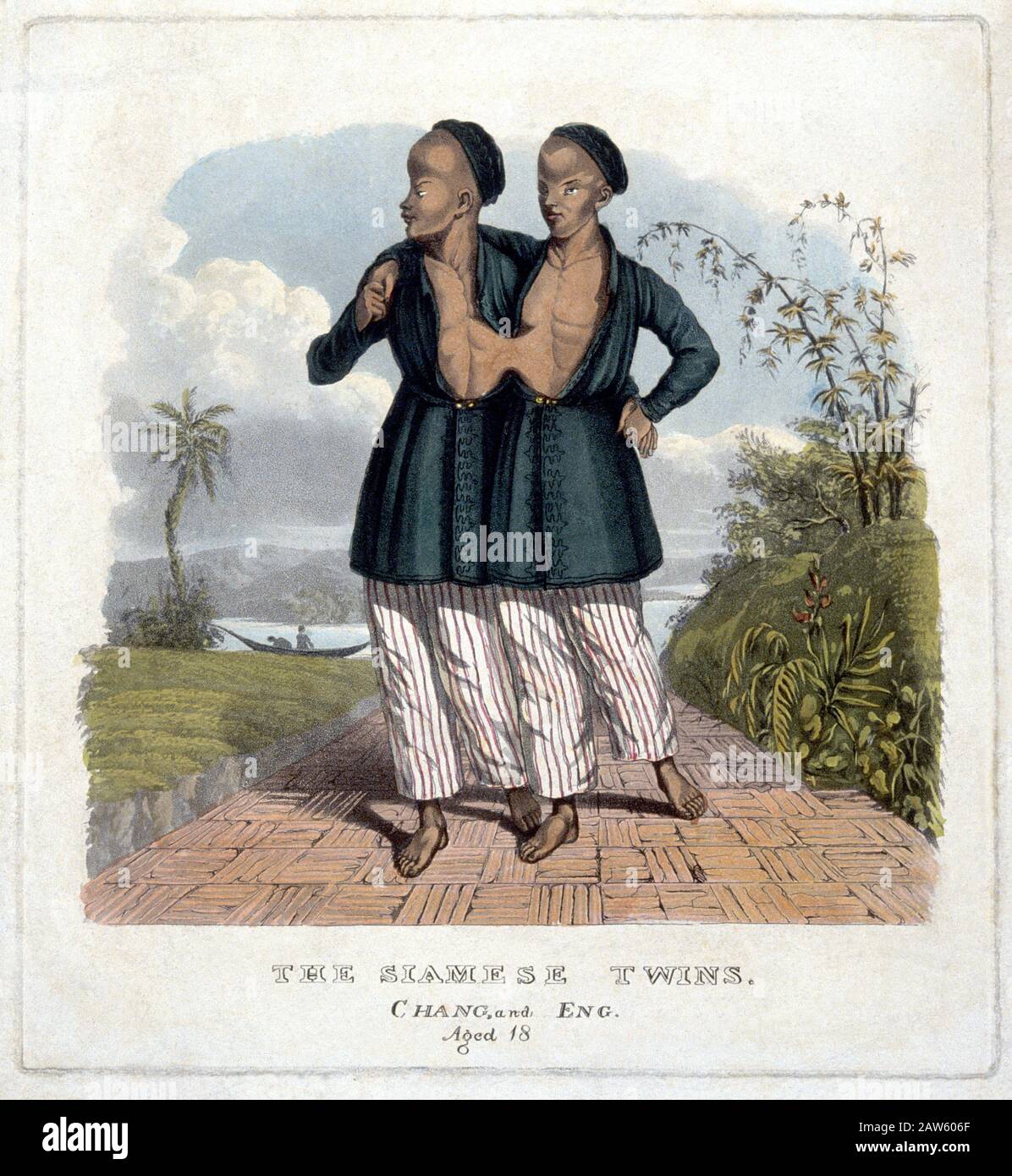
Chang and Eng Bunker: The Original "Siamese Twins"
Though born in the Kingdom of Siam (modern-day Thailand), Chang and Eng Bunker are perhaps the most significant "American" conjoined twins. They arrived in the United States in 1829. After years of touring, they settled in North Carolina, became naturalized U.S. citizens, and adopted the surname "Bunker."
Their story is one of remarkable integration: they married two sisters, fathered 21 children between them, and managed successful farms. Their legacy is complicated by the fact that they were slaveholders in the pre-Civil War South, but from a medical and social standpoint, they proved that conjoined twins could lead productive, long, and multifaceted lives. They died within hours of each other in 1874.
The Hilton Sisters: Vaudeville Stars
Daisy and Violet Hilton, born in England but gaining fame in the United States, were pygopagus twins who became icons of the American vaudeville era. Their lives were marked by extreme exploitation by their managers. They eventually sued for their freedom and won, becoming independent performers. They even starred in the 1932 film Freaks. Their later years were spent in relative obscurity in Charlotte, North Carolina, where they worked in a grocery store until their deaths in 1969.
Notable 21st-Century Profiles
As of 2026, the American public's understanding of conjoined twins has been shaped by several prominent pairs who have allowed their lives to be documented to educate the public on the realities of their condition.
Ronnie and Donnie Galyon
The Galyon brothers, from Dayton, Ohio, held the record for the world's longest-living conjoined twins until their passing in 2020 at the age of 68. They were joined at the abdomen (omphalopagus) and shared a lower digestive tract. Throughout their lives, they resisted separation, famously stating that God had made them that way and they should stay that way. Their longevity was a testament to the care of their family and the stability of their shared physiology.
Lori and George Schappell
Lori and George (born Dori) Schappell were craniopagus twins who defied early medical predictions that they would not live past 30. They passed away in Pennsylvania in April 2024 at the age of 62. Their lives were notable for their distinct personalities: George had a career as a country singer, while Lori worked in a hospital laundry for years. George’s transition to living as a man in 2007 made them the first same-sex conjoined twins to identify as different genders.
Abby and Brittany Hensel
Perhaps the most famous living conjoined twins in America, Abby and Brittany are dicephalic parapagus twins. They have two heads, two hearts, two sets of lungs, but share most organs below the waist. They gained national attention through documentaries and their own TLC reality show.
As of 2026, the twins have maintained a more private life, working as elementary school teachers in Minnesota. Their ability to coordinate their movements—each controlling one side of the shared body—remains a subject of intense neurological study. They hold separate driver's licenses and have navigated the complexities of professional licensing and employment as a single legal entity with two distinct personas.
Medical Advancements and Surgical Milestones
The approach to conjoined twins in the U.S. medical system has shifted toward highly specialized, multi-disciplinary care. When a pair of conjoined twins is born today, the decision to separate is no longer just a surgical question but an ethical and philosophical one.
The Role of Imaging and 3D Printing
In modern American hospitals like the Children’s Hospital of Philadelphia (CHOP) or Texas Children’s Hospital, surgeons use advanced MRI and CT scans to create 3D-printed models of the twins' shared anatomy. This allows surgical teams to practice the separation months in advance.
| Type of Connection | Primary Organs Involved | Separation Complexity | Success Rate (Est. 2026) |
|---|---|---|---|
| Omphalopagus | Liver, Diaphragm | Moderate | High (>85%) |
| Thoracopagus | Heart, Lungs | Very High | Low to Moderate |
| Craniopagus | Brain, Cranial Vault | Extreme | Moderate (~50%) |
| Pygopagus | Lower Spine, Rectum | High | Moderate to High |
Ethical Frameworks for Separation
In the United States, the ethics of separation often revolve around the "quality of life" for both twins. If a separation would certainly result in the death of one twin to save the other, the case often moves to an ethics committee. American courts generally prioritize the "best interests" of the children, but as twins reach adulthood, their own consent becomes the primary factor.
Many adult conjoined twins in the U.S. have historically refused separation, citing the psychological trauma of losing their "other half" and the extreme physical risks involved.
Social and Legal Challenges in the United States
Living as a conjoined twin in America presents unique legal hurdles that the current justice system is still adapting to.
Identification and Documentation
Most conjoined twins possess two separate Social Security numbers and two birth certificates. However, in practical terms, they often function as a single unit. For example, when Abby and Brittany Hensel drive, they are two licensed drivers operating one vehicle simultaneously. This raises questions for insurance providers: is it one policy or two? Generally, the industry has leaned toward individual coverage for liability reasons.
Employment and Professional Ethics
When conjoined twins enter the workforce, they often face the "two for the price of one" dilemma. In the case of the Hensel twins, they reportedly share a single teaching contract but possess separate degrees. American labor laws are somewhat ambiguous here, but the Americans with Disabilities Act (ADA) provides protections, ensuring that employers make reasonable accommodations for their unique physical needs.
Privacy and the "Stigma of the Show"
The transition from being viewed as "spectacles" to being viewed as individuals with rights is still ongoing. The advent of social media has allowed conjoined twins to control their own narratives, moving away from the sensationalism of 20th-century tabloids.
FAQs About American Conjoined Twins
How rare are conjoined twins in the United States?
Conjoined twins are exceptionally rare, occurring in roughly 1 out of every 200,000 live births globally. In the United States, because of advanced prenatal screening and the option for termination in complex medical cases, the number of live-born conjoined twins has remained stable or slightly decreased over recent decades.
Can conjoined twins get married in the US?
Yes, conjoined twins have the legal right to marry. Historically, Chang and Eng Bunker both married and had large families. More recently, records in 2024 revealed that Abby Hensel had married Josh Bowling in 2021. Legally, each twin is a distinct person with full matrimonial rights, though the physical reality requires significant logistical and interpersonal coordination.
How do conjoined twins handle voting and taxes?
In the United States, conjoined twins are treated as two separate citizens. They are eligible to register to vote individually and are required to file individual tax returns if they earn income. While they may share a physical space, their legal identity remains bifurcated.
What is the survival rate for separation surgery?
The survival rate depends entirely on the organs shared. Omphalopagus twins (sharing a liver) have a survival rate of over 80% in modern American surgical centers. Thoracopagus twins (sharing a heart) rarely survive separation because it is often impossible to divide a single functioning heart into two viable organs.
Do conjoined twins have different personalities?
Almost always. Despite sharing a body and a birth date, conjoined twins consistently report having different tastes in food, different hobbies, and distinct personalities. Medical professionals observe that they often develop complementary traits—one may be more introverted while the other is more extroverted.
Practical Guidance for Supporting the Community
If you are a medical professional, educator, or citizen interacting with conjoined twins or their families, the primary focus should be on person-first language and respecting their autonomy.
- Acknowledge Individuality: Always address twins as two separate people. Use their individual names rather than referring to them as "the twins."
- Respect Privacy: Avoid asking intrusive questions about their shared physiology or personal lives that you wouldn't ask a singleton.
- Support Accessibility: Ensure that public spaces and workplaces are physically accessible. For conjoined twins, this may mean wider seating or specialized workstations.
- Legal Advocacy: Support legal frameworks that recognize the dual-identity of conjoined pairs in matters of healthcare, voting, and employment.
The story of American conjoined twins is a testament to human resilience and the complexity of the human condition. As medical technology continues to advance in 2026, the focus remains on ensuring these individuals can live lives of dignity, whether they remain joined or choose the path of separation.