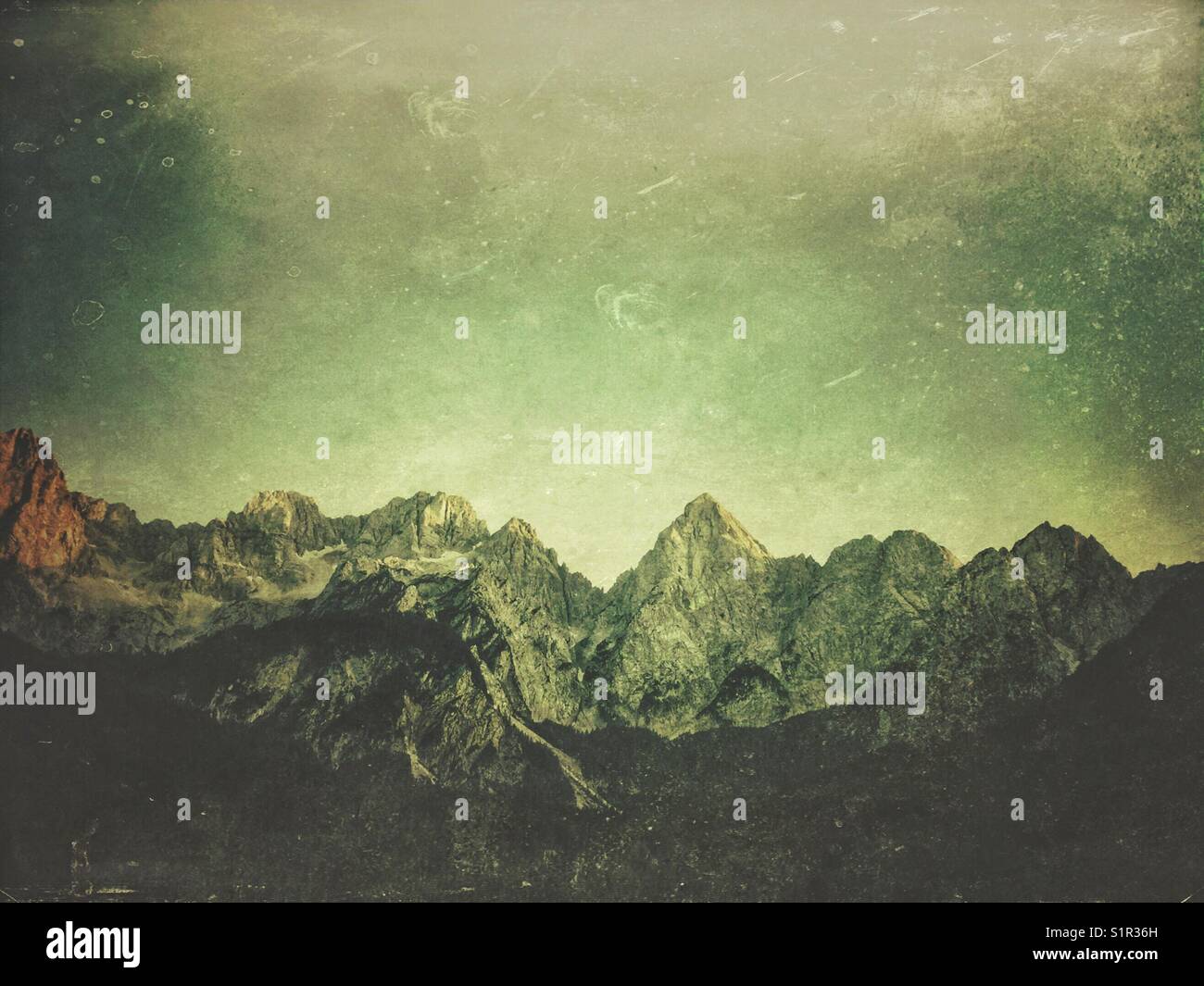
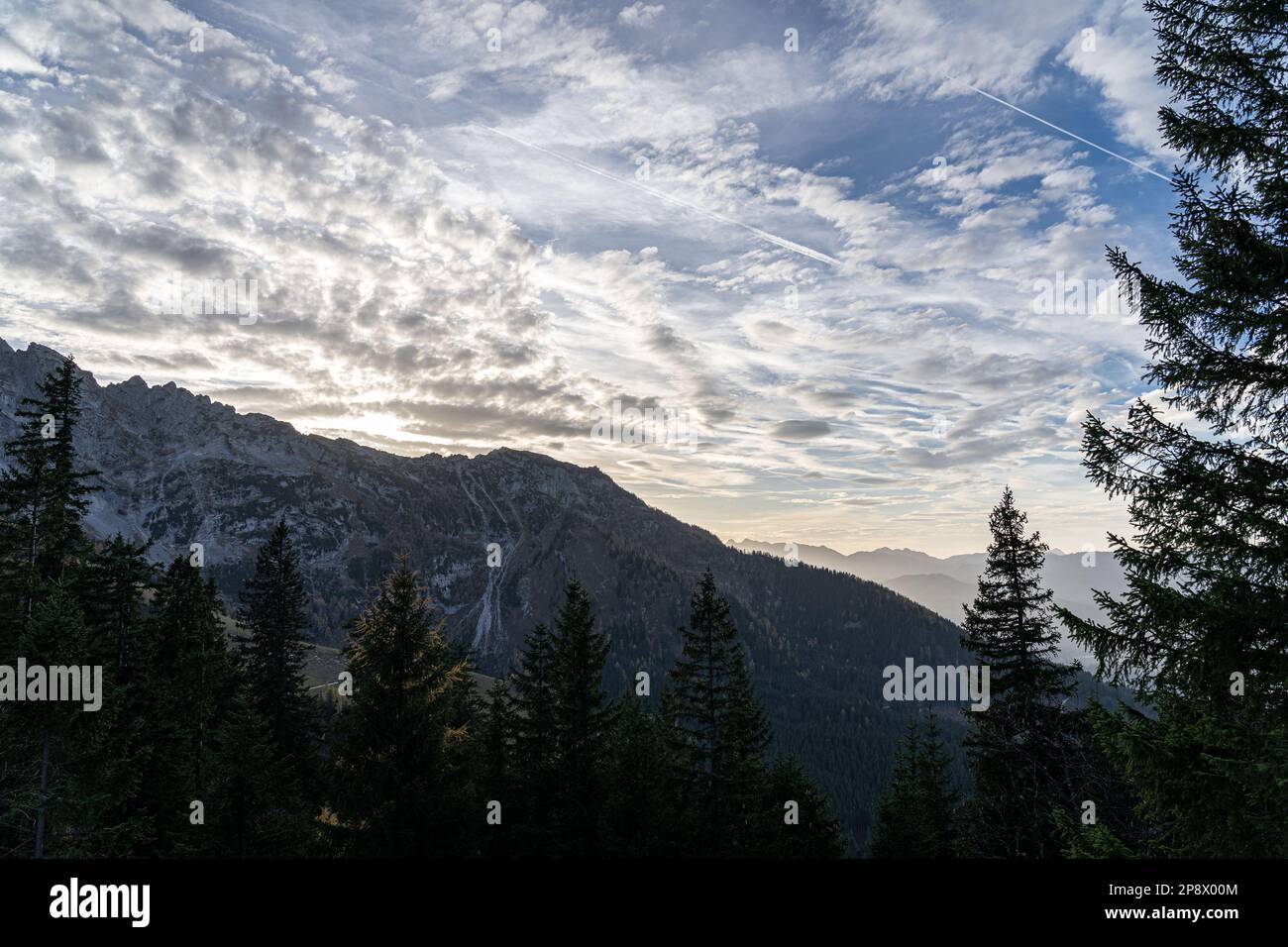
The Alps mountain chain is Europe's highest and most extensive mountain system, stretching approximately 1,200 kilometers (750 miles) across eight countries: France, Switzerland, Italy, Monaco, Liechtenstein, Austria, Germany, and Slovenia. As a central geographical feature of the continent, the Alps serve as a major climatic divide, a vital freshwater source, and a primary hub for global biodiversity and alpine tourism.
Geological Origins and the Formation of the Alps
The story of the Alps mountain chain begins roughly 300 million years ago, but the primary orogenic (mountain-building) event—the Alpine Orogeny—occurred much later. This process was driven by the relentless northward movement of the African tectonic plate against the Eurasian plate. This collision caused the closing of the ancient Tethys Ocean and the subsequent folding, faulting, and uplifting of marine sediments and crystalline basement rocks.
Geologists divide the formation into several complex phases. During the Mesozoic era, the area was largely a series of marine basins. As the plates converged during the Cenozoic era, specifically starting around 65 million years ago, the crust began to thicken. This led to the creation of "nappes"—massive sheets of rock that were pushed over one another for tens of kilometers. This stacking is why one can often find older crystalline rocks sitting atop younger sedimentary layers in various parts of the range.
The technical composition of the Alps varies significantly by region. The "External Zones" consist largely of sedimentary rocks like limestone and dolomite, which are particularly prominent in the French Prealps and the Italian Dolomites. The "Internal Zones" feature metamorphic and igneous rocks, such as gneiss and schist, which form the high, rugged "crystalline" core of the Central Alps. Glaciation during the Pleistocene epoch (the last Ice Age) further sculpted the landscape, carving the deep U-shaped valleys and jagged "horn" peaks, like the Matterhorn, that define the range's modern appearance.
Geographical Scope and Regional Subdivisions
The Alps mountain chain is not a uniform wall of rock but a complex network of massifs and sub-ranges. Geographers traditionally divide the range into the Western Alps and the Eastern Alps, separated by a line following the Rhine Valley and the Splügen Pass.
The Western Alps
The Western Alps are generally higher and more rugged than their eastern counterparts. This segment spans southeastern France, northwestern Italy, and southwestern Switzerland. It is home to the range's highest peak, Mont Blanc (4,807 meters). Significant sub-ranges here include the Graian Alps, the Cottian Alps, and the Maritime Alps, which descend toward the Mediterranean coast in Monaco. The terrain is characterized by steep vertical drops and massive glaciers, though these have seen significant volume loss by 2026.
The Central and Eastern Alps
Moving eastward from Switzerland through Liechtenstein into Austria, Germany, and Slovenia, the mountains become broader and slightly lower on average, though still formidable. Austria holds the largest share of the Alps by land area. The Eastern Alps are further subdivided into the Northern Limestone Alps, the Central Eastern Alps, and the Southern Limestone Alps. The Dolomites in Italy are a part of the Southern Limestone Alps and are world-renowned for their unique "pale" appearance, caused by their magnesium-rich carbonate composition.
The Julian Alps in Slovenia represent the southeastern terminus of the chain. While lower in elevation than the peaks of the Valais or Savoy, they offer some of the most dramatic karst topography in Europe, characterized by limestone plateaus, deep caves, and sheer cliff faces.
Significant Peaks and Iconic Massifs
To understand the Alps mountain chain, one must recognize the individual giants that command the skyline. These peaks are not just geological landmarks; they are cultural icons and centers for high-altitude mountaineering.
| Peak Name | Country (Location) | Elevation (m) | Notable Characteristic |
|---|---|---|---|
| Mont Blanc | France / Italy | 4,807 | The highest peak in Western Europe; a center for alpinism. |
| Monte Rosa | Switzerland / Italy | 4,634 | A massive ice-covered massif with the highest peak in Switzerland (Dufourspitze). |
| Dom | Switzerland | 4,545 | The highest mountain located entirely within Swiss territory. |
| Matterhorn | Switzerland / Italy | 4,478 | Famous for its distinct pyramidal shape and treacherous ridges. |
| Grossglockner | Austria | 3,798 | The highest point in Austria, featuring the Pasterze Glacier. |
| Zugspitze | Germany | 2,962 | Germany's highest peak, accessible via world-class cable cars. |
| Triglav | Slovenia | 2,864 | A national symbol of Slovenia and the highest in the Julian Alps. |
The Matterhorn (Cervino) remains perhaps the most photographed mountain in the world. Its formation is a geological curiosity; the summit is actually a piece of the African tectonic plate that was thrust over the European plate. Meanwhile, Mont Blanc continues to be the ultimate testing ground for climbers, though increasing temperatures in 2026 have made the "Gouter Route" more prone to rockfalls due to permafrost degradation.
Climate, Ecology, and the "Water Tower" Concept
The Alps mountain chain functions as a massive climatic barrier. They block moisture-laden winds from the Atlantic and the Mediterranean, resulting in high precipitation levels compared to the surrounding lowlands. This makes the Alps the "Water Tower of Europe."
The range provides the headwaters for four of Europe's major river systems:
- The Rhine: Flows north to the North Sea.
- The Rhone: Flows south to the Mediterranean.
- The Po: Flows east across Northern Italy to the Adriatic.
- The Danube: Receives significant Alpine tributaries (like the Inn) before flowing into the Black Sea.
As of 2026, the management of these water resources has become a critical geopolitical issue. The storage of water in Alpine reservoirs is essential for hydroelectric power, which provides a significant portion of the renewable energy for countries like Switzerland and Austria.
Biodiversity and Vertical Zonation
Ecologically, the Alps are organized into distinct altitudinal zones.
- The Colline Zone (up to 800m): Characterized by deciduous forests and agriculture.
- The Montane Zone (800m – 1,500m): Dominated by spruce, fir, and beech trees.
- The Subalpine Zone (1,500m – 2,200m): The limit of tree growth, featuring hardy conifers like the Larch and Arolla Pine.
- The Alpine Zone (above 2,200m): Home to alpine meadows, edelweiss, and specialized fauna such as the Alpine Ibex, Chamois, and the Golden Eagle.
- The Nival Zone: Above the permanent snow line, where only specialized lichens and mosses survive.
Human History and Alpine Culture
The Alps mountain chain has been inhabited for millennia. In 1991, the discovery of "Ötzi the Iceman"—a mummified hunter from 3,300 BCE found in the Ötztal Alps—proved that humans were crossing high-altitude passes as far back as the Copper Age.
Throughout history, the Alps were viewed both as a barrier to be conquered (as Hannibal did with his elephants in 218 BCE) and a sanctuary for distinct cultures. The isolation of alpine valleys led to a rich diversity of languages and dialects. Today, you will hear French, German, Italian, and Slovene, but also rare languages like Romansh in Switzerland and Ladin in the Italian Dolomites.
The traditional economy was based on transhumance—the seasonal movement of livestock. In summer, cattle are driven to high alpine pastures (alps) to graze on nutrient-rich grass, producing the milk used for world-famous cheeses like Gruyère, Beaufort, and Appenzeller. While modern tourism has largely supplanted agriculture as the primary income source, these farming traditions remain vital for maintaining the landscape and preventing reforestation of the meadows.
The Modern Alpine Economy and Infrastructure
By 2026, the Alps have become one of the most technologically integrated mountain ranges in the world. The economy is heavily reliant on two pillars: tourism and transit.
Tourism: The Shift to Year-Round Models
Historically, the Alps were synonymous with winter skiing. However, the shortening of snow seasons due to climatic shifts has forced a major evolution. Many resorts have transitioned into "four-season" destinations. High-speed mountain biking trails, via ferrata (protected climbing paths), and wellness retreats now sustain local economies during the summer months. Major hubs like Chamonix (France), Zermatt (Switzerland), Kitzbühel (Austria), and Cortina d'Ampezzo (Italy) have invested heavily in sustainable infrastructure to handle millions of visitors annually.
Transit and Connectivity
Crossing the Alps was once a multi-week ordeal. Today, a series of massive engineering projects—the Alpine Tunnels—facilitate the movement of goods and people across the continent.
- The Gotthard Base Tunnel: The world's longest railway tunnel (57 km), providing a high-speed link under the Swiss Alps.
- The Brenner Base Tunnel: Nearing completion of its final phases in 2026, this tunnel aims to shift freight from trucks to rail between Austria and Italy, reducing pollution in the sensitive Inn Valley.
- The Mont Blanc Tunnel: A vital road link between France and Italy, subject to strict safety and environmental regulations.
Environmental Challenges and Conservation in 2026
The Alps mountain chain is on the front lines of climate change. Observations in 2026 confirm that the Alps are warming at roughly twice the global average rate. This has led to several critical challenges:
- Glacial Retreat: Smaller glaciers are disappearing entirely, while larger ones like the Aletsch (the largest in the Alps) are thinning at an accelerating pace. This affects summer water availability for downstream agriculture.
- Permafrost Thaw: The "glue" that holds many high-altitude rock faces together is melting. This results in increased landslide risks, threatening hiking trails and mountain huts.
- Biodiversity Loss: As temperature zones shift upward, alpine species are "running out of mountain" to inhabit. The Alpine Convention, an international treaty between the Alpine countries and the EU, remains the primary legal framework for balancing economic development with environmental protection.
Travel and Logistics: Planning a Visit
For those intending to visit the Alps in 2026, planning requires an understanding of the regional differences and logistical requirements.
- Access Points: Major gateway cities include Geneva, Zurich, Munich, Milan, and Innsbruck. These cities are connected to the mountains by efficient rail networks, such as the SBB (Switzerland) and ÖBB (Austria).
- Permits and Regulations: While most of the Alps are accessible without special permits, certain protected areas (National Parks like Vanoise in France or Hohe Tauern in Austria) have strict rules regarding camping, fires, and drone usage.
- Safety: The Alps are high-altitude environments. Even in summer, weather can change in minutes. Proper gear—including topo maps, GPS, and thermal layers—is non-negotiable for anyone heading off-trail. Local "Bergführer" (mountain guides) are highly recommended for glacier crossings or technical climbs.
Seasonal Considerations
- Winter (December – March): Peak season for skiing. It is essential to book accommodations and lift passes months in advance.
- Shoulder Season (April – June): Many cable cars close for maintenance. Hiking at high altitudes is often impossible due to lingering snow.
- Summer (July – September): The best time for hiking and mountaineering. High-altitude huts (Refuges/Rifugi) are open.
- Autumn (October – November): Offers stable weather and beautiful foliage, though many high-altitude services begin to close.
FAQ
What is the highest point in the Alps mountain chain?
The highest point is Mont Blanc, located on the border between France and Italy, reaching an elevation of 4,807 meters (15,771 feet). It was first summited in 1786 by Jacques Balmat and Michel-Gabriel Paccard.
Which countries are part of the Alps?
The Alps span eight countries: France, Switzerland, Italy, Monaco, Liechtenstein, Austria, Germany, and Slovenia. Austria and Switzerland hold the most significant portions of the range's territory and high peaks.
How were the Alps formed?
The Alps were formed by the collision of the African and Eurasian tectonic plates. This orogeny began approximately 65 million years ago, folding the Earth's crust and uplifting rock layers that were once part of the Tethys Ocean floor.
Are the glaciers in the Alps disappearing?
Yes, scientific data in 2026 shows a significant and ongoing reduction in glacial mass. Most Alpine glaciers have lost over 50% of their volume since the mid-19th century, a trend that is expected to continue unless global warming is drastically mitigated.
What is the best way to travel through the Alps?
The most efficient and sustainable way is by rail. The Alpine countries have an extensive network of high-speed and scenic trains (like the Glacier Express) that connect major valleys and even high-altitude passes, reducing the need for rental cars.
Is it safe to hike in the Alps without a guide?
For marked trails at lower to moderate elevations, solo hiking is generally safe for experienced hikers. However, for glacier travel, high-altitude summits, or technical climbing, hiring a certified mountain guide is strongly recommended due to risks like crevasses, rockfalls, and rapid weather changes.
Practical Recommendation
If you are planning to explore the Alps mountain chain in 2026, prioritize sustainability and local connectivity. Utilize the integrated "Alpine Pearl" villages that focus on car-free tourism. For a first-time visitor, the Bernese Oberland in Switzerland or the Dolomites in Italy offer the most accessible combination of dramatic scenery, robust infrastructure, and cultural depth. Always check the official weather and avalanche bulletins provided by regional authorities (such as MeteoSwiss or Météo-France) before departing on any high-altitude excursion.