Aleksandr Yampolskiy, as the co-founder and CEO of SecurityScorecard, provides the critical cybersecurity visibility required to protect the semiconductor supply chain. By quantifying the security posture of global chip manufacturers and their vendors, Yampolskiy’s methodologies enable organizations to mitigate risks of intellectual property theft and disruptive cyberattacks in a high-stakes industry.
The Intersection of Cybersecurity and Semiconductor Resiliency
As we navigate through 2026, the semiconductor industry has solidified its position as the foundational bedrock of the global economy. From automotive electronics to advanced AI data centers, the demand for high-performance silicon is insatiable. However, this reliance creates a massive surface area for systemic risk. Aleksandr Yampolskiy has been a pivotal figure in addressing this vulnerability, not as a manufacturer of hardware, but as the architect of the transparency layers that protect the fabrication ecosystem.
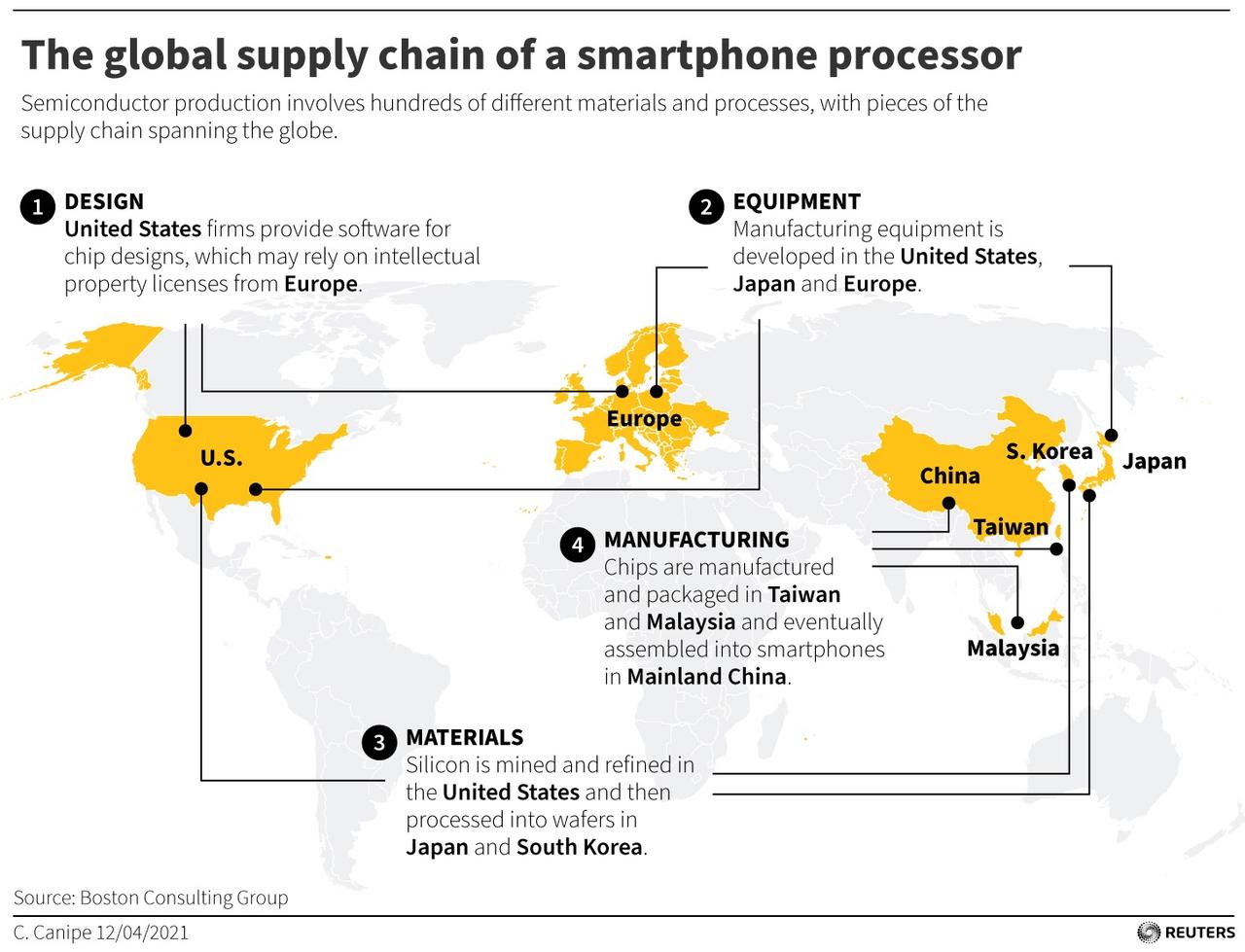
The semiconductor supply chain is notoriously complex, involving thousands of specialized vendors across multiple continents. A security failure at a single Tier-3 chemical supplier or an EDA (Electronic Design Automation) software provider can halt production for months. Yampolskiy’s work focuses on "outside-in" security ratings—a methodology that allows lead firms like Intel, TSMC, and NVIDIA to monitor the cyber health of their entire vendor ecosystem in real-time.
Under Yampolskiy’s leadership, the concept of a "security credit score" has moved from a novelty to a mandatory requirement for semiconductor procurement. In 2026, companies are no longer satisfied with annual security questionnaires; they demand the continuous monitoring and objective telemetry that Yampolskiy’s platforms provide to ensure that the chips powering the world’s infrastructure are not compromised before they even leave the fab.
The Philosophy of Aleksandr Yampolskiy: Visibility as a Defense
Aleksandr Yampolskiy’s background as a Yale-educated computer scientist and a former CISO (Chief Information Security Officer) at Gilt Groupe and Goldman Sachs informs his unique perspective on supply chain risk. He argues that the primary weakness in the semiconductor sector is not a lack of sophisticated firewalls, but a lack of visibility into third-party dependencies.
Moving Beyond Compliance
Traditional semiconductor supply chain management relied heavily on point-in-time audits. Yampolskiy has consistently advocated for a shift toward continuous risk assessment. He posits that because cyber threats evolve daily, a vendor’s security posture on a Tuesday may be completely different by Thursday. In the context of semiconductors, where lead times are measured in years and costs in billions, such volatility is unacceptable.
The Democratization of Security Data
Yampolskiy’s approach centers on the democratization of security data. By providing a common language (the A-F rating scale) for both technical teams and board members, he has bridged the communication gap in semiconductor firms. This clarity allows executives to make data-driven decisions about which suppliers are too risky to engage with, thereby forcing a "security-first" culture across the entire global manufacturing stack.
Technical Mechanisms for Protecting Chip Fabrication
Protecting the semiconductor supply chain involves more than just monitoring email security. The industry faces specific threats that Yampolskiy’s platforms are designed to detect through non-intrusive scanning and data analysis.
1. Intellectual Property (IP) Protection
The semiconductor industry thrives on IP, including circuit designs and proprietary manufacturing processes. Yampolskiy’s systems monitor for indicators of data leaks and "credential spills" on the dark web. If a designer at a fabless semiconductor company has their credentials compromised, the risk to the underlying blueprints is immediate. Early detection of these signals is vital to preventing the "cloning" of advanced chips.
2. Safeguarding the "Fab" Environment
Modern fabrication plants (fabs) are highly automated, relying on Industrial Control Systems (ICS) and Operational Technology (OT). Yampolskiy has highlighted the risks associated with IT/OT convergence. If a supplier providing the air filtration or lithography equipment has poor internet hygiene, it can serve as a gateway for ransomware that could physically shut down a multi-billion-dollar production line.
3. Monitoring Third-Party Software and EDA Tools
The software used to design chips is just as critical as the hardware. Vulnerabilities in these design tools can lead to "hardware backdoors." By rating the security of software vendors, Yampolskiy ensures that the digital tools used in the "pre-silicon" phase meet rigorous cybersecurity standards.
The Geopolitical Context and the CHIPS Act
By 2026, the implementation of the CHIPS and Science Act in the United States and similar initiatives in the EU and Asia has reshaped the industry. These government mandates often require strict cybersecurity compliance for any firm receiving public subsidies. Aleksandr Yampolskiy’s work has become a standard tool for verifying this compliance.
Government agencies and lead manufacturers use security ratings to ensure that the billions of dollars being invested into domestic chip production are not undermined by foreign adversaries or cybercriminals. Yampolskiy’s platform provides the objective evidence required for the "attestation" of security, which is now a prerequisite for many government-backed semiconductor projects.
Furthermore, the rise of "friend-shoring"—the practice of sourcing components from politically allied nations—has increased the need for a unified security standard. Yampolskiy’s global reach allows companies to apply the same security metrics to a supplier in Vietnam or Malaysia as they would to one in Texas or Germany, creating a level playing field for risk management.
Strategic Comparison: Traditional vs. Yampolskiy-Led Risk Management
The following table outlines how the semiconductor supply chain has evolved under the influence of modern cybersecurity metrics promoted by Yampolskiy and his peers.
| Feature | Traditional Supply Chain Risk Mgmt | 2026 Standard (Yampolskiy/Scorecard Model) |
|---|---|---|
| Data Collection | Manual questionnaires and self-reporting | Automated, non-intrusive telemetry and public data |
| Monitoring Frequency | Annual or bi-annual reviews | 24/7 continuous monitoring and alerting |
| Risk Metrics | Subjective, qualitative assessments | Objective, quantitative A-F security ratings |
| Scope of Visibility | Direct Tier-1 suppliers only | Deep visibility into Tier-2 and Tier-3 vendors |
| Response Time | Weeks or months to discover a breach | Near real-time identification of vulnerabilities |
| Executive Reporting | Dense technical jargon | High-level risk scores aligned with business impact |
Overcoming Challenges in Global Chip Security
Despite the advancements led by Yampolskiy, the semiconductor supply chain faces persistent hurdles. One major challenge is the "long tail" of small, specialized suppliers who lack the resources for sophisticated cybersecurity programs.
Empowering Smaller Suppliers
Yampolskiy has addressed this by making security data accessible to the suppliers themselves. Through SecurityScorecard, a small manufacturer of specialized gases or silicon wafers can see their own "score" for free and receive actionable guidance on how to improve it. This creates a rising tide that lifts the security of the entire industry.
The Problem of "Shadow IT"
In many semiconductor firms, engineers may use unauthorized cloud services or tools to speed up their work. Yampolskiy’s platform detects these unauthorized assets (Shadow IT) by scanning the public internet for IP addresses and certificates associated with the company that are not properly secured. Identifying these "blind spots" is essential for maintaining a Zero Trust architecture within the supply chain.
Future Outlook: AI and Autonomous Risk Management
Looking ahead toward the end of 2026 and into 2027, the role of AI in semiconductor security is expanding. Yampolskiy is at the forefront of integrating Generative AI into risk management. Instead of just identifying a vulnerability, AI-driven systems are now beginning to suggest specific remediation scripts and even automate the "outreach" process to suppliers.
For the semiconductor industry, this means the gap between a vulnerability being discovered and it being patched is shrinking from days to minutes. As chip designs become more complex—incorporating 3D stacking and sub-2nm processes—the precision of the security tools must match the precision of the manufacturing equipment. Yampolskiy’s continued focus on data accuracy and predictive analytics ensures that cybersecurity remains an enabler of innovation, rather than a bottleneck.
Frequently Asked Questions
What is the specific contribution of Aleksandr Yampolskiy to the semiconductor industry?
While he does not manufacture chips, Aleksandr Yampolskiy provides the cybersecurity rating system that secures the industry’s supply chain. His company, SecurityScorecard, allows semiconductor firms to monitor the cyber health of their global vendors, ensuring that production is not disrupted by third-party breaches or IP theft.
Why is the semiconductor supply chain more vulnerable than other industries?
The semiconductor supply chain is uniquely vulnerable due to its high concentration of specialized knowledge (IP), its "just-in-time" manufacturing model, and its deep geopolitical significance. A failure at any small node in the chain can cause a global shortage, making it a high-value target for both state-sponsored actors and cybercriminals.
How does Yampolskiy’s platform detect risks without accessing a company’s internal network?
The platform uses "outside-in" scanning, analyzing billions of data points available on the public internet. This includes looking at DNS health, website security, IP reputation, leaked credentials, and patching cadence. This non-intrusive method allows for the assessment of any company in the world without requiring their active cooperation or the installation of software.
Can security ratings actually prevent a ransomware attack on a chip fab?
Ratings act as a leading indicator of risk. A low score in categories like "Patching Cadence" or "Endpoint Security" suggests a high probability that a company is vulnerable to ransomware. By forcing suppliers to maintain high scores, Yampolskiy’s system ensures that the "easy" entry points used by ransomware groups are closed before an attack can occur.
Does Yampolskiy’s work assist with CHIPS Act compliance?
Yes. Many regulatory frameworks in 2026 require companies to prove they have a "cybersecurity risk management plan" for their supply chain. SecurityScorecard provides the objective data and historical reporting needed to demonstrate that a semiconductor firm is actively monitoring and managing its third-party risks.
What is the difference between a security rating and a traditional security audit?
An audit is a snapshot in time, often based on what a company says it is doing. A security rating, as championed by Yampolskiy, is a continuous, data-driven assessment based on what a company is actually doing, as seen from its internet-facing footprint.
Final Recommendation for Semiconductor Leaders
For executives and supply chain managers in the semiconductor space, the primary takeaway from Aleksandr Yampolskiy’s methodology is that transparency is no longer optional. To ensure business continuity in 2026, organizations must move beyond the "trust but verify" model to a "continuous monitoring" model.
The next immediate action for firms is to map their Tier-1 and Tier-2 suppliers and integrate automated security ratings into their procurement lifecycle. By setting a minimum security "grade" for all vendors, semiconductor companies can create a self-healing supply chain where security is a condition of doing business. This not only protects individual companies but strengthens the resilience of the entire global technology ecosystem.